

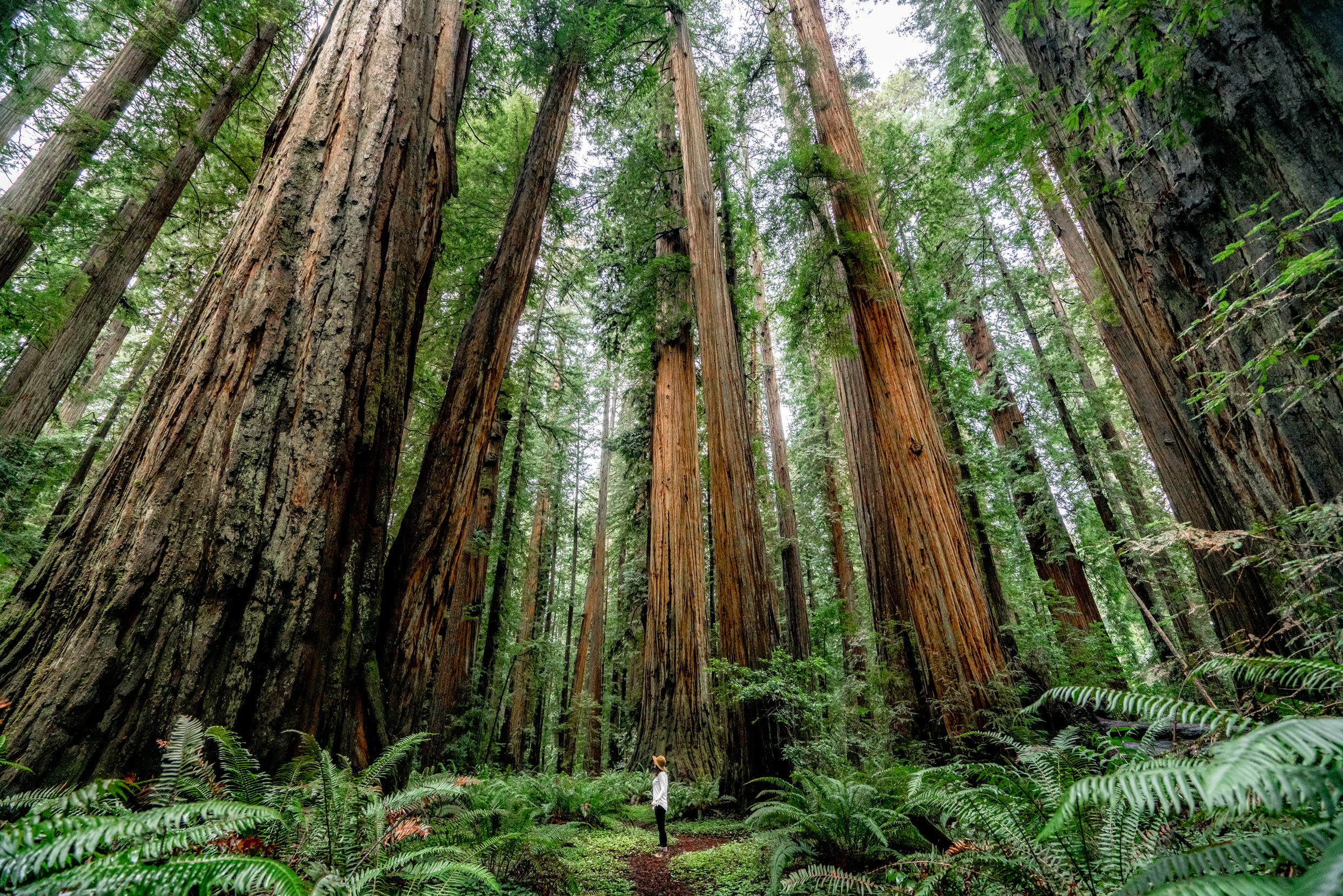
I first drove into Jedediah Smith Redwoods State Park on a foggy Tuesday morning in October, and the trees hit me before the coffee did. The canopy was so thick that my headlights stayed on for the first quarter mile of the road. I pulled over, stepped out, and spent 10 minutes just standing there with my camera hanging around my neck, not even turning it on.
Named for the mountain man who explored the American West in the 1820s, Jedediah Smith Redwoods is the northernmost unit of Redwood National and State Parks. It sits along the Wild and Scenic Smith River just a few miles north of Crescent City, California. While plenty of folks drive right through on their way to Oregon, the ones who stop and spend a day here find one of the most impressive old-growth forests left on Earth.
I have been back several times now. Each visit has been better than the last.
One thing worth knowing upfront. Jedediah Smith is a California state park, not a federal unit, even though it sits within the broader Redwood National and State Parks complex. There is no gated federal entrance. You will find a day-use parking fee at designated lots. Confirm the current rate and which passes are accepted on the official park page before you go, because state-park fees and pass policies change.
Love Redwood? It's one of 117 threatened public lands destinations we're tracking. Get the free briefing.
Why Jedediah Smith Redwoods Deserves Its Own Trip
Most folks visiting the Redwoods spend their time in the southern units. Prairie Creek and the Tall Trees Grove get the lion’s share of the attention. Jedediah Smith, meanwhile, sits up north near the Oregon border and flies under the radar in a way that works entirely in your favor.
The Smith River is one of the last major undammed river systems in California. That fact alone should tell you something about this part of the state. The water runs so clear that you can count individual stones on the bottom from 15 feet above. During summer, the swimming holes along the river fill up with families and kayakers, but even on the busiest weekends, this place feels spacious compared to the southern sections of the park.
What really sets Jedediah Smith apart is the density of its old-growth groves. The trees here are packed tightly together, creating a cathedral-like atmosphere that I have not been able to replicate in any photograph. The canopy blocks so much light that the forest floor stays cool and damp year-round, which supports some of the lushest fern understory you will find anywhere in the Pacific Northwest.
The park also sits at a rich ecological junction. Roosevelt elk, black bears, bald eagles, northern spotted owls, and giant banana slugs all live here. I have seen elk tracks on the riverbank and bear scat on the trail in the same afternoon. The biodiversity in these old-growth stands is remarkable, and it is one of the reasons the Redwood parks were designated a UNESCO World Heritage Site in 1980.
Stout Memorial Grove
If you only have time for one stop in Jedediah Smith, make it Stout Grove. This is the grove that changed how I think about photographing forests. We published a full guide to Stout Grove with detailed trail info and photography tips, so I will keep the overview here brief and send you there for the deep dive.
Stout Grove is a flat, easy loop of about half a mile that winds through some of the largest and most photogenic redwoods in the entire park system. The trees here are enormous. I paced off one trunk at roughly 16 to 20 feet in diameter, and several others were not far behind. The grove was donated to the state in 1929 by Clara Stout, the widow of lumber magnate Frank Stout, who had the foresight to protect this particular stand from the saw.
To reach Stout Grove, take Howland Hill Road (an unpaved but well-maintained road) about 3 miles in. The trailhead is marked, and the walk from the parking area takes less than 5 minutes. During summer, you can also reach the grove by crossing the footbridge from the Jedediah Smith campground on the other side of the river.

Howland Hill Road
Howland Hill Road is the scenic drive that cuts through the heart of Jedediah Smith, and it is one of the best drives in California. The road runs about 10 miles total, with roughly half of that unpaved. It is narrow enough that you will need to pull over for oncoming traffic in several spots, and worth every white-knuckle moment. The speed limit is low, and you will want to go even slower than that.
The redwoods press right up against both sides of the road. In several places, the trunks are close enough to touch from your car window. I would not recommend doing this in a wide RV or anything you are particularly attached to, but a standard SUV or sedan handles the road just fine. I have driven it in a rental Corolla without incident, though the scraping sounds from the gravel had me sweating a bit. Trailers are a firm no.
A few things about road conditions. The gravel surface gets slick during winter rains and can turn muddy enough that all-wheel drive is a real advantage from November through April. In summer, the surface dries out and kicks up dust that coats everything in your car. The road is generally open year-round, but it can close after major winter storms for repairs. Check current conditions before you go, especially between December and March.
Take the road slowly. There are several unmarked pulloffs where you can park and walk into the forest. Some of the best old-growth stands in the entire park system are just 50 to 100 yards off Howland Hill Road, and most folks never leave their cars long enough to find them.
Boy Scout Tree Trail
The Boy Scout Tree Trail is the longest maintained trail in Jedediah Smith at roughly 5.6 miles round trip. The trail rolls through dense old-growth forest to the Boy Scout Tree, one of the larger redwoods in the park, and then continues another half mile to Fern Falls.
I will be honest. The Boy Scout Tree itself did not floor me the way Stout Grove did. But the trail getting there is exceptional. The forest transitions from upland redwood groves into a damper zone thick with ferns, mosses, and fallen giants that have been decomposing for centuries. It is the kind of trail where you stop every 200 yards to look at something.
Fern Falls at the end of the trail is small but pretty, and it gives you a good reason to push through to the end. The trail has gentle ups and downs rather than one big climb, so plan accordingly. I would budget 3 to 4 hours for the full out-and-back, more if you are photographing.
The trailhead is located along Howland Hill Road. If you are combining this with Stout Grove, which you should, you can knock out both in a single morning.
Seasonal closure note. The far portion of the Boy Scout Tree Trail typically closes through the wet season (roughly November into spring) to protect the trail. If you are visiting during those months, you can still hike the lower section, but you may not be able to reach the Boy Scout Tree or Fern Falls. Plan your trip for late spring through fall if this trail is a priority, and confirm the current closure dates before you go.
The Smith River and Swimming Holes
The Smith River runs directly through the Jedediah Smith area, and during summer months it becomes one of the best swimming spots in Northern California. The water is cold. Not Sierra snowmelt cold, but cold enough to take your breath away for the first 30 seconds. After that, it is perfect.
The most popular swimming hole sits right near the campground, where the river bends and creates a wide, deep pool with a gravel beach on one side. On hot July afternoons, you will find families camped out here with coolers and towels. It is about as good as summertime gets in this part of the world.
For those wanting to explore further, the Smith River offers excellent kayaking and fishing. Steelhead and salmon runs bring anglers from across the state during fall and winter months. Even if you are not fishing, walking along the riverbanks in autumn when the water runs green and the alders turn yellow is a quietly spectacular experience.
Wildlife at Jedediah Smith
The Redwood National and State Parks complex is home to healthy herds of Roosevelt elk. Most folks associate the elk with Prairie Creek Redwoods, about 40 minutes south, where herds graze right along the highway. Jedediah Smith has its own elk activity, and you may see them along the river corridor and in meadows near the campground, especially during early morning and late evening hours.
Roosevelt elk are massive. Bulls can weigh over 1,000 pounds and carry wide, heavy antlers. During the fall rut (September and October), you can sometimes hear them bugling at night. Keep your distance. The rangers recommend staying well back, and during rut season I would give them even more room than that.
Black bears also live throughout the park, though I have only seen evidence (scat, scratched trees) rather than the animals themselves. Bald eagles, northern spotted owls, flying squirrels, and the ever-present banana slugs round out the wildlife cast. The banana slugs are impossible to miss on the trail. Some of them are 8 to 10 inches long and bright yellow.
Camping at Jedediah Smith
The Jedediah Smith campground is, without exaggeration, one of the best campgrounds in the entire Redwood National and State Parks system. The sites sit beneath towering old-growth redwoods, many with trunks growing directly within the campsite boundaries. Add in the Smith River flowing past, hot showers, and flush toilets, and you have a campground that is hard to leave.
Sites: roughly 86 tent or RV sites (no hookups)
Amenities: accessible restrooms, accessible cabins, hot showers, flush toilets, picnic tables, fire pits, dump station, visitor center
Reservations: Available in the high season through ReserveCalifornia, with first-come, first-served in the off-season. Confirm current fees, dates, and the reservation window before you book.
I have camped here three times, twice in summer and once in late September. The September trip was my favorite. The campground was half empty, the river was quiet, and I had Stout Grove to myself at sunrise. If your schedule allows for a shoulder-season visit, take it.
A few things to know about the campground. There is no cell service to speak of. If you need to make a call, you will need to drive back toward Crescent City. The camp store is basic but functional. And the campfire program run by the rangers on summer weekends is genuinely excellent. I sat through one on Roosevelt elk and learned more in 45 minutes than I had in years of casual reading.
If you are booking for summer, plan early. Peak-season weekends at Jedediah Smith can fill up months in advance. Midweek sites are easier to snag, and the experience is better anyway. Fewer generators, fewer neighbors, more silence.
Best Time to Visit Jedediah Smith Redwoods
The short answer is that there is no bad time. But there are better times, depending on what you are after.
For photography, I recommend October through December. The coastal fog is at its most dramatic, the crowds are thin, and the rain turns the forest floor into a glossy, reflective surface that photographs beautifully. You will want waterproof boots and a rain cover for your camera, but the payoff is worth the gear hassle.
For camping and swimming, June through August is the window. The Smith River warms up enough to be comfortable (barely), the campground is operating at full capacity, and the days are long enough to fit in a hike, a swim, and an evening at Stout Grove before sunset.
For hiking the full Boy Scout Tree Trail, visit in the dry season, roughly late spring through fall, when the seasonal closure on the far section is lifted.
For solitude, visit on a weekday in any season. I have visited Stout Grove on a Tuesday in November and been the only person there for over an hour. That kind of solitude in a world-class grove is rare and worth rearranging your schedule for.
Early morning is always the best time of day, regardless of season. The fog, the light, the quiet. Everything about the Jedediah Smith experience is better before 9 a.m.
Getting to Jedediah Smith
Jedediah Smith sits just off Highway 199, roughly 9 miles northeast of Crescent City. If you are coming from the south, take US-101 north through the park and turn onto 199 at the junction. From Oregon, head south on 199 from Grants Pass. Either way, the drive in is beautiful.
Crescent City is the nearest town with gas, groceries, and supplies. I would recommend filling up before heading into the park, as there are no services within Jedediah Smith itself.
The closest airports are Del Norte County Airport in Crescent City (small, limited flights) and Arcata-Eureka Airport about 85 miles south. Most folks flying in from out of state will want to fly into San Francisco or Portland and make the drive, which takes roughly 6 hours from either city. The drive from Portland down the Oregon coast is one of my favorite road trips in the country, and it drops you right at Jedediah Smith’s doorstep.
Where to Stay Near Jedediah Smith Redwoods
Beyond the campground, Crescent City has a handful of motels and vacation rentals. The options are not glamorous, but they are functional and affordable. I have stayed at a few of the motels along US-101 in town, and they get the job done.
If you want something nicer, the towns along the southern Oregon coast (Brookings, Gold Beach) are within an hour’s drive and offer better dining and lodging options. I have split trips between Jedediah Smith during the day and a rental in Brookings at night, and the arrangement works well.
What Else to See Nearby
Jedediah Smith is just one piece of the larger Redwood National and State Parks complex, and if you are making the trip, you should plan to spend at least 3 to 4 days exploring the full system. Here is what I would prioritize.
Stout Grove is the highlight and sits within Jedediah Smith itself. Boy Scout Tree Trail is the best longer hike in the area. The trails throughout Redwood National Park offer everything from easy strolls to strenuous all-day affairs. Crescent Beach Overlook provides sweeping coastal views. And Prairie Creek Redwoods, about 40 minutes south, is home to Roosevelt elk herds and some of the park’s most accessible old-growth trails.
For the full picture of what this park system has to offer, check out our complete guide to Redwood National Park.
Tips for Photographing the Redwoods
I have spent a lot of time with my camera in these forests, so here are a few things I have learned the hard way.
First, bring a wide-angle lens. The trees are so tall and so close together that anything longer than 35mm will leave you frustrated. I shoot most of my redwood work at 16 to 24mm and still find myself backing up against trunks trying to fit everything in frame.
Second, overcast and foggy days are your best friend. Direct sunlight creates harsh contrast in the forest that is nearly impossible to expose correctly. The dappled light looks beautiful in person but turns into a mess of blown highlights and crushed shadows in a photograph. Fog eliminates that problem entirely and adds atmosphere that makes the images feel the way the forest feels.
Third, look down. The forest floor in Jedediah Smith is covered in sorrel, ferns, and fallen needles that create patterns and leading lines. Some of my favorite shots from the Redwoods are not of the trees themselves but of the ground beneath them.
Finally, bring a tripod. The light levels in an old-growth redwood forest are remarkably low, even during the day. I regularly shoot at ISO 800 and shutter speeds of 1/30th or slower in here. Handheld work is possible with modern stabilization, but a tripod will give you cleaner files and more compositional precision.

Final Thoughts
Jedediah Smith Redwoods is one of those places that makes you recalibrate your sense of scale. Trees that were alive during the Roman Empire tower 300 feet above a forest floor that has been accumulating biomass for millennia. The Smith River runs clean and clear through a landscape that looks much as it did before European contact.
I have been to dozens of national parks and more state parks than I can count. Jedediah Smith remains one of the places I think about most often. Not because it is the most dramatic or the most remote, but because it is the most complete. The forest, the river, the campground, the trails. Everything here works together in a way that feels effortless and ancient.
If you are planning a trip to the Redwoods, do not skip Jedediah Smith. It is the quietest corner of one of America’s greatest parks, and it rewards the folks who take the time to find it.
What to Bring to Redwood
Gear we recommend for Redwood. Affiliate links support our work at no cost to you.
More Than Just Parks may earn a small commission from purchases made through these links, at no extra cost to you. We only recommend gear we would actually use.
Affiliate disclosure: Some links on this page earn us a small commission at no extra cost to you. We only recommend gear we actually use.
More Than Just Parks Film Watch our 4K film of Redwood We spent weeks in Redwood, one of our favorite public lands destinations, capturing it the way it deserves. Take a few minutes and see it for yourself.


