

I taught history for more than 25 years, and when I retired in 2018 I joined my sons at More Than Just Parks to help tell the stories behind the places they film. Minnesota turned out to be one of my favorite states to dig into. The history here runs deep, from Dakota and Ojibwe homelands that go back thousands of years to the iron mines that built modern America.
This list runs from #15 up to my #1 pick. It mixes National Park Service units with Minnesota Historical Society sites, one Civilian Conservation Corps camp on national forest land, and a private rowhouse where a famous novel was finished. I have tried to get the designations and the managing agencies right, because those details matter, and I have told the harder parts of this history honestly. A few of these places carry stories that were sanitized for a long time. They deserve better.
Let’s get started.
Historic Sites In Minnesota At A Glance
| Site | Designation | Managed By | Where |
|---|---|---|---|
| James J. Hill House | National Historic Landmark | Minnesota Historical Society | St. Paul |
| Rabideau CCC Camp | National Historic Landmark | U.S. Forest Service (Chippewa National Forest) | near Blackduck |
| Charles A. Lindbergh House | State Historic Site | Minnesota Historical Society | Little Falls |
| Mountain Iron Mine | National Historic Landmark | City of Mountain Iron (overlook) | Mountain Iron, Mesabi Range |
| F. Scott Fitzgerald House | National Historic Landmark | Privately owned | St. Paul |
| Split Rock Lighthouse | National Historic Landmark | Minnesota Historical Society | near Two Harbors |
| Saint Croix National Scenic Riverway | National Wild and Scenic River | National Park Service | Minnesota / Wisconsin |
| Pipestone National Monument | National Monument | National Park Service | Pipestone |
| North Country National Scenic Trail | National Scenic Trail (NPS unit) | National Park Service | across northern Minnesota |
| Mississippi National River & Recreation Area | National River & Recreation Area | National Park Service | Twin Cities corridor |
| Grand Mound Historic Site | National Historic Landmark | Minnesota Historical Society | near International Falls |
| Sinclair Lewis Boyhood Home | State Historic Site / NRHP | Minnesota Historical Society | Sauk Centre |
| Historic Fort Snelling | National Historic Landmark | Minnesota Historical Society | near St. Paul / Minneapolis |
| Grand Portage National Monument | National Monument | National Park Service | far northeastern Minnesota |
| Voyageurs National Park | National Park | National Park Service | near International Falls |
15. James J. Hill House

We start in St. Paul at the home of one of the most powerful men of the Gilded Age. James J. Hill ran the Great Northern Railway, and the mansion he completed in 1891 shows you exactly what railroad money could buy. At roughly 36,000 square feet, it was the largest home in Minnesota when it was built, with a pipe organ, a cut-stone exterior, and the kind of woodwork that takes years to carve.
117 public lands destinations are under threat. Get the free briefing that 27,000+ people use to stay informed and take action.
The Minnesota Historical Society runs the house today, and it became a National Historic Landmark back in 1961. What I appreciate about the tour is that it does not just show you the family’s rooms. It takes you downstairs to the work spaces too, so you get a sense of the servants who kept a house this size running. It is a useful reminder that the Gilded Age looked very different depending on which staircase you used.
14. Rabideau CCC Camp

Camp Rabideau sits about six miles south of Blackduck inside the Chippewa National Forest, which means this one is managed by the U.S. Forest Service, not the Park Service. It is a Civilian Conservation Corps camp, part of Franklin Roosevelt’s New Deal, and it is widely considered the best-preserved CCC camp left in the country. That is why it was named a National Historic Landmark in 2006.
The camp opened in 1935 and housed roughly 300 young men until 1941, when the country’s attention turned to the war. They planted trees, built roads and trails, and fought fires across northern Minnesota. Walking the grounds today, with the original barracks and mess hall still standing, you get an honest feel for how the CCC put a generation of out-of-work young men to work on the land. Check Forest Service hours before you go, since access is seasonal.

13. Charles A. Lindbergh House

Long before he flew solo across the Atlantic in 1927, Charles Lindbergh grew up in this house on the banks of the Mississippi River in Little Falls. The home was built in 1906, and the Minnesota Historical Society runs it today as a state historic site. Tours walk you through the rooms where a quiet, mechanically minded boy spent his summers.
The site is open seasonally, usually May through October, with guided tours and a history center next door. I will say this plainly, because the staff does too. Lindbergh was a genuine aviation pioneer, and he was also a deeply complicated man whose later views on race and on America’s role before World War II have not aged well. A good visit holds both of those truths at once.

12. Mountain Iron Mine

This is where the Mesabi Range began. The Mountain Iron Mine opened in 1892 as the first mine on the Mesabi, which turned out to hold the largest iron ore deposit ever found in the United States. The ore here was soft and close to the surface, so operators quickly switched from underground tunnels to open-pit digging, and that method went on to define the whole Iron Range. The mine ran until 1956.
It was named a National Historic Landmark in 1968 for setting that history in motion. One thing to know before you drive up. This is not a museum with an underground tour. The pit has long since filled with water, and the city of Mountain Iron maintains an overlook at Locomotive Park where you can take in the scale of what was carved out of the earth. If you want a deeper look at Iron Range mining, pair this stop with the larger working and historic mine sites elsewhere in the region.

11. F. Scott Fitzgerald House

At 599 Summit Avenue in St. Paul stands a brownstone rowhouse known as Summit Terrace, and it earns its place on this list for one reason. This is where a young F. Scott Fitzgerald finished his first novel, This Side of Paradise, in 1919. Its success launched his career and helped define the Jazz Age. The house is a National Historic Landmark for that connection.
Here is the practical part. The Fitzgerald house is privately owned and is not open for tours, so this is a sidewalk visit. The good news is that Summit Avenue is one of the best-preserved Victorian streets in the country, so a walk past the Fitzgerald rowhouse fits naturally into a longer stroll. Be respectful of the residents and enjoy it from the public sidewalk.
10. Split Rock Lighthouse

If you have seen one photo of the Minnesota North Shore, odds are it was this one. Split Rock Lighthouse stands on a 130-foot cliff above Lake Superior near Two Harbors. It was built in 1910 after a brutal November storm in 1905 wrecked or stranded dozens of ships, and it guided iron-ore freighters through some of the most dangerous water on the Great Lakes until it was automated and retired in 1969.
The Minnesota Historical Society runs the site today, and it was named a National Historic Landmark in 2011. The restored keeper’s house and fog signal building show you what isolated lighthouse life was really like, when supplies came only by water. Try to time a visit for early November, when the light is ceremonially relit each year to honor the crew of the Edmund Fitzgerald and other lost sailors.

9. Saint Croix National Scenic Riverway

The Saint Croix National Scenic Riverway protects the St. Croix and Namekagon rivers along the Minnesota and Wisconsin border, and it is managed by the National Park Service. This is a milestone river. In 1968 it became one of the original eight rivers named under the Wild and Scenic Rivers Act, thanks largely to senators Walter Mondale of Minnesota and Gaylord Nelson of Wisconsin.
The human history along these banks runs back more than 10,000 years, with generations of Native people fishing, hunting, and traveling the water long before European traders and loggers arrived. Today the riverway is a paddler’s dream, with quiet stretches, sandstone bluffs, and good fishing. There are also miles of hiking trails open year round, so it works as a history stop and an outdoor day in equal measure. Watch your footing on the steeper bluff trails, and check yourself for ticks afterward.

8. Pipestone National Monument

Pipestone National Monument protects ground that is sacred to many Native nations, and it asks visitors to approach it that way. The red stone quarried here, called catlinite or pipestone, is soft enough to carve and has been used for generations to make the ceremonial pipes that are central to Plains spiritual life. The Park Service consults with 23 affiliated tribal nations on how the place is cared for and interpreted.
Congress established the monument in 1937, and the law affirmed Native quarrying rights. This is important to understand. Only enrolled members of federally recognized tribes may quarry the pipestone, by free permit, and only for traditional and religious use. The quarrying is still done by hand, the way it always has been. A self-guided trail leads past the active quarries and Winnewissa Falls, and on many days you can watch tribal artisans at work in the visitor center. Come as a respectful guest, because for a great many people this is living sacred ground, not a tourist attraction.

7. North Country National Scenic Trail
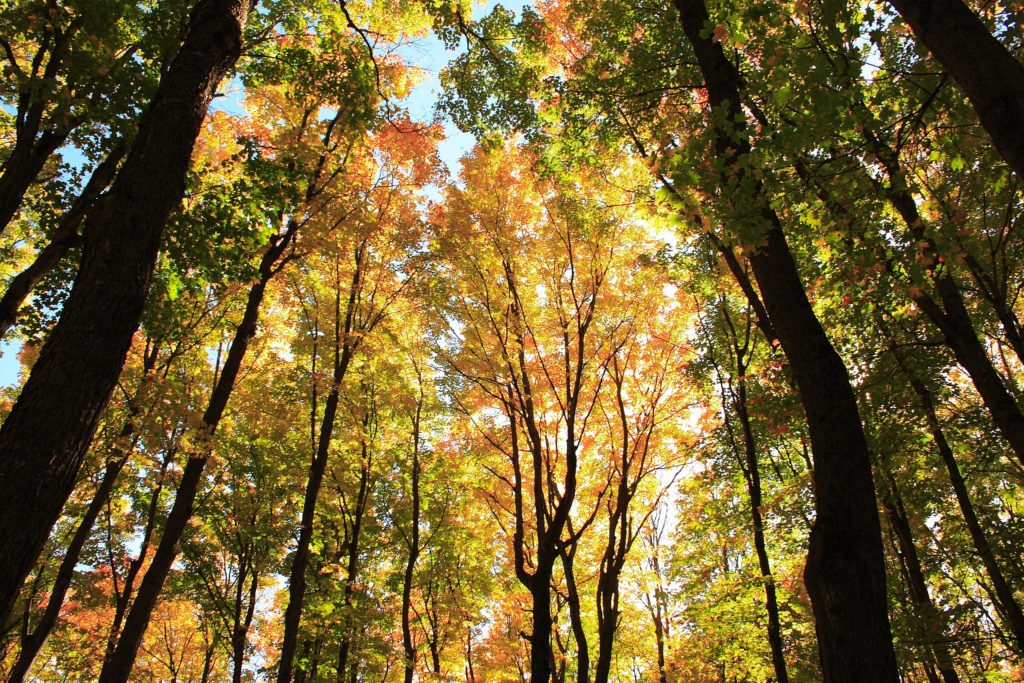
The North Country National Scenic Trail is the longest trail in the entire National Trails System, running about 4,800 miles across eight states from Vermont to North Dakota. Congress authorized it in 1980, added the Vermont section in 2019, and in 2023 it officially became a full unit of the National Park Service.
Minnesota carries a long and varied piece of the route, somewhere around 850 miles. You can walk the lakefront in downtown Duluth, climb into the rugged Sawtooth country above Lake Superior, or cross the gentle prairie of the Red River Valley. Along the way the trail passes the scars of iron mining on the Mesabi and Vermilion ranges, Native historic sites, and remnants of the old white-pine logging era. Keep your eyes open for loons, moose, black bear, and the occasional timber wolf.

6. Mississippi National River & Recreation Area

It is easy to forget that one of the National Park Service’s units runs right through a major metro area, but that is exactly what the Mississippi National River and Recreation Area does. Established in 1988, it follows 72 miles of the Mississippi River through the Twin Cities, from Dayton and Ramsey down past Minneapolis and St. Paul.
This stretch of river is layered with history, from Dakota homelands to the flour mills that made Minneapolis the milling capital of the world. Within the corridor you can visit the Mill City Museum, walk Pike Island below the bluffs, and connect to dozens of miles of trails for hiking and biking. It is a working river, a wildlife haven with eagles and herons, and an outdoor classroom all at once, and you can reach much of it without leaving the city.

5. Grand Mound Historic Site

Along the Rainy River near International Falls stands the largest prehistoric burial mound in the Upper Midwest. Grand Mound and the smaller mounds around it were built beginning roughly 2,000 years ago by people of the Laurel culture, and the largest rises about 25 feet high and 140 feet long. It anchors a chain of more than 20 burial mounds that runs for some 90 miles along both sides of the Rainy River. It is a National Historic Landmark.
Now the part you need to know before you plan a trip. This is a sacred burial ground, and it is not open to the general public. The Minnesota Historical Society closed the visitor center in 2002, and in 2018 it decided, following the wishes of descendant communities, to keep the site closed to the public while preserving the mounds and allowing access for Native Americans. There has also been discussion of eventually transferring the site to a tribe or tribes. So I include Grand Mound here for its importance and to be honest about its story, but please treat it as a place to learn about and respect from a distance, not a stop to walk up to.

4. Sinclair Lewis Boyhood Home

In the small town of Sauk Centre stands the boyhood home of Sinclair Lewis, who in 1930 became the first American writer to win the Nobel Prize in Literature. The house was built in 1883, and Lewis lived here from early childhood until he left for college in 1898. The Minnesota Historical Society cares for it, and it is on the National Register of Historic Places.
What makes this stop so satisfying is that Sauk Centre is the town. Lewis turned his hometown into the fictional Gopher Prairie in his 1920 novel Main Street, a sharp and not entirely flattering portrait of small-town America. Guided tours of the restored home run about 25 minutes and walk you through the rooms where the young writer grew up. If you want to dig deeper into the man, I recommend Richard Lingeman’s biography Sinclair Lewis: Rebel from Main Street.

3. Historic Fort Snelling

Historic Fort Snelling sits on a bluff above the meeting of the Minnesota and Mississippi rivers, a place the Dakota know as Bdote and have considered sacred for thousands of years. The U.S. Army built the stone fort in the 1820s, first calling it Fort St. Anthony, to control the fur trade and project American power into the region. It is a National Historic Landmark, and the Minnesota Historical Society runs the upper fort while the state Department of Natural Resources manages the parkland below.
For most of its existence this site told a clean military story. It no longer does, and that is the right call. After the U.S.-Dakota War of 1862, the Army marched roughly 1,600 Dakota people, mostly elders, women, and children, to a fenced internment camp on the river flats below the fort. Through the winter of 1862 and 1863 they were held in crowded, freezing conditions, and disease killed many. The Minnesota Historical Society now tells this history directly, including the broader story of forced removal that followed. A visit here gives you the soldiers and the fur trade, yes, but also the enslaved people once held here, the immigrants and veterans who passed through, and the Dakota families who suffered and endured. Go for all of it.
2. Grand Portage National Monument

In the far northeastern corner of the state, Grand Portage National Monument tells the story of an Anishinaabe homeland and the fur trade that ran through it. The grand portage itself was an 8.5-mile carrying path that let travelers bypass the unnavigable lower stretch of the Pigeon River, linking Lake Superior to the vast canoe routes of the interior. The Ojibwe knew and used this route long before European traders arrived, and the North West Company later made it the hub of its operations.
What sets this place apart is how it is told. The monument sits within the Grand Portage Indian Reservation, and the National Park Service interprets it in partnership with the Grand Portage Band of Lake Superior Chippewa. The reconstructed depot, stockade, and great hall bring the fur-trade era to life, while the heritage center grounds it all in Ojibwe culture and perspective. Hike the Mount Rose Trail for a fine view over the bay, watch the demonstrations, and take the time to understand that this is a Native community telling its own history. That partnership is why I rank it this high.

1. Voyageurs National Park

My number one pick is Voyageurs National Park, and it earns the spot on both history and beauty. The park takes its name from the French-Canadian voyageurs who hauled furs through this maze of lakes by birch-bark canoe. Long before them, the Ojibwe lived and traveled these waters, fishing and hunting across the north woods for thousands of years. A short gold rush and a logging boom came and went before the area finally became a national park in 1975.
Voyageurs is a water park in the truest sense. It is almost entirely accessible by boat, which scares some people off, but it should not. Local outfitters rent everything from canoes to houseboats at fair prices, the waterways are well mapped, and once you are out there the solitude is the whole point. On a clear night you can watch the northern lights pour across the sky over glassy water, with no city glow to spoil them.
Save The Boundary Waters
Voyageurs and the nearby Boundary Waters face an ongoing threat from copper-nickel mining interests looking to dig in the watershed that feeds these lakes, most notably the Twin Metals project. You can help protect this wild country by learning about the issue and supporting the campaign to keep the Boundary Waters clean and intact.

More Things To Do In Minnesota
If this list has you planning a Minnesota trip, here are a few of our other guides worth a look before you go:
- Minnesota National Parks – a full rundown of every National Park Service site in the state.
- Best Things To Do In Voyageurs National Park – how to make the most of my number one pick.
- Minnesota Landmarks – more iconic places to add to your itinerary.
We don’t just make this stuff up out of thin air. More Than Just Parks is a family operation. My sons Will and Jim have spent their adult lives exploring America’s national parks and public lands destinations, working with the National Park Service, the Department of the Interior, the USDA, and the U.S. Forest Service for years on films about important places and issues. And in 2018, after a lifetime teaching history, I joined them to help tell the stories behind these places.
Affiliate disclosure: Some links on this page earn us a small commission at no extra cost to you. We only recommend gear we actually use.