

Haleakala National Park climbs from the Pacific shoreline of Maui to a 10,000-foot volcanic summit, a place where you can watch the sunrise above the clouds in the morning and hike a bamboo forest by the sea that afternoon. Few parks pack this much range into one island.
I taught history for decades before my sons started filming the parks, and Haleakala is one of the most spiritual places they have ever shot. Here are 12 facts about the park, each checked against the National Park Service, the U.S. Geological Survey, and the record. Where the old numbers were muddled, I straightened them out.
Haleakala National Park: The Basics
- Location: Maui, Hawaii
- Size: About 33,000 acres, most of it designated wilderness
- Became a separate park: 1961 (part of Hawaii National Park starting in 1916)
- Highest point: Puu Ulaula Summit, 10,023 feet
- The draw: The summit and crater, the Pipiwai Trail, silverswords, and the nene
For a full plan, see our guide to the best of Haleakala National Park and our roundup of Hawaii national parks.
1. Polynesian Voyagers Reached These Islands Over a Thousand Years Ago
As a part of the Hawaiian Islands, Haleakala has one of the great origin stories. Polynesians from the Marquesas Islands were the first people to reach and settle Hawaii, arriving roughly between 1000 and 1200 AD.
Love Haleakala? It's one of 117 threatened public lands destinations we're tracking. Get the free briefing.
They were extraordinary navigators, crossing some 2,000 miles of open Pacific in double-hulled canoes by reading stars, currents, birds, and the behavior of whales. They carried with them the plants and animals they would need: taro, sweet potato, coconut, banana, sugar cane, pigs, dogs, and chickens. Haleakala has drawn people ever since.

2. The Name Means “House of the Sun”
Haleakala translates to “house of the sun,” and the name carries real cultural weight. In Hawaiian tradition, the demigod Maui is said to have lassoed the sun from this summit to slow its journey across the sky and lengthen the day.
The mountain remains one of the most sacred sites in Hawaiian culture, a place of ceremony and reverence. When you stand at the summit for sunrise, you are taking part in something Hawaiians have honored here for centuries. Treat it accordingly.

3. Measured From the Ocean Floor, It Rises Higher Than Everest Stands
Here is a fact that needs care, because it gets garbled all the time. Haleakala’s summit is 10,023 feet above sea level. But the volcano does not begin at sea level. It begins on the floor of the Pacific.
Measured from its base on the ocean floor to its summit, Haleakala rises roughly 29,700 feet, which is more than Mount Everest stands above sea level. Only about the top 10,000 feet pokes above the water. For the record, Maui’s neighbor Mauna Kea on the Big Island is taller still, the famous mountain that beats Everest base to summit. Haleakala is in remarkable company.

4. It Is a Shield Volcano, and Not Extinct
Haleakala is a shield volcano, named for the broad, gently curved profile that thin lava flows build up over time, like a warrior’s shield laid flat. Its oldest rocks, the Honomanu Basalt, run between about 0.97 and 1.1 million years old.
It is dormant, not dead. The last eruption happened only about 400 to 600 years ago on the volcano’s southwest flank, and over the past 1,000 years Haleakala has erupted at least 10 times. Scientists consider future eruptions possible. The summit valley is dotted with multicolored cinder cones, or puu, each one the scar of a past eruption.

5. The “Crater” Is Really an Eroded Valley
Everyone calls it the Haleakala Crater, but geologically that is not quite right. The vast bowl at the summit is not a true volcanic crater. It is a huge valley carved by water and landslides, later partly filled by younger eruptions.
The result is enormous. The valley is S-shaped, about 2.5 miles wide and 3,000 feet deep at its deepest. The original circular crater eroded away long ago. The volcano itself, by the way, makes up more than three-quarters of the entire island of Maui. This one mountain is most of the island.

6. It Is an International Biosphere Reserve
In 1980, Haleakala was named an International Biosphere Reserve by UNESCO, recognition of how much unique life it protects in a small space.
Biosphere reserves are meant to be working models for balancing conservation with sustainable use, and Haleakala earns the title. Because the islands are so isolated, much of the plant and animal life here exists nowhere else on Earth, which makes protecting it both urgent and difficult.
7. The Summit Holds a World-Class Observatory
Just outside the park boundary at the summit sits “Science City,” the Haleakala High Altitude Observatory, established in 1958. The same conditions that make the summit a draw for sunrise make it superb for science.
At more than 10,000 feet, above much of the atmosphere and far from city lights, the air is clear and dark. The observatory is used by the University of Hawaii, the U.S. Air Force, and others to study the sky and track objects in space. It is one of the best astronomical sites on the planet.

8. It Saved Hawaii’s State Bird From Extinction
The nene, or Hawaiian goose, is the state bird of Hawaii and found nowhere else in the world. It likely evolved from the Canada goose that reached the islands hundreds of thousands of years ago.
By the 1890s the nene had been wiped out on Maui entirely. Starting in the mid-1900s, birds from the Big Island were carried back into Haleakala Crater and reintroduced, a slow recovery that helped pull the species back from the edge. Seeing one today is a small conservation victory on two legs. Give them space and never feed them.

9. The Silversword Lives for Decades, Then Blooms Once and Dies
The Haleakala silversword, or ahinahina, is one of the rarest and strangest plants in any national park. Its silvery hairs reflect intense high-altitude sun and trap heat, letting it survive on the harsh, near-lifeless cinder of the summit.
It can live for up to 90 years, then sends up a single tall flowering stalk covered in hundreds of blooms, scatters its seeds, and dies. The plant is so delicate that the oil from a human hand can damage it, so look but never touch. It nearly went extinct from grazing and trampling, and it remains protected today.

10. It Has Appeared in Plenty of Hollywood Films
With scenery like this, no wonder filmmakers keep coming. Haleakala and its surroundings have stood in for everything from prehistoric jungle to alien planet.
Films shot in and around the park include The Devil at 4 O’Clock (1961), Papillon (1973), Baraka (1992), Jurassic Park (1993), Die Another Day (2002), and The Hulk (2003). The summit’s barren red landscape in particular reads as another world on camera.
11. Lava Tubes Run Beneath the Surface
Hawaii’s volcanoes leave behind lava tubes, underground tunnels formed when the surface of a lava flow hardens while the molten rock keeps draining out underneath. When the flow stops, it leaves a hollow cave.
When active, these tubes carry lava hotter than 2,000°F over long distances. Once cool and empty, they become home to troglobites, creatures so adapted to the dark that distinct species of crickets and spiders live in these tubes and nowhere else, alongside microbes found in no other place on Earth.
12. The Pipiwai Trail Runs Through a Soaring Bamboo Forest
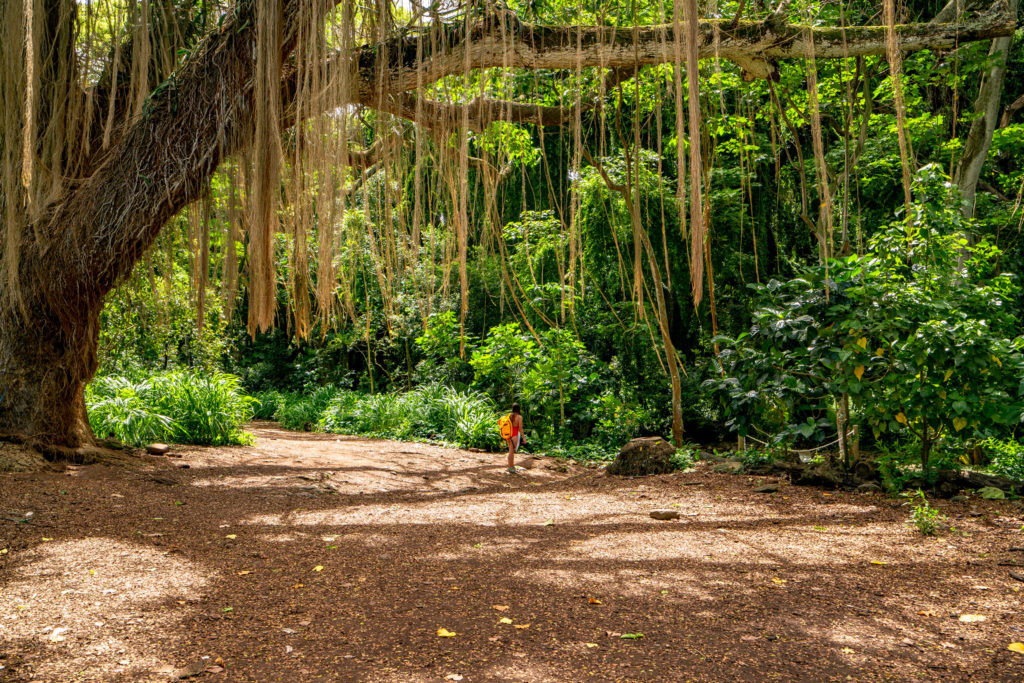
My favorite part of the park is down at the coast in the Kipahulu District. About a mile up the Pipiwai Trail, the path gives way to a boardwalk through a dense bamboo forest, with stalks towering overhead and clacking in the wind. It is unlike anything on the mainland.
The trail continues to Waimoku Falls, a 400-foot waterfall, and ranks among the best hikes in the entire national park system. Go when it has not been raining, since the path turns to mud fast, and aim for winter or shoulder season to dodge the crowds.

Watch Our Haleakala Film

For this film Will and Jim hiked every trail in the park and spent multiple seasons on Maui. Haleakala is one of only a handful of tropical parks in the system, and its mix of volcanic summit and lush coastline makes it one of the most varied places they have ever filmed.
Plan Your Haleakala Trip
Summit sunrise requires a reservation, so book ahead, and give yourself a separate day for the coastal Kipahulu District and the Pipiwai Trail. Start with our guide to the best of Haleakala National Park, and read up on nearby Hawaii Volcanoes National Park while you are island-hopping.
What to Bring to Haleakala
Gear we recommend for Haleakala. Affiliate links support our work at no cost to you.
More Than Just Parks may earn a small commission from purchases made through these links, at no extra cost to you. We only recommend gear we would actually use.
Affiliate disclosure: Some links on this page earn us a small commission at no extra cost to you. We only recommend gear we actually use.
More Than Just Parks Film Watch our 8K film of Haleakala We spent weeks in Haleakala, one of our favorite public lands destinations, capturing it the way it deserves. Take a few minutes and see it for yourself.


