

Great Basin National Park is 77,000 acres of Nevada that most people drive right past on their way to somewhere else. That is their loss. This is one of the quietest, strangest, and most rewarding parks in the country.
You get a 13,000-foot peak, a limestone cave you can tour, bristlecone pines older than the pyramids, and some of the darkest skies left in the Lower 48. I taught history before my sons started filming these places, so I like the human stories as much as the scenery, and Great Basin has both. Here are 10 facts about the park, every figure checked against the National Park Service and the record. Where the old numbers were off, I fixed them.
Great Basin National Park: The Basics
- Location: East-central Nevada, near the Utah line
- Size: About 77,180 acres
- Established: October 27, 1986
- Highest point: Wheeler Peak, about 13,065 feet
- Crowds: One of the least-visited national parks, usually fewer than 150,000 people a year
For a full plan, see our guide to the best of Great Basin National Park.
1. The Fremont People Farmed Here a Thousand Years Ago
The Fremont were an archaeological culture that lived across central Utah, eastern Nevada, and western Colorado from roughly 1000 to 1300 AD, named for the Fremont River in Utah. They lived in and around what is now the park and left clear evidence behind.
Love Great Basin? It's one of 117 threatened public lands destinations we're tracking. Get the free briefing.
What set them apart from their Ancestral Puebloan contemporaries at Mesa Verde and Chaco Canyon was their gear: a distinctive “one rod and bundle” basketry, moccasins cut from deer or sheep leg, gray coiled pottery, and trapezoidal human figures in their art. They were largely settled farmers, growing corn, beans, and squash with irrigation while still hunting and gathering. One of their villages sat near present-day Baker, Nevada.

2. They Left Rock Art You Can Still See in the Park
The Fremont were artists. They made both pictographs, painted onto rock, and petroglyphs, pecked or carved into it, all over this region.
The figures tend to be human-like with trapezoidal bodies, often decorated with headdresses, necklaces, and ear ornaments, alongside animals and abstract patterns. Inside the park, Upper Pictograph Cave holds paintings believed to be theirs. Archaeologists still study this art to understand a culture that left no written record.

3. It Holds Some of the Oldest Trees on Earth, and a Cautionary Tale
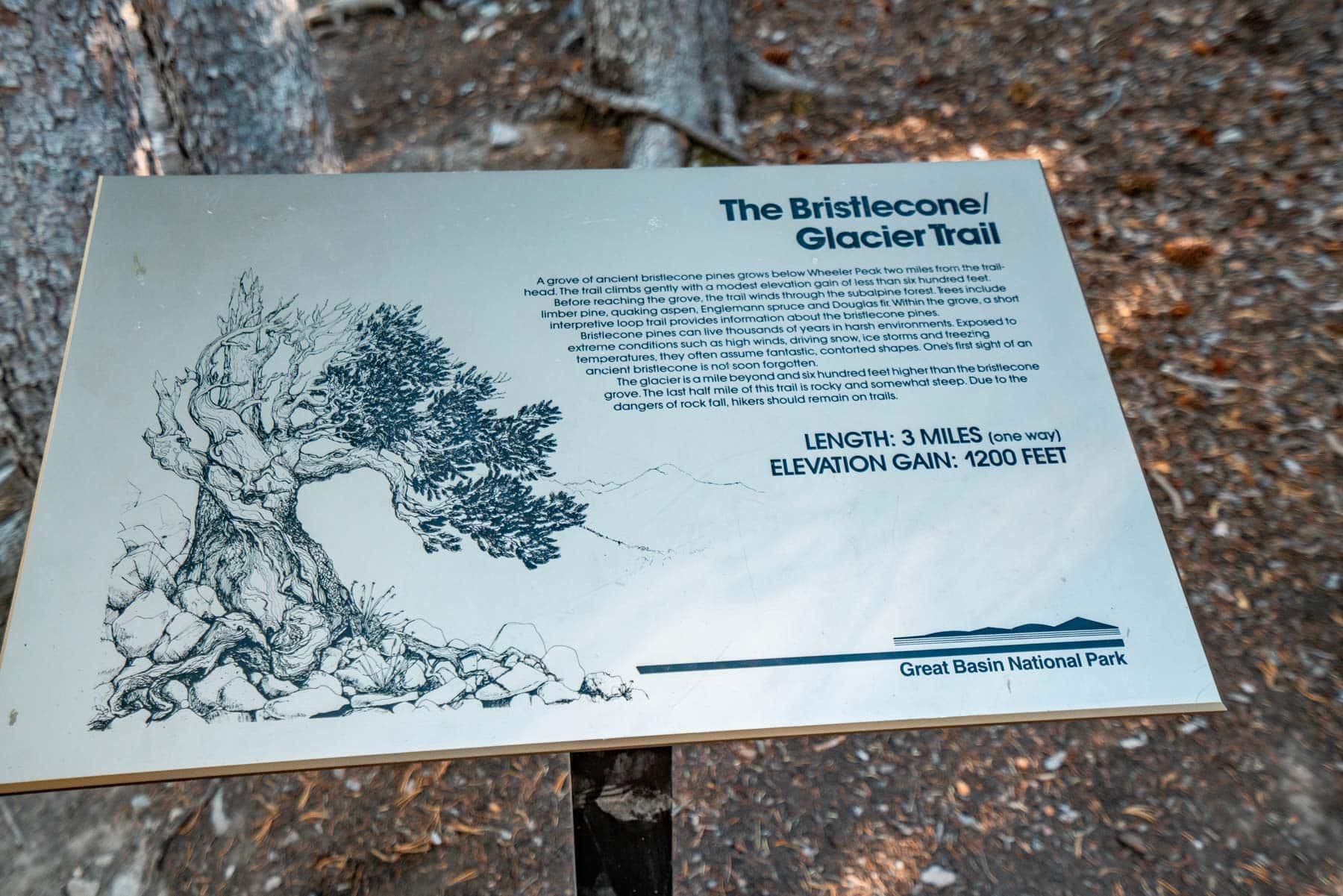
High near the tree line, the Great Basin bristlecone pine grows in scattered groves where it can live 4,000 years or more. These are among the oldest living things on the planet, gnarled survivors that thrive precisely because the conditions are so harsh.
The park also carries a hard lesson. In 1964, a bristlecone here known as Prometheus, later determined to be at least 4,862 years old and the oldest known non-clonal organism on Earth, was cut down during a research project. Its death helped change how science treats these ancient trees. The stump is part of the park’s story now.

4. Nevada’s Only Glacier Sits Below Wheeler Peak
You do not expect ice in the Nevada desert, but it is here. Tucked into a shaded cirque at about 11,500 feet below Wheeler Peak is the Wheeler Peak Glacier, a small alpine glacier and the only one in Nevada. It is a remnant of the Ice Age that carved these high basins more than 10,000 years ago.
Just below it lies the Lehman Rock Glacier, a slow-moving mass of boulders cemented by ice, visible from the Glacier Trail. The basin-and-range valleys below were shaped by faulting, not ice, but up high the glaciers did their work.
5. Wheeler Peak Is the Second-Highest Mountain in Nevada
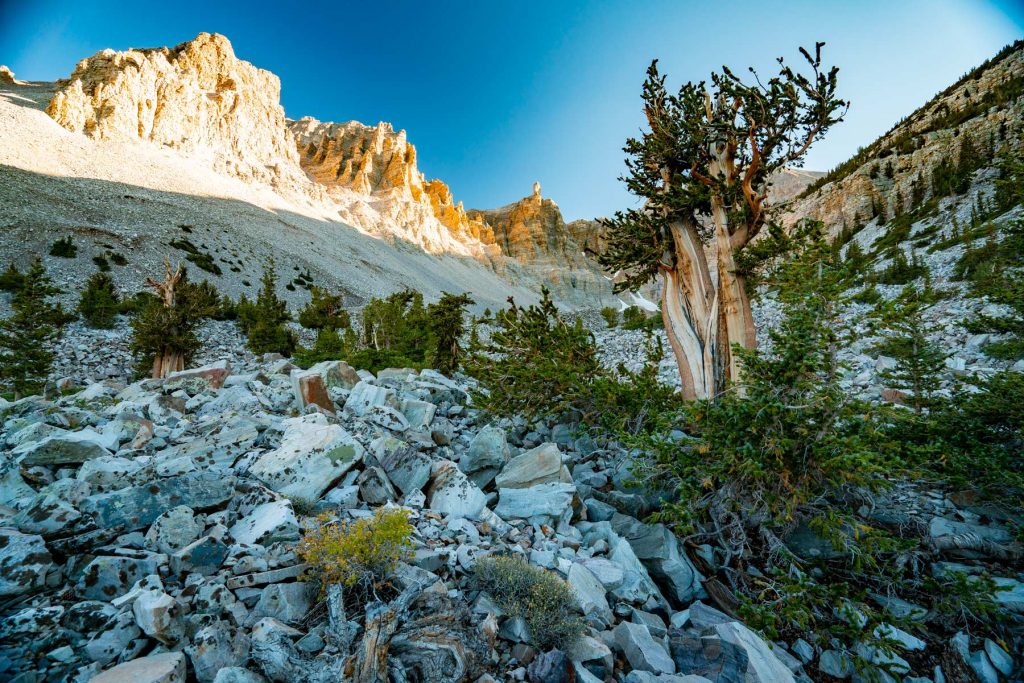
Wheeler Peak, the tallest mountain in the Snake Range, tops out at about 13,065 feet. That makes it the second-highest peak in Nevada, just behind Boundary Peak at 13,140 feet. Its prominence of more than 7,500 feet is second in the state only to Mount Charleston.
The peak is named for George Wheeler, who led one of the great government surveys of the West. Starting in 1871, his United States Geographical Surveys West of the 100th Meridian spent nine years mapping the western half of the country on foot, horseback, and wagon. The mountain you climb today carries his name.

6. It Has Some of the Darkest Skies in the Country
Great Basin is so remote, so high, and so dry that its night skies are nearly free of light pollution and humidity. In 2016 it was certified an International Dark Sky Park, and on a clear, moonless night you can see the Milky Way, meteors, and even the Andromeda Galaxy with your own eyes.
If you can time it, the annual Great Basin Astronomy Festival in September brings telescopes, night-sky photography workshops, and ranger talks. Stay overnight here. The sky is half the reason to come.

7. Lehman Caves Is the Park’s Underground Showpiece
Despite the plural name, Lehman Caves is a single cavern, a quarter-mile of passages cut into limestone and marble at the base of the Snake Range. It is one of the most heavily decorated caves in the region, full of stalactites, stalagmites, and rare shield formations like the famous “Parachute Shield.”
A rancher and miner named Absalom Lehman found the cave in 1885. It was protected as a national monument in 1922, decades before the surrounding national park existed. You can only enter on a ranger-led tour, which runs year-round, and you should book ahead because they fill.

8. At Least 10 Species of Bats Live in the Park
Great Basin is home to at least 10 species of bats, including the silver-haired bat, hoary bat, big brown bat, and Townsend’s big-eared bat. Every one of them feeds on insects.
The Townsend’s big-eared bat is the standout, with a wingspan around 11 inches and long, curling ears you cannot mistake. On summer evenings these bats pour out to hunt moths by the hundreds, then retreat to caves to hibernate in winter. Their guano feeds the cave-adapted creatures that never see daylight at all.
9. The Park Climbs More Than a Mile From Bottom to Top
If you are planning a trip, know that Great Basin covers a huge range of elevation. The gap between its lowest and highest trails is more than a mile. The summit of Wheeler Peak sits above 13,000 feet, while the Mountain View Nature Trail near the visitor center is at about 6,825 feet.
That spread means the weather changes as fast as the scenery. You can start in warm sagebrush and end in alpine cold and wind in a single day, so pack layers and check the forecast for the high country, not just the valley.

10. It Has Its Own Native Trout
Great Basin even has a native fish. The Bonneville cutthroat trout is the only trout native to the park, holding on in cold, high-elevation streams. It is a survivor of the ancient Lake Bonneville system that once covered much of this region.
Other trout you might catch here, brown, rainbow, and brook, were all introduced. The park has worked to protect and restore the Bonneville cutthroat in its home streams, which is a small conservation win in a place that already feels like the edge of the map.

Plan Your Great Basin Trip
Great Basin is far from everything, which is exactly the point. Start with our guide to the best of Great Basin National Park, book your Lehman Caves tour ahead of time, and plan to stay for at least one dark night under the stars.
What to Bring to Great Basin
Gear we recommend for Great Basin. Affiliate links support our work at no cost to you.
More Than Just Parks may earn a small commission from purchases made through these links, at no extra cost to you. We only recommend gear we would actually use.
Affiliate disclosure: Some links on this page earn us a small commission at no extra cost to you. We only recommend gear we actually use.


