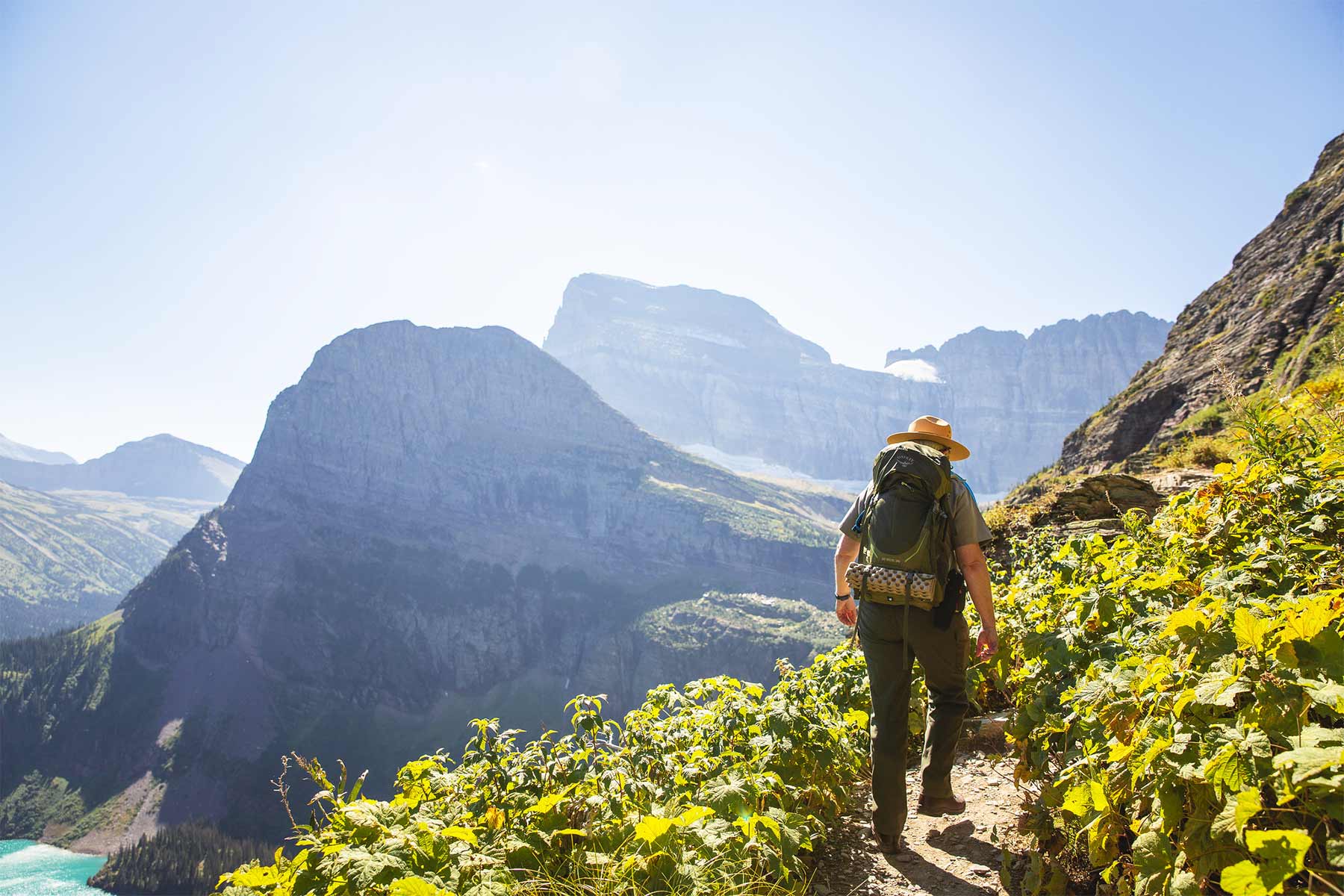


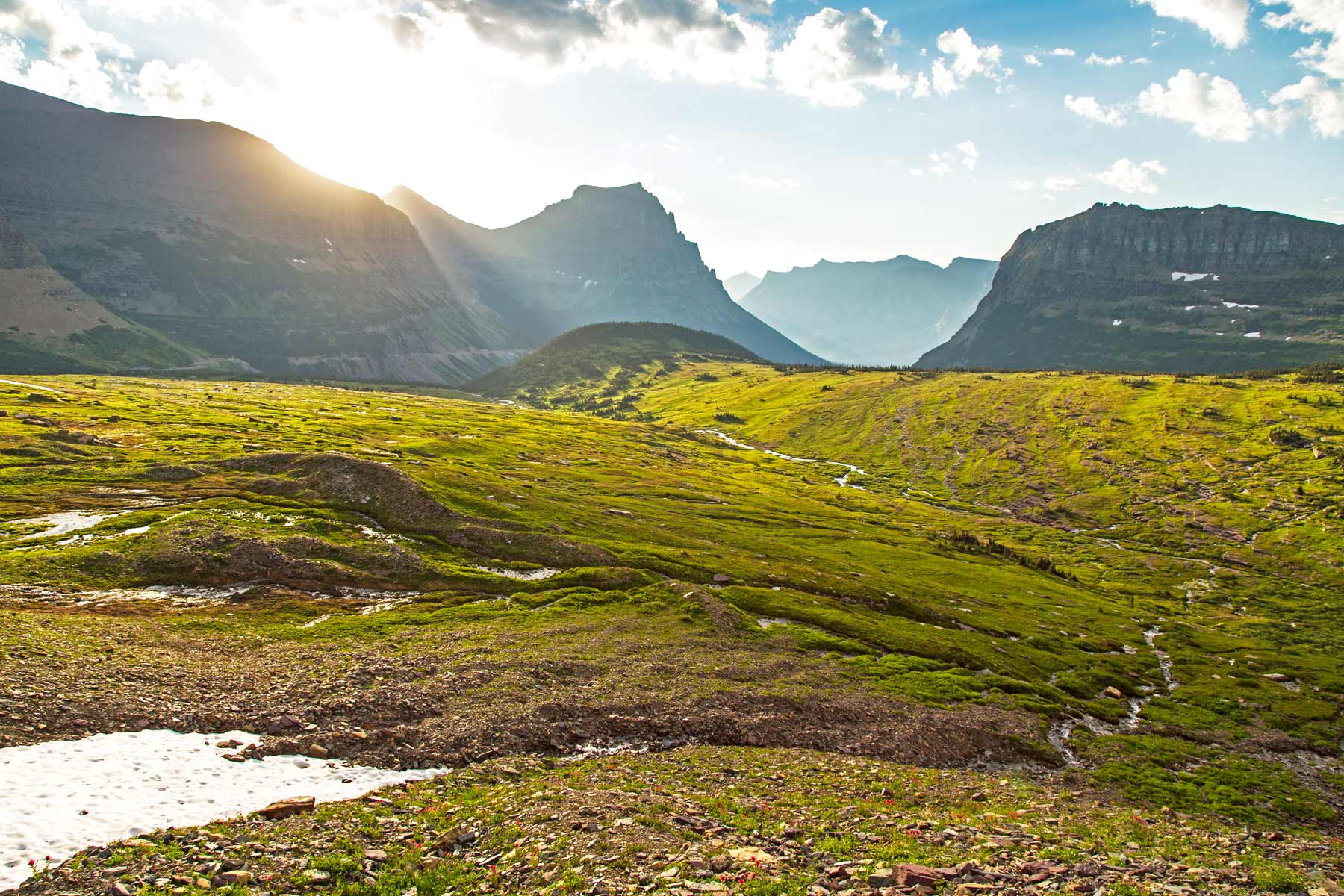
Glacier National Park is the crown of the continent, a million acres of glacier-carved peaks straddling the Montana-Canada border. My sons Will and Jim have filmed a lot of parks. This is one we keep coming back to.
I taught history for 25 years before I started visiting these places, so I tend to look past the postcard view to the people and the events behind it. Glacier has plenty of both. What follows are 15 facts about the park, every number checked against the National Park Service, the U.S. Geological Survey, and the historical record. If a claim could not be verified, it did not make the list.
Glacier National Park: The Basics
- Location: Northwestern Montana, on the Canadian border
- Established: May 11, 1910, the country’s 10th national park
- Size: Roughly 1 million acres
- Highest point: Mount Cleveland, 10,466 feet
- Wildlife: 71 mammal species and 276 bird species, including grizzlies, wolves, mountain goats, and elk
For a day-by-day plan once you know the lay of the land, see our guide to the best of Glacier National Park.
1. The Kootenai Were Among the Earliest Peoples in the Region
Long before anyone drew a park boundary, the Kootenai made their seasonal rounds through the landscape that is now Glacier, going back thousands of years. They lived along the Kootenai River across what is today Idaho, Montana, and British Columbia.
Love Glacier? It's one of 117 threatened public lands destinations we're tracking. Get the free briefing.
They were hunter-gatherers, and fish was an important staple. They built winter villages of cone-shaped lodges framed with wooden poles and covered in rush mats. The Blackfeet were the other major presence, and their descendants still have a strong connection to this land today.
2. Lewis and Clark Came Close, But Never Set Foot in the Park
People assume the Corps of Discovery walked everywhere out here. They did not. By their own records, Lewis and Clark never actually entered what is now Glacier National Park, though they did get distant views of the mountains.
Their nearby encounter with the Piegan Blackfeet turned violent and was the only time on the whole expedition that the party killed anyone in a confrontation. It left a long shadow of distrust between the Blackfeet and the newcomers who followed.

3. A Trapper Who Lived Among the Blackfeet Named the St. Mary Lakes
Hugh Monroe came out of Edmonton House around 1817 with a job to learn the Blackfeet language and build trade. He was only seventeen when the Blackfeet adopted him.
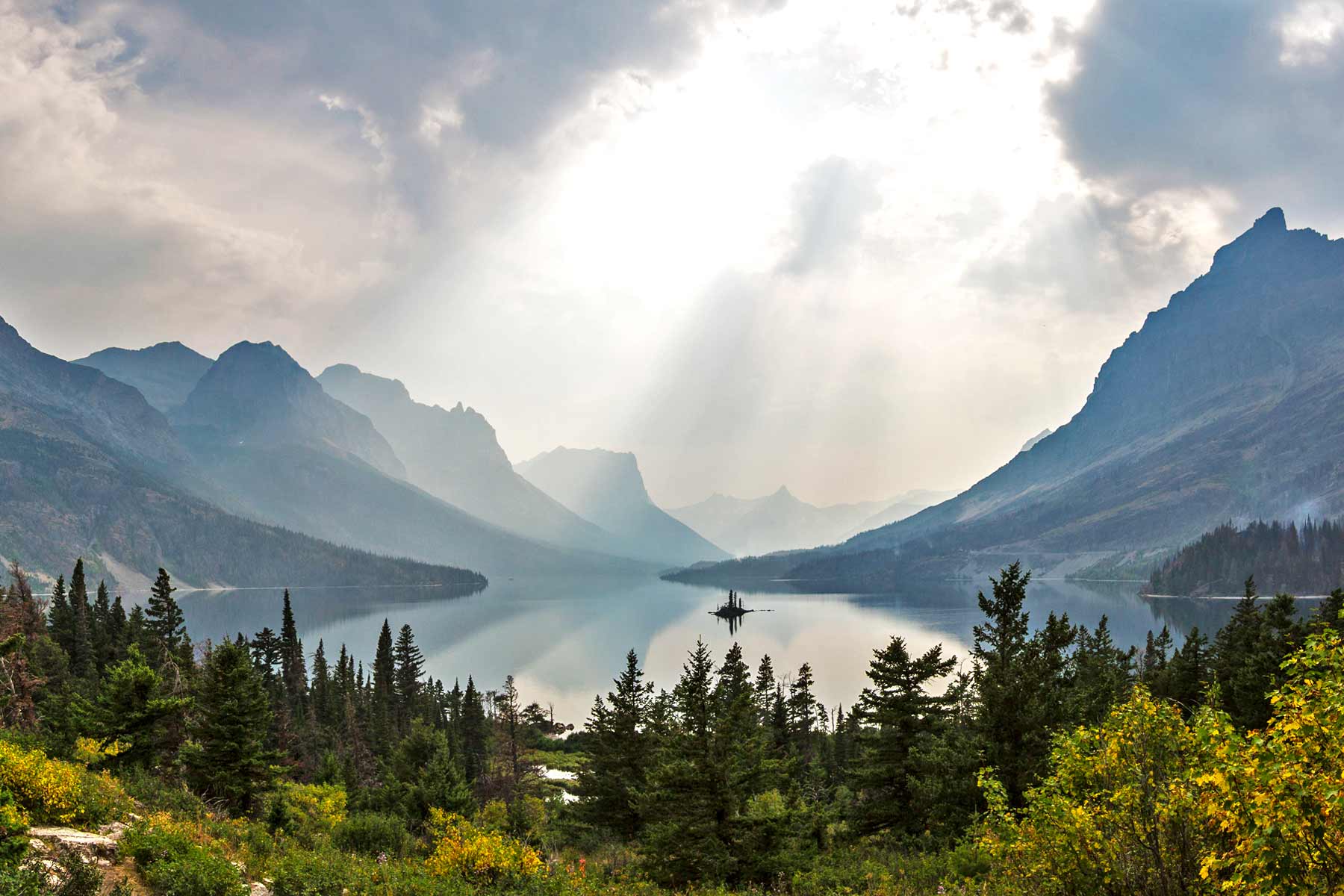
Monroe married a Blackfeet woman, Sinopah, and raised a family. Historians believe he may have been the first person of European descent to see the St. Mary Lakes, and between roughly 1836 and 1845 he held a ceremony to name them after the Virgin Mary. The name stuck.
4. A Railroad Built the Park’s First Tourism, and the Railroad Still Runs
The Great Northern Railway was the first major transportation system to bring people to Glacier, and for decades the only one. James J. Hill, the railway’s president, and his son Louis, were among the earliest backers of a national park here. They funded and led a public-relations campaign to push Congress to act.
It worked. President William Howard Taft signed the bill establishing Glacier National Park on May 11, 1910. You can still arrive the way the first visitors did. Amtrak’s Empire Builder runs from the Midwest across Marias Pass, the highest point on the route, with stops at the park.
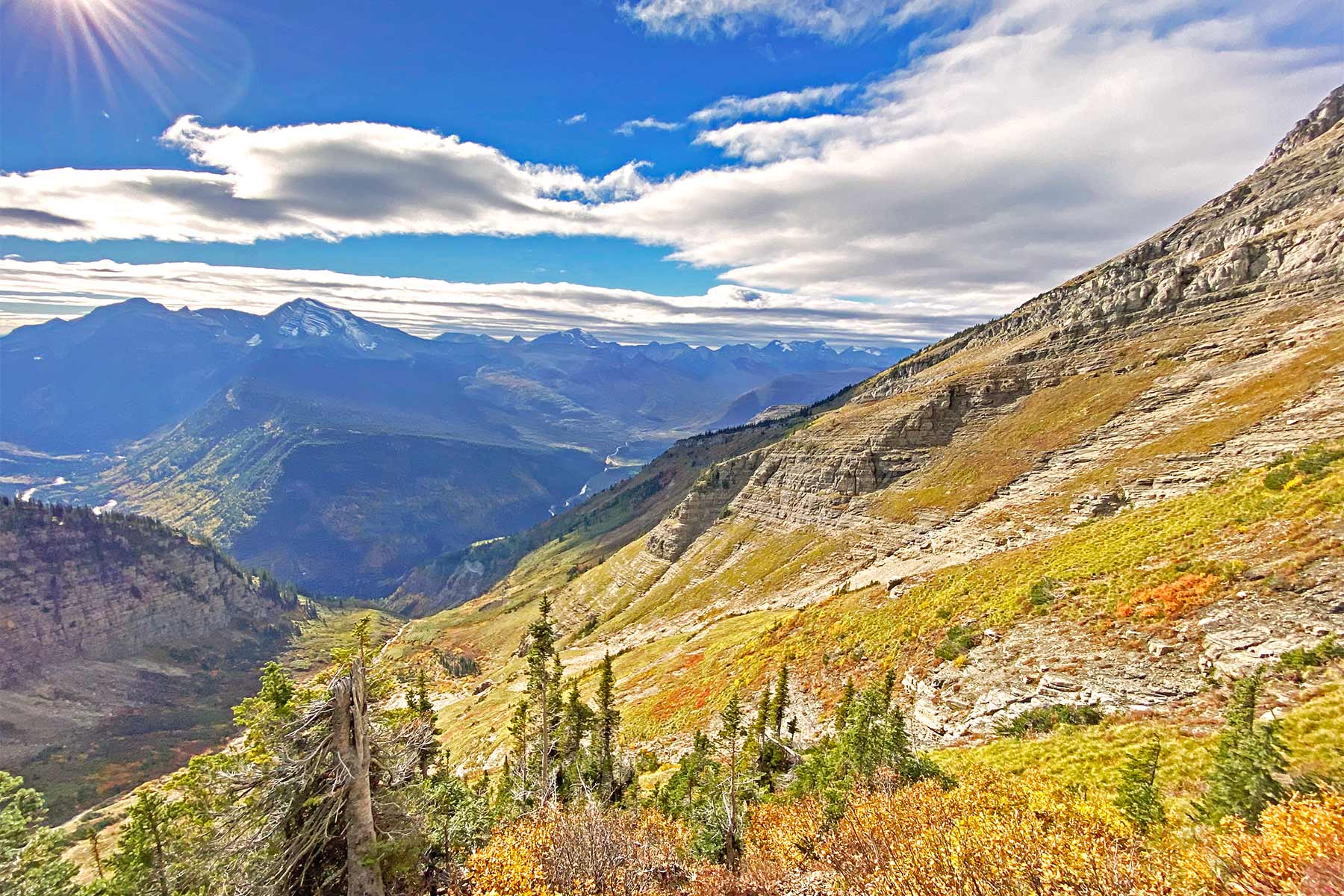
5. The “See America First” Campaign Tried to Build an American Alps
Louis Hill understood that a railroad only grows if there are places worth riding it to see. So he led a campaign urging Americans to “See America First” rather than sail to Europe for the summer. Glacier was his showpiece.
Up on the mountains of Glacier National Park the air is laden with the fragrance of pine and hemlock. Your eyes view a region of beauty at your feet, your ears hear the music of a primitive world and heed the silence of great places. Life is different in Glacier National Park. You can freshen up there.
From a See America First brochure
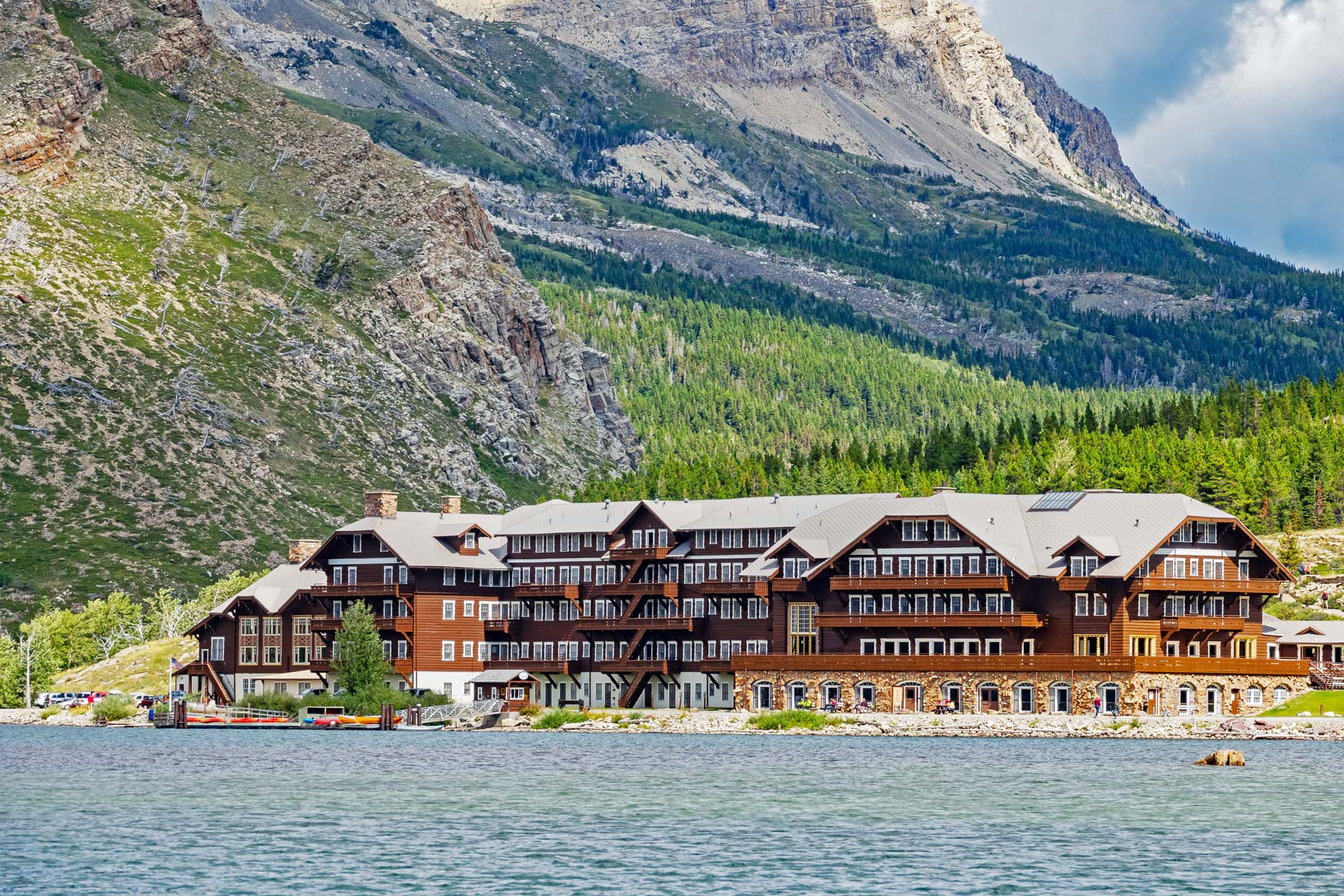
To rival the Swiss Alps, Hill borrowed the look of Swiss chalets for a chain of lodges he called “chalet colonies,” spending around $200,000 to build them. The style helped give rise to what became known as “Parkitecture,” the rustic look you still see at Lake McDonald Lodge and other grand park hotels.
6. The “Cattle Queen of Montana” Helped Open the Region
One of the most colorful figures in the park’s backstory was Elizabeth Collins, the “Cattle Queen of Montana.” Wife of rancher Nathaniel Collins, she became the first woman to ride the train with her cattle from western Montana to Chicago and may have been among the first women of European descent to see this country.
She came from a small farm town in Iowa, worked as a mining-camp cook, then became a miner herself. After a run at the Klondike gold fields she returned to Choteau, cared for her husband until he died, sold the ranch, and moved to California. Hollywood eventually borrowed her nickname for a 1954 film, Cattle Queen of Montana, starring Barbara Stanwyck and Ronald Reagan, though the plot was pure invention.

7. George Bird Grinnell Nicknamed Glacier the “Crown of the Continent”
George Bird Grinnell, editor of Forest and Stream and one of the great early American conservationists, first came to this country in 1885 and returned for the rest of his life. He gave the park the name that stuck: the “Crown of the Continent.”
How many people get a park landmark named after them? Grinnell got three: a glacier, a lake, and a mountain. From 1891 onward he campaigned tirelessly for the park, lobbying leaders like Theodore Roosevelt and William Howard Taft. His effort finally bore fruit in 1910.
8. Going-to-the-Sun Road Took Three Lives to Build
The first director of the National Park Service, Stephen Mather, wanted a road across Glacier, and not just any road. He wanted an engineering marvel. He got one.
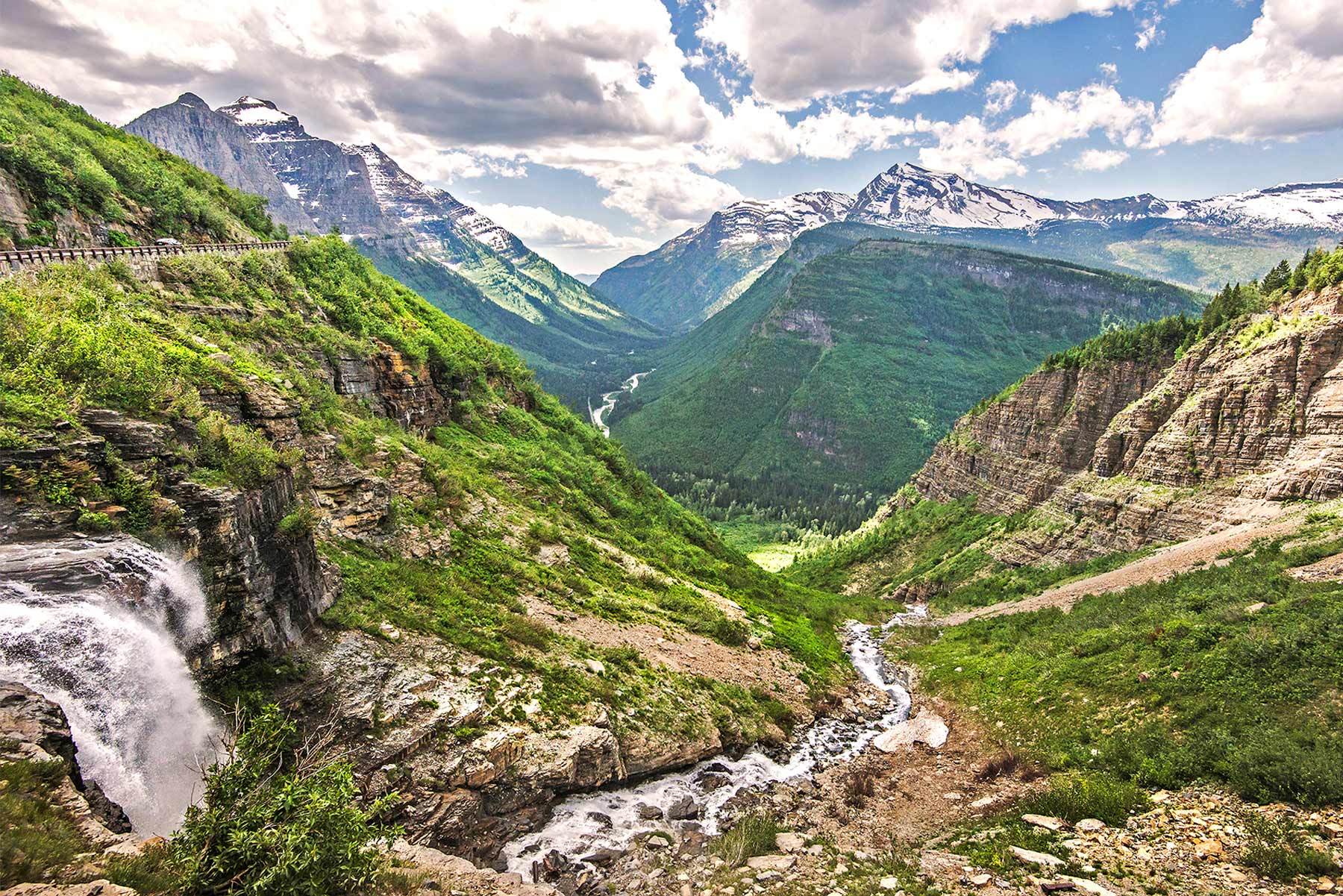
The Going-to-the-Sun Road opened along its full length and was dedicated in 1933. Building it cost roughly $2.5 million, hundreds of thousands of pounds of explosives, and three workers’ lives. One man fell from a rope while checking an overhanging rock, one was struck on the head by falling stone, and one died in a rockslide. The result is one of the most dramatic mountain roads in the world.
9. Glacier Is Half of the World’s First International Peace Park
In 1932, Canada’s Waterton Lakes National Park and Montana’s Glacier National Park were joined to create the world’s first International Peace Park. The designation celebrates the long, peaceful border between Canada and the United States.
The combined Waterton-Glacier International Peace Park is also a UNESCO World Heritage Site, recognized for both its scenery and its place in conservation history. Cross the border at the top of the park and you are still inside the same protected wilderness.

10. “The Night of the Grizzlies” Changed Bear Management Forever
Before 1967, the park made it far too easy to get close to grizzly bears. In a practice popularized at Yellowstone and copied across the West, bears fed at trash dumps while crowds watched.
That ended on the night of August 12, 1967. In two separate attacks miles apart, two young women, Julie Helgeson near Granite Park Chalet and Michele Koons at Trout Lake, were killed by grizzlies. The shock of it forced a complete rethink of how parks handle bears and garbage. The food-storage rules you follow at any park today trace back to that night. For staying safe around bears, the Park Service keeps a useful guide.

11. The Mountain Goat Is the Park’s Unofficial Mascot
Mountain goats are one of the most sought-after sights in Glacier, and you can find them almost everywhere up high, above the tree line and on cliffs that look impossible to stand on. Known as Rocky Mountain goats (Oreamnos americanus), they are native to the high mountains of western North America.
The white goat became so closely tied to the park and the Great Northern Railway that it serves as an unofficial mascot. Watch for them around Logan Pass, where they sometimes wander right up to the parking lot.
12. Only 26 Glaciers Remain, Down From About 150
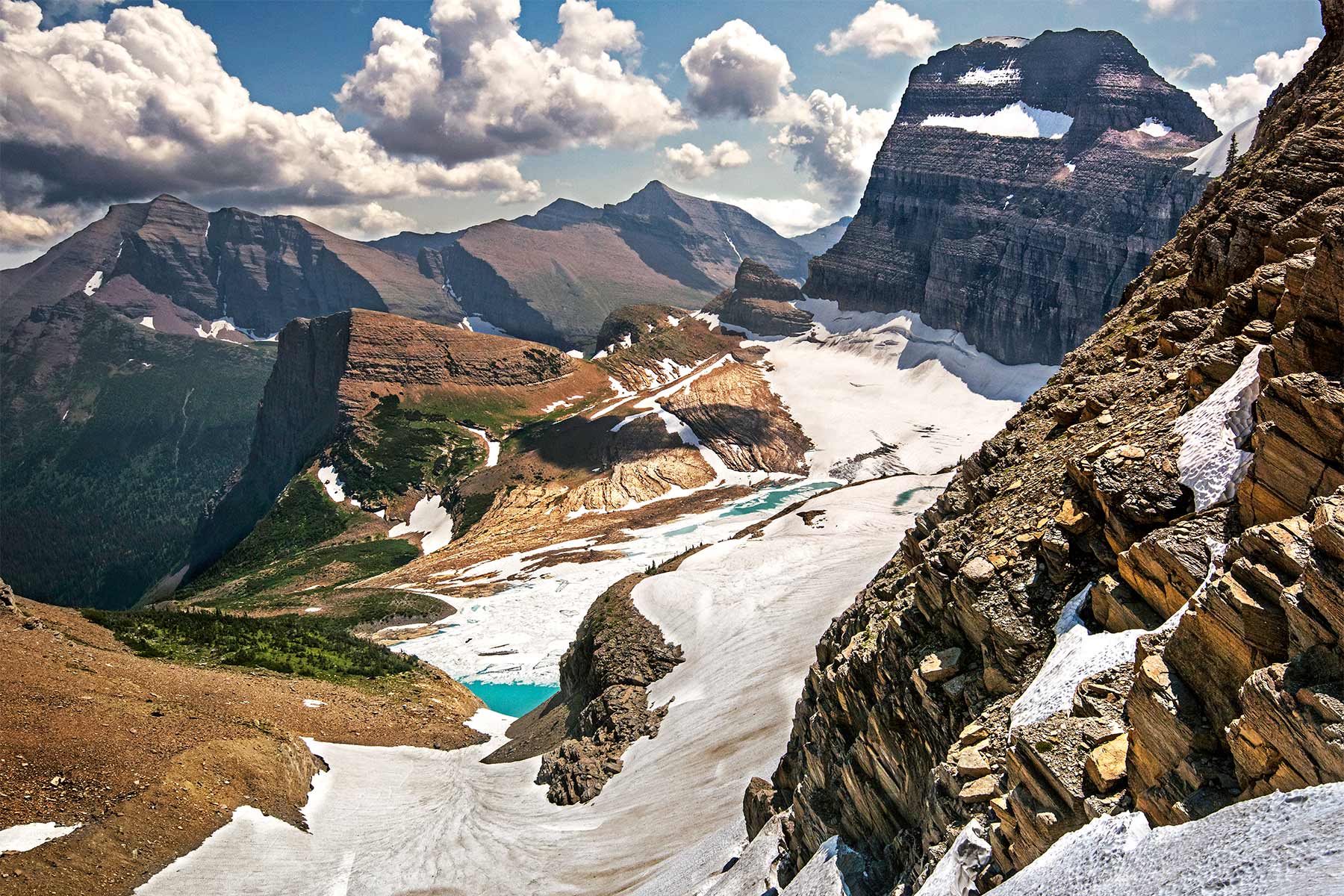
Glacier is home to 26 glaciers, down from roughly 150 in 1850, according to the U.S. Geological Survey. The largest is Harrison Glacier, about 466 acres.
Older projections warned the glaciers could vanish by 2030. Revised USGS work suggests some, Harrison among them, will likely persist beyond that date, though the long-term trend is decline. How long they last depends on the climate of the decades ahead.

13. Going-to-the-Sun Road Opens the Film “The Shining”
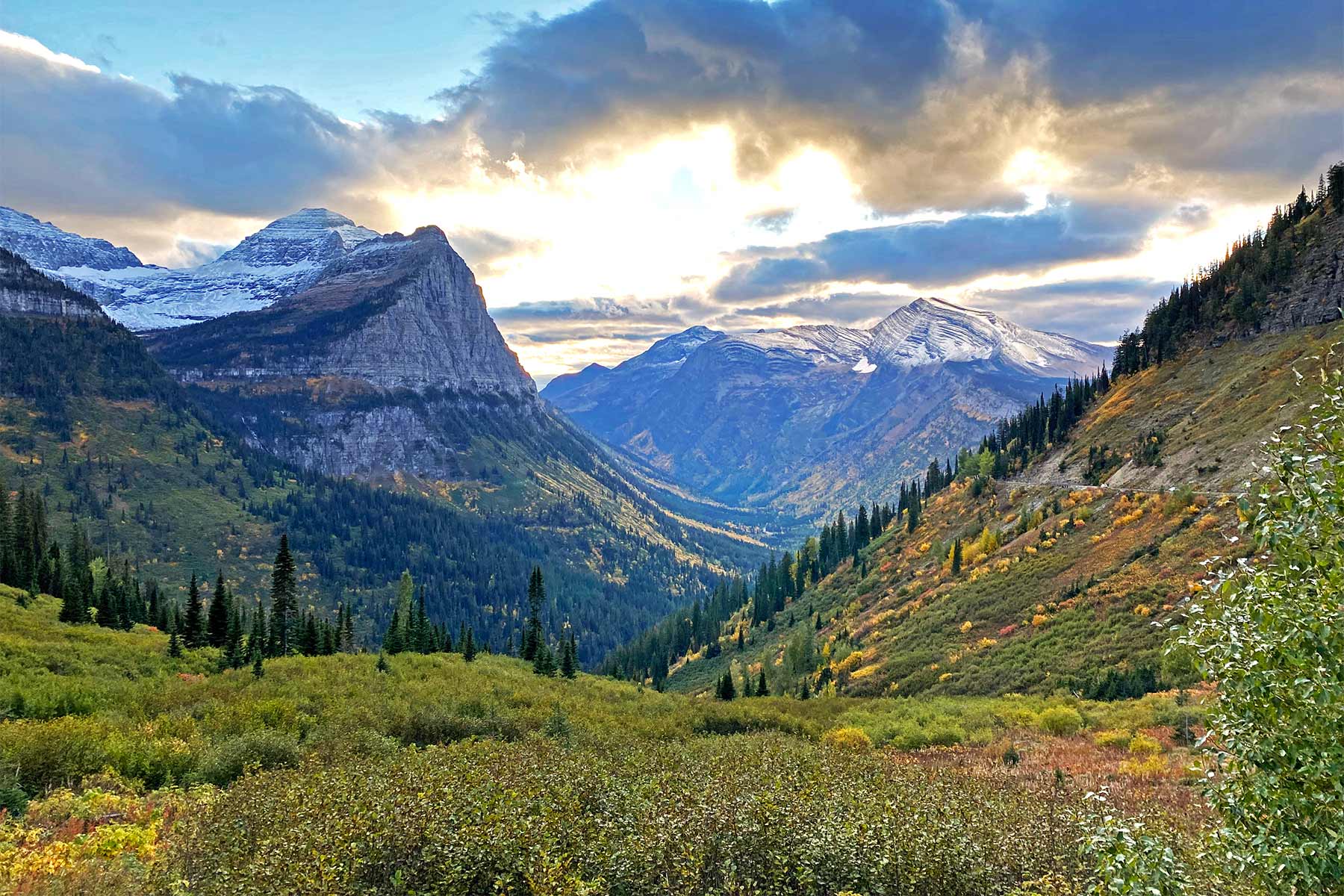
Going-to-the-Sun Road appears in the opening credits of Stanley Kubrick’s 1980 film The Shining.
You see aerial shots of Wild Goose Island as Jack Torrance, played by Jack Nicholson, drives the north shore of St. Mary Lake toward his job interview at a remote mountain hotel. The road plays the lonely approach to the Overlook.
More parks have played roles on screen than you would guess. See our list of classic movies filmed in the national parks.
14. There Are 762 Lakes, and Lake McDonald Is the Largest
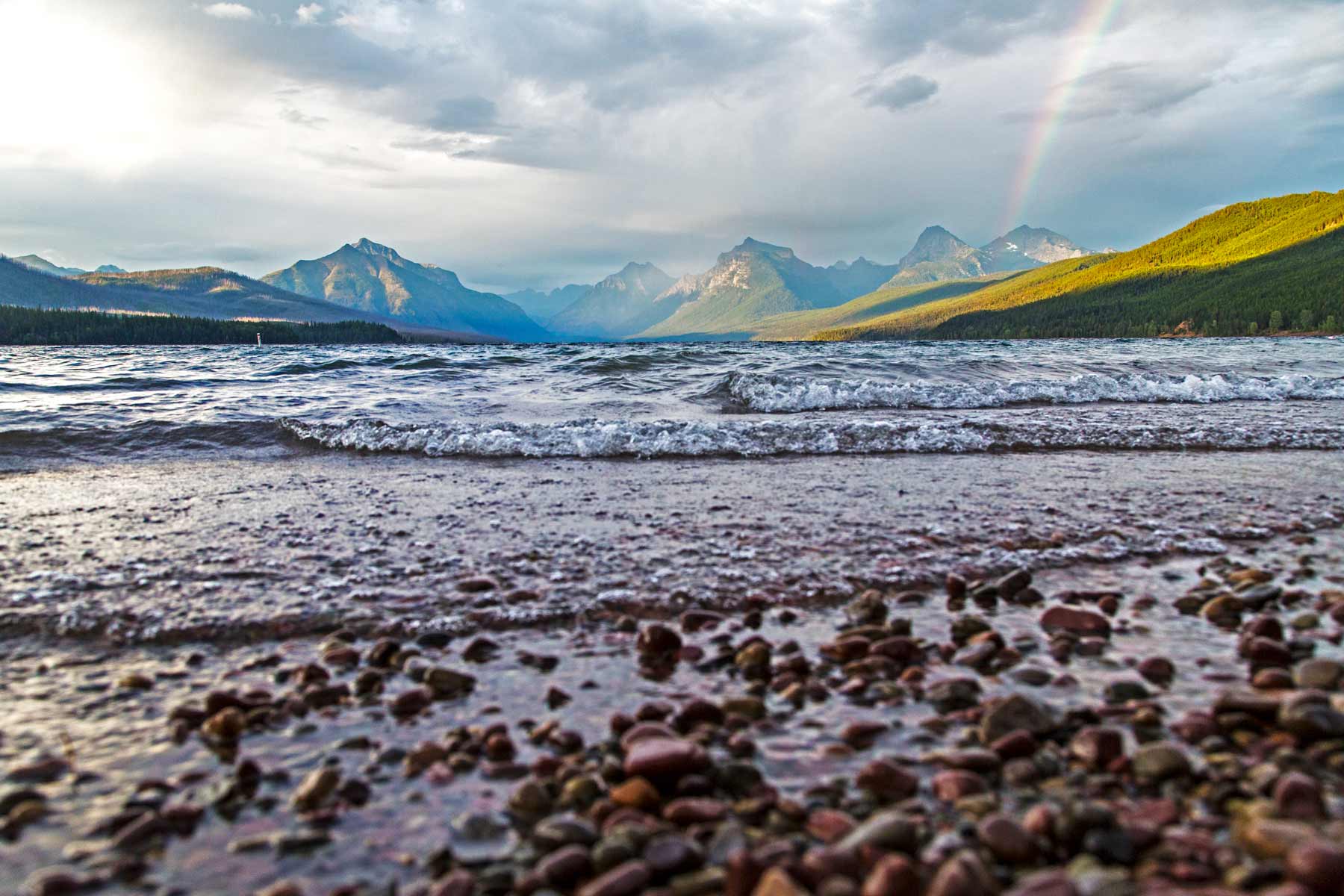
Glacier holds 762 lakes, and only 131 of them carry names. The largest is Lake McDonald, 9.4 miles long, 1.5 miles wide, and 464 feet deep. It is not a prime fishing lake, but its shoreline draws moose, black bears, and mule deer.
The park also carries 2,865 miles of streams. The longest is Upper McDonald Creek at 25.8 miles. All that water comes off the peaks and the remaining glaciers, which is why the lakes here run that unmistakable glacial turquoise.
15. The Park Holds 71 Mammals, 276 Birds, and Nearly 2,000 Plant Species
Glacier supports 71 species of mammals, 276 species of birds, and close to 2,000 species of plants, a remarkable range packed into one mountain park. That diversity is the real reason it earns the “Crown of the Continent” name.
Spring and summer are the best windows for seeing it, when grizzlies forage on the slopes, goats work the high cliffs, and the meadows at Logan Pass come alive. Keep your distance, store your food, and let the place stay wild for the next person who comes through.
Plan Your Glacier Trip
Glacier rewards a little planning, especially with the 2026 access changes. Start with our guide to the best of Glacier National Park, and explore more of the region through our Montana national parks guide.
What to Bring to Glacier
Gear we recommend for Glacier. Affiliate links support our work at no cost to you.
More Than Just Parks may earn a small commission from purchases made through these links, at no extra cost to you. We only recommend gear we would actually use.
Affiliate disclosure: Some links on this page earn us a small commission at no extra cost to you. We only recommend gear we actually use.


