

Within sight of downtown Miami sits a national park you can barely walk on. Biscayne National Park is 95 percent water, a place where the trails are marked by mooring buoys, the historic districts sit on the seafloor, and the oldest stories go back more than 10,000 years. It may be the strangest and most wonderful park boundary in America, and almost nobody outside South Florida knows how it got there.
What follows are 12 verified facts about Biscayne, from a pirate legend that is probably fiction to the family of Black pioneers whose islands became the heart of the park. For trip planning, boat tours, and current access, start with our full Biscayne National Park guide.
Tony Pattiz taught American history for more than 25 years before he began writing it for this site. We have not yet filmed at Biscayne, so this piece was built the way Tony built his lectures, from the park’s own historians and records rather than from our cameras. Every date, number, and name below has been checked against the National Park Service and the primary sources listed at the end of this article. Last verified July 2026.
Biscayne National Park Basics
- Location: Southeast Florida, in Miami-Dade County, within sight of downtown Miami
- Size: 172,971 acres, about 95 percent of it water
- Visitation: 486,567 recreation visits in 2025, per NPS Stats
- Established: Biscayne National Monument on October 18, 1968; redesignated a national park on June 28, 1980
- Ecosystems: Four, blending into one another from the mangrove shoreline to the open reef
- Wildlife: More than 600 native fish species, plus manatees, sea turtles, and crocodiles
1. The Park Is 95 Percent Water
Start with the number that explains everything else. According to the National Park Service, Biscayne National Park is 95 percent water. Of its 172,971 acres, only a thin fringe of mainland shoreline and a chain of low limestone keys ever break the surface.
Love Biscayne? It's one of 117 threatened public lands destinations we're tracking. Get the free briefing.
That single fact reshapes what a park visit means. There is no scenic drive here and no grand lodge. Beyond the visitor center area at Convoy Point, you need a boat to see almost anything. The payoff is a park that still feels like discovery, where your trail map is a nautical chart and the crowds thin out a few hundred yards from the dock.
2. Four Distinct Ecosystems Melt Into One Another
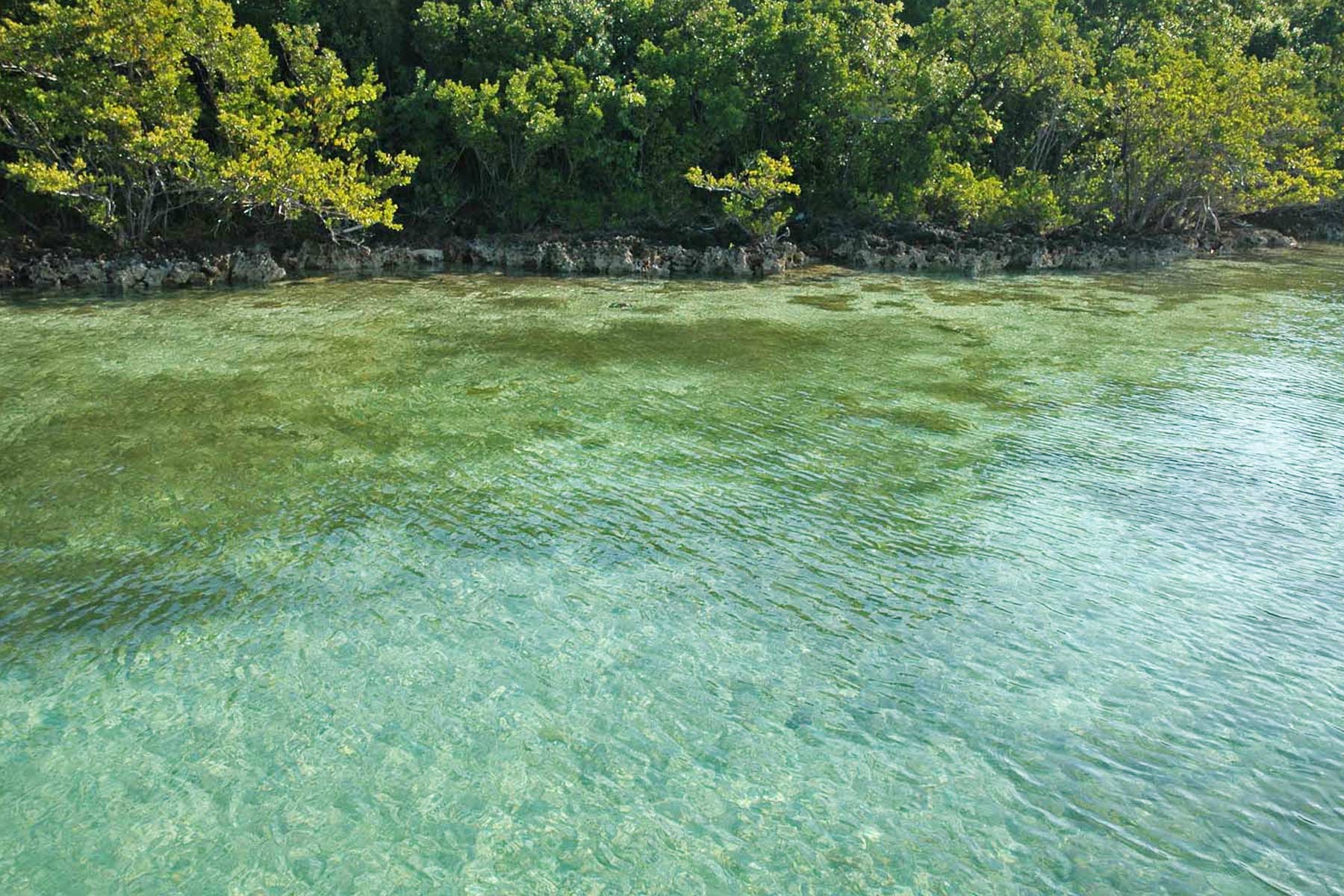
Biscayne is really four parks stacked side by side. The NPS describes four distinct ecosystems that melt into one another as you move east from the mainland. First comes a fringe of mangrove forest along the shoreline, a nursery where young fish and crustaceans shelter among the roots.
Next is the southern expanse of Biscayne Bay itself, shallow, clear, and famous among anglers. Then the northernmost Florida Keys, low islands of coral limestone capped with tropical hardwood forest. And finally, out in the Atlantic, the northernmost portion of Florida’s Coral Reef. Cross the park by boat and you pass through all four in an afternoon.
3. People Have Lived On Biscayne Bay For More Than 10,000 Years
Who stood on this shoreline first? The NPS dates the bay’s human story to more than 10,000 years ago, when Paleo-Indians migrated down the Florida peninsula into a landscape where mammoths and mastodons still roamed.
Their successors, known today as the Tequesta, took full advantage of the bounty of the sea, and the wealth of easy food gave them time for art, religion, and complex social structures. Around 2,500 years ago their piles of discarded conch and whelk shells began to grow into middens that archaeologists still read like history books. Then came European contact in the 16th century, and with it disease. By the mid 1700s, virtually all of the area’s indigenous people had been wiped out.
4. The Pirate Legend Behind Caesar Creek Is Probably Fiction
We repeated this legend ourselves for years, so let’s set the record straight. The story goes that Black Caesar, an African chieftain who escaped a wrecked slave ship, ruled these waters in the early 1700s, ran his operation from a rock in what is now the park, and buried a fortune in treasure that has never been found.
The names are real. Caesar Creek and Caesar’s Rock still carry the pirate’s name. The evidence is not. As Florida writers who have chased the tale concede, the islands have yielded little evidence of Black Caesar’s lair, the story changes with almost every telling, and one popular version comes straight from fiction, a 1920s mystery novel called Black Caesar’s Clan. Piracy here was real, and many of the era’s pirates were Black men who had escaped or been freed from slavery. But the treasure of Caesar Creek belongs to the campfire, not the history books.

5. The Jones Family Built An Island Farming Empire, Then Helped Save The Bay
If Biscayne has a founding family, it is the Joneses of Porgy Key, and theirs may be the best story in the park.
Israel Jones Buys An Island
According to the National Park Service, Israel Lafayette Jones was born in Raleigh, North Carolina in 1858 and came to Florida in 1892, working as a farm laborer, foreman, and caretaker. A Black man in the Jim Crow South, he learned to grow pineapples and limes, married Mozelle Albury in 1895, and began buying island land in the bay for roughly 300 dollars. His sons, King Arthur Jones and Sir Lancelot Jones, born in 1897 and 1898, are believed to be the first Black Americans born on Key Biscayne. The family farm on Porgy Key eventually became one of the largest producers of pineapples and limes on the east coast of Florida.
Presidents In The Fishing Boat
When the farming economy faded, Arthur and Lancelot began guiding sport fishermen in 1935, serving the exclusive Cocolobo club nearby. Lancelot fished with a remarkable roster of clients, including Herbert Hoover, Lyndon Johnson, and Richard Nixon. Think about that for a moment. A man born to a formerly enslaved father spent his days teaching presidents where the bonefish ran.
The Choice That Shaped The Park
By 1970, developers would have paid handsomely for the family’s islands. Lancelot and his widowed sister-in-law Kathleen instead sold more than 277 acres to the National Park Service for 1.2 million dollars, and Lancelot kept the right to live out his life on Porgy Key. He stayed for two more decades, greeting rangers and schoolchildren, until Hurricane Andrew destroyed his home in 1992. Lancelot Jones died on December 22, 1997, at the age of 99.
6. A Village On Stilts Stands A Mile Offshore
On the flats at the park’s northern edge, wooden houses stand on pilings in open water, no land in sight beneath them. This is Stiltsville, and per the NPS history of the community, it began in the 1930s when “Crawfish Eddie” Walker built the first shack on stilts above the water.
More buildings followed, along with an aura of mystery. Accessible only by boat, Stiltsville became the place to see and be seen for the Miami Beach resort crowd, and stories of illegal alcohol and gambling brought police raids on the Quarterdeck Club and the Bikini Club. At its peak in 1960 there were 27 structures on the flats.
The sea has been collecting them ever since. In 1985 the state of Florida deeded the bottom land beneath the buildings to the federal government as part of the park, and in 1992 Hurricane Andrew left only seven buildings standing. Those seven survive today, managed with the nonprofit Stiltsville Trust under an agreement reached in 2003, and you can see them from the water even though entry is by permit only.

7. Developers Once Planned A City Called Islandia Here
How close did we come to losing all of this? In 1961, thirteen landowners incorporated the islands as the City of Islandia, dreaming of a resort metropolis on the keys. A year later came a proposal called Seadade, an industrial seaport and refinery that would have required dredging a 40 foot deep channel through the bay’s clear, shallow waters.
When the tide of opinion turned against them, frustrated landowners answered with a bulldozer. They cut a swath six lanes wide and seven miles long straight down the middle of Elliott Key, a scar known ever since as the Spite Highway. The forest is slowly healing it, and today, in one of history’s better ironies, the regrown corridor is the island’s main hiking trail.

8. Ordinary Citizens Won The Fight For The Park
The people who beat Islandia were not senators or tycoons. The NPS describes them as doctors and pilots, farmers and writers. Lloyd Miller, president of the local Izaak Walton League chapter, led the charge and paid for it; he said opponents poisoned his dog and tried to get him fired from his job. He later told the story in his book, aptly titled Biscayne National Park, It Almost Wasn’t. Juanita Greene put the fight on the front page as a Miami Herald reporter, and Herbert W. Hoover Jr., of the vacuum cleaner fortune and no relation to the president, flew legislators over the bay in blimps so they could see what was at stake. In Congress, Representative Dante Fascell carried the bill, and the visitor center at Convoy Point bears his name today.
A rare combination of terrestrial, marine and amphibious life in a tropical setting of great natural beauty.
What Congress protected in the 1968 act creating Biscayne National Monument, as recorded by the National Park Service
President Lyndon B. Johnson signed the bill creating Biscayne National Monument on October 18, 1968. Congress enlarged the monument in 1974, then expanded it again and redesignated it a national park on June 28, 1980. Today it anchors our list of the best national parks near Miami, and it exists because a handful of determined people refused to quit.
9. The CIA Trained Cuban Exiles On Elliott Key
Before the park existed, its largest island played a bit part in the Cold War. A National Park Service historic resource study records that in the early 1960s the Central Intelligence Agency used Elliott Key as a training ground and staging site for operations against Fidel Castro’s Cuba. The island held at least three covert facilities, among them the former Ledbury Lodge, the only hotel ever built on the key, and longtime residents recalled stumbling across squads of Cuban exiles practicing guerrilla warfare in the island’s interior.
The most famous operation of that era ended in disaster. Components of Brigade 2506 landed at Cuba’s Bay of Pigs on April 17, 1961, and were defeated within two days by Cuban forces under Castro’s direct command. Exile training around the bay carried on into the years that followed, yet the quiet island where commandos once drilled became parkland in 1968. As a retired history teacher who once taught a course on the Cold War, I find that turn of events almost too neat for fiction.
10. A Snorkel Trail Links Six Shipwrecks And A Lighthouse
The Florida Reef has been catching ships for as long as ships have sailed past it, and Biscayne turned that graveyard into a museum. The park’s Maritime Heritage Trail maps six wrecks spanning nearly a century, from the Arratoon Apcar, sunk in 1878, through the Erl King, the Alicia, the Lugano, and a still unidentified 19th century wooden sailing vessel, to the Mandalay, a schooner lost in 1966. Each mapped site has its own brochure and mooring buoy, three suit scuba divers, and the rest reward snorkelers in shallow water.
The newest stop on the trail is not a wreck at all. Fowey Rocks Lighthouse, an iron skeleton tower first lit in 1878 and known as the Eye of Miami, was transferred to the park in 2012. Snorkeling is excellent around its base, though the structure itself is closed to the public. Many more wrecks rest in park waters beyond the trail, and archaeologists are still finding them, which is why disturbing or removing anything from these sites is illegal.

11. The Park Holds The Northern End Of The World’s Third Largest Coral Reef
The reef that sank all those ships is itself the park’s crown jewel. Biscayne protects the northernmost portion of Florida’s Coral Reef, which the NPS ranks as the third largest coral reef in the world. The Florida Department of Environmental Protection maps it at roughly 350 miles, from the Dry Tortugas north to the St. Lucie Inlet, and notes that Florida is the only state in the continental United States with extensive shallow coral reefs near its coasts.
Under the surface, the reef is a city. Stony and soft corals build the architecture, and sponges, anemones, lobsters, rays, moray eels, and clouds of parrotfish and angelfish fill it. Like reefs everywhere, Florida’s has suffered from warming water, disease, and bleaching in recent decades, which makes the protected stretch inside the park more valuable with every passing year.

12. Manatees, Sea Turtles, And One Of America’s Rarest Butterflies Live Here
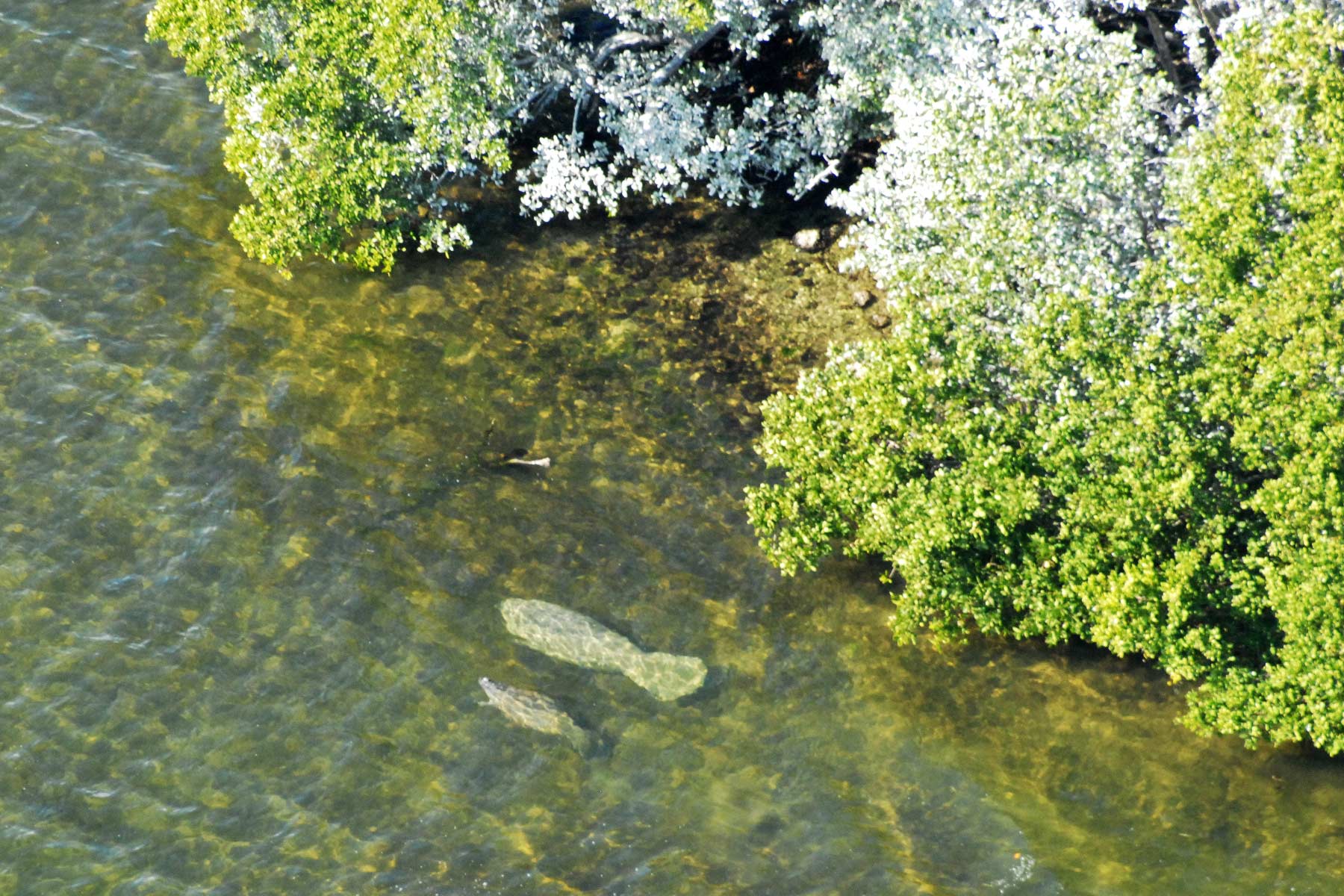
For a park with so little land, Biscayne shelters an astonishing roster of life. The NPS counts more than 600 native fish species in park waters, along with manatees that cruise the shallows, nesting sea turtles, and American crocodiles, which rangers remind visitors never to feed.
The rarest resident may be an insect. The Schaus’ swallowtail, a large brown and yellow butterfly of the tropical hardwood hammocks, was federally listed as threatened in 1976 and reclassified as endangered in 1984, and today it survives only around north Key Largo and the islands of this park. Scientists have been rearing the butterflies in captivity and releasing them on Elliott Key to pull the species back from the edge. The park that people saved is now saving something in return.
How To See Biscayne For Yourself
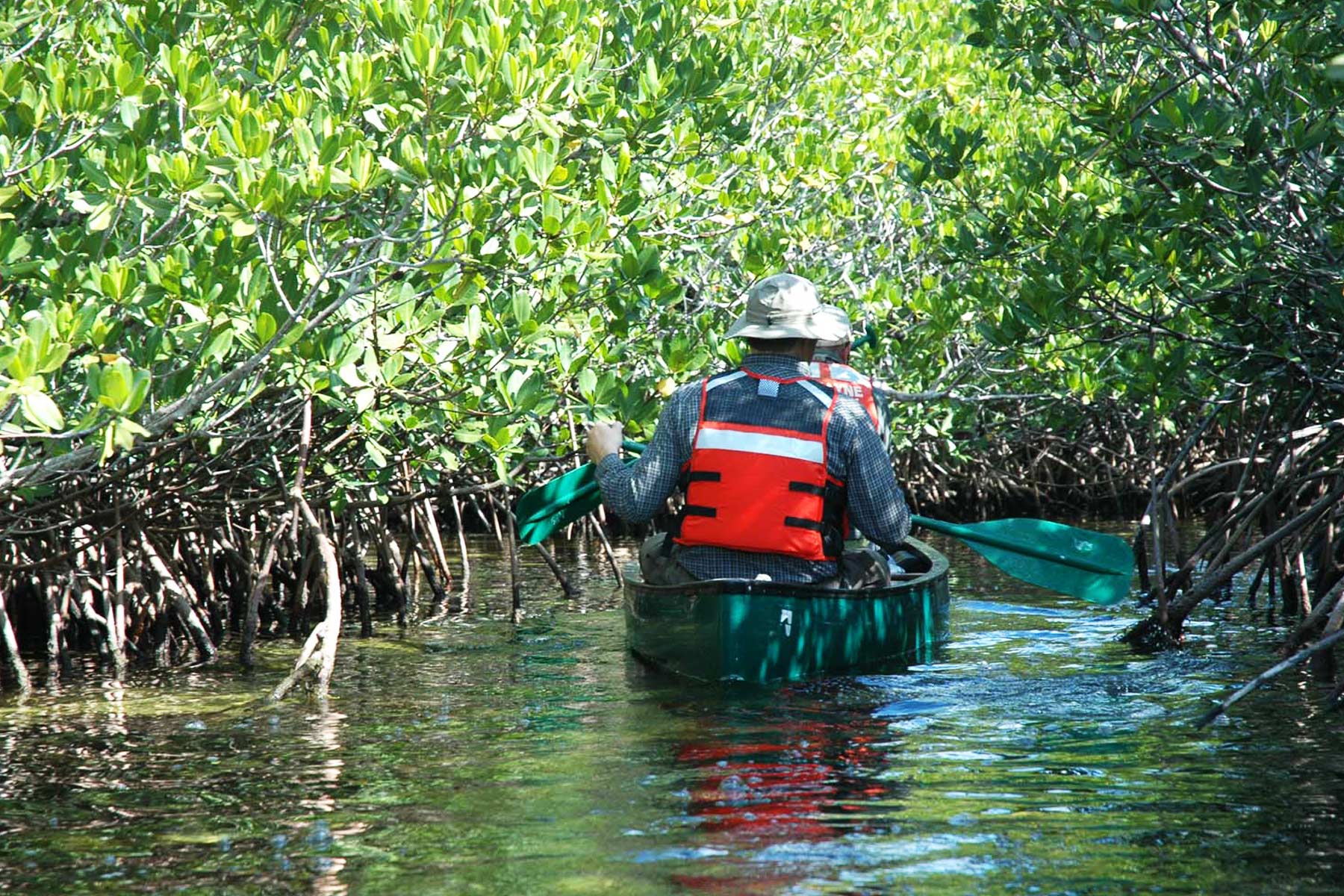
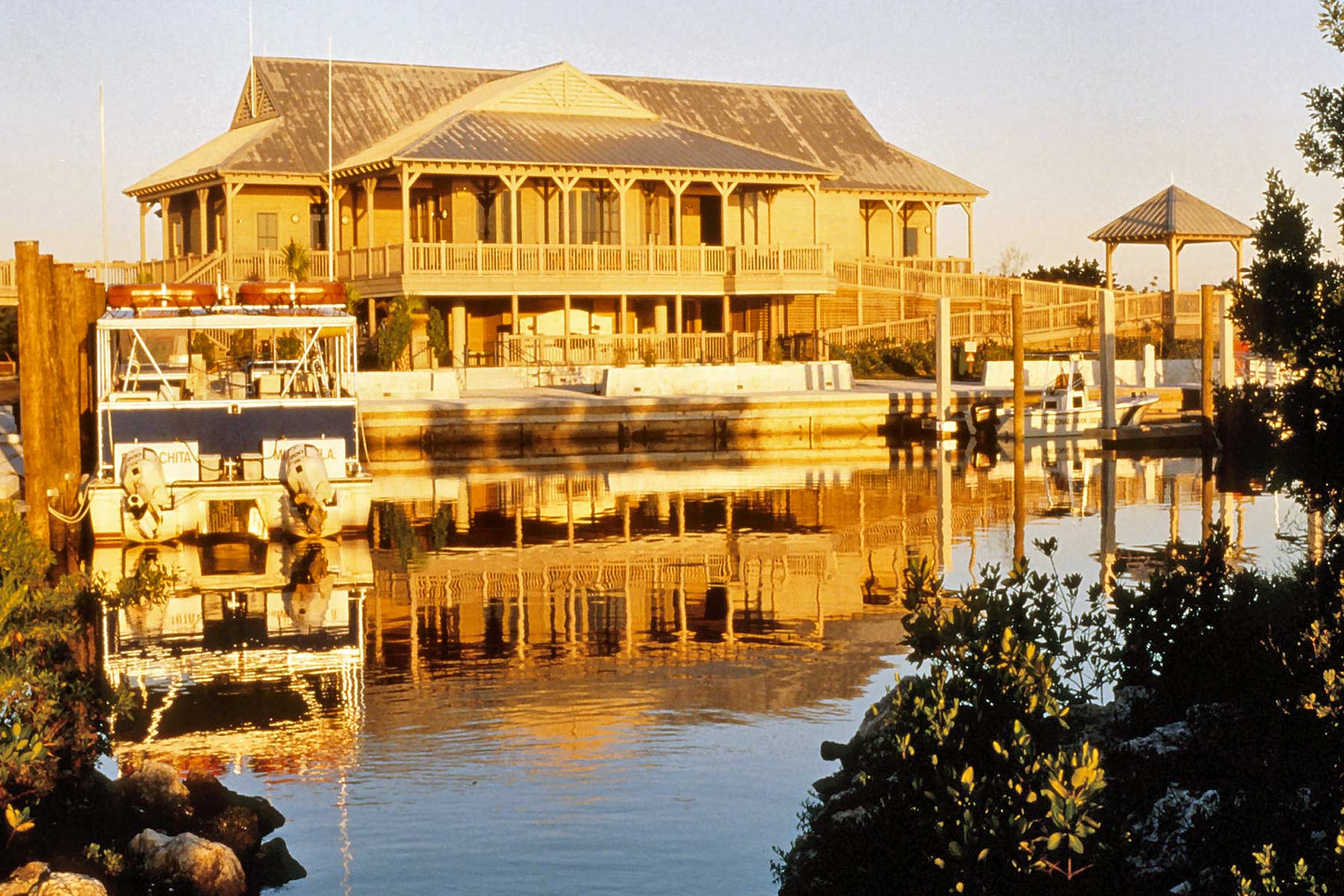
We will be honest with you. We have not yet filmed at Biscayne, so rather than borrow someone else’s memories, here is how to build your own. Start at the Dante Fascell Visitor Center at Convoy Point, the one corner of the park you can reach by car, where a short jetty walk gives you the bay, the breeze, and a fair chance of wading birds. From there, the park belongs to boats. Park authorized trips run to the reef, the keys, and Stiltsville, and paddlers can work the mangrove edges on calm days. Check schedules through the park before you go, and see our guide to the best things to do in Biscayne National Park for how we would spend a first day.
Where These Facts Come From
Every claim in this article was checked against the sources below in July 2026. Numbers that change over time, like annual visitation, are stated with the year they were reported.
- NPS, Biscayne National Park, for the 95 percent water figure and park overview
- NPS, Ecosystems of Biscayne, for the four ecosystems and the Florida’s Coral Reef ranking
- NPS, Native Peoples, for the 10,000 year human history, the Tequesta, and the shell middens
- NPS, The Joneses of Porgy Key (three part series), for the Jones family story, the 1970 sale, and Lancelot’s famous clients
- NPS, Stiltsville, for Crawfish Eddie, the 27 structures, the 1985 transfer, and the Stiltsville Trust
- NPS, The Birth of Biscayne National Park, for Islandia, Seadade, the Spite Highway, and the citizens’ campaign
- NPS, Maritime Heritage Trail and NPS, Fowey Rocks Lighthouse, for the six wrecks, their dates, and the lighthouse
- NPS, Animals of Biscayne, for the 600 plus fish species, manatees, sea turtles, and crocodiles
- NPS, Partners Work to Bring Back Endangered Schaus Swallowtail and US Fish and Wildlife Service, for the butterfly’s listing history and recovery work
- GovInfo, Biscayne National Park, for the 1968 monument, 1974 expansion, and June 28, 1980 park laws
- NPS Stats (IRMA), for the 486,567 recreation visits in 2025
- Florida Department of Environmental Protection, Florida’s Coral Reef, for the reef’s roughly 350 mile extent from the Dry Tortugas to the St. Lucie Inlet
- US State Department, Office of the Historian, for the Bay of Pigs invasion, and Steve Hach, Cold War in South Florida Historic Resource Study (NPS, 2004), for the Elliott Key training facilities
- Florida Rambler, The Legend of Black Caesar, for the pirate legend and its literary origins
Keep Exploring Biscayne
- Biscayne National Park Guide, our full trip planning hub
- Best Things To Do In Biscayne National Park, from reef trips to island trails
- Florida National Parks Worth Visiting
- Dry Tortugas National Park Facts, more history from Florida’s island parks
- All 63 US National Parks Ranked
- Before you go, check live alerts and air quality on our national park conditions dashboard
What to Bring to Biscayne
Gear we recommend for Biscayne. Affiliate links support our work at no cost to you.
More Than Just Parks may earn a small commission from purchases made through these links, at no extra cost to you. We only recommend gear we would actually use.
Affiliate disclosure: Some links on this page earn us a small commission at no extra cost to you. We only recommend gear we actually use.