
Open for comment · closes December 18
Stop NPS from opening Gates of the Arctic to ORVs without environmental review
National Park Service · Gates of the Arctic National Park and Preserve, AK
- What
- The agency proposes to open all of Gates of the Arctic National Park and Preserve to ORV use by residents of a 395-person village while relying on a categorical exclusion that bypasses any environmental analysis of impacts on tundra, caribou, or wilderness character.
- Where
- Gates of the Arctic National Park and Preserve, AK
- How much
- Current population of Anaktuvuk Pass: 395 residents in 2024. Inupiat share of Anaktuvuk Pass population: over 84%. Advance notice required before imposing mitigation measures: at least 30 days.
- By when
- Comments to National Park Service by December 18, 2026.Date from Federal Register ↗, read October 29, 2026.
What to ask forAll 8 points →
NPS should prepare at minimum an Environmental Assessment, and likely an EIS, to analyze cumulative impacts on tundra, caribou, and wilderness character before finalizing this rule.
Where these four lines come from
- WhatOur plain-English read of the Federal Register 2026-21300 ↗. Check it against the agency’s own words under Case.
- WhereThe places and states the notice names, as PLAN read them.
- 395 residents in 2024“In 2024, Anaktuvuk Pass was home to 395 residents, with Inupiat making up over 84% of the population.” Background Open the document ↗
- over 84%“In 2024, Anaktuvuk Pass was home to 395 residents, with Inupiat making up over 84% of the population.” Background Open the document ↗
- at least 30 days“The Superintendent must provide authorized residents with notice of proposed mitigation measures at least 30 days prior to requiring such measures.” § 13.1005 Open the document ↗
- By whenDecember 18, 2026, from Federal Register, the notice's DATES field (federalregister.gov API) ↗: “Comments must be received by 11:59 pm ET on December 18, 2026.”. Read October 29, 2026.
- Read from PLAN’s record November 13, 2026.
Two ways to be heard on this, and both count. Comment for the legal record, then call the members who answer to you.
Comment nowWhat to say
Make these points, in your own words
The agency claims this rule is categorically excluded from NEPA review under DOI NEPA Handbook Appendix section 12.5A(10), which covers modifications to existing regulations, provided the changes do not increase public use to the extent of compromising the nature and character of the area or cause physical damage.Read the point +
But the rule opens all of Gates of the Arctic to unrestricted ORV use by authorized residents for the first time since 1986, a forty-year prohibition. The document nowhere analyzes whether expanded ORV access across a 8.4-million-acre roadless wilderness park meets the categorical exclusion condition of not increasing public use enough to compromise the area's character. The agency simply asserts the exclusion applies without any analysis of the scale of expanded access. NPS should prepare at minimum an Environmental Assessment, and likely an EIS, to analyze cumulative impacts on tundra, caribou, and wilderness character before finalizing this rule. Section cited: National Environmental Policy Act of 1969.
The agency concludes under Executive Order 13175 that this rule would not have substantial direct effects on Alaska Native Tribes, yet the entire justification for the rule rests on protecting the subsistence rights of the Inupiat Nunamiut people of Anaktuvuk Pass, and the document describes the Secretary's directive to complete the regulatory process in consultation with key stakeholders.Read the point +
The document then states NPS has tentatively concluded the rule lacks substantial direct tribal effects, a conclusion that directly contradicts the rule's own stated purpose of restoring rights central to Nunamiut cultural and physical survival. The agency should explain this contradiction, document the government-to-government consultation that occurred, and release any consultation record before finalizing the rule. Section cited: Consultation With Alaska Native Tribes and Alaska Native Corporations.
The proposed rule defines authorized residents exclusively as local rural residents of Anaktuvuk Pass, but the document never analyzes what process, if any, will verify that a given ORV operator qualifies.Read the point +
With no verification mechanism described, the rule creates a regulatory gap: any enforcement of the general ORV prohibition against non-authorized users must rest on an undefined determination of residency. The document acknowledges the village had 395 residents in 2024, yet gives no guidance on how the Superintendent determines authorized status. The agency should either define a verification or documentation procedure in the rule itself, or provide a supplemental analysis explaining how authorized-resident status will be determined and enforced. Section cited: section 13.1005(a).
The document states that DOI is seeking comment specifically on the number of ORVs in use annually in Gates for subsistence purposes and on the expected change as a result of this regulation, admitting it does not know the current baseline or the magnitude of change the rule will produce.Read the point +
An agency cannot rationally determine that expanded ORV access triggers no extraordinary circumstances under a categorical exclusion when it concedes it lacks basic data on current and future ORV use levels. The agency should commission or require the 1989 NPS study it cites to be updated, establish a current ORV-use baseline, and assess the resource impact of the expected change before finalizing the rule. Section cited: Proposed Rule, Elements of the Rule background.
The rule requires that the Superintendent issue mitigation measures only after providing 30 days advance notice, Federal Register publication, consultation, and at least one public hearing.Read the point +
But the rule also requires that adverse impacts be currently occurring or reasonably foreseeable before mitigation can be imposed. Combined with the prohibition on modeling and climate-based evidence, these procedural requirements could make it practically impossible to impose mitigation before tundra damage or wildlife harassment has already occurred and become irreversible, given the known slow recovery rate of arctic tundra documented in the 1988 Army Corps and NPS studies the document itself cites. The agency should analyze whether the 30-day notice plus consultation sequence is compatible with protecting resources that recover on decadal timescales, and should consider a tiered standard that allows earlier protective action. Section cited: section 13.1005(e)(1) and (e)(2).
The Secretary's May 16, 2026, Memorandum directed NPS to complete a regulatory process in consultation with key stakeholders within six months of the decision.Read the point +
The proposed rule was published October 19, 2026, exactly six months later, with a 60-day comment period ending December 18, 2026. The document provides no record of stakeholder consultation that occurred between May and October 2026, no summary of input received, and no explanation of how that input shaped the proposed rule. A 60-day comment period driven by a pre-set six-month deadline, with no public record of prior consultation, does not constitute the meaningful consultation the Memorandum required or that Executive Order 13175 envisions. The agency should release all records of pre-proposal stakeholder consultation and extend the comment period to allow meaningful public participation. Section cited: Proposed Rule, Purpose for the Rule.
The rule's operating standard in proposed section 13.1005(d)(2) prohibits herding, harassment, hazing, or driving of wildlife, but the adverse-impact definition in section 13.1005(h) limits the Superintendent's mitigation authority to direct significant impacts on a short list that does not include general wildlife disturbance or non-threatened, non-endangered species.Read the point +
This creates a direct internal contradiction: the rule prohibits conduct that harms non-listed wildlife but strips the Superintendent of authority to impose mitigation unless the impact rises to the level of affecting a threatened or endangered species or another listed category. The agency should reconcile these provisions and explain how general wildlife impacts from ORV use will be addressed under the rule. Section cited: section 13.1005(d) and (h).
The document relies on three mid- to late-1980s studies to establish that ORVs were traditionally used for subsistence purposes, the most recent of which dates to 1989.Read the point +
The document also acknowledges that caribou migration patterns have shifted significantly since then, with herds now moving farther west and south. No post-1989 resource condition baseline for tundra impacts, trail density, or ORV numbers is presented. Applying a categorical exclusion to a rule that opens millions of acres to ORV use based on nearly 40-year-old impact studies, while simultaneously admitting current use levels are unknown, does not meet the reasoned-analysis standard courts apply to agency decisions. The agency should incorporate current resource condition data and update the impact record before finalizing the rule. Section cited: Background, ORV Use by Residents of Anaktuvuk Pass.
Say something only you can say. The law requires the agency to consider and respond to substantive comments, and specifics are what make a comment substantive.
Affects public lands
The agency proposes to open all of Gates of the Arctic National Park and Preserve to ORV use by residents of a 395-person village while relying on a categorical exclusion that bypasses any environmental analysis of impacts on tundra, caribou, or wilderness character.
What’s at risk
If this goes through
Our plain-English read of the official notice ↗. Check it against the agency’s own words below.
By the numbers, from the agency’s own document
- Current population of Anaktuvuk Pass
Background
Open the document ↗“In 2024, Anaktuvuk Pass was home to 395 residents, with Inupiat making up over 84% of the population.”
- Inupiat share of Anaktuvuk Pass population
Background
Open the document ↗“In 2024, Anaktuvuk Pass was home to 395 residents, with Inupiat making up over 84% of the population.”
- Advance notice required before imposing mitigation measures
§ 13.1005
Open the document ↗“The Superintendent must provide authorized residents with notice of proposed mitigation measures at least 30 days prior to requiring such measures.”
Source: the agency’s document ↗
Testing the agency’s case
What the agency argues, and whether its own record backs it
- 7
- Not backed yet
The National Park Service proposes a rule stating that off-road vehicles are a traditionally employed means of subsistence access for residents of Anaktuvuk Pass in Gates of the Arctic. Under the rule, the Superintendent could limit that use only after following a set process. The agency says the 1986 interpretation that banned this use misread the Alaska National Interest Lands Conservation Act, and that the rule gives regulatory certainty.
“The purpose of this proposed rule is to provide regulatory certainty and clarity regarding use of ORVs for subsistence purposes in Gates consistent with Federal law.”
Purpose for the Rule
Each Ask below goes into your letter when you write it with PLAN on this page, matched to what you tell it about how this land reaches you.
Purpose and needNot backed yetThe old prohibition left Anaktuvuk Pass residents limited to areas where they couldn't reach subsistence resources such as caribou.
The document quotes Congress's 1996 finding that residents relied on all-terrain vehicles in summer as their main means of access. But the claim that the 1992 agreement areas don't reach caribou rests on what residents 'contend' and 'have reported.' The document gives no caribou location data, harvest figures or maps comparing the open areas with where caribou now gather.
AskAdd caribou movement and harvest data, with maps of the areas opened in 1992, showing where those areas fall short of reaching subsistence resources.
The agency’s words, the record +Hide the words
The agency says
“This prohibition had confined local residents of Anaktuvuk pass to areas where subsistence uses were unreachable and only certain types of ORVs were allowed.”
Purpose for the Rule
Elsewhere in the same document
“Local residents of Anaktuvuk Pass contend the ATV access granted by the 1992 Agreement is insufficient for Anaktuvuk Pass residents who rely on subsistence uses, in part, because caribou herds now migrate further west and south of the village.”
NPS Prohibition of ORV Subsistence Access to Gates
AuthorityNot backed yetThe correct reading of "traditionally employed" covers means of transportation that had been in use for subsistence, for some decades, when the park was created, and the law's legislative history backs that reading.
The agency's strongest support is the statute itself. It tells the government to permit 'other means of surface transportation traditionally employed' for subsistence, and it states Congress's purpose to let rural residents in a subsistence way of life 'continue to do so.' The agency also reads a Senate report's mention of snowmobiles and motorboats as examples, not a closed list. But that report is the only legislative history quoted, and it doesn't address how long or when a means must have been in use. The 1981 agency interpretations cited in the Secretary's memo aren't in this text.
AskPublish the legislative history and the 1981 agency interpretations the Secretary's memo relies on, and show how they support tying 'traditionally employed' to the date the park was created.
The agency’s words, the record +Hide the words
The agency says
“The better reading of the term ``traditionally employed'' under Section 811(b) is one that allows for the continuation of surface transportation means that were in use, for some decades, for subsistence purposes at the time of Gates' creation.”
Consistency With ANILCA
Elsewhere in the same document
“The section-by-section analysis in the Senate Committee on Energy and Natural Resources report for the bill that became ANILCA stated that the text of ANILCA Section 811 ``recognize[d] the importance of'' snowmobiles and motorboats.”
Consistency With ANILCA
“However, the land exchange agreement did not ``conf[i]rm or deny that ATV access to public lands for subsistence use is a statutorily protected traditional access right under ANILCA,'' and did ``not purport to resolve this issue.''”
NPS Prohibition of ORV Subsistence Access to Gates
AlternativesNot backed yetA special, narrowly tailored framework suits Anaktuvuk Pass better than the general closure rules for Alaska parks, and it still preserves the agency's power to address real harm.
The agency points to the village's isolation, its lack of road access, its reliance on subsistence and the small number of residents involved (395 in 2024). The rule keeps the power to impose mitigation measures, including closures. It also lets the agency act in an emergency without advance notice for 45 days, and it sets an operating standard against unnecessary damage and wildlife harassment. But the document doesn't say where the general closure rules fell short for this village. The new definition also limits harm to 'direct significant' impacts and bars findings 'based on generalized climatic patterns, or derived from any type of modeling.' The document doesn't explain how those limits leave the agency's authority intact.
AskExplain how the general Alaska park closure rules fail at Gates of the Arctic, and why evidence from modeling or climatic patterns should be barred from any finding of harm.
The agency’s words, the record and the law +Hide the words
The agency says
“Rather, the NPS has determined that a narrowly tailored regulatory framework is appropriate here because it protects access required by ANILCA while preserving the agency's authority to address demonstrated adverse impacts when supported by specific facts and evidence.”
Consistency With ANILCA
Elsewhere in the same document
“These regulations authorize closure and restrictions of subsistence uses under certain conditions across all Alaska park areas, but specific System units have regulations tailored to the circumstances of subsistence use in those units.”
Consistency With ANILCA
“For purposes of this section, ``adverse impact'' means a direct significant impact to public health and safety, resources, historic or scientific values, subsistence uses, or endangered or threatened species.”
Sec. 13.1005
The law
“consistent with the provisions of this chapter, study, develop, and describe technically and economically feasible alternatives;” National Environmental Policy Act, 42 U.S.C. 4332(2)(F) ↗
Show 4 more claims +Show fewer
EffectsNot backed yetThe rule qualifies for a categorical exclusion from detailed environmental review because it won't increase use enough to cause physical damage to the park.
The rule covers only local rural residents of one village and doesn't authorize recreational riding. It requires use that prevents unnecessary damage, and it keeps the power to impose mitigation measures, including closures. It also puts into regulation a change the Secretary's May 16, 2026 memo already made to the general management plan. But the exclusion requires that the rule not increase use to the point of physical damage. The department is asking for the number of vehicles in use and the expected change, so the document doesn't show it has measured either. Under the 1992 agreement, only certain non-wilderness areas were open. The agency says it will document the exclusion, and that record isn't in this text.
AskEstimate current and expected off-road vehicle use across the newly opened park lands, and publish the categorical exclusion record showing that the use won't cause physical damage to tundra or other resources.
The agency’s words, the record +Hide the words
The agency says
“A detailed statement under the National Environmental Policy Act of 1969 (NEPA) is not required because the rule is covered by a categorical exclusion.”
National Environmental Policy Act of 1969 (NEPA; 42 U.S.C. 4321 et seq.)
Elsewhere in the same document
“In particular, DOI is interested in information about the number of ORVs in use annually in Gates for subsistence purposes and information about the expected change as a result of this proposed regulation.”
Consistency With ANILCA
EconomicsNot backed yetThe rule won't have adverse economic effects on any sector or a significant impact on small entities.
The rule doesn't directly regulate businesses or other small entities. It lifts a prohibition for individual residents of one village and bars mitigation measures that would make those residents incur unreasonable costs. The conclusion of no adverse economic effects follows from what the rule does. The document gives no cost or benefit figures and asks for comments on costs and benefits, but that's a request for input, not a sign of harm. Being labeled significant for regulatory review doesn't, by itself, point to economic effects.
AskPublish any cost and benefit analysis behind the rule, including the agency's costs for monitoring and the required determinations and hearings, and explain why the rule was found significant.
The agency’s words, the record +Hide the words
The agency says
“This action is not expected to have adverse economic effects on any sector, including small entities.”
Regulatory Flexibility Act
Elsewhere in the same document
“DOI also requests comments on the costs and benefits of the proposed rule.”
Consistency With ANILCA
“This rule has been determined to be significant for purposes of Executive Order 12866.”
Regulatory Planning and Review (Executive Orders 12866 and 14192)
ScienceNot backed yetAnaktuvuk Pass residents used off-road vehicles for subsistence inside what is now Gates of the Arctic before the park was created in 1980.
The document says residents used off-road vehicles regularly from the 1960s, with use increasing in the 1970s. It estimates between fifteen and twenty-eight vehicles in the village by 1980 and cites a 1985 study and three 1988 to 1989 studies. The village sits entirely within the park boundaries. The studies themselves aren't in this text, but the record described here backs the claim.
The agency’s words, the record and the law +Hide the words
The agency says
“Additional information available to NPS demonstrates that ORVs were used around Anaktuvuk Pass for subsistence purposes in Gates before its establishment.”
ORV Use by Residents of Anaktuvuk Pass
Elsewhere in the same document
“Beginning in the 1960s, and increasing during the 1970s, ORVs were regularly used by the residents of Anaktuvuk Pass engaging in subsistence activities.”
ORV Use by Residents of Anaktuvuk Pass
“By 1980, the year ANILCA became law, it is estimated there were between fifteen and twenty-eight ORVs in Anaktuvuk Pass.”
ORV Use by Residents of Anaktuvuk Pass
The law
“ensure the professional integrity, including scientific integrity, of the discussion and analysis in an environmental document; (E) make use of reliable data and resources in carrying out this chapter;” National Environmental Policy Act, 42 U.S.C. 4332(2)(D)-(E) ↗
ProcessNot backed yetThe agency has engaged the Nunamiut people and the Anaktuvuk Pass community in developing the rule.
The Secretary's memo directed the agency to consult key stakeholders. The document names the Nunamiut people, the Anaktuvuk Pass community and associated entities as groups it has engaged and will keep engaging. But it gives no dates, participants, topics or results of that engagement. In the tribal consultation section, it tentatively concludes the rule wouldn't have substantial direct effects on Alaska Native Tribes. That's even though the rule is written for a village it describes as over 84% Iñupiat, and it doesn't explain that conclusion.
AskDescribe who was consulted, when and on what, and how the input shaped the rule, and explain the tentative finding of no substantial direct effects on Alaska Native Tribes.
The agency’s words, the record +Hide the words
The agency says
“In developing this proposed rule, the NPS recognizes the importance of consultation with key stakeholders including the Nunamuit people, the community of Anaktuvuk Pass, and associated entities and has engaged with stakeholders accordingly.”
Consistency With ANILCA
Elsewhere in the same document
“In 2024, Anaktuvuk Pass was home to 395 residents, with I[ntilde]upiat making up over 84% of the population.”
ORV Use by Residents of Anaktuvuk Pass
How this was read
Read from the agency’s own notice ↗, the notice that opens this window; the full analysis comes later, so what it leaves unsupported is what to ask it to show. Every quote is checked word for word against it, a claim marked contradicted stands on a quote from the same document, and a second reading argued the agency’s side of every verdict before it was published. The verdicts are our reading; the quotes are the agency’s. A court can set aside agency action it finds “arbitrary, capricious, an abuse of discretion, or otherwise not in accordance with law” (5 U.S.C. 706(2)(A) ↗), which is why these gaps are worth putting in the record.
In the agency’s own words
The National Park Service (NPS) proposes to amend special regulations for Gates of the Arctic National Park and Preserve (Gates) to establish a process by which the Superintendent can establish reasonable mitigation measures on the use of off-road vehicles (ORVs) for subsistence purposes by local rural residents of Anaktuvuk Pass, but only when such use is causing or likely to cause an adverse impact to public health and safety, resources, historic or scientific values, subsistence uses, or endangered or threatened species.
Federal Register 2026-21300 ↗Read the docket on regulations.gov ↗
Who signs it
Kevin J. Lilly
Assistant Secretary for Fish and Wildlife and Parks
Where the notice says so
The ground
This fight isn’t bound to a map place in PLAN’s record yet. The notice names Gates of the Arctic National Park and Preserve (AK); none is a unit on the threatened lands map, so there’s no place page to open or watch.
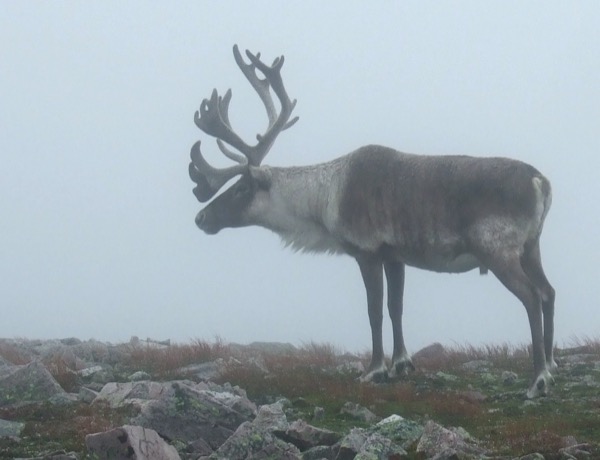
The photograph on this page: Caribou on foggy tundra. More Than Just Parks.
In court on this ground
One court case is over Gates of the Arctic National Preserve and Gates of the Arctic National Park. The newest is first.
Closed · filed August 3, 2020
Northern Alaska Environmental Center v. Trump
The court closed the docket. We don’t hold its entries yet.
Who holds the vote
PLAN’s record doesn’t tie a member of Congress to this fight yet. The scorecard grades the votes and bills that decide public lands; nothing joins a vote or a bill to this decision, so there’s no member to name here without guessing.
See how your members vote ↗Calling your two senators and your representative is the Call door on this page.
Know an open comment period we are missing, or spotted a wrong deadline? .
More fights that need you
Go deeper for free
See how your members of Congress vote on public lands
Every representative, graded on the votes that decide the fate of parks, forests, and refuges.
Open ↗The mapSee the places under active threat
A live map of the parks, monuments, and wild country in the crosshairs right now.
Open ↗A wrong fact, a dead link, a form that wouldn’t take your letter: one tap and it comes to the people who build PLAN, with this fight attached.