

National Parks Near San Antonio come with a piece of good news that most Texas cities can’t offer. San Antonio is the rare one with a genuine National Park Service unit inside the city limits. Drive about fifteen minutes south of downtown and you reach the San Antonio Missions, a string of 18th-century Spanish missions that make up the only UNESCO World Heritage Site in Texas.
After that, the honest geographic math sets in. Texas is enormous, and the two places that carry the actual “National Park” title, Big Bend and Guadalupe Mountains, sit way out in West Texas. Both are roughly a full day’s drive from San Antonio. Most of the closer NPS sites are historical parks, a preserve, a seashore, and a monument rather than big scenic wilderness parks.
This guide covers eight National Park Service destinations you can reach from San Antonio, ranked by what you get for the drive rather than alphabetically. We tell you the real designation, the real one-way drive time, and whether each one earns the miles. We will also tell you when a “park” is really a half-day stop.

National Parks Near San Antonio At A Glance
| Destination | Type (NPS Designation) | Drive Time (one-way from San Antonio) | Worth The Drive? |
|---|---|---|---|
| San Antonio Missions National Historical Park | National Historical Park (UNESCO World Heritage Site) | About 15 minutes (5 miles) | Yes. It is in the city and it is free. |
| Lyndon B. Johnson National Historical Park | National Historical Park | About 1.5 hours (75 miles) | Yes, especially for history fans. Easy Hill Country day trip. |
| Waco Mammoth National Monument | National Monument | About 2.5 to 3 hours (180 to 200 miles) | Yes if you like fossils. It is a one-hour stop, not a day. |
| Padre Island National Seashore | National Seashore | About 3 to 3.5 hours (via Corpus Christi) | Yes for beach and wildlife lovers. Bring a plan for the sand. |
| Big Thicket National Preserve | National Preserve | About 4.5 hours (East Texas) | Better paired with a Houston or East Texas trip. |
| Palo Alto Battlefield National Historical Park | National Historical Park | About 4 to 4.5 hours (near Brownsville) | Only as part of a deep South Texas trip. Small site. |
| Big Bend National Park | National Park | About 6.5 to 7.5 hours (410 to 455 miles) | Yes, but treat it as a multi-day destination, not a drive. |
| Guadalupe Mountains National Park | National Park | About 7.5 to 8 hours (460 to 490 miles) | Yes, ideally combined with Carlsbad Caverns next door. |

1. San Antonio Missions National Historical Park
Drive from San Antonio: About 15 minutes (5 miles) south of downtown via S. St. Mary’s and Roosevelt Ave.
117 public lands destinations are under threat. Get the free briefing that 27,000+ people use to stay informed and take action.

This is the obvious number one, and not just because it is close. San Antonio Missions National Historical Park protects four 18th-century Spanish missions strung along the San Antonio River: Mission Concepción, Mission San José, Mission San Juan Capistrano, and Mission Espada. Together with the Alamo, they earned Texas its only UNESCO World Heritage designation in 2015. Franciscan missionaries built them to convert and resettle the indigenous people of the region, and the churches, living quarters, workshops, and farm fields are still here.
Mission San José is the largest and the best place to start. It earned the nickname “Queen of the Missions” for its size, and the main visitor center sits here. Admission to all four missions is free, and there are no reservations to deal with. Rangers lead free guided tours at San José daily, and a paved hiking and biking path called the Mission Trail connects the sites along the river, so you can string several together on foot or by bike.
The honest caveat is mostly about time of day. Summer afternoons in San Antonio are brutally hot, and there is limited shade in the open mission compounds. Go early, carry water, and you can comfortably see two or three missions in a morning. For more Texas context, see our guide to Texas National Parks.

2. Lyndon B. Johnson National Historical Park
Drive from San Antonio: About 1.5 hours (75 miles) northwest via US-281 and US-290 into the Hill Country.
This is the easiest real day trip on the list. Lyndon B. Johnson National Historical Park spreads across two districts in the Texas Hill Country, one in Johnson City and the LBJ Ranch district near Stonewall. It preserves the full arc of the 36th president’s life, from his birthplace and boyhood home to the “Texas White House” on the ranch and his final resting place in the family cemetery. Johnson was born here in 1908, grew up in these hills, and returned to this land throughout his presidency.
You can drive the ranch on a self-guided auto tour, see the reconstructed birthplace, and tour the Texas White House grounds. The story here is a big one. Johnson signed the Civil Rights Act of 1964, the Voting Rights Act of 1965, and the legislation that created Medicare, and he led the country through the hardest years of the Vietnam War. Standing on the land where he grew up gives that record a human scale.

One of us is a retired history teacher who has read deeply on LBJ, and the recommendation here is Robert Caro’s biographical series, The Years of Lyndon Johnson. The Pulitzer-winning set is the definitive account of the man, and reading even one volume before you visit changes what you notice on the ranch.

3. Waco Mammoth National Monument
Drive from San Antonio: About 2.5 to 3 hours (180 to 200 miles) north via TX-130 and I-35.
Waco Mammoth National Monument is a fossil site, and it is the best fossil stop in the state. It protects the remains of a herd of Columbian mammoths that died here roughly 65,000 to 70,000 years ago, preserved in what was once a wet sinkhole. At least 24 mammoths have been found, including a rare grouping that appears to be a nursing female and a juvenile, which gives paleontologists a window into how these animals lived and traveled together.
The fossils stay in the ground inside a climate-controlled dig shelter, so you walk above them on a suspended walkway and see them right where they were found. The monument grounds are free to enter, and a small guided tour fee, around six dollars for adults, gets you the ranger-led walk through the shelter.
Here is the honest part: this is a one-hour stop, not a day. The dig shelter and short trails are the whole visit. It works best as a break on a drive to Dallas or as a half-day in Waco paired with other things in town, not as a destination you build a trip around.


4. Padre Island National Seashore
Drive from San Antonio: About 3 to 3.5 hours, mostly via I-37 S to Corpus Christi, then onto the island.
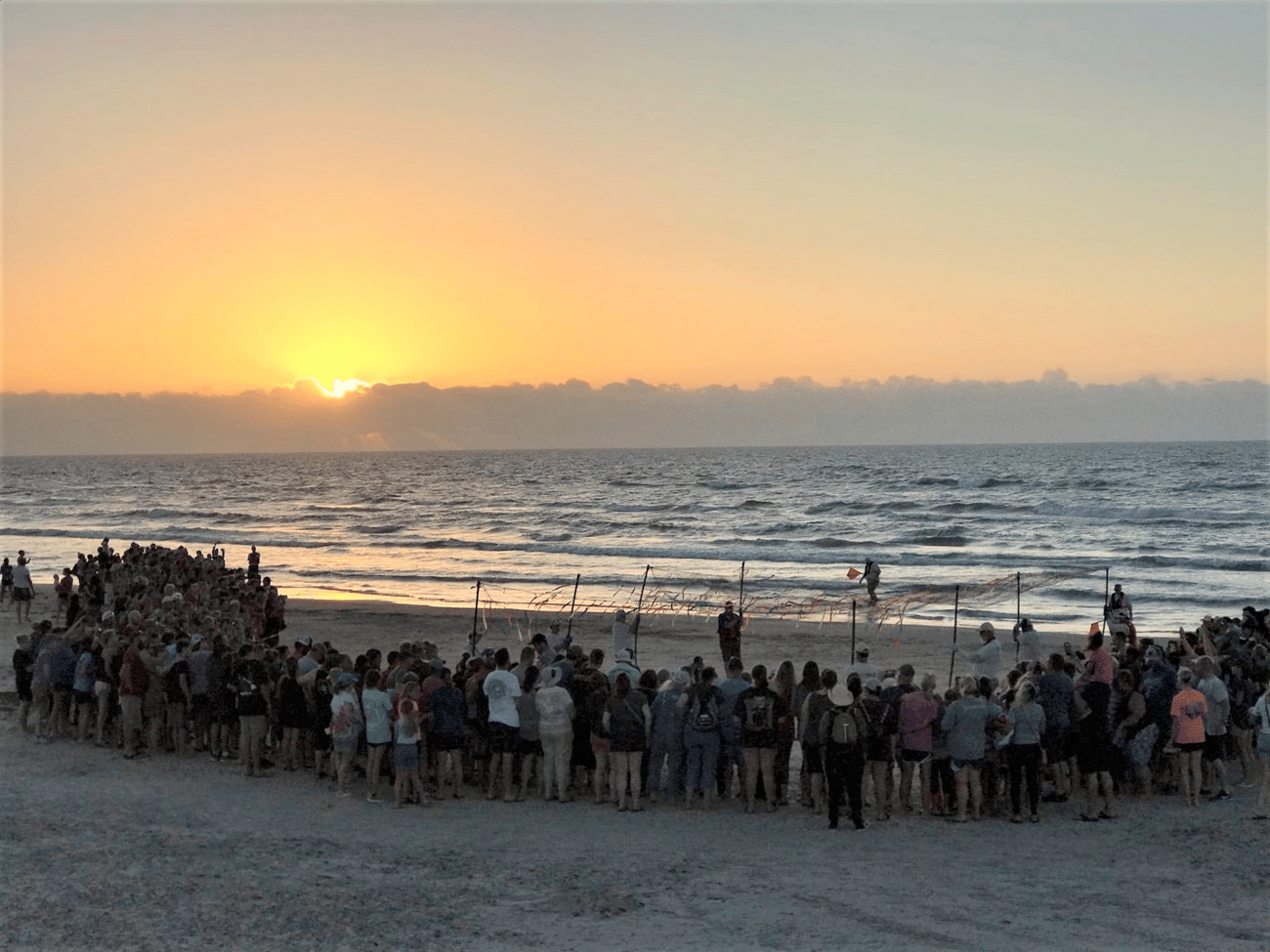
Padre Island National Seashore protects about 70 miles of undeveloped barrier island along the Gulf of Mexico, the longest stretch of its kind left in the world. The landscape is sand dunes, grasslands, and tidal flats rather than mountains or forests, and that emptiness is the point. It is also one of the few places anywhere you can watch endangered Kemp’s ridley sea turtles nest and, in season, see hatchlings released back into the gulf.
The main activities are beachcombing, fishing, birdwatching, and camping. There is an entrance fee here, around 25 dollars for a seven-day pass or 10 dollars for a single day, so factor that in. The seashore is the one place on this list that is genuinely undeveloped wild coastline near San Antonio, and the wildlife alone makes it worth the drive.
The big caveat is the sand. The paved road runs only a few miles in, and after that the beach becomes the road. Down Island driving past that point really does require high-clearance four-wheel drive, and ordinary cars get stuck every season. If you do not have the right vehicle, stick to the developed north end and you will still have a fine day.
5. Big Thicket National Preserve
Drive from San Antonio: About 4.5 hours east, via I-10 toward Beaumont, then north to Kountze.
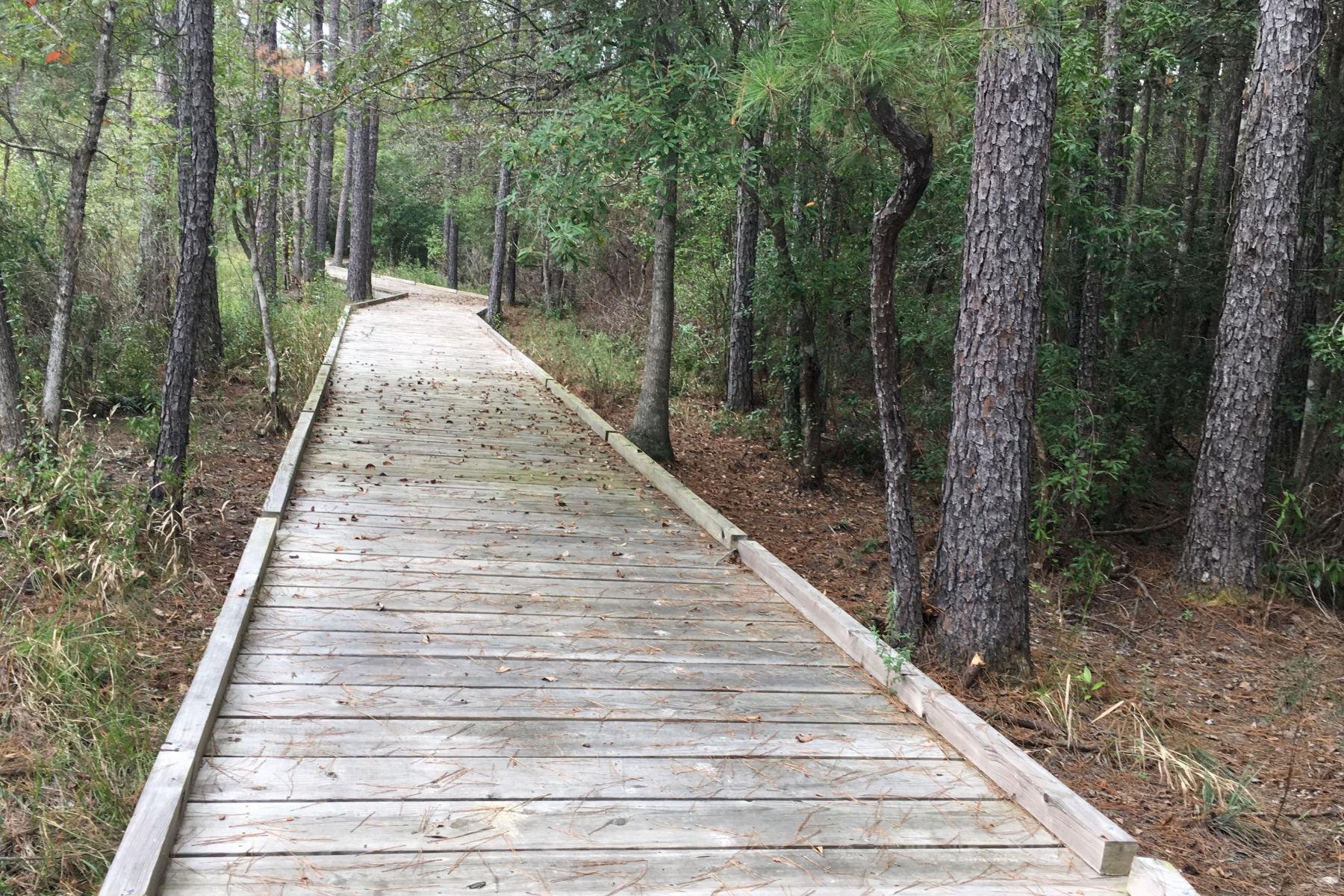
Big Thicket National Preserve sits in deep East Texas and protects one of the most biologically diverse pockets in the country. The “thicket” is a tangle of forest, wetlands, and prairie where eastern and western ecosystems overlap, which is why you find carnivorous pitcher plants, longleaf pine, hardwood swamps, and bird species that have no business living in the same place. It is more than 100,000 acres of habitat, with the endangered red-cockaded woodpecker and American black bear among the residents.
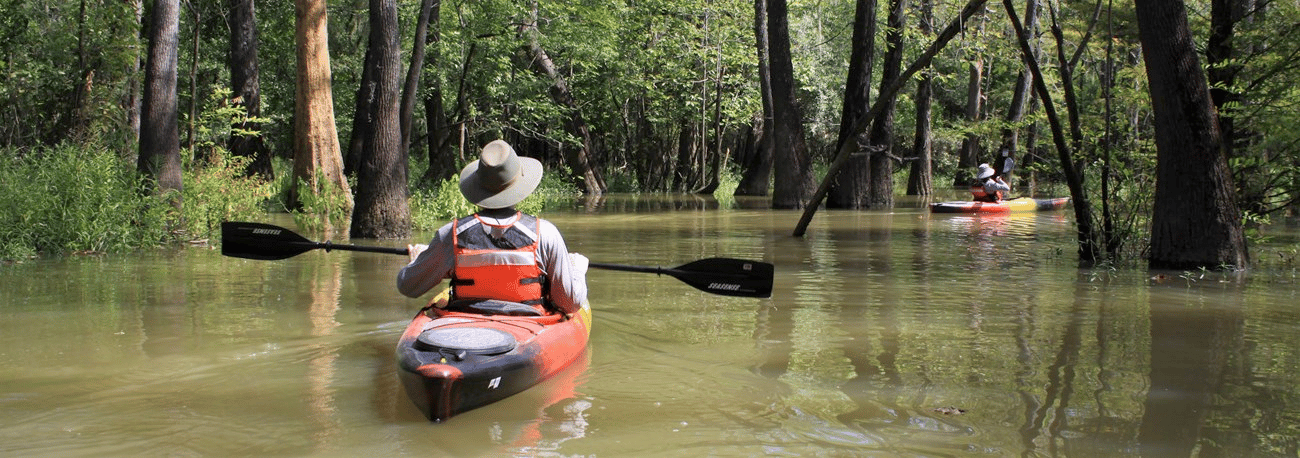
This is a place for slow exploration: hiking, birdwatching, fishing, and paddling the bayous and sloughs by canoe or kayak. Start at the visitor center near Kountze to get oriented, because the preserve is spread across several disconnected units rather than one tidy boundary.
The honest verdict: at 4.5 hours out, Big Thicket is a long haul from San Antonio for what is essentially quiet backcountry. It makes far more sense as part of a Houston or East Texas trip than as its own drive from the Hill Country. If you are already headed that direction, it is well worth a day.
6. Palo Alto Battlefield National Historical Park
Drive from San Antonio: About 4 to 4.5 hours south via I-37 and US-77, near Brownsville at the southern tip of Texas.
Palo Alto Battlefield National Historical Park preserves the ground where the first major battle of the U.S.-Mexican War was fought on May 8, 1846. It is the only National Park Service site that interprets that war, and the open coastal prairie here looks much as it did on the day of the fighting. Established in 1991, the park centers on a visitor center with exhibits and a half-mile battlefield trail with interpretive markers, plus the related Resaca de la Palma site nearby.
The honest verdict: this is a small, quiet historical site at the far southern end of Texas, roughly four hours away. Driving down just for Palo Alto is hard to justify. It earns its place when you are already exploring deep South Texas, the Brownsville area, or the Rio Grande Valley, where you can pair it with the region’s other history and birding stops. For more Texas history, see our roundup of historic sites in Texas.
7. Big Bend National Park
Drive from San Antonio: About 6.5 to 7.5 hours (410 to 455 miles) west, most directly via US-90 through Del Rio and Marathon.
Big Bend National Park is one of the two true national parks in Texas, and it is enormous, more than 800,000 acres where the Rio Grande makes its big bend along the Mexico border. Inside one park you get the Chisos Mountains rising straight out of the desert floor, the Chihuahuan Desert, and deep river canyons. It is a place for hiking, backpacking, river trips, and some of the darkest night skies in the country, with black bears and mountain lions in the high country.
Be straight with yourself about the distance. This is not a day trip. It is a full day’s drive each way, and the right way to do it is to commit several days once you arrive. Plan fuel and water carefully, because gas stations and services are far apart out there, and summer desert highs regularly top 100 degrees.

The payoff for the drive is real. The South Rim Trail in the Chisos is one of the best day hikes in the Southwest, and there are more than 150 miles of desert and mountain trails to choose from. If you make the trip, build in time to do at least one big hike rather than just driving the park roads.

8. Guadalupe Mountains National Park
Drive from San Antonio: About 7.5 to 8 hours (460 to 490 miles) west via I-10, the farthest destination on this list.
Guadalupe Mountains National Park is the other true Texas national park, covering more than 80,000 acres in the far west of the state. It holds Guadalupe Peak, the highest point in Texas at 8,751 feet, and an ancient fossil reef that once sat beneath a prehistoric sea and now forms towering limestone cliffs and canyons. The park draws hikers, backpackers, and climbers, and McKittrick Canyon turns gold with bigtooth maples in late October, an unusual fall color show for Texas.
The drive is the longest here, so the smart move is to combine it with a neighbor. Carlsbad Caverns National Park in New Mexico is only about a 45-minute drive away, so most visitors do both on the same trip. For that side, see our guide to New Mexico National Parks.
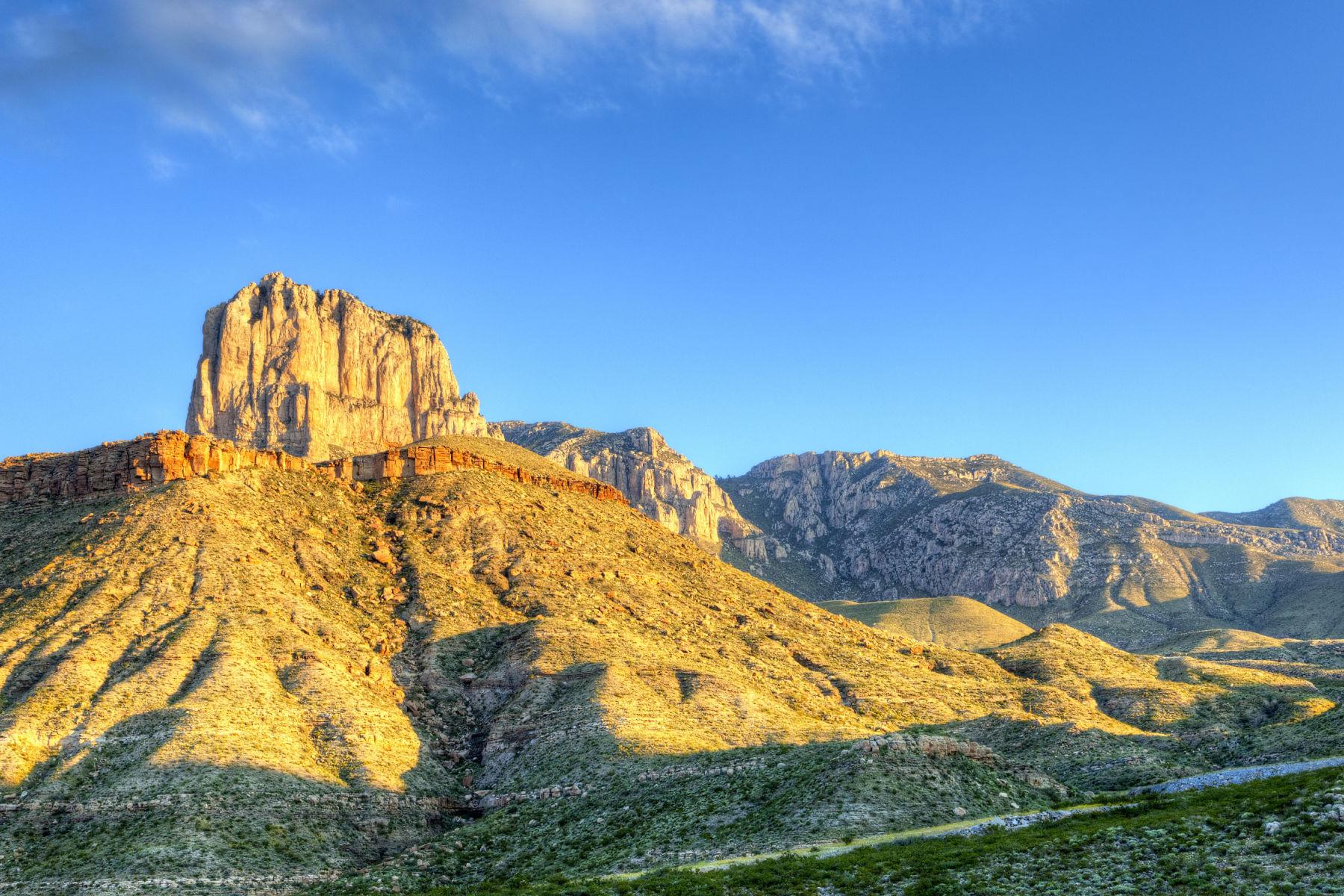
The caveat is that this is a rugged, undeveloped park with limited services. There is no lodge and no gas inside the park, the wind can be fierce, and the marquee hike up Guadalupe Peak is a strenuous all-day climb of about 8.5 miles round trip with serious elevation gain. Come prepared and it rewards you with the wildest high country in Texas.

Planning Your Trip From San Antonio
Best home base. San Antonio itself is the right base for the close stuff. The Missions, the LBJ park, and the Waco Mammoth site are all easy out-and-back trips from the city. For the West Texas parks, plan to base inside or just outside Big Bend and Guadalupe Mountains, because the driving distances make day trips impossible.
When to go. Fall through spring is the sweet spot for almost everything on this list. Texas summers are hot and humid in the east and brutally hot in the western deserts, so the open missions, the desert trails of Big Bend, and the high country of Guadalupe Mountains are all far more pleasant from October through April. Late October is the window for fall color in McKittrick Canyon.
Fees. The fee picture varies by site. The San Antonio Missions and the grounds at Waco Mammoth are free, though Waco charges a small fee for the guided dig-shelter tour. Padre Island National Seashore and Big Bend both charge entrance fees, and an annual America the Beautiful pass pays for itself quickly if you plan to hit several parks in a year. Always check the official NPS page for each site before you go, since fees and hours change.
How to combine sites. The geography sorts itself into natural pairings. Do the Missions and the LBJ ranch as a Hill Country weekend. Pair Big Bend and Guadalupe Mountains, ideally with Carlsbad Caverns, on one big West Texas loop. Save Big Thicket and Palo Alto for when you are already in East or South Texas, since both are long drives for what they are.
You should probably know that this guide does not come out of thin air. More Than Just Parks is a family operation. My sons Will and Jim have spent their entire adult lives exploring America’s national parks and public lands. I taught American history for 25 years, and I write our history and travel guides.
Will and Jim have worked with the National Park Service, the Department of Interior, USDA, and the U.S. Forest Service for years. Their work has been featured in leading publications all over the world.
San Antonio Missions, a National Park Service site and the only UNESCO World Heritage Site in Texas.
Despite its immense size, Texas only has two officially designated National Parks: Big Bend National Park and Guadalupe Mountains National Park.
The Chisos Mountains in Big Bend are the closest true mountains, but they are still about 450 miles west. Hiking and camping in those mountains is one of the best things to do in Big Bend National Park.