

Vermont’s Green Mountains Are Built for Fall
Leaf peepers, the secret has been out for a long time. The best fall foliage in the country runs down the spine of Vermont, and a huge share of it sits inside Green Mountain National Forest. Roughly 400,000 acres of maple, birch, and beech draped over the Green Mountains, lit up in late September and October like nothing else in the East.
First, the basics. Green Mountain National Forest is managed by the U.S. Forest Service, not the National Park Service. There is no national park in Vermont, so this forest, along with a scattering of historic sites, is the closest thing the state has to a marquee federal landscape. The Forest Service distinction shapes the rules here: no entrance fee, hunting allowed in season, dogs welcome on most trails, and dispersed camping permitted across much of the land. If that split confuses you, we broke it all down in our guide to national forest versus national park.

Getting There
The forest runs in two large sections down the western half of Vermont. The Burlington airport is the most convenient gateway, putting you roughly an hour from the northern districts. From the south, Albany, New York, sits about two hours from the lower forest. Boston is around three to four hours depending on which section you target.
Once you arrive, the two scenic corridors that thread the forest are Vermont Route 100, which runs the length of the state down the eastern edge of the mountains, and the Green Mountain Byway. Both are classic New England drives. There is no single park gate, so pick a district, a trailhead, or a town and build out from there. The towns of Manchester, Rutland, Middlebury, and Warren all make good bases.
117 public lands destinations are under threat. Get the free briefing that 27,000+ people use to stay informed and take action.
Best Time to Visit
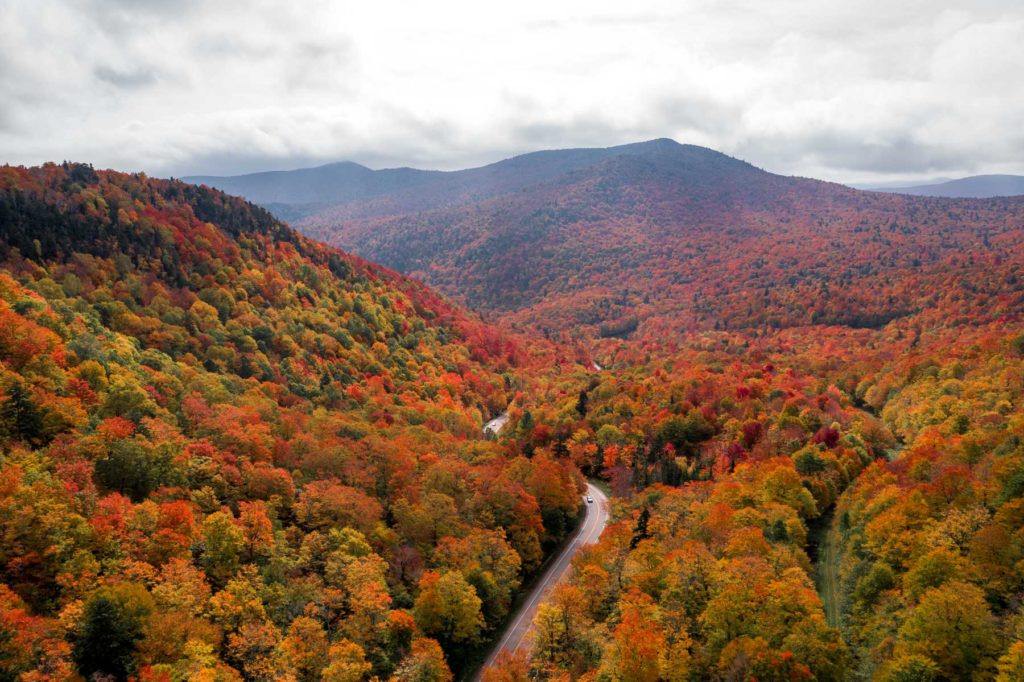
Fall is the headline, and rightly so. Peak color usually arrives in the northern and higher elevations during late September, then rolls south and downhill through mid-October. Time it right and you get hillsides of red maple, orange and gold birch, and the deep evergreen of the spruce-fir up high. Weekends in October draw crowds and book up lodging fast, so reserve early or go midweek.
Summer brings cool mountain hiking, swimming holes, and long green days, and it is far quieter than fall. Winter turns the forest into cross-country ski and snowshoe country, with downhill resorts like Killington and Stratton sitting nearby. Spring is mud season, with soft trails and unreliable conditions, so it is the one stretch I would skip for serious hiking.
Top Things to Do in Green Mountain National Forest
1. Hike the Long Trail
The Long Trail is the oldest long-distance hiking trail in the United States, running about 272 miles down Vermont’s spine from Massachusetts to Canada, and a large stretch passes through the forest. You do not have to thru-hike it. Day sections off Route 100 and other access points deliver ridgeline views, mossy spruce woods, and summits without the multi-week commitment. The Appalachian Trail also shares the Long Trail’s route through the southern part of the forest.
2. Summit Mount Ellen and the High Peaks
The forest holds some of Vermont’s tallest mountains. Mount Ellen and Camel’s Hump area peaks give you above-tree-line views across the Champlain Valley to the Adirondacks on a clear day. These are real climbs with real elevation gain, so come prepared with layers, water, and a map. Weather on the ridges turns fast.
3. Drive Route 100 in October
If you do only one thing here, drive Vermont Route 100 during peak color. It threads villages, covered bridges, farm stands, and mile after mile of hardwood forest. Stop for cider donuts, pull over at the overlooks, and let it take all day. This is the drive that built Vermont’s reputation as the country’s foliage capital.
4. Cool Off at a Swimming Hole
In summer, the forest’s rivers and streams form classic Vermont swimming holes. Spots like Bristol Falls and the Warren Falls area off Route 100 draw locals on hot afternoons. Tread carefully on wet rock and never jump into water you have not checked first.
5. Camp in the Forest
The forest runs developed campgrounds such as Hapgood Pond and Moosalamoo, and it allows dispersed backcountry camping across much of its acreage, along with backcountry shelters spaced along the Long Trail. Developed sites can be reserved through Recreation.gov where available. Fall weekends fill fast, so plan ahead.
Fees and Permits
Green Mountain National Forest has no entrance fee. You can drive in, park at most trailheads, and hike for free. What costs money are specific developed services: campground fees, certain day-use sites, and a small number of fee areas. Some popular trailhead lots may charge parking. A Vermont fishing or hunting license is required for those activities and can be purchased through the state.
Because this is Forest Service land rather than a national park, you get more freedom and more responsibility. Leashed dogs are welcome on most trails, hunting is legal in season, and dispersed camping is broadly allowed. That makes it your job to leave the place as you found it.
Where to Stay
The classic move is a Vermont inn or bed and breakfast in one of the villages along Route 100, in Manchester, or in Stowe nearby. These book out months ahead for peak foliage, so reserve early. Ski-town condos near Killington and Stratton offer more space for groups. For the budget-minded and the outdoors-first, the forest campgrounds and backcountry shelters are the way to go.
Visit It With Respect
Vermont’s mountains are loved nearly to death every October. Stay on durable trail surfaces, especially during mud season when soft ground tears easily, pack out all trash, and follow the Leave No Trace principles. Above tree line, fragile alpine plants live their whole lives in a few square feet, so step only on rock.
The 2026 Reality
As of 2026, Green Mountain National Forest is fully open for the usual seasons, with developed campgrounds running on a spring-to-fall calendar and the Long Trail system maintained by the Green Mountain Club. Foliage timing shifts a little every year with the weather, so check current color reports in late September before you commit to a date. Trail conditions after storms can change quickly, so look up the latest from the forest’s ranger districts before a big hike.
Building a wider New England trip? Pair this with our guides to Vermont’s national parks and New Hampshire’s national parks next door, or head to the coast for Acadia.