

The Largest Wilderness in the Lower 48
There is wild, and then there is the Frank Church. Spanning roughly 2.4 million acres across central Idaho, the Frank Church River of No Return Wilderness is the largest contiguous federally designated wilderness in the lower 48 states. It is bigger than several national parks combined, and most of it has no roads, no buildings, and no cell signal. This is about as close as the contiguous United States gets to true backcountry.
A quick clarification on what this place is. The Frank Church is a designated Wilderness administered by the U.S. Forest Service, layered across several national forests including the Salmon-Challis, Payette, Boise, Bitterroot, and Nez Perce-Clearwater. Wilderness designation is the highest level of land protection in the country. No motorized vehicles, no mechanized equipment including bikes, and no permanent development. It is named for Idaho Senator Frank Church, who championed the 1964 Wilderness Act. If you are fuzzy on how Forest Service land differs from a national park, we lay it out in our guide to national forest versus national park.

Getting There
This is the hard part, and it is by design. There is no driving into the heart of the Frank Church. The wilderness is ringed by gateway towns: Salmon and Challis to the east, Stanley to the south, McCall to the west, and the small community of Riggins along the Salmon River corridor. Boise, the nearest major airport, sits roughly three to five hours from the various trailheads depending on which edge you target.
From those gateways, you enter on foot, on horseback, by raft down the rivers, or by small aircraft to one of the historic backcountry airstrips. The Main Salmon and the Middle Fork of the Salmon are the classic float corridors. However you go in, plan carefully. Once you are inside, help is far away and self-reliance is the rule.
117 public lands destinations are under threat. Get the free briefing that 27,000+ people use to stay informed and take action.
Best Time to Visit
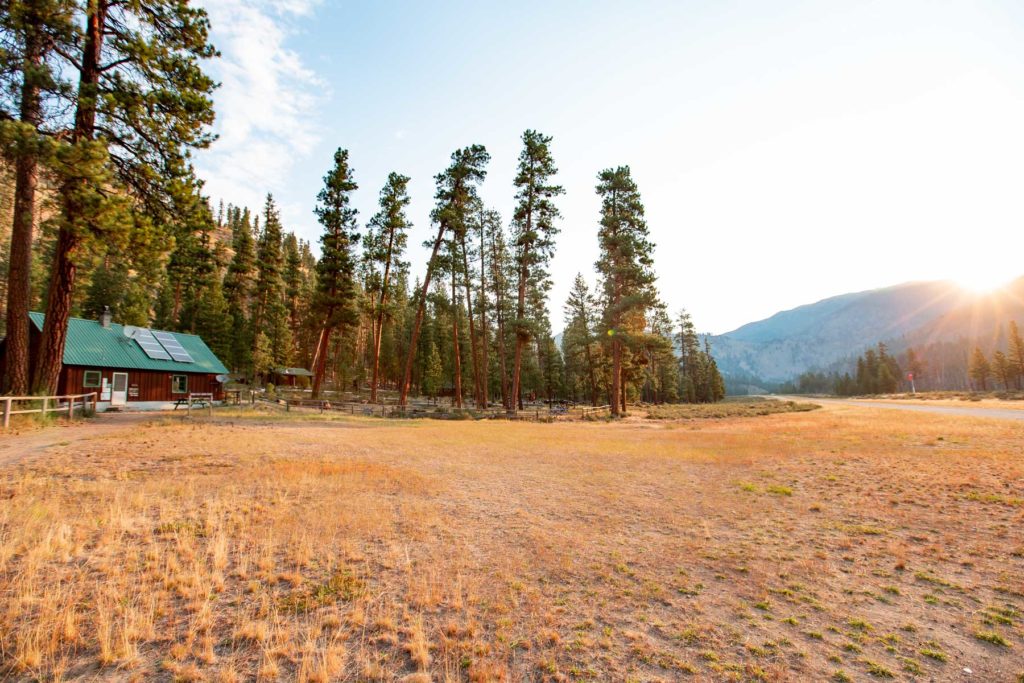
Summer, roughly late June through September, is the prime window for most trips. The high country sheds its snow, trails open, and the rivers settle into runnable flows. July and August bring warm, dry days that suit hiking, fishing, and rafting alike.
River timing is its own science. The Middle Fork of the Salmon runs high and pushy with snowmelt in late spring and early summer, then drops through the season into lower, technical flows by August. Outfitters and the permit system track this closely. Winter locks the wilderness in deep snow and is the domain of only the most experienced and committed travelers.
Top Things to Do in the Frank Church Wilderness
1. Raft the Middle Fork of the Salmon
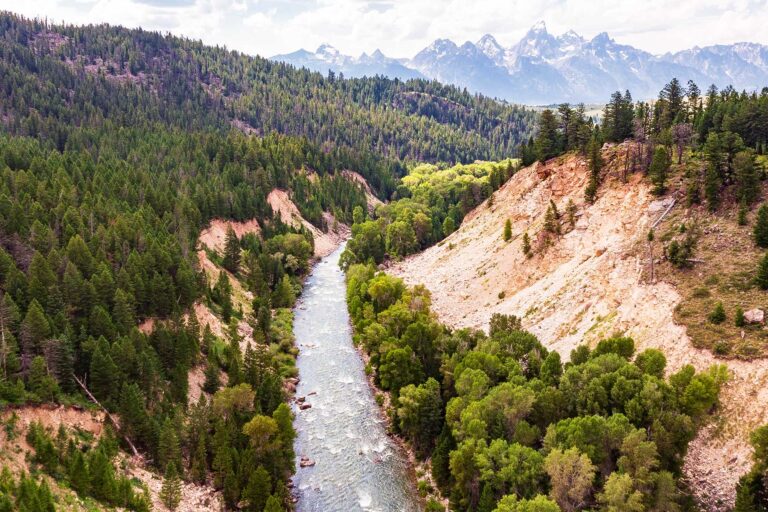
The Middle Fork of the Salmon is one of the great whitewater trips on the planet, a roughly 100-mile run through the wilderness with dozens of rapids, hot springs, and Native rock art along the banks. It is a designated Wild and Scenic River, and the multi-day float requires a permit issued through a competitive lottery, or a spot with a licensed outfitter. If you can pull it off, it is a trip of a lifetime.
2. Float the Main Salmon, the River of No Return
The Main Salmon, the river that gave the wilderness its name, carves a canyon deeper in places than the Grand Canyon. Early travelers could float downriver but not back up against the current, hence the River of No Return. Like the Middle Fork, the Main Salmon multi-day float runs on a permit lottery during the controlled season, with outfitted trips available.
3. Backpack the Bighorn Crags
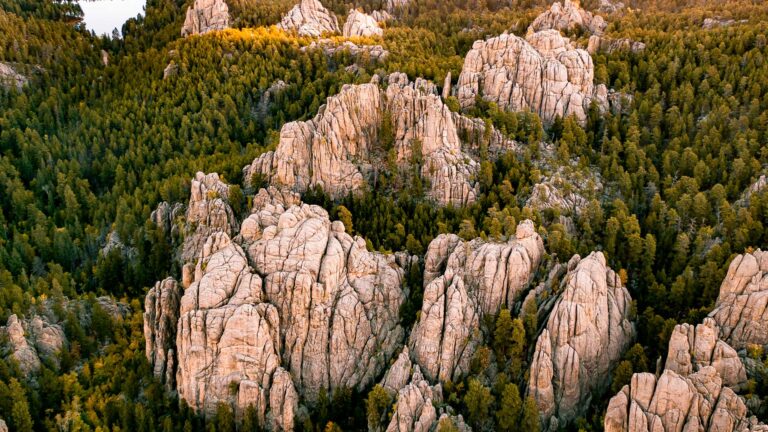
For hikers, the Bighorn Crags are the crown of the wilderness, a range of jagged granite spires cradling clear alpine lakes. The backpacking here is rugged and remote, with serious effort required just to reach the trailheads, but the payoff is solitude few places can match. This is expert backcountry territory. Go prepared and self-sufficient.
4. Fish for Wild Salmon and Steelhead
The Salmon River system still hosts runs of wild salmon and steelhead that travel hundreds of miles inland from the Pacific, an increasingly rare thing in the modern West. Native cutthroat trout fill the cold tributaries. An Idaho fishing license is required, and regulations vary by species and stretch, so check the rules before you cast.
5. Watch for Wildlife
This is one of the wildest intact ecosystems in the country. Elk, mule deer, mountain goats, bighorn sheep, black bears, mountain lions, and reintroduced gray wolves all live here. The Frank Church was central to the return of wolves to the northern Rockies. Travel with bear-aware habits and store food properly.
Fees and Permits
There is no general entrance fee to the wilderness. The serious permits are for the rivers. Multi-day floats on the Middle Fork and Main Salmon during the controlled-use season require permits awarded through a competitive lottery on Recreation.gov, and demand vastly exceeds supply, so plan a year ahead or book through a licensed outfitter who holds commercial allocations. Backcountry hiking and camping generally do not require a permit, though that can change, so confirm current rules with the managing forest. An Idaho fishing or hunting license is required for those activities.
Wilderness rules are strict and worth respecting. No motorized or mechanized travel, including mountain bikes. Group size limits apply. This is the strongest land protection the country offers, and the regulations exist to keep the place wild.
Where to Stay
Inside the wilderness, you sleep in a tent, at a river camp, or at one of the historic backcountry lodges and guest ranches reachable only by trail, boat, or bush plane. On the edges, the gateway towns of Salmon, Stanley, McCall, and Riggins offer hotels, motels, and outfitters who can arrange trips. Stanley, in particular, makes a scenic base near the Sawtooths to the south.
Visit It With Respect
A place this wild stays wild only if every visitor treats it that way. Practice strict Leave No Trace principles, pack out everything including human waste on the rivers where required, use established camps, and keep group sizes within limits. River trips have specific waste and fire-pan rules you must follow. The Frank Church is a gift from the people who fought to protect it in 1980. Treat it like one.
The 2026 Reality
As of 2026, the Frank Church remains fully protected wilderness, and the Middle Fork and Main Salmon river permits are still distributed through the competitive Recreation.gov lottery, which opens months ahead of the season. Wildfire is a constant factor in central Idaho summers and can close trails, trailheads, and even river sections on short notice, so check current fire and closure status with the Salmon-Challis and neighboring national forests before any trip. Wild and remote as ever, this is a place to plan for seriously and enter humbly.
Exploring more of the state? See our guides to Idaho’s national parks and the best parks near Boise to round out the trip.