

Great Smoky Mountains National Park straddles the Tennessee and North Carolina line, 522,000 acres of ancient blue ridges, and it is by a wide margin the most-visited national park in the country. There is a lot of history packed into that smoke.
I taught history for 25 years before I started visiting the parks, and the Smokies are one of my favorites for exactly that reason. The human story here is as rich as the forest. Here are 15 facts about the park, each checked against the National Park Service and the record. Where the old numbers had gone stale, I refreshed them.
Great Smoky Mountains National Park: The Basics
- Location: Along the Tennessee and North Carolina border
- Size: 522,427 acres, split almost evenly between the two states
- Established: Authorized by Congress in 1934; dedicated by FDR in 1940
- Highest point: Kuwohi, formerly Clingmans Dome, 6,643 feet
- The draw: It is the most-visited national park in the United States
For a full plan, see our guide to the best of Great Smoky Mountains National Park and our roundup of Tennessee national parks.
1. It Is the Most-Visited National Park in the Country
The Great Smoky Mountains is the most-visited national park in the United States, and it is not close. The park draws more than 12 million visitors a year, roughly twice the total of the next-busiest park.
Love Great Smoky Mountains? It's one of 117 threatened public lands destinations we're tracking. Get the free briefing.
A few things drive that. The Smokies charge no entrance fee, they sit within a day’s drive of a huge share of the eastern population, and the scenery delivers in every season. The crowding is real, so go early, go on weekdays, and explore beyond the famous overlooks if you want the park to yourself.

2. The “Smoke” Comes From the Trees Themselves
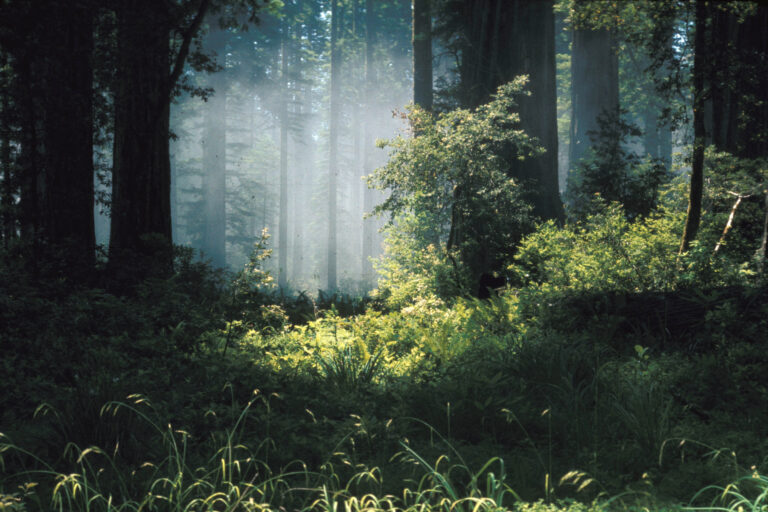
The blue haze that gives the park its name is not smoke at all, and it is not pollution. It comes from the forest. The trees and plants release natural compounds called volatile organic compounds, chiefly isoprene.
In sunlight, those compounds react to form tiny particles that scatter blue light, draping the ridges in that soft bluish veil. With millions of plants exhaling at once across these mountains, the effect is constant. The Cherokee noticed it too, and their name for the place referred to the same smoky quality.

3. These Are Among the Oldest Mountains on Earth
The Smokies look soft and rounded because they are old. Really old. The mountains were uplifted roughly 200 to 300 million years ago as continents collided, which makes the Appalachians among the oldest mountain ranges in the world.
Some of the rock itself is older still, over a billion years old. Hundreds of millions of years of weathering have worn the once-jagged peaks down to the gentle, forested ridges you see today. The Rockies and the Tetons are babies by comparison.

4. It Is the Salamander Capital of the World
The Great Smokies are the Salamander Capital of the World, with around 30 species, more salamander diversity than anywhere else of comparable size.
Most of them are lungless salamanders that breathe through their skin and the lining of their mouths. One, the Jordan’s red-cheeked salamander, lives in the high elevations of this park and nowhere else on Earth. On any given day, salamanders likely outnumber every other backboned animal in the park, human visitors included. Look near creeks and under rocks and logs.
5. Its Highest Point Was Renamed Kuwohi in 2024
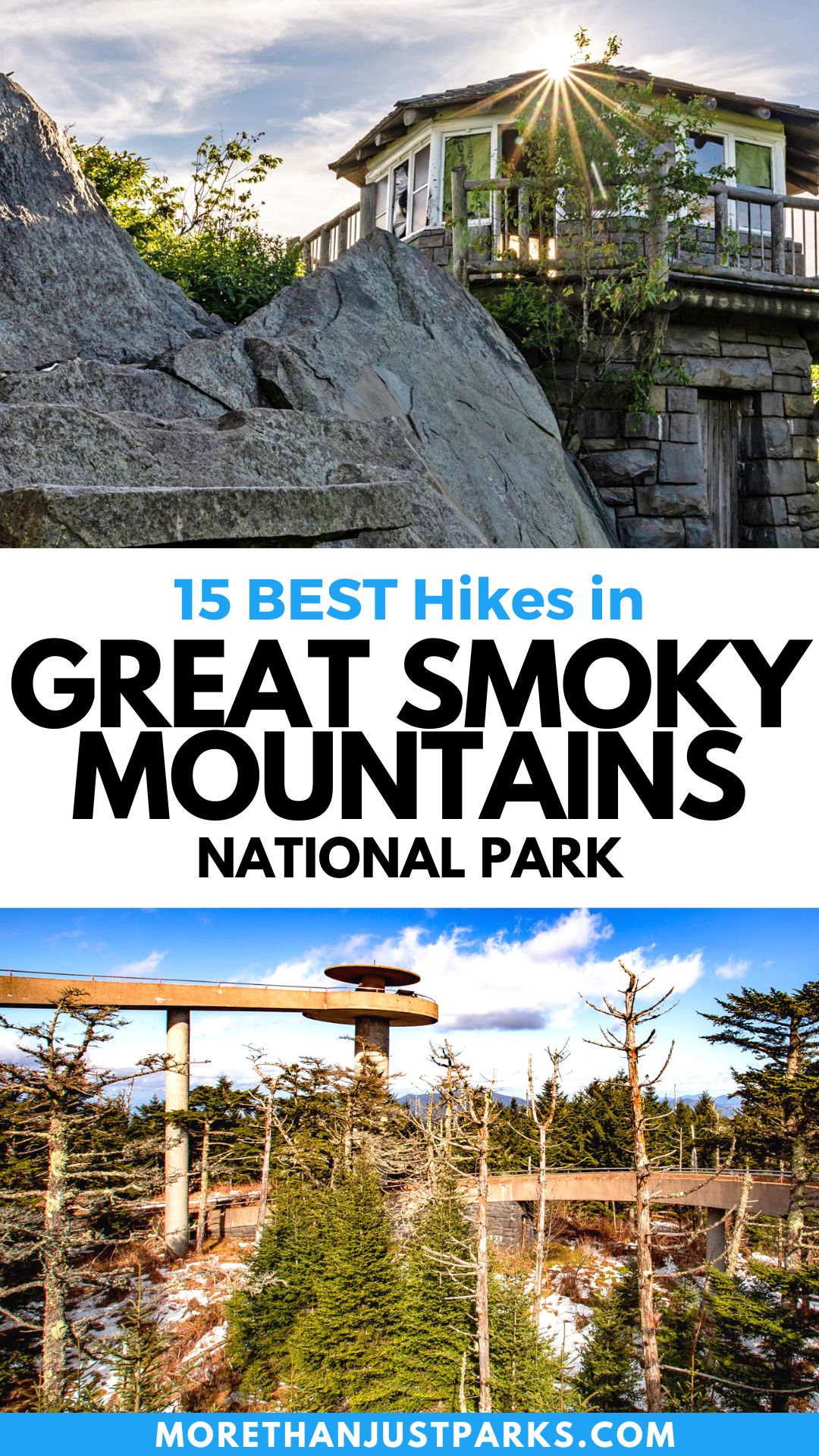
At 6,643 feet, Kuwohi is the highest point in the park and the highest point in Tennessee. It is also the highest point on the entire 2,190-mile Appalachian Trail.
In 2024, the peak’s official name was changed from Clingmans Dome back to Kuwohi, a Cherokee name meaning “mulberry place,” restoring the mountain’s original name on the homeland of the Cherokee people. A steep half-mile walk leads to the observation tower at the summit, where on a clear day the view runs for miles in every direction.

6. The Cherokee Have Called This Region Home for a Thousand Years
The Cherokee have lived in these mountains for more than a thousand years. By the time Europeans arrived, Cherokee land covered much of the Southeast, with villages built around seven-sided council houses that represented the seven clans: Bird, Paint, Deer, Wolf, Blue, Long Hair, and Wild Potato.
Decisions were made democratically, with two chiefs, one for peacetime and one for war, but the people had a voice. After the forced removals of the 1830s, some Cherokee remained, and their descendants form the Eastern Band today. Their language, once banned in federal schools, is now being revived in classrooms and the community.
7. Hernando de Soto Passed Through in 1540
One of the earliest European brushes with these mountains came in 1540, when the Spanish conquistador Hernando de Soto led an expedition through the Southeast in search of gold.
By most accounts his route skirted the southern edge of the Smokies as it crossed between Georgia and the Carolinas. It was de Soto’s chronicler who first wrote down the name “Cherokee.” De Soto found no gold here, but later Spanish prospectors reportedly did turn up gold and silver in the broader Blue Ridge region, drawing fortune-seekers back for generations.
8. The Park Saved the Last of the Forest From the Saw
By the early 1900s, logging companies had moved into the Smokies after stripping the forests of the Great Lakes. The Little River Lumber Company and others bought up huge tracts and were cutting fast. Without intervention, the old-growth forest would have been gone.
Creating the park stopped the saws. Today the Smokies protect some of the largest stands of old-growth forest left in the eastern United States, and the conservation paid off economically too. Visitors now spend well over a billion dollars a year in the gateway towns around the park. The skeptics who said a park would hurt the local economy had it backwards.

9. It Took the Supreme Court to Assemble the Park
Unlike the western parks carved from land the government already owned, the Smokies had to be bought, parcel by parcel, from lumber companies and hundreds of families who lived there. Not everyone wanted to sell.
John W. Oliver of Cades Cove, a descendant of the cove’s first settlers, fought the state’s use of eminent domain to take his land. His case went all the way to the courts, which upheld the state’s right to acquire the property. Had he won, the movement to build the park in Tennessee might have collapsed. His family’s John Oliver Cabin still stands in Cades Cove, one of the oldest structures in the park.

10. A Woman Known as the “Mother” of the Park Got It Started
The idea began with a question. On a 1923 trip home from the western parks, Anne Davis of Knoxville asked her husband why their own Great Smokies could not be a national park too.
She did not stop at the question. In 1924 Davis became the third woman elected to the Tennessee legislature, and she sponsored the bill that authorized buying tens of thousands of acres from a lumber company for the park. When critics dismissed the land as worthless “stump land,” she organized a trip to show the legislature the real thing. The bill passed. Today she is remembered as the “Mother” of the park, alongside Colonel David Chapman, the Knoxville businessman known as its “Father.”

11. A $5 Million Rockefeller Gift Closed the Deal
Even with state money and donations from schoolchildren, the fundraising fell short. The man who closed the gap was John D. Rockefeller Jr.
In 1928, through a family foundation, Rockefeller gave $5 million in memory of his mother, Laura Spelman Rockefeller, to help buy the land. Because nearly all of it was owned by lumber companies, that money was decisive. A monument at Newfound Gap, on the state line, honors the gift. The same Rockefeller fortune also helped create Grand Teton and Acadia.

12. The Civilian Conservation Corps Built Much of the Park
When Franklin Roosevelt launched the Civilian Conservation Corps during the Great Depression, the Smokies became one of its biggest projects. The CCC put unemployed young men to work building the infrastructure visitors still use.
There were 22 CCC camps in the Great Smokies, more than in any other two national parks combined, with roughly 4,000 men planting trees, fighting fires, fighting erosion, and building trails and roads. As one historian put it, nearly all of the park’s early infrastructure was built with CCC labor. The next time you drive a park road or hike a graded trail here, you are using their work.
13. FDR Dedicated the Park in 1940
Congress authorized the park in 1934, but the formal dedication came on September 2, 1940, when President Franklin Roosevelt stood at the Rockefeller Memorial at Newfound Gap and dedicated it “for the permanent enjoyment of the people.”
First Lady Eleanor Roosevelt grew so fond of the Smokies that she returned on her own, spending time in Cades Cove and hiking along Forge Creek Road, where she stopped to drink straight from the creek. Few presidential families have left such a personal mark on a park.
14. It Is One of the Most Biodiverse Parks in the System
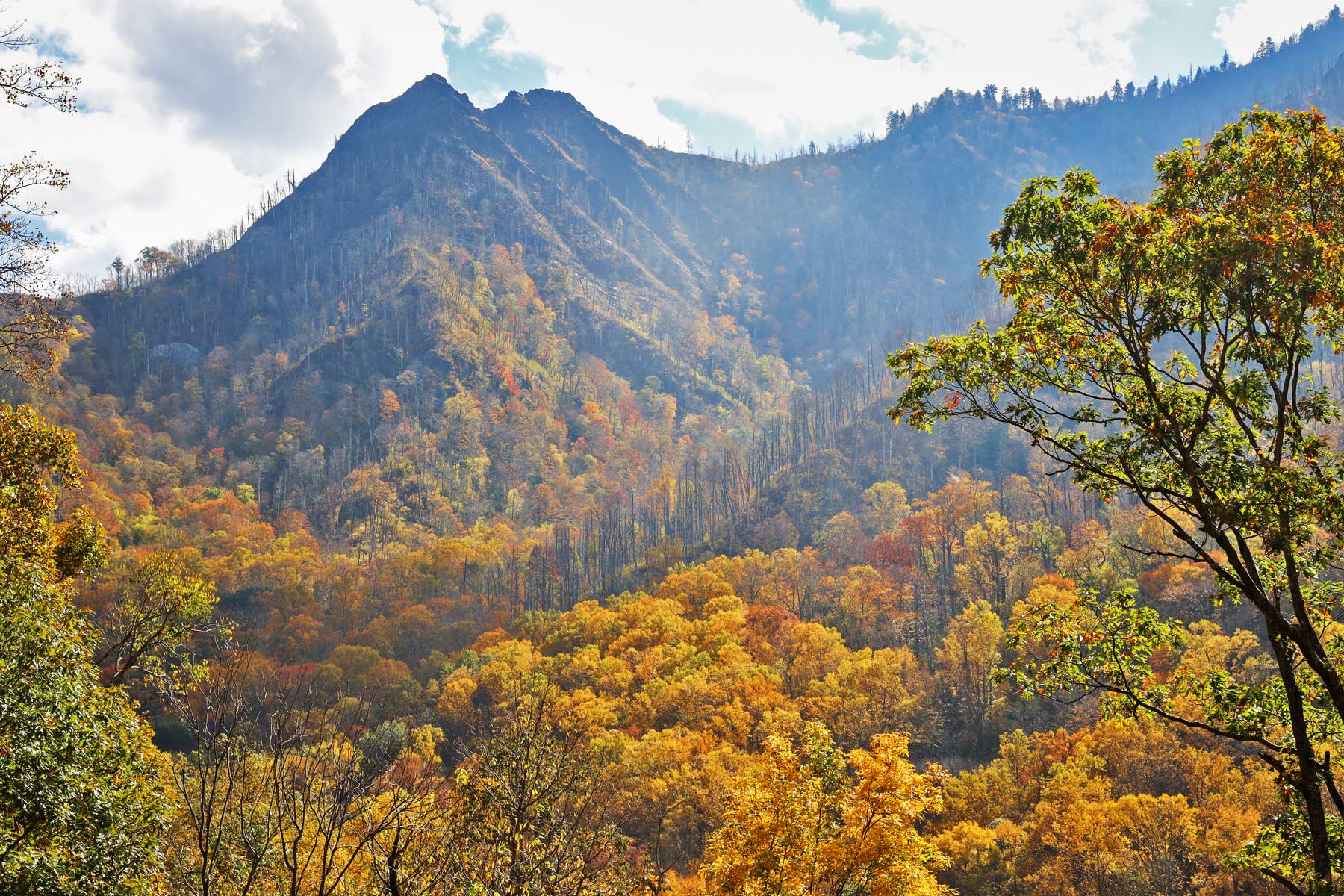
The Smokies are a UNESCO World Heritage Site and an International Biosphere Reserve, and the biology is the reason. The park protects more documented species than any other national park in the country, with tens of thousands recorded and scientists certain that many more remain unknown.
That range comes from the elevation. Climbing from about 875 feet to 6,643 feet is, ecologically, like driving from Georgia to Canada. Black bears, white-tailed deer, elk, more than 200 kinds of birds, and an astonishing variety of plants and amphibians all share these slopes. Few places in North America pack so much life into so little distance.
15. The Fall Color Is Some of the Best in the Country
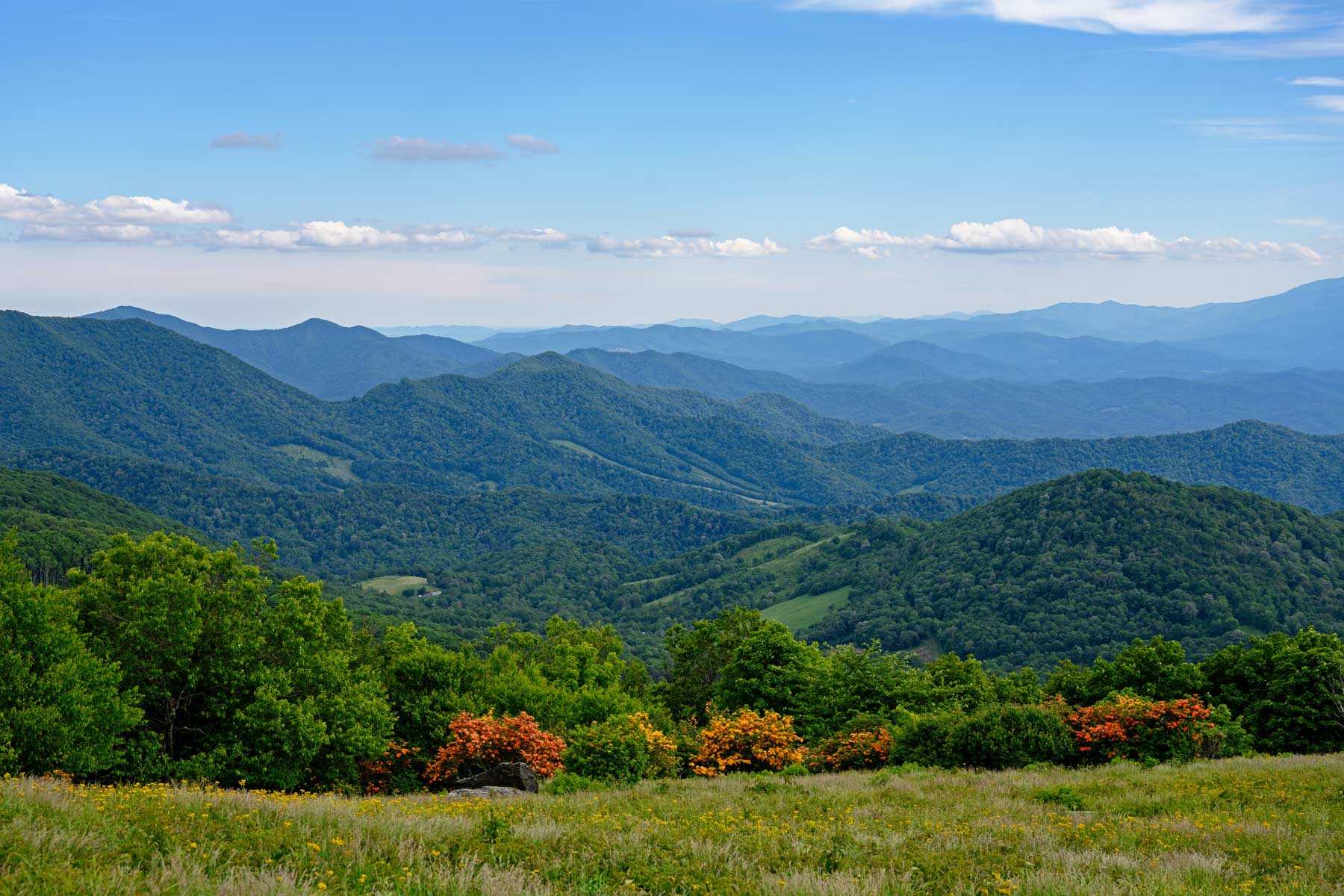
Because the park spans such a range of elevation, its fall color lasts for weeks, starting high on the ridges in early October and working down to the valleys into November.
That long, layered display is one reason the Smokies are so beloved in autumn, and it is exactly why Will and Jim chose to film here in the fall. Add in the elk rut at Cataloochee and cooler, less humid air, and there is no better time to see the park. Just expect company, because everyone else knows it too.
Watch Our Great Smoky Mountains Film

This film is the result of two weeks in the park. Will and Jim shot it in fall on purpose, for the color, the elk rut, and the cooler, drier air. It was only the second park they ever filmed, chosen for its wildlife, its autumn display, and its standing as the most-visited park in the country.
Plan Your Great Smoky Mountains Trip
The Smokies reward early starts and a willingness to wander past the famous stops. Start with our guide to the best of Great Smoky Mountains National Park, plan a slow loop through Cades Cove, and see what else is close in our Tennessee national parks guide.
What to Bring to Great Smoky Mountains
Gear we recommend for Great Smoky Mountains. Affiliate links support our work at no cost to you.
More Than Just Parks may earn a small commission from purchases made through these links, at no extra cost to you. We only recommend gear we would actually use.
Affiliate disclosure: Some links on this page earn us a small commission at no extra cost to you. We only recommend gear we actually use.
More Than Just Parks Film Watch our 4K film of Great Smoky Mountains We spent weeks in Great Smoky Mountains, one of our favorite public lands destinations, capturing it the way it deserves. Take a few minutes and see it for yourself.