


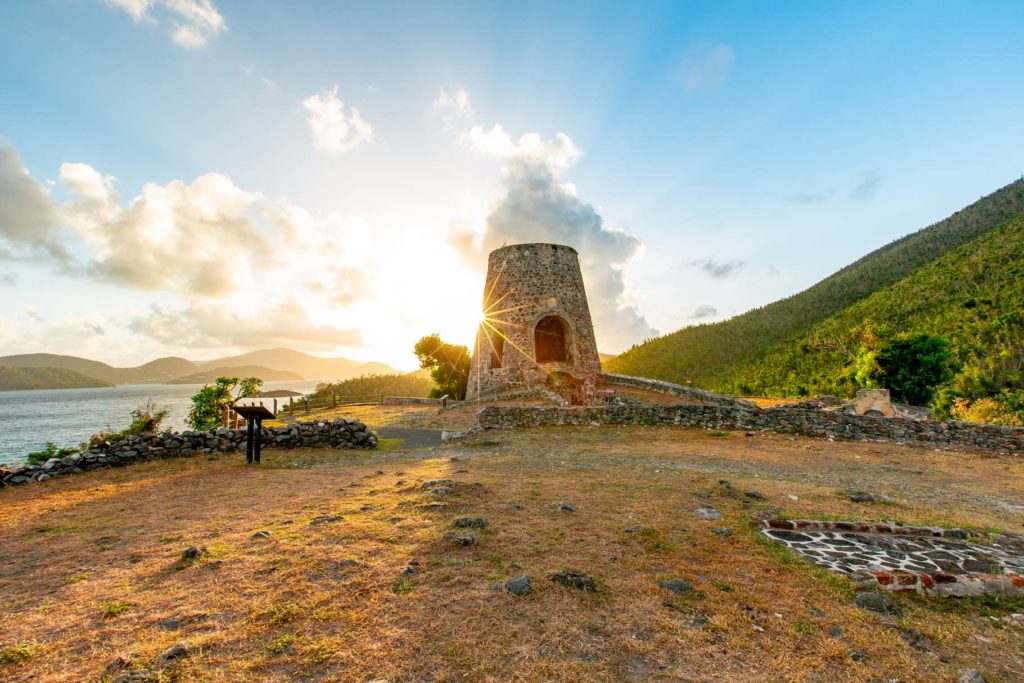
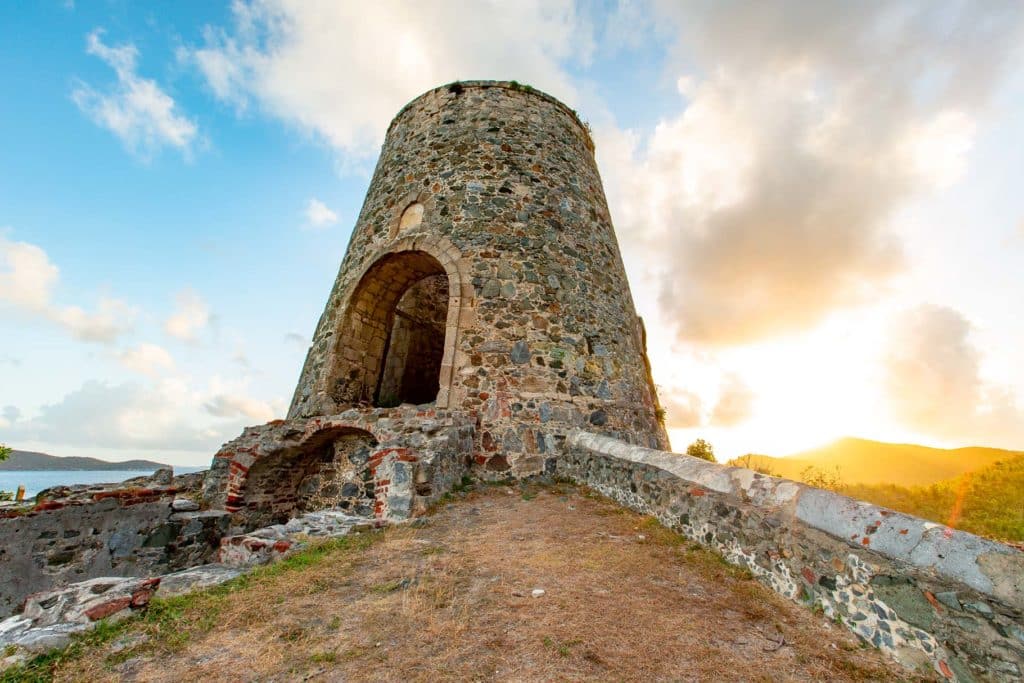
The Annaberg Plantation Ruins on St. John are among the best-preserved sugar-estate ruins in Virgin Islands National Park. The stone windmill tower stands on a hillside above Leinster Bay, with the blue water of Waterlemon Cay below. It is one of the most photographed historic sites on the island, and at sunrise it is one of the quietest.
It is also a place worth slowing down for. These ruins were not just a sugar factory. They were a site of forced labor, where enslaved Africans built and ran one of the largest sugar operations in the Danish West Indies. Understanding that history is part of visiting Annaberg honestly, and the park’s interpretive signs help tell it. Here is what to know before you go, and what you will find when you get there.
The Quick Version
- Where: North Shore Road area, St. John, U.S. Virgin Islands, within Virgin Islands National Park
- Getting there: Ferry from St. Thomas to Cruz Bay, then about a 20-minute drive to the Annaberg parking area
- Walk: A short, mostly paved loop from the parking lot to the ruins
- Best time of day: Sunrise, when the sun comes up behind the mill and the site is empty
- Note: Some structures may be fenced off for stabilization or storm repair, so stay on marked paths
The History of Annaberg
St. John was a Danish colony for most of the 1700s and 1800s, and its economy ran on sugar. By the late 18th century, the island was covered in plantations, and Annaberg, on the slopes above Leinster Bay, grew into one of the larger sugar estates on St. John. Its windmill ground cane, and the factory below it boiled the juice down into sugar, molasses, and rum for export to Europe.
That work was done by enslaved Africans. Plantations like Annaberg were built and operated entirely through forced labor, and the people held here endured brutal conditions in the cane fields and the boiling house. The stone ruins you walk through today, the mill, the factory, the cisterns, and the foundations of the laborers’ quarters, are the physical record of that system. The National Park Service preserves and interprets the site so that history is not lost.
Love Virgin Islands? It's one of 117 threatened public lands destinations we're tracking. Get the free briefing.
St. John also holds one of the most significant chapters in the history of resistance to slavery in the Americas. In November 1733, enslaved Africans on the island, many of them Akwamu from the Gold Coast of West Africa, rose up and seized control of much of St. John. They held it for roughly six months before Danish and French colonial forces put the rebellion down in 1734. The uprising was one of the earliest and longest sustained slave revolts in the Caribbean, and it remains central to the island’s history.
Denmark eventually abolished slavery in its West Indian colonies in 1848, following an emancipation uprising on nearby St. Croix. The United States purchased the Danish West Indies in 1917, and the islands became the U.S. Virgin Islands. Virgin Islands National Park was established in 1956, and the Annaberg ruins have been protected within it since.

Exploring the Ruins
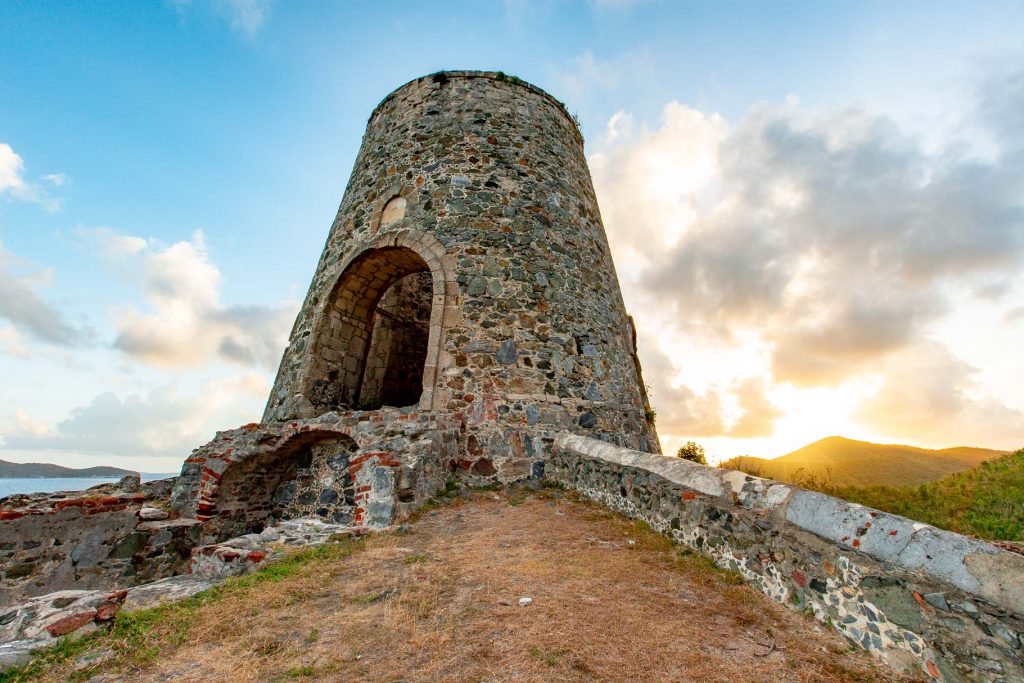
Annaberg holds the most extensive plantation ruins on St. John. A short interpretive trail loops through the complex, passing the windmill tower, the horse mill, the factory and boiling-house ruins, the cisterns, and the foundations of the quarters where enslaved laborers lived. Numbered signs along the way explain what each structure was and how the sugar-making process worked.
Storm damage and ongoing stabilization mean some structures may be fenced off at any given time, including portions of the mill. Conditions change, so follow posted signs and stay out of any marked sensitive or closed areas. The main loop is suitable for most visitors and works for a wide range of ages.

Getting There and Parking
Annaberg sits on the north shore of St. John, about a 20-minute drive from Cruz Bay, where the ferry from St. Thomas lands. Follow North Shore Road (Route 20) to the Annaberg turnoff and continue to the parking area. From the lot, the ruins are a short walk along a mostly paved path.
St. John roads are narrow and steep, and traffic drives on the left, so take it slow if you are renting. If you would rather not drive, a taxi from Cruz Bay is straightforward.
Best Time to Visit
Go at sunrise. The sun comes up behind the mill, and the light sweeps across the hills and down to Waterlemon Cay, turning the water blue and green. You will also have the site largely to yourself, which is the right way to experience a place like this. Mornings are cooler, too, since the ruins offer little shade once the day heats up.
December through April is the dry, busy high season with the most reliable weather. Hurricane season runs June through November, with the highest risk from August into October.
Continue on the Leinster Bay Trail

From the Annaberg area, many visitors continue along the Leinster Bay Trail toward Waterlemon Cay, a flat shoreline walk of roughly 2 miles round trip that takes about an hour. The trail leads to some of the best snorkeling in the park, around Waterlemon Cay, and gives you views back toward the ruins on the hill.
- Length: About 2 miles round trip to Waterlemon Cay
- Time: Roughly 45 to 60 minutes of walking, plus snorkeling time
Know Before You Go
- Bring water and a hat. The site is open and exposed, with little shade once the sun is up.
- Reef-safe sunscreen only. The U.S. Virgin Islands has banned sunscreens containing oxybenzone, octinoxate, and octocrylene. Use a mineral, reef-safe option.
- Stay on marked paths. Some ruins may be fenced for stabilization or storm repair. Respect closures.
- Pair it with Waterlemon Cay. Bring snorkel gear if you plan to continue on the Leinster Bay Trail.
After Hurricane Maria
Hurricanes Irma and Maria hit St. John hard in September 2017, and the island still carries the marks. The Annaberg ruins came through largely intact, though some structures took damage and stabilization work has continued since. Most photos of the park you will see, including ours, show it in its present condition rather than the way it looked before the storms.
More to Explore Nearby
Annaberg pairs well with the rest of the north shore. Good stops nearby include Waterlemon Cay, Francis Bay, Trunk Bay, America Hill Ruins, Maho Bay, and Cinnamon Bay. For the full picture of the park, including where to stay and how to plan your days, start with our complete Virgin Islands National Park guide.
Watch the Virgin Islands Film
Our Virgin Islands National Park film features Annaberg along with the beaches, trails, and reefs across St. John. It runs a few minutes and is a good primer if you are planning a visit.

What to Bring to Virgin Islands
Gear we recommend for Virgin Islands. Affiliate links support our work at no cost to you.
More Than Just Parks may earn a small commission from purchases made through these links, at no extra cost to you. We only recommend gear we would actually use.
Affiliate disclosure: Some links on this page earn us a small commission at no extra cost to you. We only recommend gear we actually use.
More Than Just Parks Film Watch our 8K film of Virgin Islands We spent weeks in Virgin Islands, one of our favorite public lands destinations, capturing it the way it deserves. Take a few minutes and see it for yourself.


