


Olympic is three parks in one. Glaciated peaks in the middle, temperate rain forest on the west side, and 73 miles of wild Pacific coast, all inside one boundary. You can stand in moss-draped old growth in the morning and watch sea stacks at sunset the same day. I got engaged at Hurricane Ridge, so this one runs personal for me, and it still holds up as one of the most varied parks in the country.
Below are 17 things to do in Olympic, ranked and grouped by the park’s three worlds so you can plan around the mountains, the rain forest, and the coast. Each item lists the trailhead, distance, difficulty, and the best time to go. For the full overview and current road status, start at our Olympic National Park hub.
Some links below are affiliate links. If you book a stay or buy a recommended map or guidebook through them, we may earn a small commission at no extra cost to you. It helps keep our park coverage free.
Where to stay near Olympic National Park: Most visitors base themselves in Port Angeles, Washington, the closest gateway with a real range of options. You can compare hotels and lodges near Olympic National Park to find dates that still have availability, since the best places book out months ahead in peak season.
Love Olympic? It's one of 117 threatened public lands destinations we're tracking. Get the free briefing.
It is also worth carrying a paper map and a good guidebook, because cell service is spotty across most of the park. We use the National Geographic Trails Illustrated map for Olympic National Park for trail planning, paired with a detailed Olympic National Park guidebook for trip ideas and logistics.

Here is our award-winning Olympic film if you want to see all three worlds in four minutes.
At a Glance
| Activity | Type | Distance / Time | Difficulty |
|---|---|---|---|
| Hurricane Ridge | Viewpoint / hikes | Varies | Easy to strenuous |
| Hoh Rain Forest | Forest walks | Hall of Mosses 0.8 mi loop | Easy |
| Mount Storm King | Hike | 4.1 mi RT, 2,100 ft gain | Strenuous |
| Sol Duc Falls | Hike | 1.6 mi RT | Easy |
| Marymere Falls | Hike | 1.8 mi RT | Easy to moderate |
| Rialto Beach to Hole in the Wall | Beach hike | 3.3 mi RT | Moderate, tide-dependent |
| Obstruction Point | Hike | Varies | Moderate to strenuous |
| Lake Crescent | Lake / kayak | Varies | Easy |
The Mountains
1. Explore Hurricane Ridge
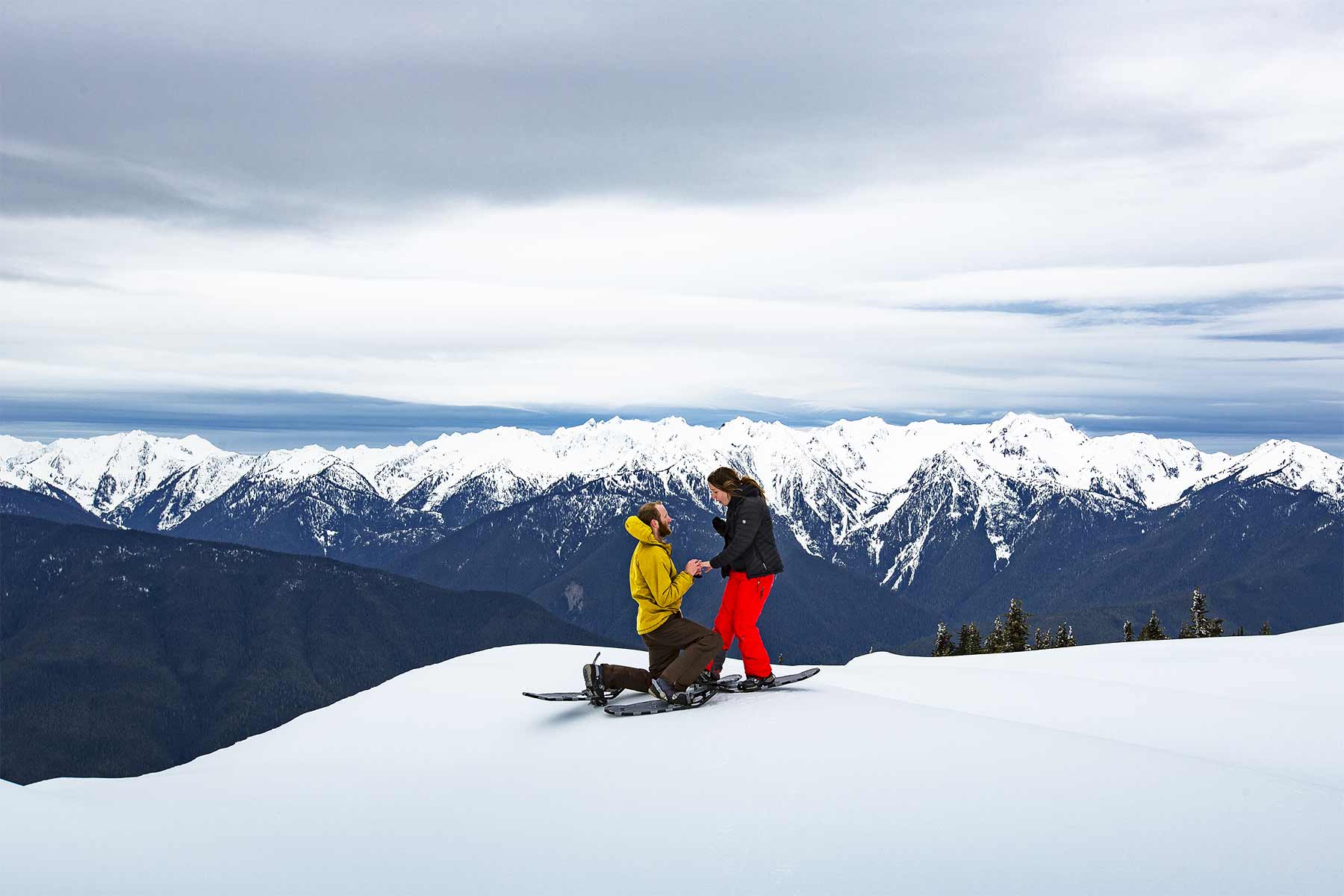
Location: 17 miles south of Port Angeles. Difficulty: Easy access, hikes range easy to strenuous. Best time: Clear summer day. 2026 note: Check days and hours before you go.
The most accessible high country in the park, with a mile of paved nature trails and big views of the Bailey Range and, on a clear day, Canada across the strait. Worth knowing before you go, the Hurricane Ridge Day Lodge burned down in 2023 and there are no permanent indoor facilities right now, just temporary restrooms and a contact station. The road also closes some weekdays for utility work, so verify the schedule on the park site first.
2. Hike the Obstruction Point Trail

Trailhead: End of Obstruction Point Road, off Hurricane Ridge. Distance: Varies, the road itself is 7.8 miles of gravel. Difficulty: Moderate to strenuous. Best time: Late summer once the road is snow-free.
The narrow gravel road past Hurricane Ridge leads to the highest trailhead in the park and some of its best alpine hiking. From here you can ramble along open ridgelines with the interior peaks all around you. The road is rough and opens late, so check conditions, and do not bring a low-clearance car if you can help it.
3. Hike to Deer Park and Blue Mountain

Trailhead: Deer Park, end of a steep gravel road. Distance: Short walks to longer ridge hikes. Difficulty: Moderate. Best time: Summer.
The quiet, harder-to-reach cousin of Hurricane Ridge, reached by a steep gravel road that keeps the crowds away. Blue Mountain sits near the top with open meadows and ridge views in every direction. It is the place to go when you want high country without the busier Hurricane Ridge scene.
The Rain Forest
4. Visit the Hoh Rain Forest

Location: End of the Upper Hoh Road. Distance: Hall of Mosses 0.8-mile loop, Spruce Nature Trail 1.2 miles. Difficulty: Easy. Best time: Early morning, weekdays.
One of the largest temperate rain forests in the country, dripping with moss and ferns under a canopy that gets 12 to 14 feet of rain a year. The Hall of Mosses loop is the signature walk. Worth noting, the Upper Hoh Road was washed out by a 2024 storm and reopened in spring 2026, so check that it is open and expect possible long waits at the entrance station midday.
5. See Sol Duc Falls

Trailhead: End of Sol Duc Road. Distance: 1.6 miles round trip. Difficulty: Easy. Best time: After rain, when the falls run full.
A short, flat walk through old-growth forest to one of the prettiest waterfalls in the park, where the river splits into channels and drops into a narrow canyon. It is family-friendly and rewarding out of all proportion to the effort. Pair it with a soak at the nearby Sol Duc Hot Springs.
6. Discover Olympic’s Staircase Region

Trailhead: Staircase, southeast corner near Lake Cushman. Distance: 2-mile Staircase Rapids loop. Difficulty: Easy. Best time: Spring for high water.
The southeast corner of the park, far quieter than the Hoh, with old-growth forest along the rushing Skokomish River. The Staircase Rapids loop crosses a footbridge over the rapids and makes an easy, gorgeous walk. It is the move when you want rain-forest feel without the rain-forest crowds.
7. Go Wildflower Peeping

Where: Hurricane Ridge and high meadows. Difficulty: Easy. Best time: Mid-July into August.
For a few weeks each summer the subalpine meadows at Hurricane Ridge and Obstruction Point fill with lupine, paintbrush, and avalanche lily. Timing shifts with the snowpack, so check before you go. Stay on the trails, because these high meadows are fragile and slow to recover.
Lakes and Waterfalls
8. Visit Lake Crescent

Location: Highway 101 west of Port Angeles. Difficulty: Easy. Best time: Calm morning for the reflections.
A deep, glacially carved lake so clear it glows turquoise on a sunny day. You can kayak it, swim it, or just stop at Lake Crescent Lodge and take it in. It also serves as the trailhead hub for Marymere Falls and Mount Storm King, so it earns a half day on its own.
9. Hike the Marymere Falls Trail

Trailhead: Storm King Ranger Station, Lake Crescent. Distance: 1.8 miles round trip. Difficulty: Easy to moderate. Best time: Any time.
An easy forest walk to a 90-foot falls that drops in a thin ribbon through the trees. The trail passes under Highway 101 and winds through old growth before a short climb to the viewpoint. It is one of the best low-effort payoffs in the park.
10. Hike Mount Storm King

Trailhead: Storm King Ranger Station, Lake Crescent. Distance: 4.1 miles round trip. Elevation gain: about 2,100 feet. Difficulty: Strenuous. Best time: Dry day, the final ropes section is dangerous when wet.
A steep grind that rewards you with a top-down view of Lake Crescent that is hard to beat anywhere in the park. The last stretch uses fixed ropes to scramble exposed rock, so this is not for anyone uneasy with heights or for a rainy day. The maintained viewpoint below the ropes is still excellent if you want to stop short.
The Coast
11. Explore Rialto Beach and Hole in the Wall

Trailhead: Rialto Beach, near La Push. Distance: 3.3 miles round trip to Hole in the Wall. Difficulty: Moderate, walking on cobble and sand. Best time: Low tide.
The most dramatic stretch of the Olympic coast, with sea stacks, driftwood logs the size of cars, and a natural arch called Hole in the Wall you can walk through at low tide. Check a tide table before you go, because the route to the arch and the tidepools around it are only accessible when the water is out. Never turn your back on the surf.
12. Check Out Kalaloch Beach

Location: Highway 101, southwest coast. Difficulty: Easy. Best time: Sunset, low tide for tidepools.
The most accessible coastal area in the park, with a lodge, a campground, and easy beach access right off the highway. Nearby is the famous Tree of Life, a Sitka spruce somehow surviving with its roots suspended over an eroded hollow. It is an easy place to catch a Pacific sunset without a hike.
13. Venture Out to Ozette Lake

Trailhead: Ozette, far northwest corner. Distance: 9.4-mile triangle loop to the coast. Difficulty: Moderate. Best time: Low tide, dry day.
A long boardwalk hike through coastal forest out to a remote, petroglyph-marked stretch of shore, then back via the beach to form a triangle. It is one of the wildest day hikes in the park and the boardwalk gets slick when wet. Time the beach leg with low tide and carry the tide table with you.
Wildlife and Night Skies
14. Spot the Roosevelt Elk

Where: Hoh and Quinault valleys, dawn and dusk. Difficulty: Easy. Best time: Early morning, fall rut.
The park protects the largest unmanaged herd of Roosevelt elk in the world, the species the park was originally created to save. The Hoh and Quinault valleys are your best bet, especially at first light. Keep your distance and stay quiet, and in fall you may hear the bulls bugling through the rain forest.
15. Go Whale Watching

Where: Coastal overlooks like Kalaloch and Cape Flattery area. Difficulty: Easy. Best time: Gray whale migration, spring and fall.
Gray whales pass along this coast on their migration in spring and fall, and you can sometimes spot their spouts from the bluffs. Bring binoculars and a little patience. The coastal overlooks double as great spots to watch the surf even when the whales are shy.
16. Soak in the Starry Night Skies

Where: The coast and Hurricane Ridge. Difficulty: Easy. Best time: New moon, clear night.
The far edges of the Olympic Peninsula are dark, and on a clear night the beaches and Hurricane Ridge both deliver real stars. The catch is the marine clouds, which roll in often, so you need a clear forecast and a little luck. When it lines up, the Milky Way over the sea stacks is unforgettable.
17. Soak at Sol Duc Hot Springs

Location: Sol Duc Road, near the falls. Difficulty: Easy. Best time: After a long hike day.
A developed hot springs resort with mineral pools tucked into the forest, the perfect place to soak tired legs after a day on the trail. It is seasonal and popular, so check hours and consider booking ahead. Pair it with the short hike to Sol Duc Falls for a complete day in this valley.
Planning Your Olympic Visit
Fees and Reservations
The entrance fee is $30 per private vehicle, $25 per motorcycle, or $15 per person, good for seven days, and an America the Beautiful annual pass covers it. There is no parkwide timed-entry or reservation system. You can pay online at Recreation.gov before you arrive to speed up the entrance station, which helps during busy summer days at the Hoh.
How Many Days You Need
Because the park is huge and the regions are far apart, give it at least three days. One day for the mountains around Hurricane Ridge and Lake Crescent, one for the Hoh Rain Forest, and one for the coast. With more time, add Sol Duc, Staircase, and the remote Ozette area.
Where to Stay

Inside the park, Lake Crescent Lodge, Kalaloch Lodge, and Sol Duc Hot Springs Resort book up far ahead. For campgrounds, Kalaloch, Sol Duc, and Hoh are the main reservable options on Recreation.gov. Outside the park, Port Angeles makes the best northern base and Forks the best western one. There is also dispersed camping on the surrounding public lands destinations in Olympic National Forest.
When to Go
Summer is the most reliable window, with the high roads open, the wildflowers out, and the lowest chance of rain on the coast and in the rain forest. Spring and fall are quieter and greener, but wetter. Winter brings snow to Hurricane Ridge for skiing and sledding on open days, while the rain forest lives up to its name.
Frequently Asked Questions
How many days do you need in Olympic National Park?
At least three. The park’s three regions, the mountains, the rain forest, and the coast, are spread far apart by road, so plan a day for each to avoid spending your whole trip driving.
Is Hurricane Ridge open in 2026?
Yes, though with limits. The Day Lodge burned down in 2023 and there are no permanent indoor facilities yet, just temporary restrooms and a contact station. The road also closes some weekdays for utility work, so check the park’s current schedule before you drive up.
Is the Hoh Rain Forest open?
Yes. The Upper Hoh Road washed out in a 2024 storm and reopened in spring 2026. Confirm the road is open before you go, and expect possible long waits at the entrance station in the middle of the day during summer.
What is the best hike in Olympic?
It depends on the world you want. For mountains, the ridges off Hurricane Ridge or Obstruction Point. For a big payoff, Mount Storm King over Lake Crescent. For the coast, Rialto Beach to Hole in the Wall at low tide.
Trying to choose between Washington’s parks? Read our comparison of Olympic vs. North Cascades vs. Rainier before you plan.
What to Bring to Olympic
Gear we recommend for Olympic. Affiliate links support our work at no cost to you.
More Than Just Parks may earn a small commission from purchases made through these links, at no extra cost to you. We only recommend gear we would actually use.
Affiliate disclosure: Some links on this page earn us a small commission at no extra cost to you. We only recommend gear we actually use.
More Than Just Parks Film Watch our film of Olympic We spent weeks in Olympic, one of our favorite public lands destinations, capturing it the way it deserves. Take a few minutes and see it for yourself.


