

About STAND
Every defender, in one place
America’s public lands belong to every one of us, and hundreds of groups spend their days keeping them public. STAND maps all of them, from the national legal teams to the friends group that adopted one trail, and shows you the record on each. Built by More Than Just Parks. Beholden to none of the groups on it.
Start from the place you love
Most tools make you already know an organization’s name. STAND starts from the land. Name a park, a river, a species, or your home state, and it shows you the people defending it: a local group and a small grassroots crew seen right next to the national names, with whoever is in federal court surfaced first.
Every match is built from evidence, and we show our work on the card: federal court records, a group’s own footprint and filings, and links our editors have verified by hand. The score is a rubric, not a vibe, and money can’t move it. No group can pay to be listed, ranked higher, or shown in a better light.
Six signals, weighed in the open
When you search a place, every group is scored against it on six signals, strongest first: a link our editors verified by hand (the strongest signal there is, each one a sentence we can defend with a source); federal court records over that very place; the place in the group’s own name or mission; how much of the group’s footprint the place’s state actually is (two states counts, twelve barely does); how rare and specific its focus areas are (a tag half the directory carries is worth almost nothing); and its home ground. Groups with no plausible connection are not shown at all, and a match percent is always a range, never fake precision.
Two things can never move a score: money, and a group’s own say-so without evidence. If we got one wrong, tell us at ask@morethanjustparks.com and an editor will look at the record.
Two brothers, a decade in the field
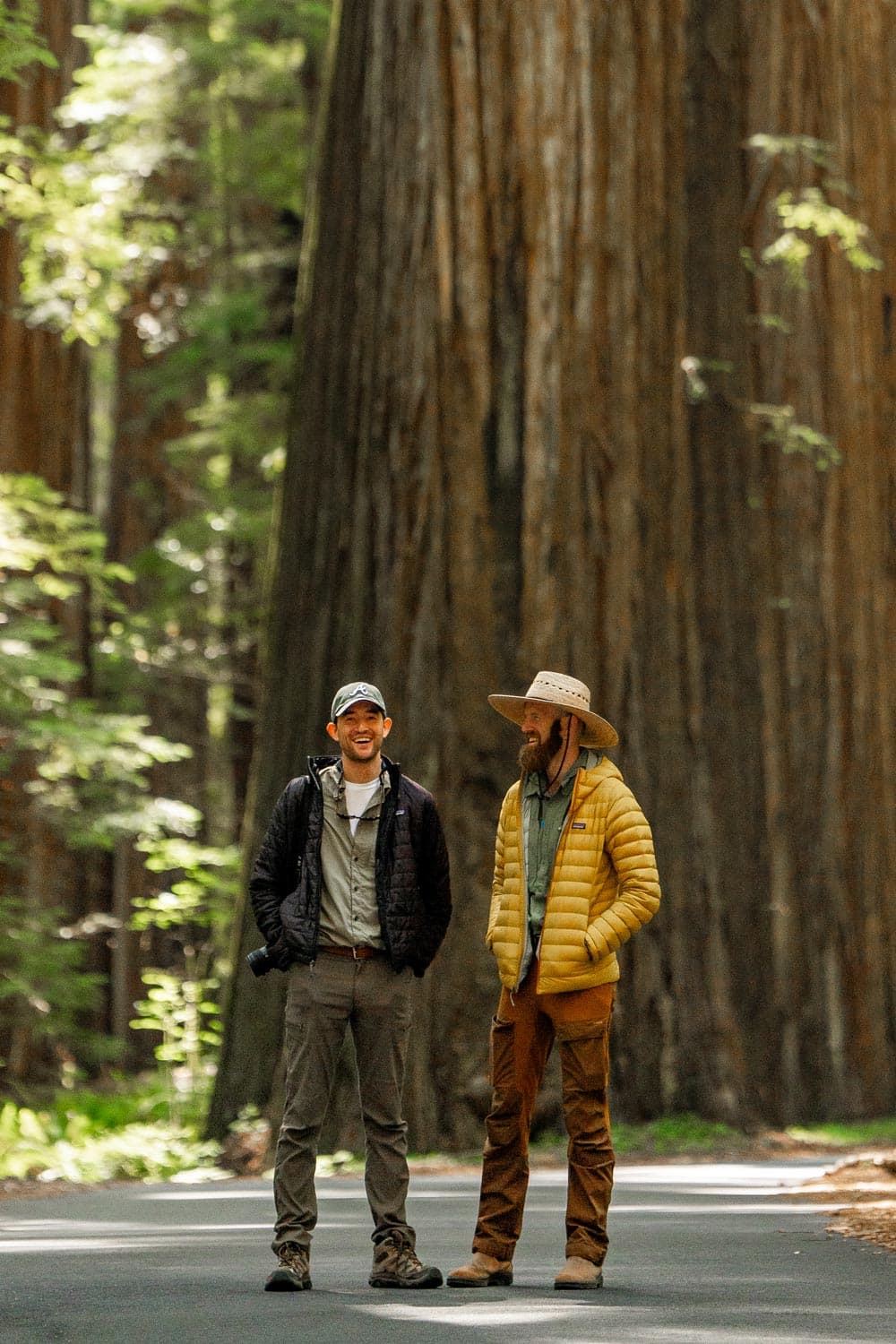
Jim and Will Pattiz are the brothers behind More Than Just Parks. They came to this work as filmmakers, documenting the country’s parks and forests for the agencies that manage them, and spent years in the field learning these places and the people who run them from the inside. What started in film is now an independent public lands publication and intelligence operation. STAND is one of the tools built from it.
Our films and reporting have been made for or featured by National Park Service, Department of the Interior, U.S. Forest Service, National Geographic, Outside, The Weather Channel and NPR.
We take no money from any group on this map. That’s the only reason it can be honest about them.
The whole ecosystem, not a top-orgs list
A group belongs on STAND if its work protects, defends, or stewards America’s public lands, at any scale: nonprofits, coalitions, tribal nations and organizations, land trusts, volunteer friends groups. Today that’s 260 groups across 34 states, and the single largest slice isn’t the national names, it’s the 91 local friends groups. We leave out political campaign operations, industry-backed front groups, and anything with no real public-lands work. Missing a group? Suggest one.
No number is invented
Finances come from IRS 990 filings through ProPublica: 193 of 260 groups carry sourced revenue. Court activity comes from the federal docket through CourtListener: 46 live federal cases across the groups we track, and the litigation we show is a selection, not any group’s complete docket. We’d rather undercount than overstate. Anything a group reports about itself is labeled org-reported and verified on claim, never presented as our own finding.
The sources, by name: IRS Form 990 via ProPublica, CourtListener federal dockets, MTJP litigation database, MTJP editorial record, Org-reported, verified on claim.
For journalists: the data is free to cite with attribution to More Than Just Parks. For methodology or an interview, reach the desk at ask@morethanjustparks.com.
America’s public lands belong to all of us, equally and without exception
They’re the last places where the country still holds something in common. The people mapped here are the ones keeping it that way, and standing with them is the whole point.
The Briefing: original reporting on America’s public lands, in your inbox almost every day. Free, read by more than 27,000 people. Subscribe