
Stop delisting the Gila chub from federal protection
Endangered and Threatened Wildlife and Plants; Removal of Gila Chub From the List of Endangered and Threatened Wildlife
Fish and Wildlife ServiceFederal Register 2026-18470 ↗
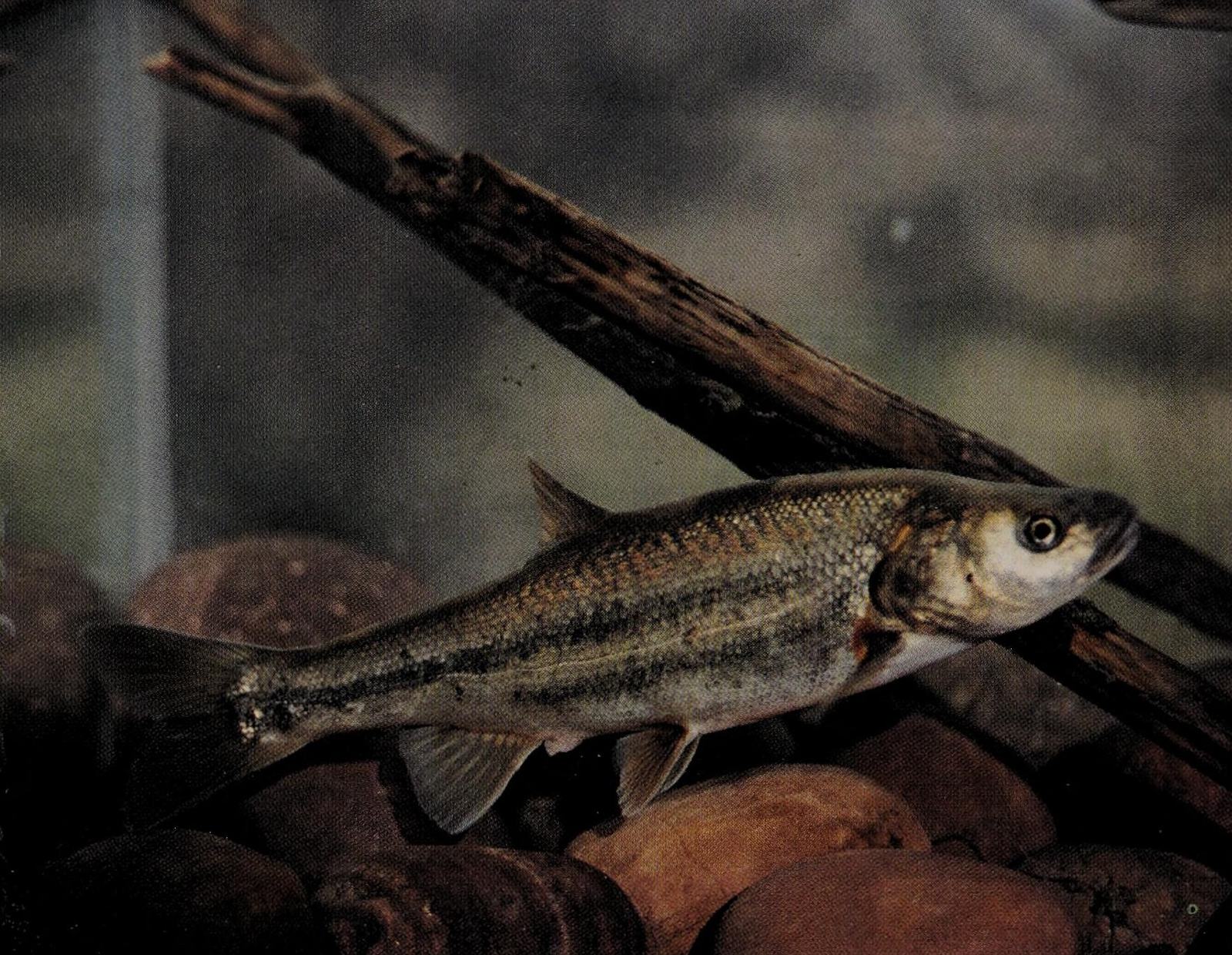
Federal protection for the Gila chub, a native Southwest fish, could be permanently removed.
What’s at risk
The Gila chub, a freshwater fish native to Arizona and New Mexico, faces loss of its Endangered Species Act protections. Without that status, federal agencies and permit holders face weaker legal obligations to protect the species and its habitat.
If this goes through
If the delisting is finalized, the Gila chub loses the legal safeguards that have driven its recovery, and restoring those protections would require starting the listing process over.
Our plain-English read of the official notice ↗. Check it against the agency’s own words below.
The agency’s case, tested
What the agency argues, and whether its own record backs it
- 4
- No support given
The Fish and Wildlife Service finds that listing the Lower Colorado River roundtail chub as threatened or endangered isn't warranted, and it's considering removing the endangered Gila chub from the federal list because a 2017 taxonomic revision folded the Gila chub into roundtail chub.
“Therefore, we hereby announce that we are considering issuing a proposed rule to remove Gila chub (Gila intermedia) from the List of Endangered and Threatened Wildlife at 50 CFR 17.11(h).”
Advance Notice of Proposed Rulemaking
Each Ask below goes into your letter when you write it with PLAN on this page, matched to what you tell it about how this land reaches you.
Effects
No support given
Most roundtail chub populations in the Lower Colorado River basin are stable or increasing even though nonnative fish occur across much of the range.
The Summary of Finding section says conservation efforts have stabilized most existing populations, and that since 2004, 20 populations have been introduced, reintroduced, or expanded, with at least 37 augmentations in 14 streams. It also gives 83 populations over 1,146 miles of stream and occupancy of around 34 percent of the historical range, with extirpation from two of nine major basins. It doesn't say how many populations are stable, increasing or declining, or how many of the 83 are introduced ones.
AskState how many of the 83 populations are stable, increasing or declining, and how many were introduced or augmented, with the monitoring data behind each trend.
The agency’s words, the record +Hide the words
The agency says
“Most of these populations are stable or increasing, despite the co-occurrence of nonnative species across much of the range.”
Summary of Finding
Elsewhere in the same document
“Currently, we estimate that the Lower Colorado River basin roundtail chub DPS occupies around 34 percent of its historical range in the basin and has been extirpated from two of the nine major basins it historically occupied.”
Summary of Finding
“Within its current range, 83 populations occupy a cumulative total of 1,146 miles (1,845 kilometers) of stream length.”
Summary of Finding
Effects
No support given
Roundtail chub populations will stay resilient and diverse enough to cope with changing conditions in the future.
The notice says there's variation in ecological settings and genetic diversity across the range that represents potential adaptive capacity. It says Federal and State agencies and Tribal nations have been carrying out conservation measures that stabilized most existing populations. It also says the agency anticipates these efforts will continue. Every modeled scenario included a positive effect of management, but the notice doesn't identify any funding, agreement or commitment that keeps that management going. It only encourages agencies to continue.
AskIdentify which conservation commitments are funded or binding, and show model results for a scenario where management declines or stops.
The agency’s words, the record +Hide the words
The agency says
“Overall, these results suggest that populations of this DPS will continue to be adequately resilient and retain sufficient intraspecific diversity to cope with changing environments in the future.”
Summary of Finding
Elsewhere in the same document
“These efforts have stabilized most existing populations and expanded the species’ distribution through translocations.”
Summary of Finding
“We encourage local agencies and stakeholders to continue cooperative monitoring and conservation efforts.”
New Information
Science
No support given
Threats aren't concentrated in any part of the population's range at a biologically meaningful scale.
The notice says nonnative species co-occur across much of the range and that surviving populations are widely distributed, which points to widespread rather than concentrated threats. Still, it states the no-concentration conclusion without basin-by-basin threat data. It notes extirpation from two of nine major basins but doesn't show how threats compare among the remaining basins.
AskShow threat levels and population trends for each remaining basin and explain why the two basins where the fish was lost don't indicate concentrated threats.
The agency’s words, the record +Hide the words
The agency says
“Based on the best available information, we found no concentration of threats in any portion of the DPS’s range at a biologically meaningful scale.”
Summary of Finding
Elsewhere in the same document
“These influences include nonnative species and alterations to the hydrological regime, which have reduced the distribution and abundance of roundtail chub in the past and continue to impact populations today.”
Summary of Finding
Show 1 more claim +Show fewer
Science
No support given
Little Colorado River roundtail chub are discrete but not significant, so they were excluded from the petitioned population.
The notice explains that genetic research places Little Colorado River chub in the same lineage as Upper basin chub, which is its reason for treating them separately. However, it cites no study for this, and it gives no reasoning here for the finding that they aren't significant. Instead it refers readers to the species assessment form, which isn't in this text. The original petition included the Little Colorado River.
AskCite the genetic studies and explain in the notice why Little Colorado River chub fail the significance standard and what their status is.
The agency’s words, the record +Hide the words
The agency says
“Roundtail chub in the Little Colorado River do meet the threshold of discrete under the policy, but not the standard for significant.”
Summary of Finding
Elsewhere in the same document
“This research has also found that roundtail chub from the Little Colorado River, traditionally geographically placed in the Lower Colorado River basin, belong to the same genetic lineage as roundtail chub in the Upper Colorado River basin.”
Summary of Finding
“The original petition to list roundtail chub in the Lower Colorado River basin included populations found in the Bill Williams, Gila, and Little Colorado River basins, which are located in Arizona and New Mexico.”
Summary of Finding
Read from the agency’s own decision document ↗, all 4 pages. Every quote is checked word for word against it, a claim marked contradicted stands on a quote from the same document, and a second reading argued the agency’s side of every verdict before it was published. The verdicts are our reading; the quotes are the agency’s. A court can set aside agency action it finds “arbitrary, capricious, an abuse of discretion, or otherwise not in accordance with law” (5 U.S.C. 706(2)(A) ↗), which is why these gaps are worth putting in the record.
What to say
Make these points, in your own words
- I oppose this action as proposed, and I ask the agency to weigh the specific harms below.
- The agency acknowledges that a 2017 taxonomic revision concluded species-level status is not warranted for Gila chub, yet the document never explains how a species the agency's own taxonomic authority says should not exist as a separate species can simultaneously be delisted as a species. The advance notice of proposed rulemaking section states that the taxonomic revision concluded species-level status is not warranted for Gila chub, but the document does not analyze what this means for the validity of the original 2005 listing or the legal basis for delisting under the five statutory factors. The agency should explain in the proposed rule whether delisting is warranted because the species is recovered, or because it was never a valid species, and justify which statutory basis under section 4 applies.
- The document initiates a proposed delisting of an endangered species through an advance notice of proposed rulemaking without presenting any analysis of the five statutory listing factors for Gila chub. The ESA requires that delisting be based solely on the best scientific and commercial data available evaluated against those five factors, but this document contains no such evaluation for Gila chub. The agency should complete and publish a full five-factor analysis for Gila chub before advancing any proposed rule to remove it from the list.
- The document separates Little Colorado River roundtail chub from the Lower Colorado River roundtail chub DPS based on genetic lineage, finding it does not meet the significance threshold under the DPS Policy, but provides no analysis in the Federal Register notice of why it fails that threshold. A reader cannot evaluate whether the agency applied the DPS Policy correctly. The agency should publish its full significance analysis for the Little Colorado River population in the rulemaking record so the public can comment meaningfully.
- The agency states that roundtail chub currently occupies only about 34 percent of its historical range and has been extirpated from two of nine major basins it historically occupied, yet concludes that listing is not warranted. The document does not explain how a species occupying one-third of its historical range and absent from two of nine historical basins fails to meet the definition of threatened. The agency should provide explicit reasoning reconciling the 34 percent occupancy figure with the not-warranted conclusion.
Show all 12 points from the document
- The agency's positive finding on population stability relies heavily on translocations and augmentations, acknowledging that 20 populations have been introduced, reintroduced, or expanded and at least 37 augmentations in 14 streams have occurred. The document does not analyze whether these managed populations would persist without ongoing active intervention, which is a critical question for a not-warranted finding. The agency should analyze the viability of roundtail chub populations in the absence of continued translocation and augmentation efforts before concluding the species does not warrant listing.
- The document acknowledges that climate change will alter precipitation patterns, drought, and water usage, and that these effects may exacerbate existing threats from nonnative species and hydrological modification, but then states only that 'most sites that are currently occupied will likely continue to be so in the 50-year foreseeable future.' The document does not define what percentage of sites or populations constitutes 'most,' nor does it explain the threshold below which the species would warrant listing. The agency should quantify the minimum viable population and occupancy thresholds used in its models and explain how the projected losses remain below those thresholds.
- The advance notice of proposed rulemaking provides only a 60-day public comment window for a decision affecting a currently listed endangered species, and the supporting species status assessment and species assessment form are available only by navigating to an external docket, not summarized in the Federal Register notice itself. Members of the public cannot meaningfully comment on a delisting without access to the underlying analysis. The agency should extend the comment period to at least 90 days and publish a summary of the five-factor analysis for Gila chub directly in the Federal Register.
- The document notes that several Federal and State agencies and Tribal nations have been implementing conservation measures but does not describe what tribal consultation, if any, was conducted with those Tribal nations regarding the advance notice of proposed rulemaking to delist Gila chub, which occupies waters in the Gila River basin where Tribal interests are significant. The agency should disclose what government-to-government consultation occurred and whether Tribal nations concur with the proposed delisting direction before issuing a proposed rule.
- The agency states it found no concentration of threats in any portion of the Lower Colorado River roundtail chub DPS range at a biologically meaningful scale, yet the document itself acknowledges the species has been extirpated from two of nine historical basins. Extirpation from entire basins is, by definition, a geographically concentrated loss, and the document provides no explanation for why basin-level extirpation does not constitute a concentration of threats at a biologically meaningful scale. The agency should provide explicit analysis of why basin-level extirpation does not satisfy the significant-portion-of-range standard.
- The document acknowledges that nonnative species co-occur across much of the roundtail chub range and continue to impact populations today, and that most populations are stable despite this co-occurrence, but does not analyze whether stability is contingent on continued suppression of nonnative species or whether nonnative species pressure is increasing. Concluding that the species does not warrant listing while leaving the nonnative species threat unquantified and unresolved is an unexplained analytical gap. The agency should analyze trends in nonnative species pressure and assess whether current stability is self-sustaining or management-dependent before finalizing any not-warranted finding.
- Say something only you can say. The law requires the agency to consider and respond to substantive comments, and specifics are what make a comment substantive.
In the agency’s own words
We, the U.S. Fish and Wildlife Service (Service), are reopening the public comment period on our June 17, 2025, proposed rule to remove the Gila chub (Gila intermedia) from the Federal List of Endangered and Threatened Wildlife. We are taking this action to allow all interested parties an additional opportunity to comment on the proposed rule. Comments previously submitted on the proposed rule need not be resubmitted and will be fully considered in our development of the final rule.
Federal Register 2026-18470 ↗Read the docket on regulations.gov ↗
Did the agency answer?
10 issues are on this record. The agency has not published its decision document yet, so each one stays pending until the agency answers.
Issues on the record, awaiting the decision
- PendingThe agency acknowledges that a 2017 taxonomic revision concluded species-level status is not warranted for Gila chub, yet the document never explains how a species the agency's own taxonomic authority
The agency acknowledges that a 2017 taxonomic revision concluded species-level status is not warranted for Gila chub, yet the document never explains how a species the agency's own taxonomic authority says should not exist as a separate species can simultaneously be delisted as a species. The advance notice of proposed rulemaking section states that the taxonomic revision concluded species-level status is not warranted for Gila chub, but the document does not analyze what this means for the validity of the original 2005 listing or the legal basis for delisting under the five statutory factors. The agency should explain in the proposed rule whether delisting is warranted because the species is recovered, or because it was never a valid species, and justify which statutory basis under section 4 applies.
A hole PLAN found in the agency’s own analysis, quote verified against the document
- PendingThe document initiates a proposed delisting of an endangered species through an advance notice of proposed rulemaking without presenting any analysis of the five statutory listing factors for Gila chu
The document initiates a proposed delisting of an endangered species through an advance notice of proposed rulemaking without presenting any analysis of the five statutory listing factors for Gila chub. The ESA requires that delisting be based solely on the best scientific and commercial data available evaluated against those five factors, but this document contains no such evaluation for Gila chub. The agency should complete and publish a full five-factor analysis for Gila chub before advancing any proposed rule to remove it from the list.
A hole PLAN found in the agency’s own analysis, quote verified against the document
- PendingThe document separates Little Colorado River roundtail chub from the Lower Colorado River roundtail chub DPS based on genetic lineage, finding it does not meet the significance threshold under the DPS
The document separates Little Colorado River roundtail chub from the Lower Colorado River roundtail chub DPS based on genetic lineage, finding it does not meet the significance threshold under the DPS Policy, but provides no analysis in the Federal Register notice of why it fails that threshold. A reader cannot evaluate whether the agency applied the DPS Policy correctly. The agency should publish its full significance analysis for the Little Colorado River population in the rulemaking record so the public can comment meaningfully.
A hole PLAN found in the agency’s own analysis, quote verified against the document
- PendingThe agency states that roundtail chub currently occupies only about 34 percent of its historical range and has been extirpated from two of nine major basins it historically occupied, yet concludes tha
The agency states that roundtail chub currently occupies only about 34 percent of its historical range and has been extirpated from two of nine major basins it historically occupied, yet concludes that listing is not warranted. The document does not explain how a species occupying one-third of its historical range and absent from two of nine historical basins fails to meet the definition of threatened. The agency should provide explicit reasoning reconciling the 34 percent occupancy figure with the not-warranted conclusion.
A hole PLAN found in the agency’s own analysis, quote verified against the document
- PendingThe agency's positive finding on population stability relies heavily on translocations and augmentations, acknowledging that 20 populations have been introduced, reintroduced, or expanded and at least
The agency's positive finding on population stability relies heavily on translocations and augmentations, acknowledging that 20 populations have been introduced, reintroduced, or expanded and at least 37 augmentations in 14 streams have occurred. The document does not analyze whether these managed populations would persist without ongoing active intervention, which is a critical question for a not-warranted finding. The agency should analyze the viability of roundtail chub populations in the absence of continued translocation and augmentation efforts before concluding the species does not warrant listing.
A hole PLAN found in the agency’s own analysis, quote verified against the document
- PendingThe document acknowledges that climate change will alter precipitation patterns, drought, and water usage, and that these effects may exacerbate existing threats from nonnative species and hydrologica
The document acknowledges that climate change will alter precipitation patterns, drought, and water usage, and that these effects may exacerbate existing threats from nonnative species and hydrological modification, but then states only that 'most sites that are currently occupied will likely continue to be so in the 50-year foreseeable future.' The document does not define what percentage of sites or populations constitutes 'most,' nor does it explain the threshold below which the species would warrant listing. The agency should quantify the minimum viable population and occupancy thresholds used in its models and explain how the projected losses remain below those thresholds.
A hole PLAN found in the agency’s own analysis, quote verified against the document
- PendingThe advance notice of proposed rulemaking provides only a 60-day public comment window for a decision affecting a currently listed endangered species, and the supporting species status assessment and
The advance notice of proposed rulemaking provides only a 60-day public comment window for a decision affecting a currently listed endangered species, and the supporting species status assessment and species assessment form are available only by navigating to an external docket, not summarized in the Federal Register notice itself. Members of the public cannot meaningfully comment on a delisting without access to the underlying analysis. The agency should extend the comment period to at least 90 days and publish a summary of the five-factor analysis for Gila chub directly in the Federal Register.
A hole PLAN found in the agency’s own analysis, quote verified against the document
- PendingThe document notes that several Federal and State agencies and Tribal nations have been implementing conservation measures but does not describe what tribal consultation, if any, was conducted with th
The document notes that several Federal and State agencies and Tribal nations have been implementing conservation measures but does not describe what tribal consultation, if any, was conducted with those Tribal nations regarding the advance notice of proposed rulemaking to delist Gila chub, which occupies waters in the Gila River basin where Tribal interests are significant. The agency should disclose what government-to-government consultation occurred and whether Tribal nations concur with the proposed delisting direction before issuing a proposed rule.
A hole PLAN found in the agency’s own analysis, quote verified against the document
- PendingThe agency states it found no concentration of threats in any portion of the Lower Colorado River roundtail chub DPS range at a biologically meaningful scale, yet the document itself acknowledges the
The agency states it found no concentration of threats in any portion of the Lower Colorado River roundtail chub DPS range at a biologically meaningful scale, yet the document itself acknowledges the species has been extirpated from two of nine historical basins. Extirpation from entire basins is, by definition, a geographically concentrated loss, and the document provides no explanation for why basin-level extirpation does not constitute a concentration of threats at a biologically meaningful scale. The agency should provide explicit analysis of why basin-level extirpation does not satisfy the significant-portion-of-range standard.
A hole PLAN found in the agency’s own analysis, quote verified against the document
- PendingThe document acknowledges that nonnative species co-occur across much of the roundtail chub range and continue to impact populations today, and that most populations are stable despite this co-occurre
The document acknowledges that nonnative species co-occur across much of the roundtail chub range and continue to impact populations today, and that most populations are stable despite this co-occurrence, but does not analyze whether stability is contingent on continued suppression of nonnative species or whether nonnative species pressure is increasing. Concluding that the species does not warrant listing while leaving the nonnative species threat unquantified and unresolved is an unexplained analytical gap. The agency should analyze trends in nonnative species pressure and assess whether current stability is self-sustaining or management-dependent before finalizing any not-warranted finding.
A hole PLAN found in the agency’s own analysis, quote verified against the document
The reporting behind this
From More Than Just ParksA memo signed by Fish and Wildlife Service Director Brian Nesvik rewrites the heart of the Endangered Species Act without a vote, a rule, or a single public comment.
It’s referred to as Unit 346 in the Twin Mountain II Timber Sale. On the ground, it’s some of the most spectacular old growth we’ve ever witnessed, and it’s marked for clearcutting.
To document and do our part to save America’s greatest old growth forest
More actions that need you
Go deeper, free
See how your members of Congress vote on public lands
Every representative, graded on the votes that decide the fate of parks, forests, and refuges.
Open ↗The mapSee the places under active threat
A live map of the parks, monuments, and wild country in the crosshairs right now.
Open ↗A wrong fact, a dead link, a form that wouldn’t take your letter: one tap and it comes to the people who build PLAN, with this fight attached.
Know an open comment period we are missing, or spotted a wrong deadline? .