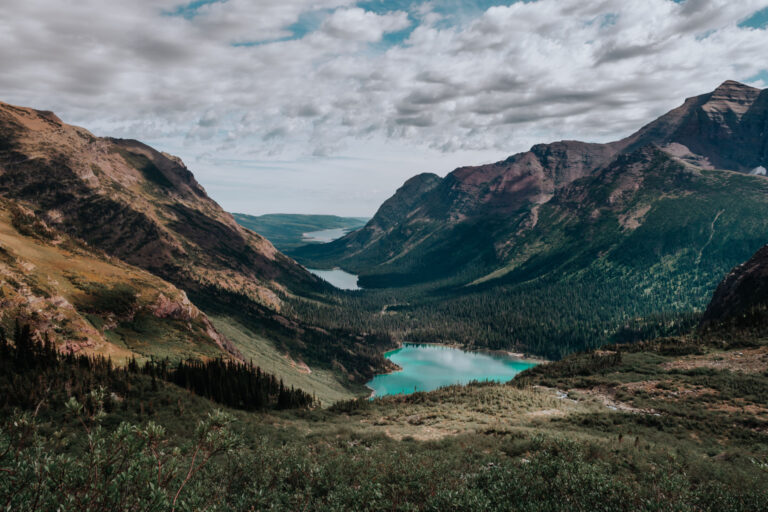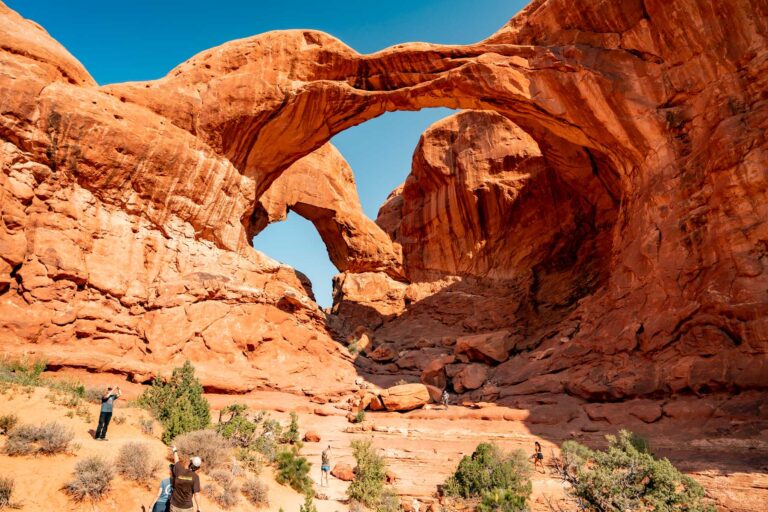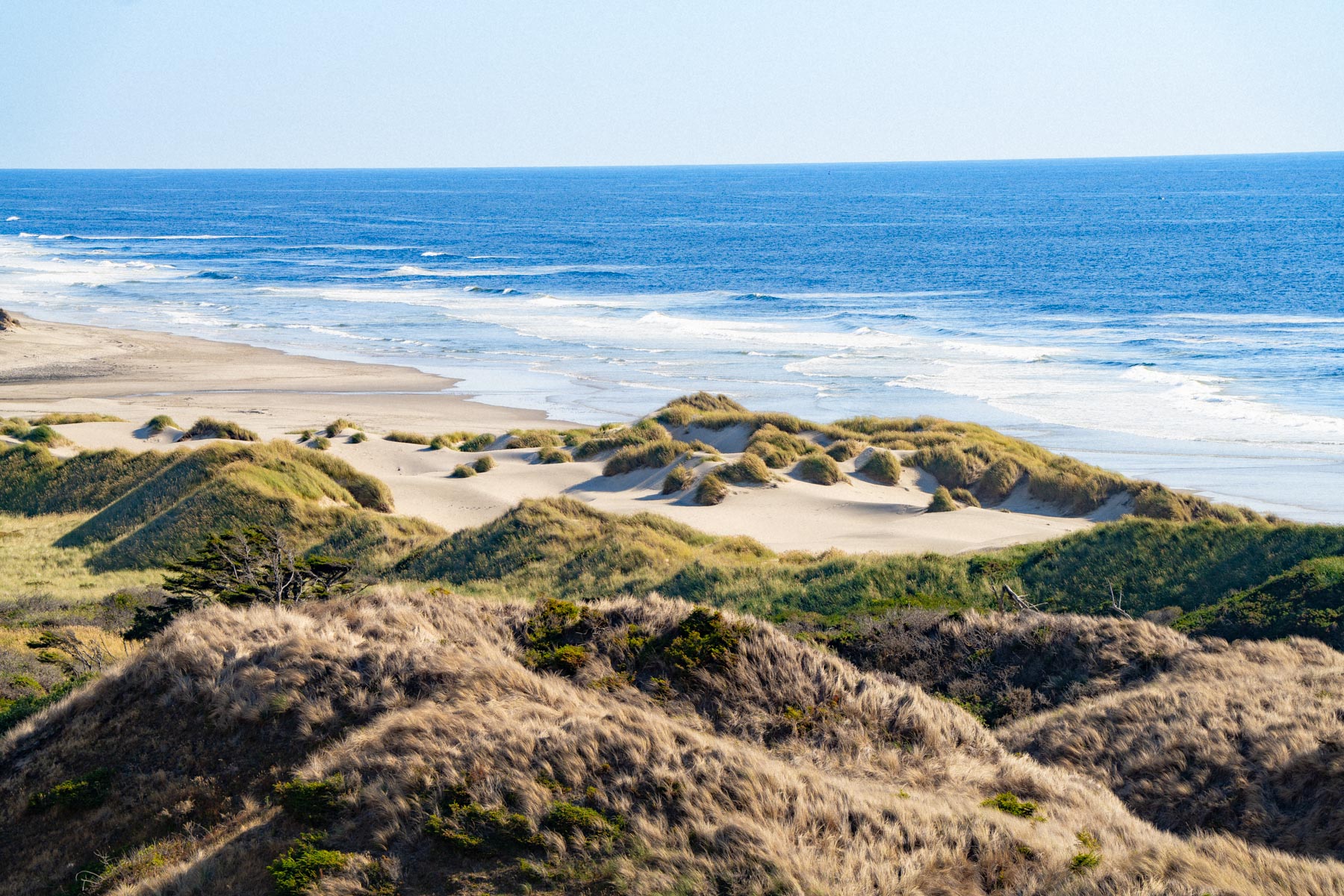


Portland has a strange relationship with its national parks. The best one is four hours away, the closest one is technically in Washington, and the thing most locals call a national park (the Columbia River Gorge) is actually a national scenic area. So let me sort this out honestly before you waste a Saturday.
Here is the real math from Portland. You can be standing inside a restored fur-trading fort in fifteen minutes, at the mouth of the Columbia where Lewis and Clark wintered in under two hours, and walking the candy-striped Painted Hills in about three and a half. Crater Lake, the one everybody actually wants, is a genuine four to four and a half hour haul south, which makes it a marquee overnight, not a casual day trip. I have ordered everything below by what I think of as drive-cost versus payoff. Close and easy first, the long southern hauls last.
One thing to know up front for 2026. Crater Lake is in the middle of a multi-year rehabilitation of Rim Drive and its rim-village facilities, so sections of the road, trails, and lodging may be closed when you go. Check nps.gov for current status before you commit to that drive. I will flag it again below, because it changes the trip. I have also been straight about the parts nobody puts on a postcard, like late-summer wildfire smoke that can settle over southern and eastern Oregon and gray out the very views you drove all that way to see.
Portland’s Parks At A Glance
Drive times are from downtown Portland and assume reasonable traffic. Fees listed are the standard rate as of 2026. Several of these sites are historic units with no entrance fee at all, which makes them some of the best free outings in the Pacific Northwest. Confirm anything fee-related and any Crater Lake closures at nps.gov before you go.
109 public lands destinations are under threat. Get the free weekly briefing that 25,000+ people use to stay informed and take action.
| Park | Drive from Portland | Best season | Signature draw | Entrance fee (2026) |
|---|---|---|---|---|
| Fort Vancouver NHS | ~15 min | Year-round | Reconstructed Hudson’s Bay fur fort | ~$10/person (kids free) |
| Lewis & Clark NHP | ~1 hr 45 min to 2 hr | Late spring to fall | Fort Clatsop, Columbia’s mouth | ~$10/person, often free |
| John Day Fossil Beds NM | ~3 hr 30 min to 4 hr | Apr to Jun, Sep to Oct | The Painted Hills | Free |
| Crater Lake NP | ~4 hr to 4 hr 30 min | Jul to Sep | Deepest lake in the US | $30/vehicle (check closures) |
| Oregon Caves NM & Preserve | ~5 hr to 5 hr 30 min | Late spring to fall | Marble cave tour | Free park, cave tour ~$10 |
1. Fort Vancouver National Historic Site
Drive time from Portland: about 15 minutes (roughly 10 miles north on I-5, across the river into Vancouver, Washington)
Entrance fee: grounds are free to walk. The reconstructed fort itself runs about $10 for adults, and kids 15 and under are free. Check nps.gov for current hours.
This is the closest national park unit to Portland by a wide margin, and the fact that it sits across the river in Washington does not make it any less of an easy win. Fort Vancouver was the Hudson’s Bay Company’s western headquarters, founded in 1825 as the commercial heart of the Pacific Northwest fur trade, decades before Oregon was a state. It became a national historic site in 1948. The Park Service has reconstructed the stockade and several buildings on the original footprint, so you walk through the blacksmith shop, the fur store, and the chief factor’s house where the entire regional economy was once run.
What to actually do here. Start at the visitor center, then walk the reconstructed fort with a ranger if the timing works, because the costumed-interpreter demonstrations in the blacksmith shop are the best part. Outside the stockade, Officers Row and the adjacent Pearson Air Museum round out an afternoon, and the whole site sits on a flat, walkable green that is easy with kids or grandparents. You can see the essentials in about two hours.
Honest caveats. This is history, not wilderness, so set your expectations accordingly. The grounds are open year-round, but the reconstructed buildings keep shorter hours and some are closed on certain days, so check before you drive over even though it is only fifteen minutes. Summer weekends bring school groups and living-history events, which are great if you want the demonstrations and less great if you wanted quiet.

2. Lewis and Clark National Historical Park
Drive time from Portland: about 1 hour 45 minutes to 2 hours (roughly 95 miles northwest via US-26 and US-101 to the Astoria area)
Entrance fee: around $10 per person at Fort Clatsop, good for 7 days, and free on the federal fee-free days. Children are free. Confirm current pricing at nps.gov.
Pick this one if you want history and coast in the same trip. Lewis and Clark National Historical Park sits where the Columbia River meets the Pacific, and it is built around Fort Clatsop, the log stockade where the Corps of Discovery spent the miserable, rain-soaked winter of 1805 to 1806 before turning around and walking home. The park spans both the Oregon and Washington sides of the river mouth and pulls together a string of sites tied to the expedition’s final push to the ocean. It was redesignated as a national historical park in 2004.
What to actually do here. Tour the reconstructed Fort Clatsop, walk the short forest trails through the kind of dripping coastal rainforest the expedition complained about constantly, and in summer catch the ranger and costumed-interpreter demonstrations of flintlock firing and candle-making. Then drive out to the coast. Sunset Beach and the Fort to Sea Trail connect the fort to the Pacific, and nearby Astoria gives you a working river town with a great maritime museum to fill out the day.
Honest caveats. This is the Oregon coast, so plan for rain in every season except a narrow window in late summer, and bring a real layer. The expedition recorded rain on all but a handful of days that winter, and not much has changed. Summer weekends fill the Fort Clatsop parking lot by late morning, so come early. If you only have a few hours, the fort and one short trail are the core of it.
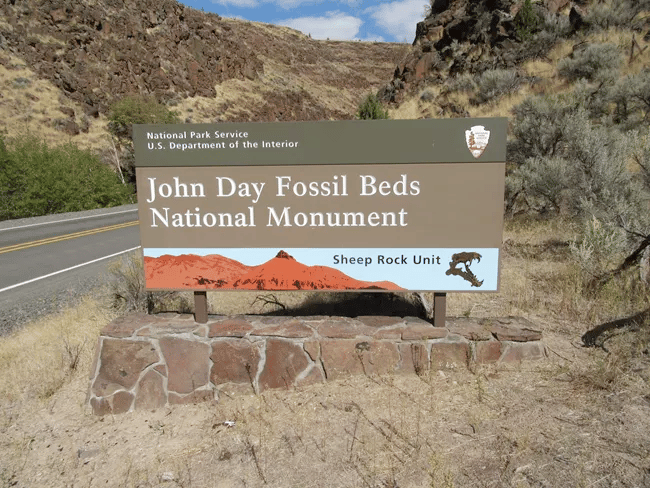
3. John Day Fossil Beds National Monument
Drive time from Portland: about 3 hours 30 minutes to 4 hours to the Painted Hills Unit (roughly 230 miles via I-84 east and US-26)
Entrance fee: free.
This is the one that is worth the drive even though the drive is long. John Day Fossil Beds protects one of the best continuous fossil records on the planet, roughly 40 million years of climate change and animal evolution written into the rock, and it was established as a national monument in 1975. It is split into three separate units spread across eastern Oregon, but the one you came for is the Painted Hills, where iron, manganese, and ancient soils stack the slopes in bands of red, gold, and black that shift color with the light and the moisture.

What to actually do here. Time the Painted Hills for the last two hours of daylight. The low-angle light deepens the reds and the bands separate cleanly, and the same hills look flat and washed out at noon. Walk the short Painted Hills Overlook Trail for the wide view, then the quarter-mile Painted Cove boardwalk that puts you close enough to see the popcorn-textured clay up close. Over at the Sheep Rock Unit, the Thomas Condon Paleontology Center has real fossils on display and a working lab window, and the Blue Basin trails wind through eerie blue-green badlands. Each unit is a drive apart, so pick one or two rather than chasing all three.

Honest caveats. There is no camping inside the monument and almost no services nearby, so fuel up in Prineville or Mitchell and pack your own food and water. This is high desert, which means hot, dry summer afternoons and cold nights, and late summer is the heart of eastern Oregon wildfire season, when smoke can roll in and dull the colors or close access entirely. Spring and early fall are the sweet spot. Walk on the trails and boardwalks only, because a footprint in that fragile clay can last for years. River rafting and fishing are popular along the wild-and-scenic stretch of the John Day River if you want to add water to the trip.
4. Crater Lake National Park
Drive time from Portland: about 4 hours to 4 hours 30 minutes (roughly 250 miles via I-5 south and OR-138 or OR-62)
Entrance fee: $30 per vehicle in summer, good for 7 days. Important for 2026: a multi-year rehabilitation of Rim Drive and the rim facilities means roads, trails, and lodging may be partially or fully closed. Check nps.gov for current status before you leave.
This is the marquee, and it earns the long drive south. Crater Lake is the deepest lake in the United States at 1,943 feet, and that depth is what gives the water its impossible, saturated blue. It sits in the caldera of Mount Mazama, a roughly 12,000-foot volcano that blew its top and collapsed about 7,700 years ago, an eruption the ancestors of the Klamath people witnessed and carried forward in their oral history. It became Oregon’s first national park in 1902, the sixth in the country. There are no rivers in or out, just snowmelt and rain filling the caldera, which is part of why the water is so clear.

What to actually do here, construction permitting. In a normal year, the 33-mile Rim Drive is the headline, a loop of overlooks circling the entire caldera, so confirm which sections are open before you count on it. Hike Garfield Peak from the historic Crater Lake Lodge for the best rim view that does not require a full day, climb Watchman Peak at sunset for the long light across the water, and if the trail is open, the steep Cleetwood Cove Trail is the only legal way down to the shoreline and the boat tours out to Wizard Island. Photograph the lake in the morning when the water is dead calm and the blue is at its deepest.
Honest caveats. This park is buried in snow most of the year. The deep snowpack means full Rim Drive access typically does not open until July and can close again by October, so summer is effectively your only window for the complete loop, and the 2026 rehabilitation narrows that further. Late summer also brings southern Oregon wildfire smoke, which can hang in the caldera and erase the very view you drove four hours for, so watch the air-quality forecast. Treat this as a two-night trip, not a day trip, and book lodging or a campsite well ahead because the options near the rim are limited and fill fast. For more on the park, see our guides below.
RELATED: Things To Do At Crater Lake National Park and Crater Lake Facts
5. Oregon Caves National Monument and Preserve
Drive time from Portland: about 5 hours to 5 hours 30 minutes (roughly 290 miles via I-5 south to Cave Junction, then OR-46)
Entrance fee: the monument is free to enter. The ranger-led cave tour costs around $10 per adult. Tours are seasonal and tickets are first come, first served, so check nps.gov for the schedule.
This is the longest haul on the list, tucked into the Siskiyou Mountains near the California line, and it is for travelers who want something different. Oregon Caves is a marble cave dissolved out of ancient seafloor limestone, one of the few marble caves open to the public anywhere, and it was set aside as a national monument in 1909. The only way to see the cave is on a guided tour, where a ranger walks you through a tight, dripping route past flowstone, columns, and the marble passages the cave is named for. Above ground, the monument protects a pocket of old-growth forest and a 1934 rustic lodge, the Chateau, that is a landmark in its own right.
What to actually do here. Take the standard cave tour, then walk the surface trails. The Cliff Nature Trail runs about a mile past marble outcrops and Illinois Valley views, the Big Tree Trail climbs to one of the widest-girth Douglas firs in Oregon, and the longer Cave Creek and No Name trails wind through streams and old growth if you want to stretch the visit into a full day.

Honest caveats. Five-plus hours each way makes this an overnight, not a day trip, and the cave tour involves more than 500 stairs, low ceilings, and tight passages, so it is not for anyone with mobility issues or a fear of close spaces. Tours run on a seasonal schedule and can sell out on summer days, so arrive early or plan around the tour time. The access road is narrow and winding, and like the rest of southern Oregon it sits in wildfire-smoke country in late summer.
Not National Parks, But Closer And Free
If you only have a day, the truth is the best wild outing from Portland is not a national park unit at all. Two places do most of the heavy lifting for locals, and both beat a four-hour drive south.
- Columbia River Gorge National Scenic Area: about 30 minutes east on I-84. Multnomah Falls drops 620 feet right off the highway, and the Historic Columbia River Highway strings together a dozen more waterfalls in a few miles. It is the easiest scenery-for-effort win in the state. Go early on weekends, because the Multnomah Falls lot fills before mid-morning and the popular trails use a timed-entry permit in peak season.
- Mount Hood National Forest: about 1 hour 30 minutes southeast. Oregon’s tallest peak at 11,249 feet, with alpine lakes like Trillium and Lost that frame the mountain perfectly, plus year-round skiing at Timberline. No entrance fee, though some trailheads need a Northwest Forest Pass.
How To Pick, And A Weekend Plan
Portland is unusual in that its closest national park units are historic sites and its only true scenic national park is a long drive away. Here is how I would choose.
- Easiest half-day: Fort Vancouver. Fifteen minutes from downtown, mostly free, and a genuine slice of Pacific Northwest history. Pair it with lunch in Vancouver and you are home by dinner.
- Best coastal day trip: Lewis and Clark. Drive out to Fort Clatsop, walk to the Pacific, and finish with seafood and the maritime museum in Astoria.
- Most worth the drive: John Day Fossil Beds. Leave Portland early, hit the Painted Hills in late-afternoon light, overnight in Mitchell or Prineville, and explore the Sheep Rock Unit the next morning. Skip it if late-summer smoke is in the forecast.
- The marquee overnight: Crater Lake. Treat it as a two-night trip in July through September, confirm the 2026 Rim Drive closures first, and watch the wildfire-smoke forecast before you commit to the drive.
- The far bucket-list haul: Oregon Caves. Five-plus hours south, best combined with a longer southern Oregon loop rather than a standalone trip.
One more honest note on what counts as near. People always ask about Mount Rainier and Olympic up in Washington, and yes, both are reachable, Rainier in about two and a half to three hours north and Olympic in roughly three and a half to four. They are real weekend trips over the state line, and we have filmed in both, so they deserve a list of their own rather than a footnote here. If you want a true day trip from Portland and not a national park, point the car at the Columbia River Gorge.
Frequently Asked Questions
Fort Vancouver National Historic Site is the closest national park unit, about 15 minutes north across the river in Vancouver, Washington. The closest true scenic national park is Crater Lake National Park, a roughly 4 to 4.5 hour drive south, which makes it an overnight trip rather than a day trip.
Not really. Crater Lake is about 4 to 4.5 hours south of Portland each way, so a day trip means roughly 9 hours of driving for a few hours at the rim. Plan it as a two-night trip, and for 2026 check nps.gov first, because a multi-year rehabilitation of Rim Drive and the rim facilities may close roads, trails, or lodging.
John Day Fossil Beds National Monument is free and protects the Painted Hills, some of the most colorful badlands in Oregon, about 3.5 to 4 hours east. Closer to home, Fort Vancouver’s grounds are free to walk, and the Columbia River Gorge National Scenic Area, about 30 minutes east, has Multnomah Falls and a dozen waterfalls with no entrance fee.
A word on who is telling you this. We are filmmakers who have worked across the Pacific Northwest, on projects with the National Park Service, the Department of the Interior, the USDA, and the U.S. Forest Service. The drive times and the rain warnings above come from making these runs out of Portland ourselves, not from a guidebook.