


Here is the honest math on national parks near Charleston. The closest National Park Service sites are not a drive at all, they are sitting in the harbor you can see from the Battery. Fort Sumter, where the Civil War started, and its sister Fort Moultrie make up one historical park split across Charleston Harbor. Charles Pinckney National Historic Site is twenty minutes away in Mount Pleasant. After that you have exactly one true national park in day-trip range, Congaree, about an hour and three quarters northwest near Columbia, and it is the marquee.
Everything else is a real haul. The Reconstruction Era park down in Beaufort is an hour south. Fort Pulaski and Cumberland Island are deep into Georgia, two to four hours one way, and Cape Hatteras up on the Outer Banks is a six-hour commitment that belongs on a different trip. So if you came to South Carolina picturing a string of big wilderness parks an easy drive from your hotel, adjust the picture. What Charleston actually gives you is some of the most loaded American history anywhere within a short drive, plus one genuinely wild old-growth forest you can reach before lunch.
I have ordered these by drive-cost versus payoff. The in-town forts and Charles Pinckney come first because the math is unbeatable, Congaree sits in the middle as the one real national park worth a full day, and the long Georgia and Outer Banks hauls come last. I have also been straight about the parts nobody puts on the brochure, the Fort Sumter ferry that books up and runs on fixed departures, the summer heat and mosquitoes that make Congaree miserable in July, and the fees that add up once a boat is involved.

Charleston’s Parks At A Glance
Drive times are from downtown Charleston. Fees below are the 2026 rates I am confident about, but historic-site fees change, so confirm on nps.gov before you go. The one thing worth saying up front, only one of these is a national park in the full sense, and that is Congaree.
117 public lands destinations are under threat. Get the free briefing that 27,000+ people use to stay informed and take action.
| Park | Drive from Charleston | Best season | Signature draw | Entrance fee (2026) |
|---|---|---|---|---|
| Fort Sumter & Fort Moultrie NHP | In town (ferry from Liberty Square) | Spring and fall | Where the Civil War started | Fort free; ferry ~$40/adult round trip |
| Charles Pinckney NHS | ~20 min (Mount Pleasant) | Year-round | Founding-era plantation site | Free |
| Congaree NP | ~1 hr 45 min to 2 hr | Oct to Apr (fireflies late May) | Old-growth bottomland forest, boardwalk | Free |
| Reconstruction Era NHP | ~1 hr (Beaufort) | Spring and fall | Story of post-Civil War freedom | Free |
| Fort Pulaski NM | ~2 hr (near Savannah, GA) | Spring and fall | Coastal fort, rifled-cannon history | $10/person (check nps.gov) |
| Cumberland Island NS | ~3 hr 30 min to 4 hr + ferry (GA) | Mar to May, Oct to Nov | Wild horses, empty beaches, ruins | $15/person + ferry ~$45 |
1. Fort Sumter & Fort Moultrie National Historical Park
Drive time from Charleston: none to the ferry dock. The boat leaves from Liberty Square downtown. Fort Moultrie, the other half of the park, is about a 20 minute drive over to Sullivan’s Island.
Entrance fee: the forts themselves are free. To reach Fort Sumter you pay for the ferry, which runs around $40 per adult round trip and less for kids, booked through the park’s authorized concessioner. Fort Moultrie charges a small per-person entrance pass at its visitor center.
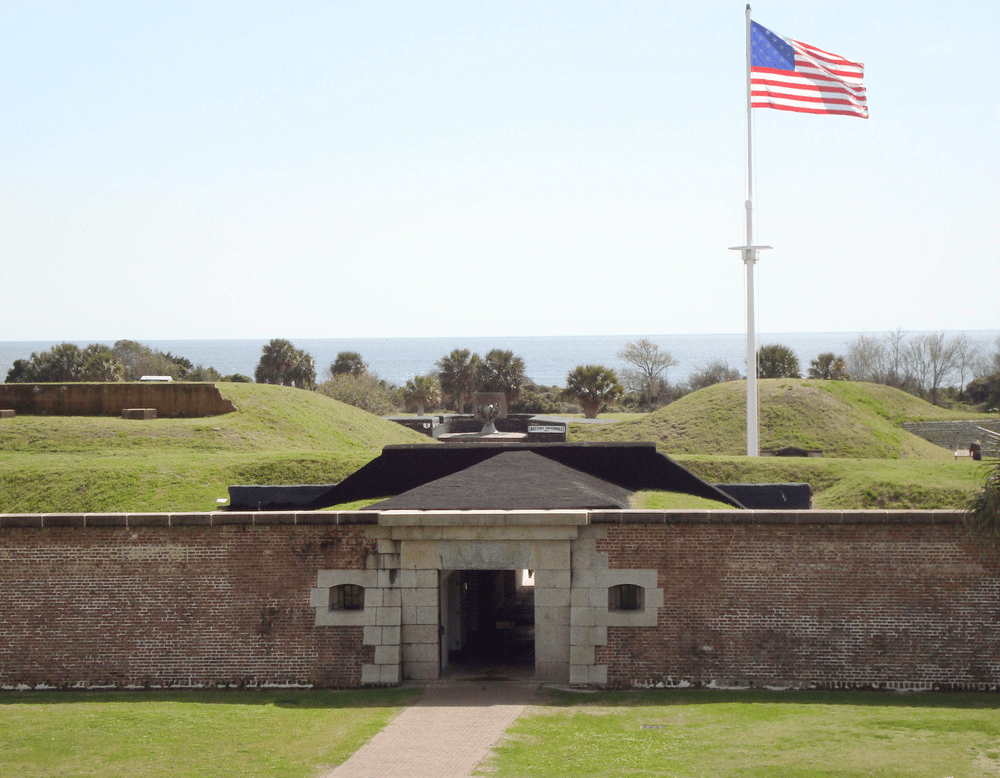
This is the one I send everybody to first, because the most important spot on this entire list is a twenty-minute boat ride from your hotel. The first shots of the Civil War were fired on Fort Sumter on April 12, 1861, and standing inside those brick walls while a ranger walks you through that morning is the kind of history that does not translate to a photo. The two forts were combined into a single national historical park in 2019. Fort Moultrie is the older story, a palmetto-log fort the patriots threw up in 1776 that bounced British cannonballs off its spongy walls and saved Charleston early in the Revolution, and its timeline runs all the way through World War II.
What to actually do here. Start at the Fort Sumter Visitor Education Center at Liberty Square, which is free and worth thirty minutes before you ever board, then take the ferry across the harbor. The crossing itself is a highlight, you pass the carriers and container ships and get the skyline from the water. Give yourself the full hour the boat allows on the island. Then drive out to Sullivan’s Island another day or the same afternoon and walk Fort Moultrie on your own time, where the layered batteries show you how coastal defense changed across two centuries.
Honest caveats. The Fort Sumter ferry is the whole bottleneck. It runs on fixed departure times, usually a few sailings a day, and the good slots sell out in spring and summer, so book online in advance rather than showing up and hoping. You are locked to the boat schedule once you are on the island, there is no swimming back, so build your day around the return time. Summer means full sun and no shade on the fort, and the harbor wind does not always save you. Spring and fall are the comfortable windows.
10 BEST Civil War Sites In America
2. Charles Pinckney National Historic Site
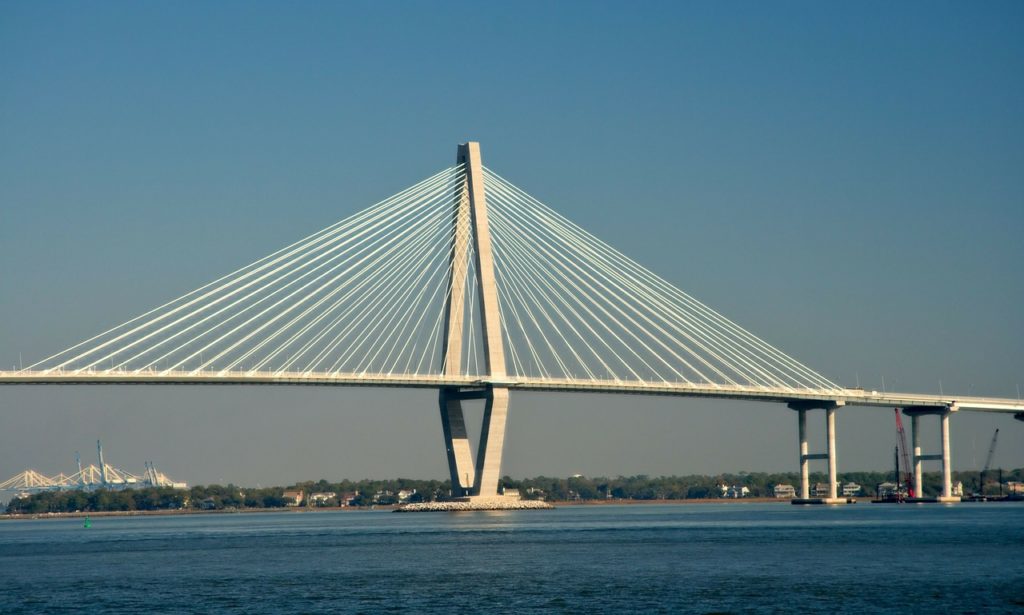
Drive time from Charleston: about 20 minutes to Mount Pleasant, just across the Ravenel Bridge.
Entrance fee: free.
The smallest and quietest site on this list, and an easy add-on to any Charleston day. Charles Pinckney was a principal author and signer of the U.S. Constitution, and this 28-acre remnant of his Snee Farm preserves a piece of the world that produced him. The 1828 lowcountry farmhouse on the property came after his time, but the grounds tell the fuller and harder story, this was a working plantation, and the people enslaved here are part of the history the Park Service does not skip.
What to actually do here. Walk the short interpretive trail under the live oaks, go through the exhibits inside the farmhouse, and use it as the founding-era bookend to the Civil War story you get at the forts. You can see the whole thing in under an hour, which is exactly why it pairs so well with a morning at Fort Moultrie just up the road. Honest caveats. It is small, so set expectations accordingly, this is a focused historic site and not a day of hiking. Summer brings heat and mosquitoes in the shaded grounds, so go in the morning and bring repellent.
3. Congaree National Park
Drive time from Charleston: about 1 hour 45 minutes to 2 hours (roughly 105 miles northwest via I-26, near Columbia).
Entrance fee: free.
This is the one true national park in day-trip range, and it is the reason to point the car inland. Congaree National Park protects the largest stretch of old-growth bottomland hardwood forest left in the country, around 26,000 acres of floodplain that the Congaree River soaks several times a year. The flooding is the point. It drops nutrients that grow some of the tallest trees in eastern North America, loblolly pines and bald cypress and tupelo that push past 130 feet, a champion forest most people drive right past on their way somewhere else. It became a national park in 2003 after decades as a national monument.

What to actually do here. The 2.4-mile Boardwalk Loop is the easy win and the one everybody does, an elevated walk that keeps your feet dry over the swamp and gets you under the big trees without a guide. If you want more, the Weston Lake Loop and the longer Oakridge Trail push deeper into the floodplain on dirt, and the real way to see the place is from the water. Cedar Creek is a marked canoe and kayak trail that threads between the cypress knees, and paddling it at first light, with the mist still sitting on the black water, is the version of Congaree you will remember. Bring binoculars for river otters, barred owls, and a long list of woodpeckers.
- Boardwalk Loop: 2.4 miles, flat and elevated, the essential first walk through the old-growth swamp.
- Cedar Creek canoe trail: the best way to see the park, paddle it early before the wind picks up.
- Harry Hampton Visitor Center: maps, current flood conditions, and the ranger intel that makes the trip.
- Synchronous fireflies: for a couple of weeks in late May, the forest blinks in unison, by lottery only.

Honest caveats. Summer here is the real test. From June into September the heat and humidity are heavy, and this is a swamp, so the mosquitoes are not a joke, the park keeps a mosquito meter at the entrance for a reason, and on a bad day it reads all the way up. Go October through April for the comfortable weather and the fall color. The flooding that built this forest can also close the boardwalk and the trails outright, so check conditions before you drive two hours. And the synchronous firefly display in late May is one of the great wildlife events in the East, but access is by lottery only, so you have to plan months ahead and get lucky.
4. Reconstruction Era National Historical Park
Drive time from Charleston: about 1 hour south to Beaufort (roughly 70 miles via US-17 and US-21).
Entrance fee: free.
One of the newest sites in the system and one of the most important stories the Park Service tells. Established in 2017, Reconstruction Era National Historical Park preserves the lowcountry around Beaufort and the Sea Islands where, after Union forces took the area early in the Civil War, formerly enslaved people began building free lives years before the war ended. This is where the Port Royal Experiment played out, where Black Southerners bought land, voted, and opened some of the first schools for freed people in the South. It is history that usually gets one paragraph in a textbook, told here on the ground where it happened.
What to actually do here. Start at the visitor center in downtown Beaufort, then drive out to the Penn Center on St. Helena Island, one of the first schools in the country built for formerly enslaved people and a center of Gullah Geechee culture to this day. The Brick Baptist Church next door is part of the same story. Pair it all with a walk through Beaufort’s historic district, which is one of the prettier small towns in the South. Honest caveats. The park is spread across several sites rather than one gate, so look at the map and pick your stops before you go. Some buildings keep limited hours, so check the schedule, and as with everywhere down here, summer is hot and buggy.
5. Fort Pulaski National Monument
Drive time from Charleston: about 2 hours south, just outside Savannah, Georgia (roughly 110 miles via I-95).
Entrance fee: a per-person fee, around $10 for adults and free for kids 15 and under as of 2026, good for 7 days. Confirm on nps.gov.
The first of the long hauls, and best done as part of a Savannah trip rather than a Charleston day. Fort Pulaski guards the mouth of the Savannah River, and it earned its place in the history books in 1862, when Union rifled cannon breached its brick walls in about thirty hours and proved that the era of masonry forts was over. The damage is still in the walls, you can put your hand on the spots where the shells punched through. The monument was set aside in 1924, and a young Lieutenant Robert E. Lee helped engineer the place decades before the war that broke it.
What to actually do here. Walk the parade ground and the casemates, cross the drawbridge over the moat, and find the breached southeast wall where the patched brick tells the whole story without a sign. The trails out along the dikes are good for marsh birds and the lighthouse view. Honest caveats. It is a two-hour drive each way from Charleston, so do not make it a standalone errand, fold it into time in Savannah. Coastal heat and salt-marsh bugs are real in summer, and the fort sits low, so high-water events occasionally affect access.
6. Cumberland Island National Seashore
Drive time from Charleston: about 3 hours 30 minutes to 4 hours south to St. Marys, Georgia, then a 45-minute ferry to the island.
Entrance fee: $15 per person, good for 7 days, plus the ferry, which runs around $45 round trip for adults. You cannot drive to the island, so the boat is mandatory.
The farthest reach on this list and, for the right kind of traveler, the best. Cumberland Island is Georgia’s largest barrier island, an undeveloped 18-mile strip of empty Atlantic beach, maritime forest under canopies of live oak and Spanish moss, and a band of feral horses that wander the dunes and the lawns of old estate ruins. There are no roads, no stores, no crowds, just the ferry, your feet, and whatever you carried in. It became a national seashore in 1972, and the Carnegie family ruins at Dungeness give the wild island a strange and beautiful backdrop.
What to actually do here. Take the first ferry, walk the Dungeness ruins where the horses graze, then cross the island on the boardwalk to a beach you will likely have to yourself. Strong hikers push north toward the Plum Orchard mansion or the First African Baptist Church, the tiny chapel where John F. Kennedy Jr. married. Honest caveats. This is the longest trip in the roundup and not a day trip from Charleston in any honest sense, plan an overnight. The ferry is limited and seasonal, reservations are essential and sell out, and the island has almost no shade once you leave the forest, so carry all your water and food. The horses are wild, beautiful, and to be kept at a distance.
How To Pick, And A Couple Of Routes
If you only have a day or two, here is how I would spend it.
- The classic Charleston history day: book the morning Fort Sumter ferry from Liberty Square, then drive over to Sullivan’s Island for Fort Moultrie and add Charles Pinckney in Mount Pleasant on the way back. Three Park Service sites and the start of the Civil War, all without leaving the metro area.
- The one true national park day: Congaree. Leave early, do the Boardwalk Loop, paddle Cedar Creek if you booked a rental, and be home for dinner. Go October through April unless you have a firefly lottery ticket for late May.
- The history weekend south: spend a morning at Reconstruction Era park in Beaufort, then continue down to Savannah and Fort Pulaski. Two hours of driving buys you two very different chapters of American history.
- The bucket-list overnight: Cumberland Island. Four hours each way plus a ferry means this is a planned trip, not a whim. Reserve the boat well ahead, stay a night, and have the wild horses and an empty beach mostly to yourself.
One honest note on what counts as near. People ask about Cape Hatteras and the Outer Banks parks up in North Carolina, and yes, you can reach them from Charleston, but that is six-plus hours and a different state’s coastline, so it belongs on its own trip. The realistic truth for Charleston is this, the history is incredibly close and Congaree is the one national park worth a full day. Plan around those and you will not waste a mile.
Frequently Asked Questions
The closest National Park Service sites are right in Charleston Harbor: Fort Sumter and Fort Moultrie National Historical Park, with the Fort Sumter ferry leaving from Liberty Square downtown. The closest full national park is Congaree National Park, about an hour and 45 minutes to 2 hours northwest near Columbia.
Yes. Congaree National Park is South Carolina’s only true national park, protecting the largest old-growth bottomland hardwood forest in the country near Columbia. The state also holds many National Park Service historic sites, including Fort Sumter, Charles Pinckney, and Reconstruction Era National Historical Park.
Fort Sumter sits on an island in Charleston Harbor and is reachable only by the park’s authorized ferry, which departs from the Fort Sumter Visitor Education Center at Liberty Square downtown. The fort itself is free, but the ferry costs around $40 per adult round trip, runs on fixed departure times, and books up in spring and summer, so reserve in advance.
You should know that this guide does not come out of thin air. More Than Just Parks is a family operation. My sons Will and Jim have spent their adult lives exploring and filming America’s national parks and public lands destinations, working with the National Park Service, the Department of the Interior, the USDA, and the U.S. Forest Service on films about the places that matter. Their work has run in publications around the world, and a few people outside our own family have even called them experts on the parks. I taught American history for 25 years, and I write our history and travel guides.


