


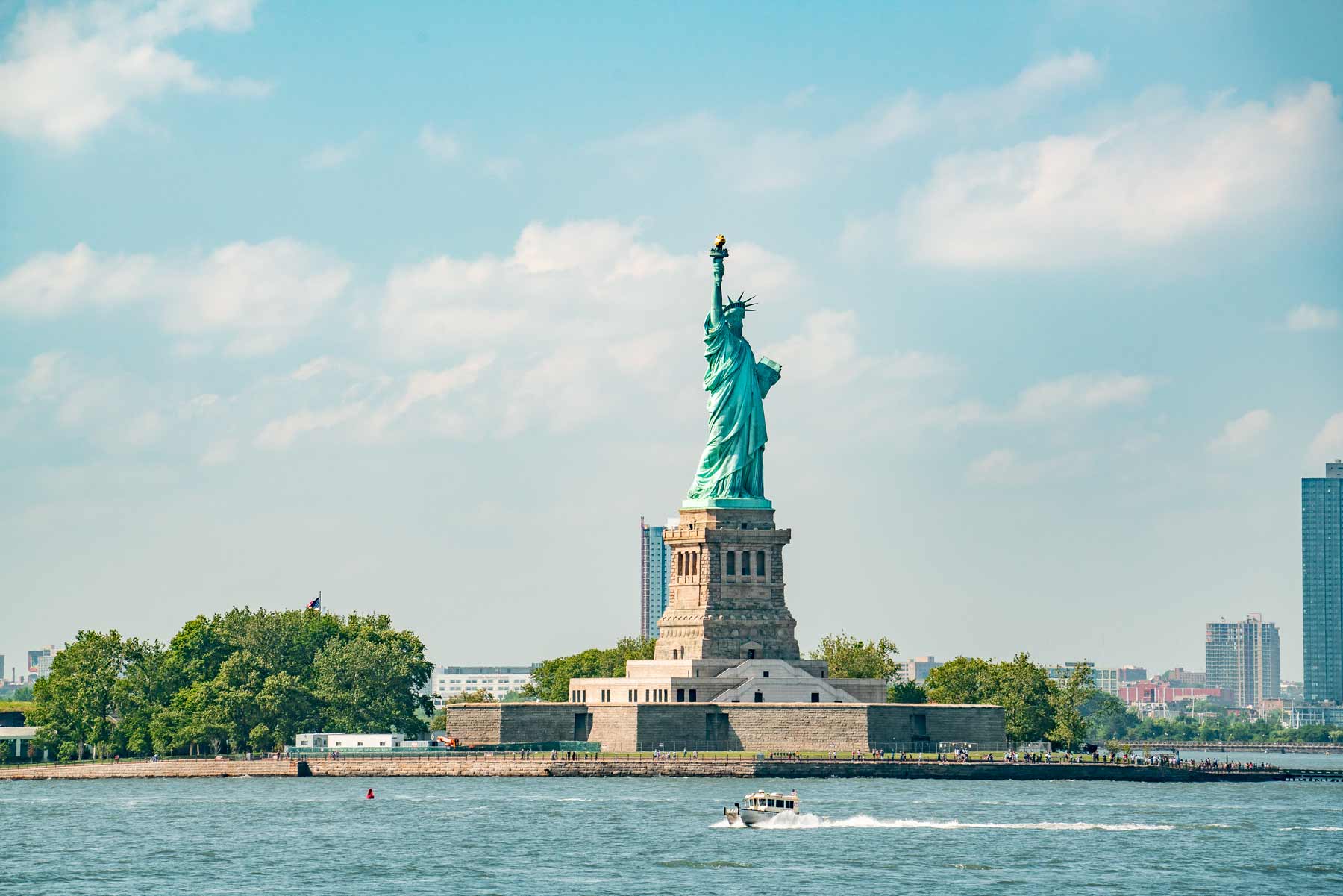
Here is the honest answer to the question everyone types into Google. New York City has zero national parks, the kind with the formal “National Park” title like Yosemite or Acadia. What the five boroughs do have is one of the densest clusters of National Park Service sites in the country, ten of them inside the city, plus a huge national recreation area spread across the harbor. They are National Monuments, National Memorials, and National Historic Sites, and together they hold more than 400 years of American history.
I grew up in this city and I taught its history for more than 25 years before I started writing these guides. So a word on the label before we start, because it matters. A National Monument and a National Memorial and a National Historic Site are all real units of the National Park Service, run by rangers, stamped in your passport book, every bit as official as a national park. They just are not “National Parks,” and calling them that does nobody any favors when they are planning a trip. Below are all ten NPS sites within the city, ranked by how much of your day each one earns, plus the one giant unit most visitors miss.
New York City’s NPS Sites at a Glance
| Site | NPS Designation | The Draw | Borough | Fee | Time Needed |
|---|---|---|---|---|---|
| Statue of Liberty & Ellis Island | National Monument | The statue, the crown, the immigration museum | Harbor (ferry from Manhattan) | Free site, ferry $25.50 adult | Half to full day |
| Governors Island | National Monument | Two historic forts, harbor views, car-free island | Harbor (ferry from Manhattan/Brooklyn) | Free monument, ferry fee | Half day |
| African Burial Ground | National Monument | Colonial-era burial site of free and enslaved Africans | Manhattan | Free | 1 hour |
| Stonewall | National Monument | Birthplace of the modern LGBTQ rights movement | Manhattan (Greenwich Village) | Free | 1 hour |
| Federal Hall | National Memorial | Where Washington took the first oath of office | Manhattan (Wall Street) | Free | 1 hour |
| General Grant (Grant’s Tomb) | National Memorial | Largest mausoleum in North America | Manhattan (Morningside Heights) | Free | 1 hour |
| Hamilton Grange | National Memorial | The only home Alexander Hamilton ever owned | Manhattan (Hamilton Heights) | Free | 1 hour |
| Castle Clinton | National Monument | 1808 fort, ferry ticket hub for the harbor sites | Manhattan (Battery) | Free | 30-45 min |
| Lower East Side Tenement Museum | NPS Affiliated Area | Restored immigrant apartments, guided tours only | Manhattan | Paid timed tours | 2 hours |
| Gateway (Jamaica Bay, etc.) | National Recreation Area | Beaches, wildlife refuge, the city’s real outdoors | Brooklyn / Queens / Staten Island | Free (some beach fees) | Half to full day |
Worth a Dedicated Trip
1. Statue of Liberty National Monument (and Ellis Island)
The two most famous immigration sites in America share one National Monument and one ferry ticket, so treat them as a single day. The statue, a gift from France dedicated in 1886, was sculpted by Frederic-Auguste Bartholdi over an iron framework engineered by Gustave Eiffel of tower fame. Across the water, Ellis Island processed close to twelve million arrivals between 1892 and 1954, and the National Museum of Immigration in the restored Main Building is the best place in the country to understand that story. An estimated 40 percent of Americans can trace an ancestor through these doors.
Access notes. The monument is free, but the only authorized boat is Statue City Cruises from Battery Park, about $25.50 for adults round trip, including both islands. Crown access is a separate timed reservation that sells out months ahead; pedestal access is easier to get. Book through the official operator, not the resellers crowding the Battery. Buy ahead and take the first morning boat to beat the lines and the heat.
117 public lands destinations are under threat. Get the free briefing that 27,000+ people use to stay informed and take action.

2. Governors Island National Monument
A 15-minute ferry from Lower Manhattan lands you on a car-free island the public could not set foot on for two centuries. The National Monument protects two forts, the star-shaped Fort Jay and the round Castle Williams, that guarded New York Harbor through the War of 1812 and the Civil War. The wider island has since become one of the city’s best open spaces, with the Hills, slides built into a 70-foot mound, and skyline views that rival any rooftop bar without the cover charge.
Access notes. The monument is free; pay only the short ferry from the Battery Maritime Building or Brooklyn’s Pier 6. Open seasonally, roughly May through October, with expanding shoulder-season days. Bring a picnic, rent a bike, and give it a half day.

3. Gateway National Recreation Area
This is the unit nearly every “national parks in NYC” list forgets, and it is by far the largest. Gateway National Recreation Area sprawls across Brooklyn, Queens, and Staten Island (plus a New Jersey unit), more than 26,000 acres of beach, marsh, and old coastal forts. The Jamaica Bay Wildlife Refuge inside it is one of the best urban birding spots in North America, on the Atlantic Flyway, where you can stand with a heron at eye level and the Manhattan skyline behind it. Fort Tilden and Riis Park in the Rockaways give you Atlantic surf inside the city limits.
Access notes. Free, though some beach lots charge seasonal parking. Reachable by subway and bus to the Rockaways or by car to Jamaica Bay. This is where New Yorkers go when they want actual nature without leaving town.
Worth an Hour Downtown
The next group clusters in Lower Manhattan and Greenwich Village, and you can chain several together on foot in a single afternoon. None needs more than an hour, and all of them are free.
4. Federal Hall National Memorial
On the steps at 26 Wall Street, beneath a bronze George Washington, is where he took the first presidential oath of office in 1789, when New York was the nation’s capital. The first Congress met on this spot and passed the Bill of Rights here. The original building is gone; the current Greek Revival Custom House holds the inaugural Bible, the balcony stone Washington stood on, and a quiet rotunda that makes a striking contrast with the stock exchange across the street.

Access notes. Free, open weekdays. Pairs naturally with the harbor sites at the Battery a few blocks south. More context in our guide to America’s best Revolutionary War sites.
5. African Burial Ground National Monument
In 1991, construction crews digging a federal office tower in Lower Manhattan hit the largest colonial-era cemetery of free and enslaved Africans ever found in North America, the remains of more than 400 people from a burial ground that held an estimated 15,000. Years of community advocacy turned the site into a National Monument in 2006. The outdoor memorial and the indoor visitor center together tell a chapter of New York history that the city spent two centuries paving over.

Access notes. Free. The visitor center sits at 290 Broadway; the outdoor memorial is around the corner on Duane Street. More in our guide to America’s best civil rights sites.
6. Stonewall National Monument
The uprising that began at the Stonewall Inn on June 28, 1969, when patrons fought back against a police raid, is widely marked as the start of the modern LGBTQ rights movement. In 2016 the surrounding block of Greenwich Village, centered on Christopher Park across from the bar, became the first National Monument dedicated to that history. A visitor center opened on Christopher Street in 2024. It is a small site with an outsized place in American history.

Access notes. Free, and the park itself is always open. Christopher Park sits a short walk from the West 4th Street subway station.
7. Castle Clinton National Monument
The squat sandstone fort at the tip of Manhattan has lived more lives than any building in the city. Built in 1808 to guard the harbor, it later became a concert hall where P.T. Barnum staged shows, then the immigration depot that processed more than eight million arrivals before Ellis Island opened, then an aquarium. Today it is the place you actually buy your ferry tickets for the Statue of Liberty, so most visitors pass through it without realizing it is its own NPS unit.

Access notes. Free to enter. Since it is your ferry-ticket hub anyway, give it ten minutes before you board.
Uptown and Specialist Stops
8. General Grant National Memorial (Grant’s Tomb)
The old quiz answer to “who is buried in Grant’s Tomb” is, technically, nobody; Ulysses and Julia Grant rest in sarcophagi above ground, not buried. Completed in 1897 with money raised from 90,000 donors, it is the largest mausoleum in North America, a granite dome above Riverside Park honoring the general who won the Civil War and the president who fought to enforce Reconstruction. It is overlooked precisely because it sits uptown, away from the tourist core.

Access notes. Free. In Morningside Heights near Columbia University, an easy add-on to a visit uptown. More in our guide to America’s best Civil War sites.
9. Hamilton Grange National Memorial
Thanks to a certain musical, Alexander Hamilton needs no introduction, and the Grange is the only house the first Treasury Secretary ever owned. Completed in 1802, two years before his fatal duel with Aaron Burr, the Federal-style home has been moved twice and now sits restored in St. Nicholas Park in Hamilton Heights. Free ranger tours walk you through the period rooms and the story of the man who built the American financial system.
Access notes. Free, with a short introductory film and guided tours of the restored rooms. Check the day’s tour schedule before you go.
10. Lower East Side Tenement Museum
One honest footnote on this one. The Tenement Museum is an NPS Affiliated Area, not a full park unit, which means it is privately run with National Park Service recognition rather than rangers and free admission. That technicality aside, it is one of the most affecting history experiences in the city. Inside an 1863 tenement at 97 Orchard Street that housed an estimated 7,000 immigrants before it was sealed in 1935, restored apartments recreate the lives of specific families who actually lived there. You see it only on a guided tour, and the tours sell out.

Access notes. Paid, timed tours only; book ahead on the museum’s site. The visitor center is at 103 Orchard Street.
Beyond the City Limits
A quick myth to retire while we are here. People often ask whether Central Park is a national park; it is not, it is a city park, designated a National Historic Landmark in 1963 but run by New York City, not the NPS. And while the state of New York has no traditional national park either, it does hold dozens of NPS sites well beyond the city, from Saratoga to the Women’s Rights park in Seneca Falls. We cover the full statewide roster in our New York national parks guide.
Planning Your NYC Park Sites Day
The geography sorts these sites for you. Group the harbor and downtown sites into one day. Buy the Statue Cruises ferry ahead, board first thing, do Liberty and Ellis Islands in the morning, then walk the Battery cluster: Castle Clinton, then Federal Hall, then north to the African Burial Ground. Save Governors Island for its own warm-weather afternoon. The uptown memorials, Grant’s Tomb and Hamilton Grange, pair on a separate trip near Columbia. Give Gateway a full day when the weather is good and you want sand instead of subway tile.
Every site here except the Tenement Museum and the boat fares is free, which makes the city’s NPS sites one of the better deals in American travel. Take the subway, not a car. And if you collect park stamps, bring your passport book; ten cancellation stamps inside one transit fare is hard to beat.
Helpful Related Articles
New York State’s Parks New York National Parks Guide
New York History Best Historic Sites in New York
Revolutionary War Sites America’s Best Revolutionary War Sites
Civil War Sites America’s Best Civil War Sites
Washington’s Parks National Park Sites in Washington DC


