

Going-to-the-Sun Road climbs more than 3,000 feet in 50 miles, and the day it fully opens, usually in late June or early July, is the day Glacier’s high country actually becomes reachable. Plan your trip around that one road and everything else falls into place. This itinerary does exactly that, with a three-day core you can stretch to five or seven.
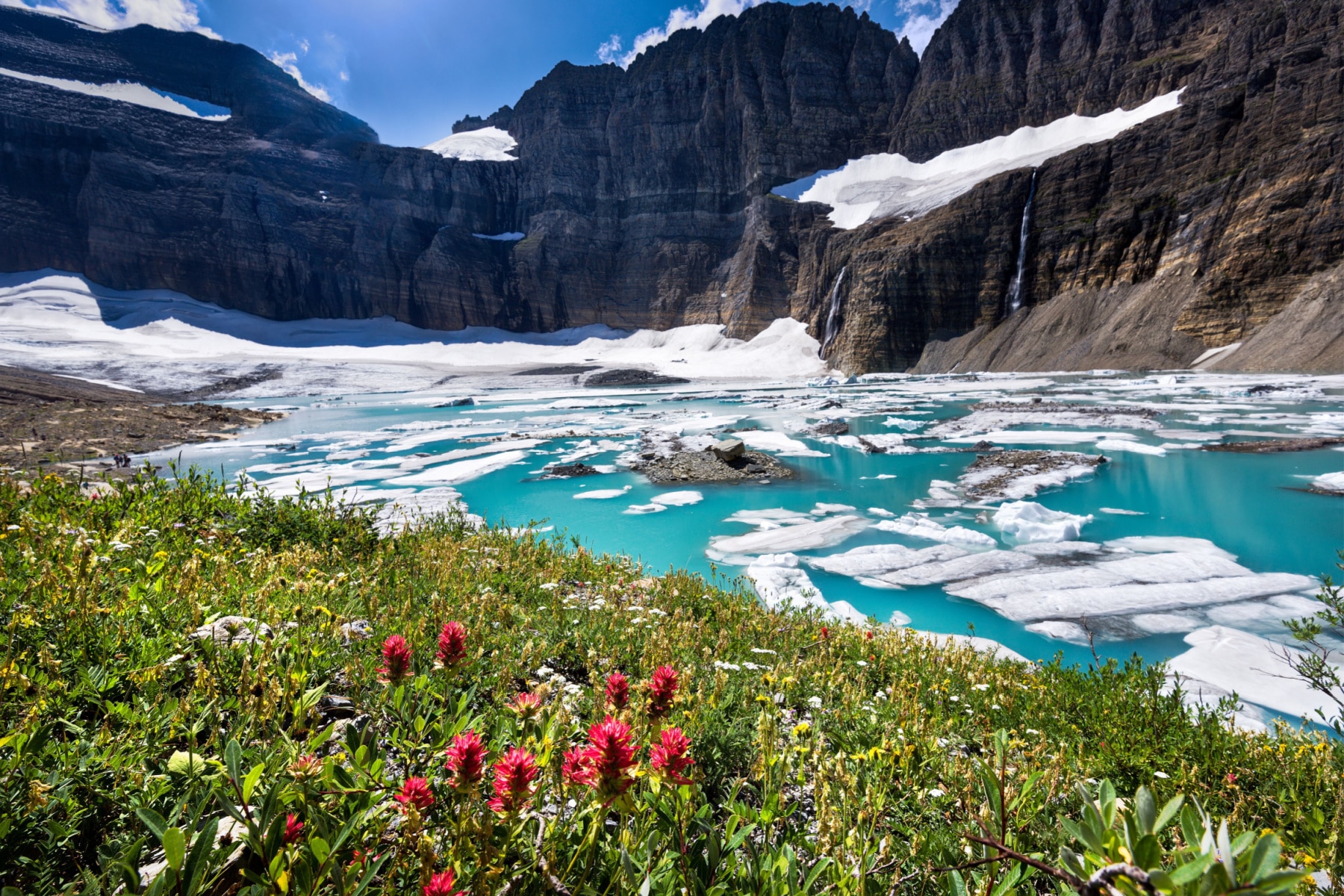
The peaks here weave into one another, framed by meadows that go neon with beargrass and wildflowers in July. Ancient glaciers carved those silhouettes, and the ice that’s left is the reason the park has a name and a deadline.
The three-day core runs Going-to-the-Sun Road end to end, Many Glacier, and Two Medicine, with the Hidden Lake Overlook behind the Logan Pass Visitor Center as the short walk that sells everyone on the place. Add days four through seven for the Highline Trail and the quiet Lake McDonald valley.
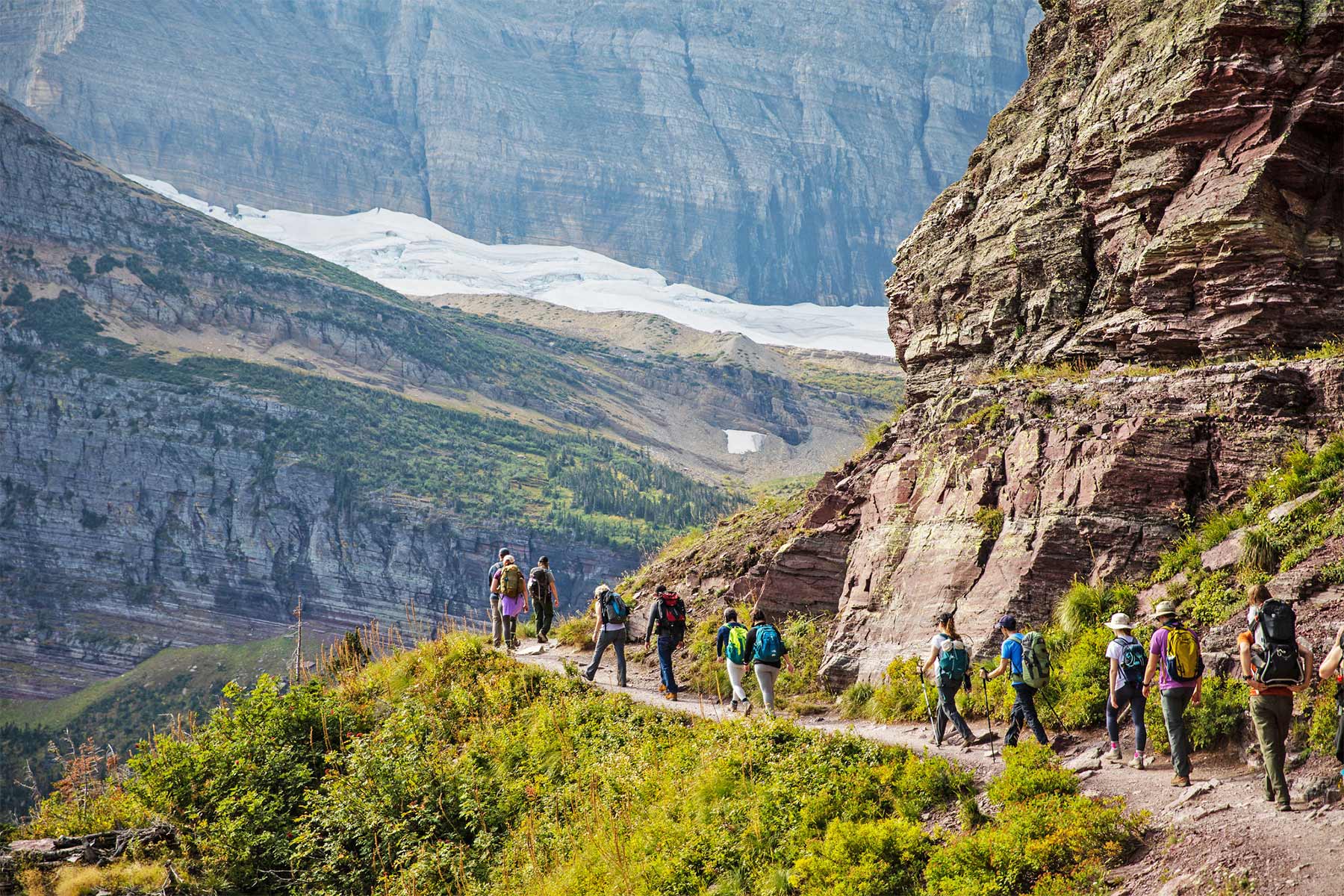
Can You See All of Glacier National Park in 3 Days?
The answer is no, and not just because this park is so large; it comprises a decent-sized portion of the US-Canadian border.
Love Glacier? It's one of 117 threatened public lands destinations we're tracking. Get the free briefing.
Every single day, Glacier National Park gets smaller. In fact, according to the National Park Service, between the years 1966 and 2015, every single named glacier in the park shrank due to climate change.
It’s even estimated that some glaciers are almost 80% gone. It’s unclear when the glaciers will completely disappear, but what rangers do know is that the park you see on your camping trip will not be the same one your children see someday.
Fortunately, we can at least say that this area is safe from deforestation and other harmful practices due to the permanent protection offered by national park status.
While it’s impossible to cover the entirety of this vast frontier in 3 days, we’ve built an itinerary for Glacier National Park that hits the park’s defining places without burning you out. Day 3 takes you to Two Medicine, the quiet southeast corner most visitors skip, and it tends to be the day people remember most.
Glacier National Park 2026 Access Changes
Big change for 2026: Vehicle reservations are NOT required anywhere in Glacier National Park this year. The timed-entry vehicle reservation system from previous years has been suspended entirely. You can drive into the park freely, but the park has replaced reservations with a new set of congestion tools you need to know about.
Logan Pass 3-Hour Parking Limit: Starting July 1, 2026, parking at Logan Pass is limited to 3 hours. You’ll grab a free timestamped permit from a kiosk and display it on your dashboard. This runs through September 7, 2026. No overnight parking is allowed unless you hold a backcountry permit or have a Granite Park Chalet reservation.
New Ticketed Shuttle to Logan Pass: Glacier is piloting a reservation-only shuttle system in 2026. Tickets are available on Recreation.gov with a $1 processing fee. Two booking windows exist. The 60-day advance window opens starting May 2 at 8 AM MDT on a rolling basis. Next-day tickets release at 7 PM MDT nightly beginning June 30. All passengers age 2 and older need a ticket, and tickets are nontransferable. Boarding locations include Apgar Transit Center, Lake McDonald Lodge, St. Mary Visitor Center, and Rising Sun Picnic Area.
Temporary Road Closures: Without vehicle reservations, the park manages congestion by temporarily closing roads when parking lots fill up. If you hold confirmed lodging, camping, boat tour, horseback riding, guided hike, or backcountry reservations, you can still enter during closures. I recommend arriving before 6 AM or after 4 PM to avoid the worst of it.
Cashless Entrance Stations: All entrance booths at Glacier are cashless. Bring a credit or debit card.
$100 Non-Resident Surcharge: As of January 1, 2026, international visitors ages 16 and older pay a $100 per person fee on top of the standard entrance fee at Glacier (one of 11 designated parks). A $250 non-resident annual pass is also available.
7 Things to Know Before You Visit Glacier National Park
- The entrance fee to Glacier is $35 per vehicle in summer and $25 per vehicle from November 1 through April 30. Motorcycles are $30 in summer. For $80, you can purchase the America the Beautiful interagency pass and get a year of access to more than 2,000 federal recreation sites. International visitors ages 16 and older now pay an additional $100 per person surcharge on top of the entrance fee.
- Cell Service is fairly non-existent in most of the park. This is the best guidebook, and this map comes in handy as well.
- Sunscreen is important when visiting this park, especially when hiking at higher elevations. We like this eco-friendly one.
- The Best Time to Visit Glacier National Park is during the summer months when the park is fully open. The best months are July – September, when the trails are mostly clear of snow, and the park is teaming with wildflowers and wildlife.
- Drive Times in the park can be deceptively long as driving mountain roads takes more time, and distances that are relatively short via crow flight can take hours to complete based on existing roads. In 2026, Glacier is running a new ticketed shuttle system to Logan Pass with reservations on Recreation.gov ($1 fee). Book early. With the 3-hour Logan Pass parking limit, the shuttle is no longer just convenient, it is practically required for longer hikes like the Highline Trail.
- Here are the best lodging options when trying to find a place to stay near Glacier National Park. We’ve covered West Glacier& East Glacier Park.
- Bear Spray is essential gear in Glacier National Park. This is serious grizzly country. You cannot fly with bear spray, but you can rent canisters in gateway towns like West Glacier and Kalispell, or buy one at Walmart for about $40. Carry it on your hip, not buried in your pack.
Whether this is your first time to Glacier National Park or your 10th, our exclusive Glacier National Park itinerary covers all the park’s famous sights, including Going to the Sun Road, Many Glacier, and everyone’s favorite well-known secret spot (don’t worry, we wouldn’t leave it off the list).
We’ve carefully picked the perfect trails to give you a taste of Glacier National Park in this itinerary without pushing you to your limits.
In addition to a beautiful, semi-challenging hike and excellent accommodations, there’s a small surprise in store for you as a reward for traversing this frozen landscape! You can read more about it when we get to Day 3.
Glacier Itinerary at a Glance
Glacier is huge and the roads are slow. Distances that look short on a map cross mountain passes, so plan generous drive times and an early start. Here is the whole route at a glance before we break it down day by day.
| Day | Region | Driving | Signature stop | Best time of day |
|---|---|---|---|---|
| Day 1 | West Glacier to St. Mary via Going-to-the-Sun Road | ~3 hrs (50 mi, slow) | Logan Pass, Wild Goose Island | Drive early, sunset at St. Mary Lake |
| Day 2 | Many Glacier | ~1.5 hrs from St. Mary | Grinnell Glacier, Swiftcurrent boat tour | Early start for the boat and glacier |
| Day 3 | Two Medicine | ~1 hr from St. Mary | Running Eagle Falls, Pitamakan Pass | Midday hike, sunset at the lake |
| Day 4 | Highline Trail (Logan Pass) | Shuttle required in 2026 | The Highline to Granite Park Chalet | First shuttle, hike point-to-point |
| Day 5 | Lake McDonald valley | ~30 min around the lake | Avalanche Lake, Bowman Lake | Morning before lots fill |
| Days 6-7 | Flathead National Forest | Varies (outside the park) | Quiet lakes and trails, no crowds | Flexible |
Day 1: Lake McDonald, Going to the Sun Road
Highlights: West Entrance, Lake McDonald, Going to the Sun Road, St Mary Lake
Drive Time: 3 hours
Sunset: Wild Goose Island Overlook at St. Mary Lake
On the first day of your Glacier National Park itinerary, we’ll be driving from Glacier Park International Airport in Kalispell, through the park’s West Entrance, around Lake McDonald, over the Going to the Sun Road and ending the day at St. Mary Lake.

Which Airport for Glacier National Park?
The first part of any decent Glacier National Park itinerary starts with how actually to get to the park. I recommend flying into Glacier Park International Airport (FCA) in Kalispell, Montana. Glacier Park International Airport is located just 30 minutes down the road from the West Entrance to Glacier National Park.
Do I Need a Car for Glacier National Park?
The short answer is yes. The park is massive, and while there are some ways to get around parts of the park without a vehicle, it is not practical to rely on them. The 2026 ticketed Logan Pass shuttle helps for that one corridor, but you still need a car to reach Many Glacier, Two Medicine, and the gateway towns.
Supplies in Kalispell, Montana
I highly recommend getting groceries and supplies while in Kalispell, which serves as a great jumping-off point for the park. The city has boomed in recent years, and you’ll find all the conveniences here, including, Costco, Albertson’s, Smith’s (Kroger), Natural Grocers, and Walmart.
Sadly, there’s not yet a Trader Joe’s or Whole Foods as of the writing of this article.
Driving into the West Entrance of Glacier National Park
Glacier National Park is divided into two halves, the West and East sections. For our trip, we’ll be starting on the West side of the park at Lake McDonald. You can easily access Lake McDonald Lodge by car, and there’s plenty of parking around the lake.
Lake McDonald is a great jumping-off point for the park because it has a lot to offer in the way of guided tours, horseback riding, and general info on other things to do in Glacier National Park.
Apgar Village
On the southern end of Lake McDonald is one of the most popular villages in the park, Apgar Village. I recommend starting by heading over to the Apgar Visitor Center to get an overview of the park, chat with a ranger about recommendations, and grab a park map.
At Apgar, visitors will find a host of amenities and conveniences, including a backcountry permit office, a campground, a few hotels, a visitor center, a cafe, a gift shop, and more.
If interested, visitors can take scenic boat tours of Lake McDonald ($23/adult & $11/children) and rent paddleboards ($15/hour), kayaks ($23/hour), rowboats ($23/hour), and motorboats ($30/hour).
I recommend passing on this particular boat tour for another, better one later on.

Lake McDonald
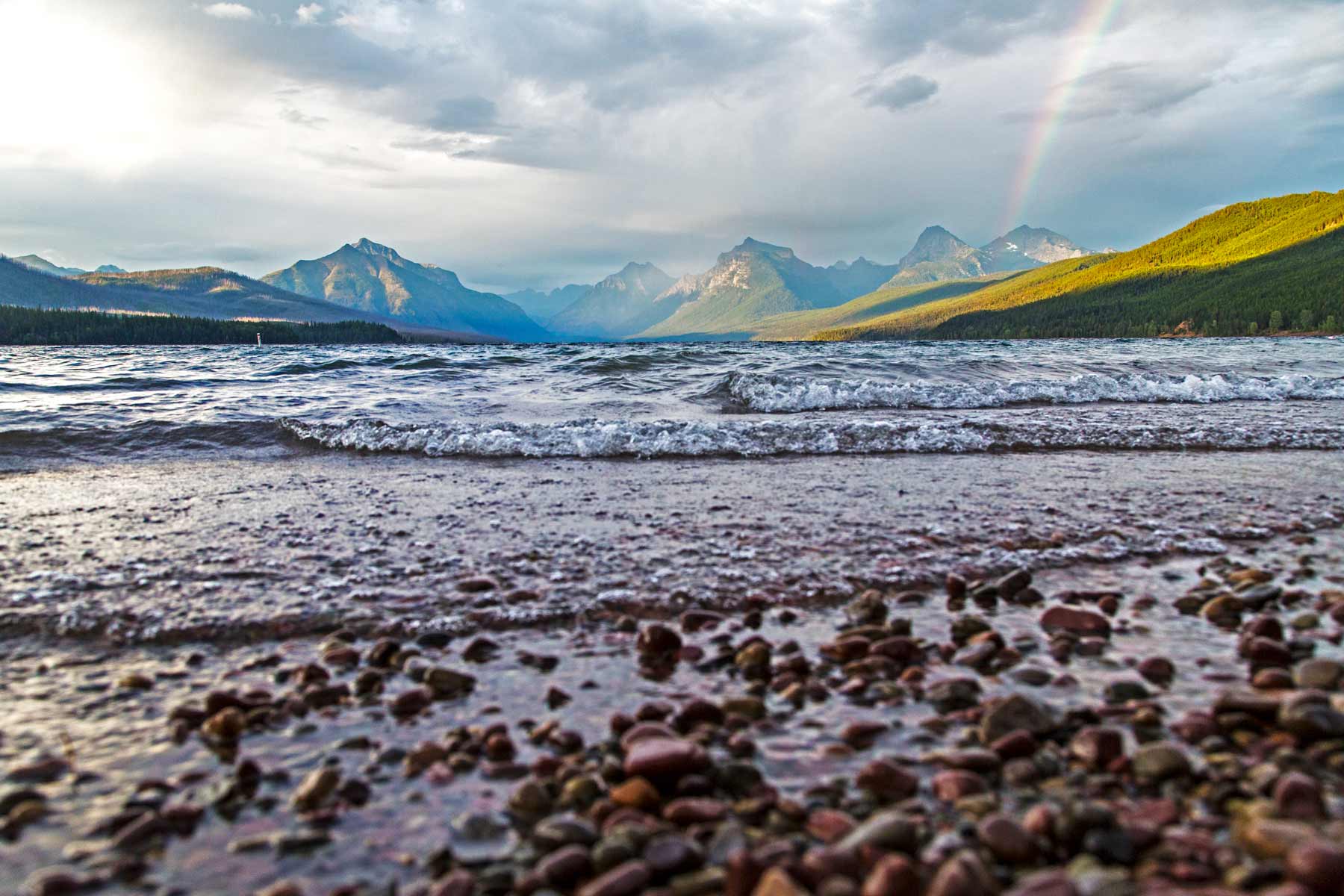
For many folks, the first exposure to Glacier National Park you might get is by seeing a photo of Lake McDonald with its clear water & multi-colored rocks. It was for me, at least, which is why I’m excited to lead with it on this Glacier Itinerary.
The rocks are real and every bit as beautiful in person as they are in the photos. Walk down to the shore and touch these rocks for yourself (but leave them there, as taking anything from a national park other than memories and photos is illegal).
You might have guessed correctly that Lake McDonald is the largest lake in Glacier National Park.
The Historic Lake McDonald Lodge
From Apgar, drive 9 miles down the road and make a quick stop over at the historic Lake McDonald Lodge to see this unforgettable Swiss cottage-themed masterpiece. The lodge is situated on the far eastern end of Lake McDonald and makes for great photos on your Glacier National Park itinerary.
If you arrive at the park late in the day, I recommend staying at the Lake McDonald Lodge if you can get a room and starting your adventures the following day.

Going to the Sun Road
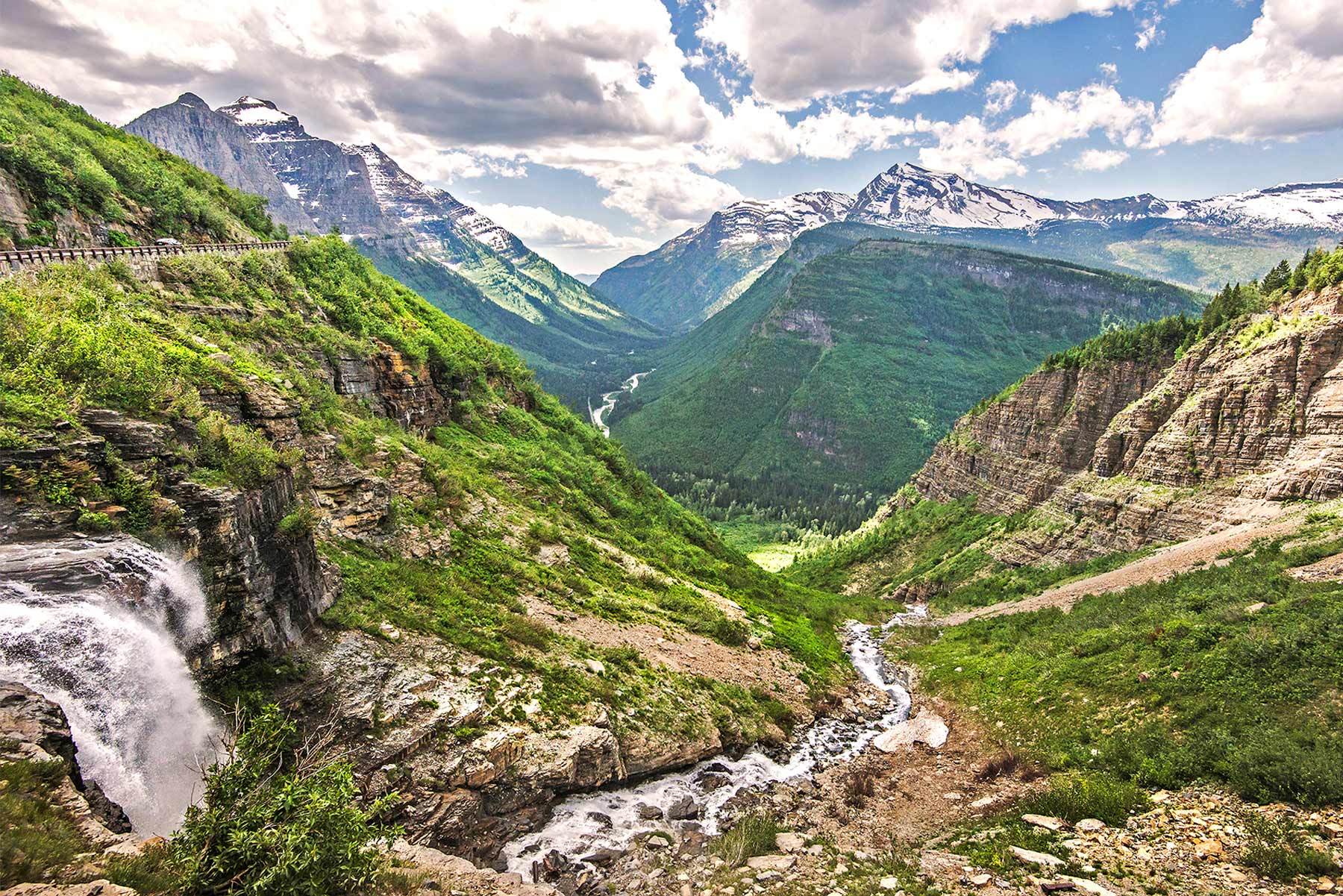
We’ve arrived at one of the best things to do on our Glacier National Park itinerary already! Going to the Sun Road is an absolute essential on your trip to Glacier National Park. Connecting the West and East halves of the park, Going to the Sun Road will take you right up to the beautiful mountain range in the heart of the park.
The good news for 2026 is that vehicle reservations are no longer required for Going to the Sun Road. You can just drive it. The tradeoff is that the park will temporarily close the road when parking fills up at Logan Pass and other popular spots. Arrive early (before 6 AM) or later in the afternoon (after 4 PM) and you should be fine.
Taking a red bus tour is a solid alternative and guarantees you’ll get a chance to take the famous road through the park (more on that below), but it adds some time and potential inconvenience.
I recommend planning ahead and driving the Going to the Sun Road yourself if possible. I’ll explain why below.
Taking a Classic Going to the Sun Road “Red Bus”
At Lake McDonald, you’ll have the option to catch one of Glacier National Park’s iconic “red buses.”
These red buses look more akin to something like an old Ford Model T, but they’re oh-so-comfortable. On the bus, you can kick back and relax as one of Glacier’s 33 red buses takes you on a round-trip tour on the famous Going to the Sun Road(GTTSR).
While taking the bus is an iconic must for a lot of folks, I don’t recommend it. If you plan on exploring the park further you’ll have to drive right back up the Going to the Sun Road eventually to see the rest of the park.
In my opinion, taking the bus only makes sense if you plan to end your trip after a day or two exploring Lake McDonald.
Make sure to book your red bus tour ahead of visiting Glacier National Park so that you can ensure you get a seat!

Drive the Going to the Sun Road
Widely considered one of the most beautiful roads in the world, the Going to the Sun Road is approximately 50 miles long and will take about 2 hours to drive (depending on traffic conditions). The road itself spans the width of the park. No Glacier National Park itinerary is complete without it.
Along the way, there are some great spots to stop, explore, and snap some iconic photos. Let’s start with the “secret” that virtually everyone already knows about: Hidden Lake.
Hidden Lake Trail & Overlook
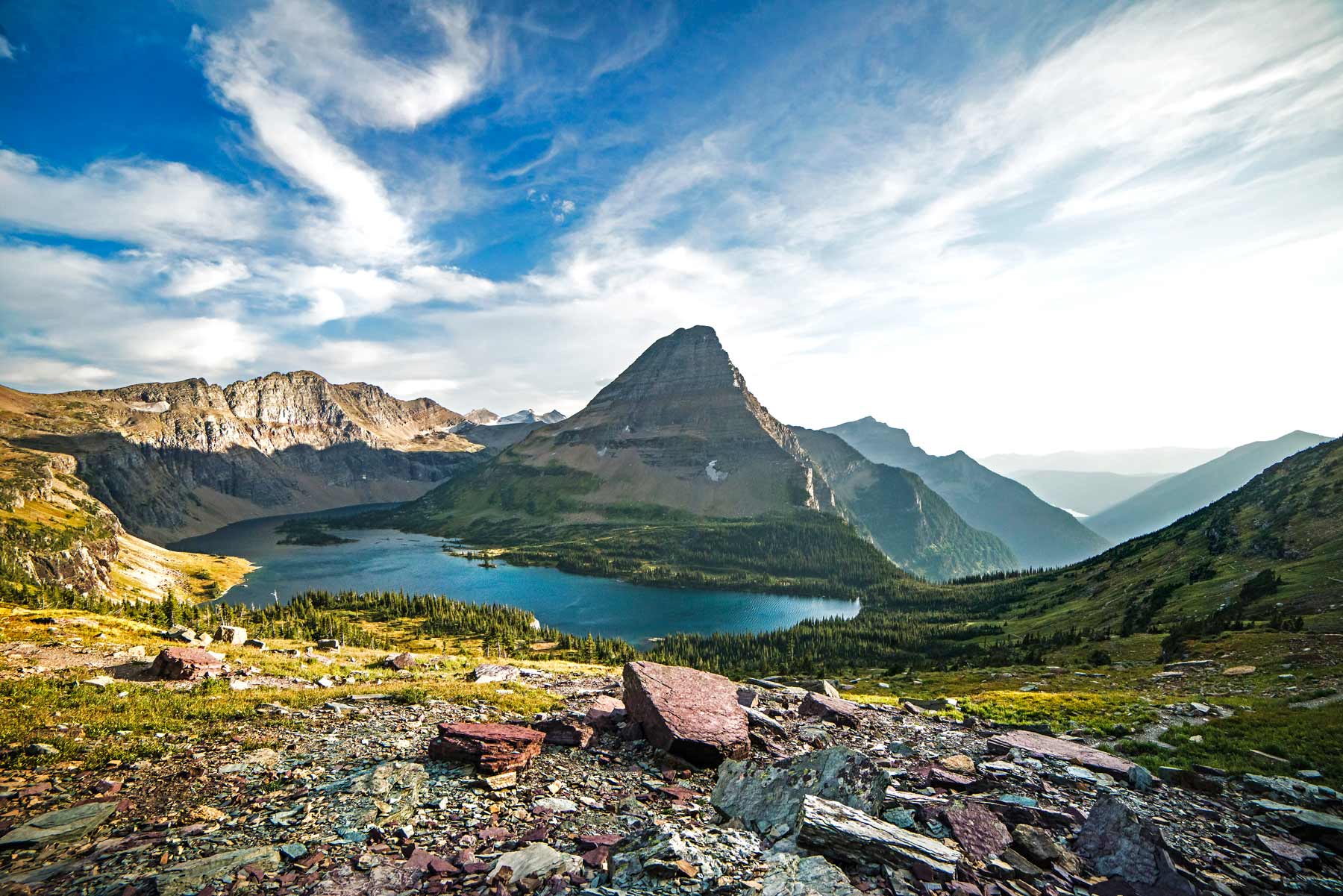
At the base of Mt. Cannon, there’s a pristine lake that gently rests between the park’s towering mountain ranges. This is a essential spot that you’ll regret missing if you don’t stop.
The trailhead for Hidden Lake is located behind the Logan Pass Visitor Center. The trail to the overlook is an easy 2.7 miles round trip with a moderate 460 feet of elevation gain (all on the way there).
For the full trail and details, check out: 15 Unforgettable Hikes in Glacier National Park
Sunset at St. Mary Lake – Wild Goose Island Overlook
From Logan Pass, continue down the road until you reach Wild Goose Island Overlook. If you’re hungry and have some time to spare, pop over to the town of St. Mary and grab a bite at Rising Sun Pizza.
Goose Island Overlook is one of the best, and most iconic sunset locations in all of Glacier National Park. This is a great spot to end the first day of your Glacier National Park itinerary. Watch the remarkable hues reflect across the lake as the sun fades away.

Day 2: Swiftcurrent Lake, Grinnell Glacier & Many Glacier
Highlights: Swiftcurrent Lake Boat Tour, Grinnell Glacier Hike, Many Glacier Hotel
Sunset: Back porch of Many Glacier Hotel
Day 2 of this 3-day Glacier National Park Itinerary is my personal favorite, with the major highlight of a boat tour on Swiftcurrent Lake & hiking to the park’s most famous glacier.
A quick note for 2026 visitors: the Swiftcurrent area in Many Glacier underwent major construction through 2024-2025, and is expected to fully reopen by mid-May 2026 with 171 additional parking spaces. That is a significant improvement over prior years, when parking here was a real headache. Check the NPS Glacier conditions page for the latest updates before your trip.

Many Glacier Boat Tour – Swiftcurrent Lake & Lake Josephine
No Glacier National Park itinerary would be complete without a trip to Many Glacier and Swiftcurrent Lake. Chances are good that you’ve seen countless photos of this region.
The Many Glacier region of Glacier National Park is one of the park’s most visually striking areas making it one of the most popular things to do and see in the park. I personally favor this region above all the others (and that’s saying a lot here!).
Start with a scenic boat tour across Swiftcurrent Lake($35/adult & $17/children). You’ll want to get an early start to take advantage of the day and book the 8:30am boat tour(or 9am) a good 8 weeks in advance of your trip. This ensures you’ll get a spot!
The ticket gets you a round trip across the lakes (Swiftcurrent and Josephine), which is important as we’ll get off at the Lake Josephine dock saving us 3.4 miles round trip on the hike! For those who don’t want to do the fairly strenuous hike, just relax on the boat and take it back to the Many Glacier Hotel.
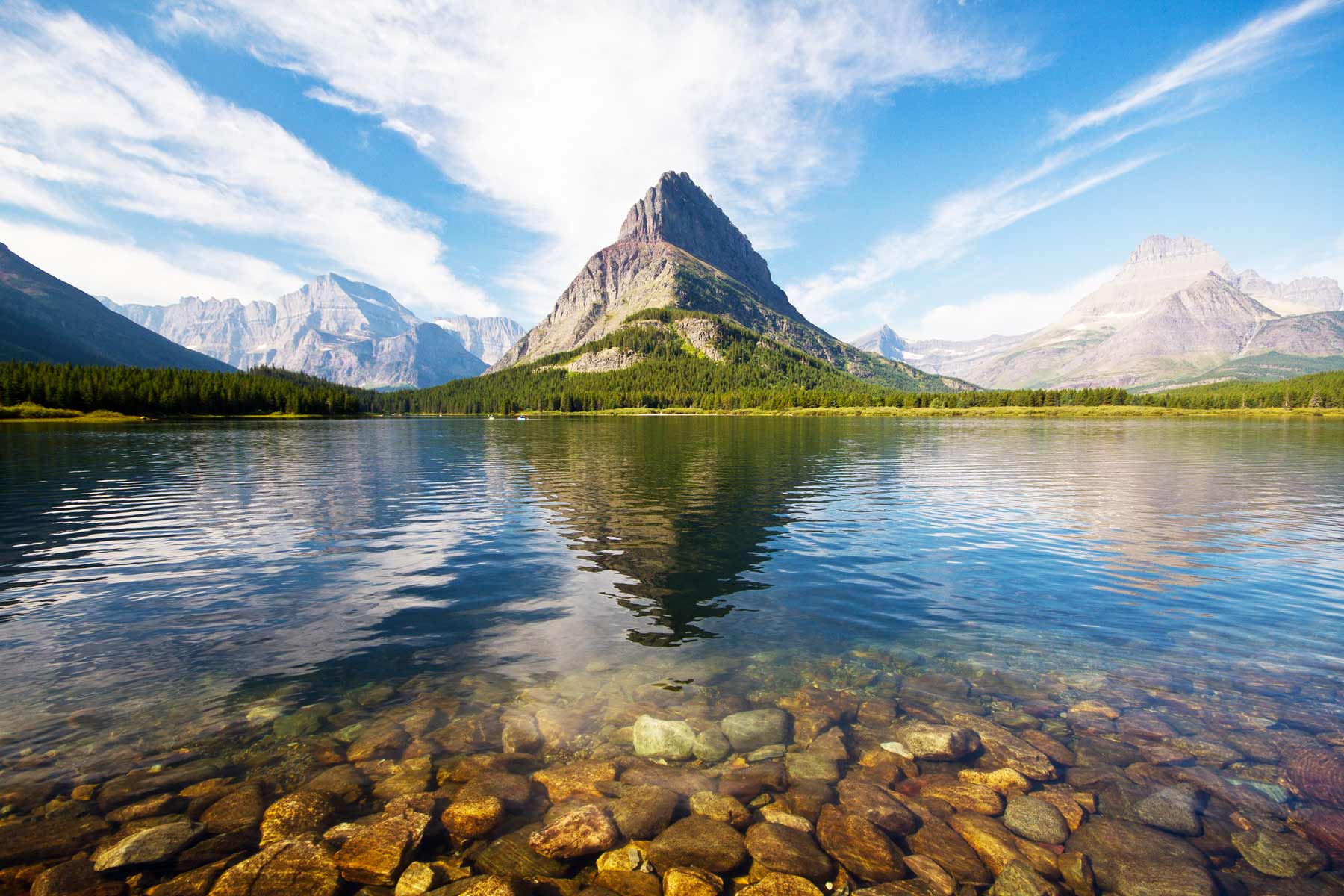
Grinnell Glacier Hike
You can start the hike one of two ways. Option 1: start at the official trailhead next to the Many Glacier Ranger Station. Option 2: you can take the boat on Swiftcurrent Lake to Lake Josephine, followed by a second boat that drops you off on the far side of that lake.
As mentioned above, taking the boat saves 3.5 miles round trip off the hike.
Once on the far side of the lake, the elevation begins up to Grinnell Lake, where the best scenery begins to come into view.
Waterfalls, wildflower meadows, turquoise waters, coupled with switchbacks, and if you’re unlucky, some unbelievably aggressive mosquitoes.
Finally, you’ll reach the Grinnell Glacier viewpoint with remarkable views of what’s left of this once mighty and now greatly reduced ice flow.
After you’re done soaking in the views, head back down the Lake Josephine dock to await your boat ride back OR continue hiking back to Many Glacier.

Dine at the Famous Many Glacier Hotel
Long celebrated as the showpiece of the park’s east side, the historic Many Glacier Hotel is a rare site to behold on the shores of Swiftcurrent Lake in Glacier National Park. From the outside, the hotel is quite large and remarkably beautiful.
The Many Glacier Hotel is modeled in the Swiss Chalet style, allowing visitors to believe for a moment that they have somehow been transported to the Alps.
The hotel was part of a greater strategy implemented by the Great Northern Railway to encourage folks to use their services to get to this area they referred to as the “American Alps.”
If the outside of this hotel impresses, the inside matches it, with a giant lobby and dining room.
The Ptarmigan Dining Room is an excellent one here open to the general public which I highly recommend visiting even if you don’t stay at the hotel.

Staying at the Many Glacier Hotel
The Many Glacier Hotel has 215 units for rent in all with a combination of suites and rooms.
Room Rates: Regular rooms go for $155 to $255, while suites go for $320 to $336
Make sure to book rooms months in advance as they go quickly due to the high demand.

Day 3: Two Medicine, Pitamakan Pass, Running Eagle Falls
Highlights: Two Medicine, Pitamakan Pass, Running Eagle Falls
Sunset: Two Medicine Lake from the boat dock
Two Medicine is the least visited of the main regions of Glacier National Park primarily because of it’s more remote proximity to the more popular areas of the park. It’s for this rare isolation that I recommend adding Two Medicine to your Glacier National Park itinerary.
That’s not to say it will be empty, but certainly, you’ll find fewer visitors in this southeastern corner of the park than in Many Glacier, Lake McDonald, & Going to the Sun Road.
Two Medicine Boating
Getting to Two Medicine requires a 90-minute drive from Many Glacier.
Start your day by renting a boat and heading out onto the lake for yourself! Kayaks, canoes, rowboats, and motorboats are available for rent at Two Medicine Lake with prices ranging from $19 – $30 per hour.
Alternatively, there are scenic boat tours of Two Medicine Lake with rates at $23/adult & $8/child.

Hike to Scenic Point OR Pitamakan Pass
If you’re up for a challenging hike, then head up to Scenic Point. You’ll probably have the trail mostly to yourself for a change and be able to soak in the unforgettable views in solitude. The trail is 7.4 miles round trip with 2,350 feet of elevation gain.
If Scenic Point is challenging enough for you, then consider Pitamakan Pass. The views from the top are, but getting there will require some effort. The trail is just over 15 miles long with 2500 feet of elevation gain.

Running Eagle Falls
If the two previous hikes are a bit too strenuous for you, then consider this one as an easy and rewarding alternative for your Glacier National Park itinerary. Running Eagle Falls is a beautiful waterfall located out of Two Medicine.
The trail is a short and easy.6-mile loop that takes you right up to the falls.

From this point, you have the option of wrapping the trip and driving back to Kalispell (2 hours) or extending the trip and continuing on! I’ll include a couple of options for extra days below to add to your Glacier National Park itinerary.
Day 4: The Highline Trail
Continuing into our 5 day Glacier National Park itinerary, we move onto another unforgettable trail. To paraphrase Andy Dufresne from The Shawshank Redemption, “If you’ve come this far, maybe you’re willing to come a bit further.”
In this case, that means driving back to the Logan Pass Visitor Center at the top of the Going to the Sun Road for one of the best hikes in Glacier National Park, The Highline Trail.
Hiking the Highline Trail
Typically this is a one-way hike. You start off at the Logan Pass Visitor Center and eventually make your way to The Loop, where you’ll catch a shuttle back to the Visitor Center.
Important for 2026: The Highline Trail takes 6+ hours round trip, which means you will exceed the new 3-hour Logan Pass parking limit. You effectively must take the park’s ticketed shuttle to Logan Pass for this hike. Book shuttle tickets on Recreation.gov well in advance. This is not optional if you want to do the Highline.
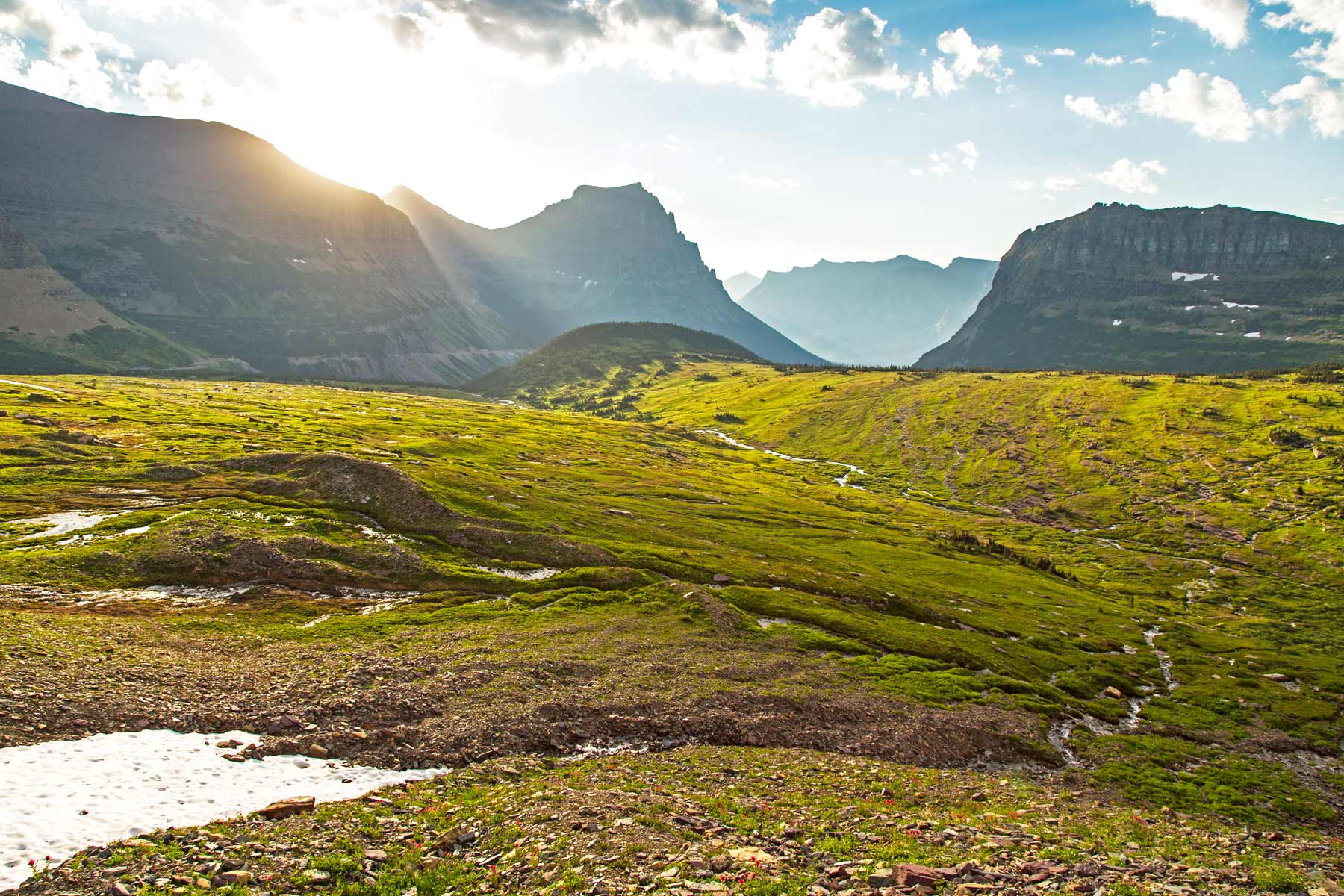
This hike is not for those with a fear of heights. It’s a pretty steep incline for the majority of the way, with drop-offs along the way. There are some safety cables and chains throughout to hold onto in the spookier parts of the trail. It’s one of the best hikes in Glacier National Park because of the view that the higher elevation provides.
This trail has grown in popularity recently and can be crowded. If you’re driving (not taking the shuttle), I recommend starting off at the visitor center no later than 7:30 for parking and also to maximize your daylight. But again, after July 1, the 3-hour parking limit makes the shuttle the better play here.
Drive Down to Apgar
After completing the hike I recommend driving back down to Apgar and staying at the Village Inn located on the eastern end of Lake McDonald. Up for some camping? Try the popular and large Apgar Campground or the lesser-traveled Logging Creek Campground.
Day 5: Avalanche Lake & Bowman Lake
Highlights: Avalanche Lake & Bowman Lake
Sunset: Bowman Lake
Avalanche Lake
I can smell the alpine scents wafting from here! If you’re familiar with the Maroon Bells in Colorado, I’d say Avalanche Lake is similar in grandeur. The shallow water allows for the crystal blueish-green hues to shine through in spectacular fashion.
Combine beautiful water with unforgettable surrounding mountains and relatively easy access, and what do you get? Crowds.
Avalanche Lake is one of the most popular things to do in Glacier because of these reasons, but not to fret. Wake up early enough, and you’ll practically have it all to yourself.
The trailhead for Avalanche Lake is located near Lake McDonald at the Trail of the Cedars parking lot, sharing the same start as that hike.
For more information on the trail, check out our article: 15 Best Things to Do in Glacier National Park

Bowman Lake
From the Popular Avalanche Lake hike, we’ll head to one of the least visited and best-a lesser-known spot on our Glacier National Park itinerary.
At 7 miles long and a half mile across, Bowman Lake is the third largest in Glacier National Park and yet far less visited than many of the lakes in the park.
Similar in grandeur and beauty to Lake McDonald with similar colored rocks blanketing the bottom, Bowman Lake is one of Glacier’s lesser-known spots.
Boating is allowed on the lake, although there are no tours or rentals available like at several of the other lakes in the park. Fishing is allowed in the lake as well.
The drive to Bowman Lake is about 90 minutes or so from the West Glacier Entrance down a dirt road which requires some slower, more methodical driving.
Those interested in camping will be glad to hear Bowman Lake Campground has 46 sites, all of which are first come, first served only.

Glacier Contingency Plan: Going-to-the-Sun Road Still Closed?
This is the single biggest way a Glacier trip falls apart, and almost nobody plans for it. Going-to-the-Sun Road is plowed every spring, but the alpine section over Logan Pass usually does not fully open until late June or early July, and a heavy snow year can push that into mid-July. If you booked for June and the road is still closed, the entire itinerary above breaks at Day 1. Do not cancel. Here is the alternate plan that keeps a closed-road trip every bit as good.
The key insight is that Going-to-the-Sun Road is one corridor in a very large park. Many Glacier, Two Medicine, and the lower lakes on each side all open and operate independently of Logan Pass. Build your days around them instead.
The Closed-Road Alternate 3-Day Plan
- Day 1, West side and Lake McDonald. The west end of Going-to-the-Sun Road stays open to Avalanche Creek even when the pass is closed. Hike to Avalanche Lake, walk the Trail of the Cedars, and drive the lower road as far as the gate. Lake McDonald itself, the most photographed water in the park, does not need the pass at all.
- Day 2, Many Glacier. This is the crown jewel and it reaches no part of Logan Pass. Drive in from the east, take the Swiftcurrent boat tour, and hike toward Grinnell Glacier or Iceberg Lake. Many Glacier alone justifies the trip and runs on its own access road.
- Day 3, Two Medicine. The quiet southeastern corner, also independent of the pass. Running Eagle Falls is a short walk, the Two Medicine boat tour opens up Pitamakan and Dawson passes, and you will share it with a fraction of the Logan Pass crowd.
Getting between the west side and the east side while the pass is closed means driving around the south end of the park on US-2, roughly two to two-and-a-half hours each way. Plan to base on the east side (St. Mary or the Many Glacier area) for Days 2 and 3 rather than crossing back and forth.
If a Boat Tour, Lot, or Region Is Closed
- Logan Pass lot full or 3-hour limit in your way? Use the 2026 ticketed shuttle instead of fighting for parking. It is the only practical way to hike the Highline point-to-point once the parking cap kicks in July 1.
- Road temporarily closed because lots filled? A confirmed lodging, camping, boat tour, or guided-hike reservation lets you in during a closure. Otherwise arrive before 6 AM or after 4 PM.
- Wildfire smoke or a region closed entirely? Step next door to the Flathead National Forest or the Helena-Lewis and Clark National Forest, which wrap the park with a tiny share of the crowds. The Days 6 and 7 plan below is built for exactly this.
- Always confirm before you drive. Check the NPS Glacier conditions page the morning of, since the road status and lot closures change daily.
Day 6 & 7: Check out the Flathead National Forest!
Continuing on to days 6 and 7 in our Glacier National Park Itinerary, we take a peak into one of America’s most striking and best-kept secrets.
If you’re in seeing Glacier without the crowds? Located RIGHT NEXT to Glacier National Park is the equally striking Flathead National Forest which sees a tiny fraction of the visitation.
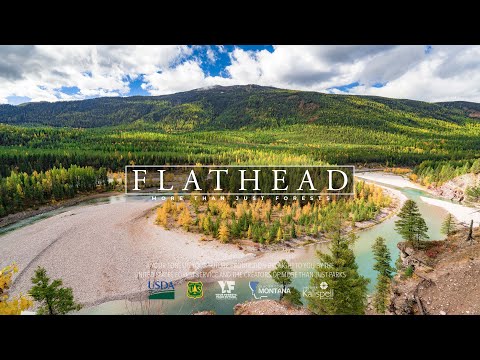
Situated in the northwestern corner of Montana, the Flathead National Forest comprises 2.4 million acres of dramatic mountain beauty. In the wild heart of the Flathead lies over 1 million acres of pristine wilderness.
Lynx, grizzly bears, timber wolves, and a vast and diverse array of other wildlife call the Flathead home. With over 1 million acres of wilderness, 2,600 miles of hiking trails, 250 species of wildlife and 22 species of fish, the Flathead National Forest truly has plenty to do.
We encourage you to visit this beautiful landscape and experience this truly unique part of America.
The dynamic and untouched landscape of Glacier National Park ensures that any trip will be a once-in-a-lifetime experience. It’s sad to think that someday, the massive ice giants that call Montana home will be lost to climate change.
If you only have 3 days to spend in Glacier, this 3 day Glacier National Park itinerary is a great sampler of the park’s most beloved features. There’s plenty more to do, however, including backcountry camping and horseback riding.
You need at least three days in Glacier National Park to do it any sort of justice, but you can cover the main attractions, excluding the best hikes, in 2 days.
The best month to visit Glacier National Park is July if you can book things far enough in advance due to the best weather and the park being fully open. The second best month is September, when crowds (and mosquitoes) are down.
Yes, the further in advance you can book basically everything in Glacier National Park, the better. Glacier was the 10th most visited national park in 2021, seeing 3.1 million visitors, up nearly double from the previous year.
No, you cannot fly with a can of bear spray in checked luggage or as a carry-on. Your best options are to either rent some bear spray on location or buy some at Walmart for about $40.
What do you think about our itinerary ideas for Glacier National Park ? Is there anything you would change? Let us know in the comments below.
And, don’t forget to sign up for our newsletter so you stay up to date on the latest national park info and exclusive guides.
Glacier National Park Itinerary FAQ
How many days do you need in Glacier National Park?
Three days is the sweet spot for a first visit. It gives you the full Going-to-the-Sun Road, a big Many Glacier day with Grinnell, and the quieter Two Medicine corner. Five days lets you add the Highline Trail and a slower pace, plus a day for Avalanche Lake and the west side. With only one day, drive Going-to-the-Sun and hike Avalanche Lake or Hidden Lake.
What happens if Going-to-the-Sun Road is still closed when I visit?
The alpine section over Logan Pass often does not fully open until late June or early July, and a heavy snow year can push that into mid-July. If you booked for June and the road is closed, do not cancel. Base yourself on the west side and the east-side valleys, which stay open: hike Avalanche Lake from the open lower stretch of the road, then drive around to Many Glacier and Two Medicine, both of which are reached by their own roads and do not depend on Logan Pass. See our closed-road alternate plan above for the full swap.
Do you need a vehicle reservation for Glacier in 2026?
For 2026 the park dropped its general vehicle reservation system, but Logan Pass on Going-to-the-Sun Road is managed through a ticketed shuttle, and there is a roughly 3-hour parking cap at Logan Pass. Plan to ride the free shuttle or arrive very early. Always confirm the current access rules on the park’s official site before your trip, since these tools change year to year.
What is the best time to visit Glacier National Park?
Mid-July through mid-September is when the full Going-to-the-Sun Road, the high trails, and the boat tours are all reliably running. Late June can still have snow over Logan Pass. September brings thinner crowds and the first golden larches, but services start winding down by the end of the month.
Where should you stay for a Glacier itinerary?
Split your nights to cut driving. Stay on the west side near West Glacier or Apgar for Going-to-the-Sun and Avalanche, then move east to Many Glacier or St. Mary for the Grinnell and Two Medicine days. In-park lodges book up close to a year out, so reserve early or base in the gateway towns and drive in.
Helpful Related Articles
Plan your whole trip: Our complete guide to Glacier National Park covers entry, lodging, and Going-to-the-Sun Road.
Things to Do Glacier National Park: 15 Best Things to Do in Glacier National Park
Glacier National Park Hikes: 15 Best Hikes in Glacier National Park
Montana National Parks: 10 Remarkable Montana National Parks to Visit
Grand Teton Hikes: Our guide to the 17 best Grand Teton National Park hikes
Grand Teton Guide: Grand Teton National Park Complete Guide
Things to Do Grand Teton: 17 Best Things to Do in Grand Teton National Park
Grand Teton Maps: The Best Maps for Grand Teton National Park
Things to Do Yellowstone: 15 BEST Things to Do Yellowstone National Park
Yellowstone Facts: 10 Top Yellowstone National Park Facts
Best Airports Near Yellowstone: The BEST Airports Near Yellowstone National Park
The Wyoming National Parks: 10 UNFORGETTABLE Wyoming National Parks: The Complete Guide (+ Photos)
Things to Do Wind Cave: 10 Top Things to Do at Wind Cave National Park
Visiting Mount Rushmore: 15 Helpful Tips for Visiting Mount Rushmore
Things to Do Near Rushmore: 25 Top Things to Do Near Mount Rushmore
Permit Systems and Reservations
Check to see if the national park you’re visiting has a permit or reservation system in place before visiting. As parks become increasingly crowded, more has to be done to safeguard them, which means controlling the hundreds of millions of people who visit these places each year. In 2026, Glacier has dropped vehicle reservations entirely but replaced them with a 3-hour Logan Pass parking limit, a ticketed shuttle system, and temporary road closures when lots fill. Plan accordingly and book shuttle tickets on Recreation.gov if you need them.
Want Less Crowds? Try a National Forest!
Try visiting a national forest while you’re on your trip to avoid the crowds. There are 155 national forests in America, many of which are equally as beautiful as the national parks they neighbor and only see a fraction of the visitors.
Practice Safety, Seriously
National parks are wild places, so it is essential to practice basic safety while visiting them. Every year people die while vacationing in national parks. This is easily avoided by:
- Sticking to trails
- Checking the weather before going out on a hike
- Maintaining a safe distance between wildlife, which means at least 25 yards from most wildlife and 100 yards from predators
What to Bring to Glacier
Gear we recommend for Glacier. Affiliate links support our work at no cost to you.
More Than Just Parks may earn a small commission from purchases made through these links, at no extra cost to you. We only recommend gear we would actually use.
Affiliate disclosure: Some links on this page earn us a small commission at no extra cost to you. We only recommend gear we actually use.