


Washington holds three national parks within a few hours of Seattle, and people drive themselves a little crazy trying to pick one. They are not interchangeable. Olympic, North Cascades, and Mount Rainier each do one thing better than almost anywhere else in the country, and each asks something different of you in return. We have filmed in all three, and the honest answer to “which one should I visit” depends entirely on what you want out of the trip and how much time you have.
This is a straight comparison, tradeoffs included. If you only have time for one, the quick version is at the bottom. If you want the reasoning, read the whole thing.

At a Glance: Olympic vs North Cascades vs Mount Rainier
| Park | Size | Yearly Visitors | Best For | Crowds | Drive From Seattle |
|---|---|---|---|---|---|
| Olympic | 922,649 acres | ~3 million | Variety: coast, rainforest, alpine | Busy in summer, but spread out | 2 to 3 hours |
| North Cascades | 504,654 acres | ~30,000 (park proper) | Solitude and rugged backcountry | Almost none | 2.5 to 3 hours |
| Mount Rainier | 236,381 acres | ~2 million | Wildflowers and one iconic peak | Heavy at Paradise and Sunrise | 2 to 2.5 hours |
One quick 2026 note before you plan: Mount Rainier is not running timed entry reservations this year. The pilot system that covered Paradise and Sunrise in 2024 and 2025 has been dropped, so entry is first come, first served. Show up early on summer weekends and you will be fine. Neither Olympic nor North Cascades requires timed entry either.
Olympic National Park: The One That Has Everything

Olympic is the strange one, in the best way. It is really three parks stitched together: a wild Pacific coastline, the mossy Hoh and Quinault rainforests, and the alpine meadows up at Hurricane Ridge. You can stand on a driftwood beach in the morning and watch sunset from a mountain ridge the same day. No other park in the Lower 48 packs that range into one trip.
Love Mount Rainier? It's one of 117 threatened public lands destinations we're tracking. Get the free briefing.
The tradeoff is the driving. Olympic wraps around the Olympic Peninsula, and there is no road through the middle. Getting from the rainforest to the coast to the high country means long stretches behind the wheel on US 101. Most people underestimate this. Give Olympic at least three days, and resist the urge to see all three zones in one.
Go to Olympic if you want maximum variety, you like the idea of rainforest and ocean and mountains in one trip, and you do not mind covering ground. For the full breakdown, see our guide to the best things to do in Olympic National Park and our Olympic National Park facts.
North Cascades National Park: The Empty One

North Cascades is one of the least-visited national parks in the country, and that is the whole appeal. The park proper sees around thirty thousand people a year, a rounding error next to Olympic and Rainier. You get serrated peaks, more than three hundred glaciers, and the turquoise water of Diablo Lake, often without another car in sight.
Here is the honest catch. Most of North Cascades National Park has no roads. The famous drive along the North Cascades Highway actually runs through Ross Lake National Recreation Area, which sits between the park’s two units. To get deep into the park itself you have to hike, and the terrain is steep and serious. Day visitors get the overlooks and a few trailheads; the real park rewards backpackers.
Go to North Cascades if you want solitude, you are comfortable on rugged trails, and crowds are a dealbreaker. It pairs well with a Rainier or Olympic trip since you can knock out the scenic highway in a day. More in our North Cascades National Park facts and our roundup of the least-visited national parks.
Mount Rainier National Park: The One With the Mountain
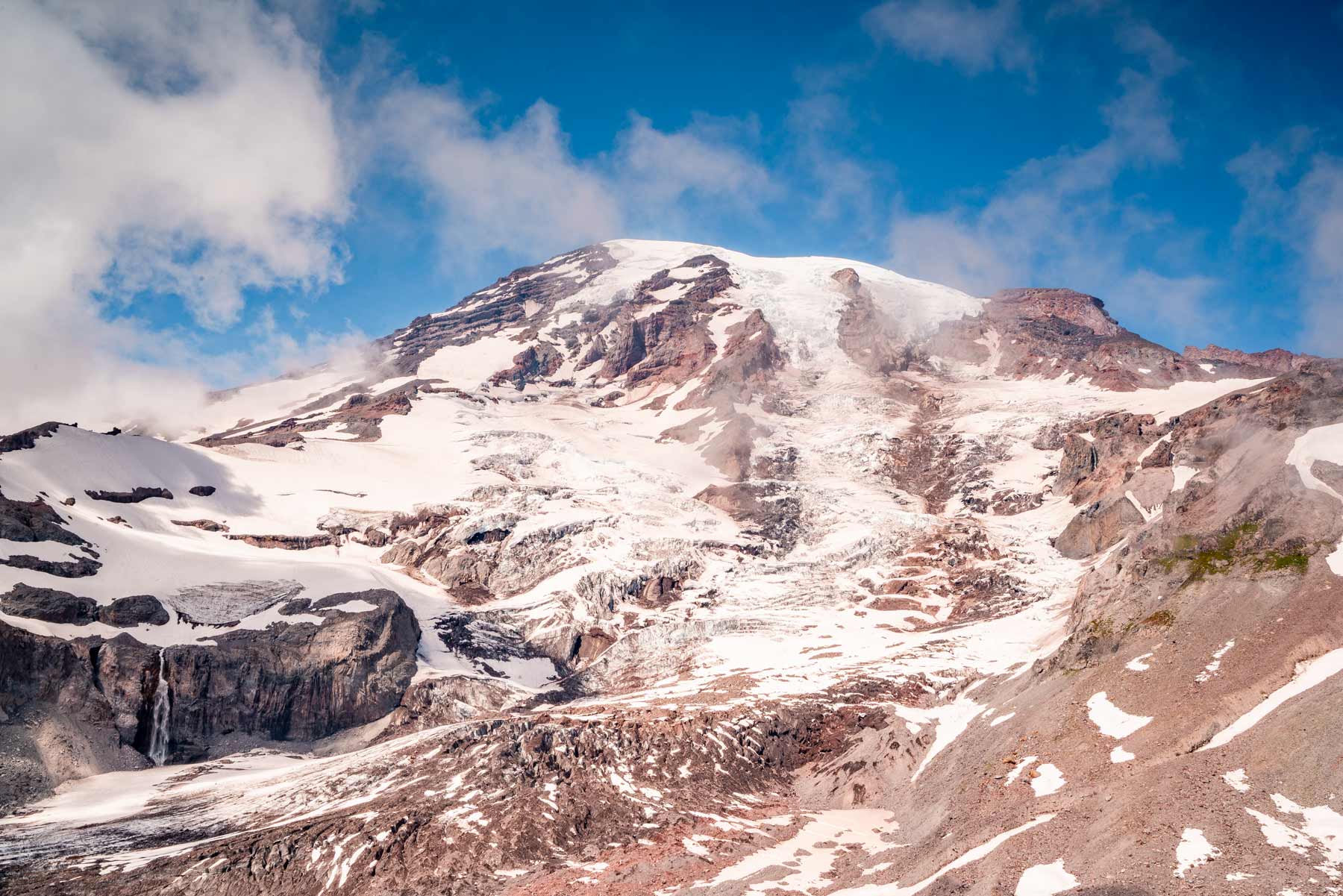
Mount Rainier is the smallest of the three and the most focused. The whole park orbits one 14,410-foot volcano, and on a clear day it dominates everything. The payoff window is late July into August, when the subalpine meadows at Paradise erupt with wildflowers and the Skyline Trail becomes one of the best day hikes in the Pacific Northwest.
The tradeoff is crowds and weather. Paradise and Sunrise fill up fast on summer weekends, and the parking lots can be full by mid-morning. Rainier also makes its own weather, so the mountain can hide behind clouds for days. Plan flexibility into your trip and start early. With timed entry gone for 2026, an early arrival is your best strategy.
Go to Mount Rainier if you want a postcard peak, wildflower meadows, and strong day hiking, and you can time it for peak bloom. See our guide to the best things to do in Mount Rainier National Park.
So Which One Should You Visit?
- Only one park, first-timer: Olympic. It gives you the widest range of scenery and the most reasons to come back.
- You hate crowds: North Cascades, with the caveat that you need to hike to get the best of it.
- You want the classic mountain shot and wildflowers: Mount Rainier in late summer.
- You have a week: Do all three. A loop from Seattle can string Rainier, North Cascades, and Olympic together, though it is a lot of driving.
However you slice it, Washington gives you three genuinely different parks within a half-day drive of each other. For the bigger picture, see our overview of Washington’s national parks, our national parks ranked guide, and our calendar of the best national parks to visit every month.
What to Bring to Mount Rainier
Gear we recommend for Mount Rainier. Affiliate links support our work at no cost to you.
More Than Just Parks may earn a small commission from purchases made through these links, at no extra cost to you. We only recommend gear we would actually use.
Affiliate disclosure: Some links on this page earn us a small commission at no extra cost to you. We only recommend gear we actually use.


