


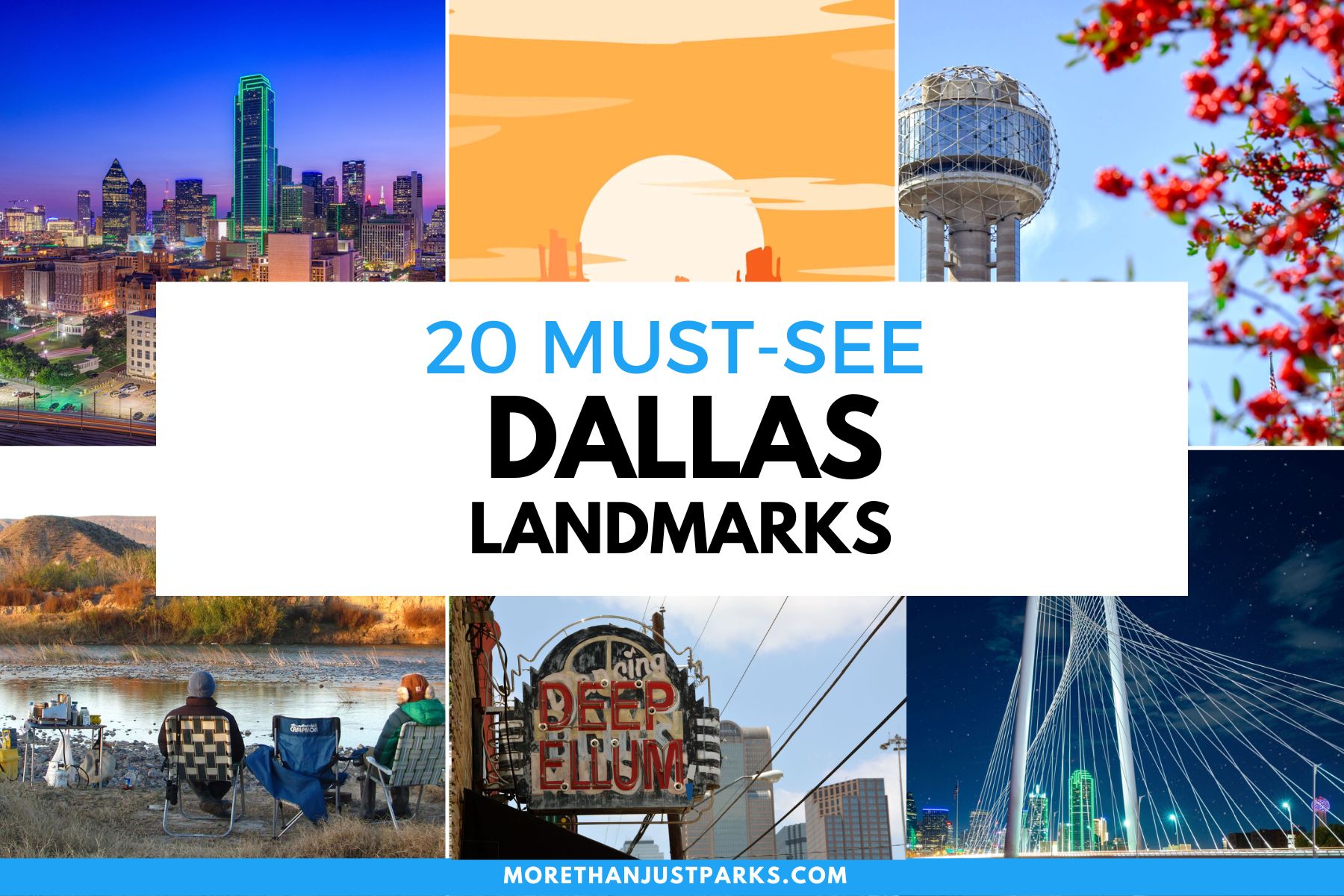
Dallas wears its history on its sleeve, from the plaza where a president was lost to the cattle drives that built Texas. This is a city of bold modern architecture and deep frontier roots, where a presidential library sits a few miles from a pioneer village and a TV ranch draws fans from around the world. I taught American history for years before I started visiting these places, and Dallas always reminds me how recent and how raw the Western story still feels here.
These 15 run from solemn memorials to playful public art, from world-class museums to a stadium the size of a small town. I have noted what each place is and why it matters so you can plan a smart visit.
Dallas Landmarks At A Glance
| Landmark | Area | Type |
|---|---|---|
| Pioneer Plaza | Downtown | Public sculpture park |
| Southfork Ranch | Parker | Historic ranch / TV site |
| Dallas Arboretum and Botanical Garden | East Dallas | Botanical garden |
| JFK Memorial Plaza & the Grassy Knoll | Dealey Plaza | Memorial & historic site |
| Dallas Heritage Village | Old City Park | Living history museum |
| Founders’ Plaza | Downtown | Historic site |
| AT&T Stadium | Arlington | NFL stadium |
| Perot Museum of Nature and Science | Victory Park | Science museum |
| The Sixth Floor Museum at Dealey Plaza | Dealey Plaza | History museum |
| George W. Bush Presidential Library and Museum | SMU campus | Presidential library |
| Reunion Tower | Downtown | Observation tower |
| Cedar Ridge Preserve | Southwest Dallas | Nature preserve |
| Margaret Hunt Hill Bridge | Trinity River | Cable-stayed bridge |
| Deep Ellum | East of downtown | Historic entertainment district |
| Fair Park | South Dallas | Art Deco park / NHL |
15. Fair Park

We start at a 277-acre showplace of Art Deco design. Fair Park was largely built for the 1936 Texas Centennial Exposition, and it holds the largest collection of Art Deco architecture, sculpture, and murals in the country. It was designated a National Historic Landmark in 1986.
The park is home to the State Fair of Texas each fall, complete with the towering Big Tex statue, along with museums, the Cotton Bowl stadium, and the Hall of State. It is a place where Texas history, design, and spectacle all come together on one sprawling campus.
117 public lands destinations are under threat. Get the free briefing that 27,000+ people use to stay informed and take action.
14. Deep Ellum

At number 14 is the soul of Dallas music. Deep Ellum, just east of downtown, grew up in the early 20th century as a hub for African American and immigrant communities and became one of the most important centers of early blues and jazz in the South.
Legends like Blind Lemon Jefferson and Robert Johnson played here in its early decades. Today the neighborhood is a lively arts district packed with live-music venues, murals, breweries, and restaurants. Come in the evening, when the stages light up and the street art glows.
13. Margaret Hunt Hill Bridge

Number 13 is a piece of modern sculpture you can drive across. The Margaret Hunt Hill Bridge opened in 2012 over the Trinity River, designed by the renowned Spanish architect Santiago Calatrava.
Its single soaring arch, rising more than 400 feet and strung with cables like a harp, has become one of the defining images of the modern Dallas skyline. It is best seen lit up at night. The bridge is part of the city’s long effort to reconnect with its river.
12. Cedar Ridge Preserve

At number 12 is a welcome escape from the city. Cedar Ridge Preserve is a 600-acre natural area in southwest Dallas, sitting on the edge of the Texas Hill Country escarpment where the prairie meets rugged limestone hills.
The preserve offers roughly nine miles of hiking trails, a butterfly garden, and seasonal wildflowers, all just a short drive from downtown. Managed by Audubon Dallas, it is free to enter and a fine reminder that Texas wildness is never far away. Bring water and good shoes for the hilly trails.
11. Reunion Tower

Number 11 is the city’s most recognizable silhouette. Reunion Tower, opened in 1978 and standing 561 feet tall, is crowned by a geodesic sphere studded with LED lights that the locals affectionately call the Ball.
The GeO-Deck observation level offers 360-degree views of the city and the surrounding plains, and the sphere puts on a nightly light show visible across downtown. It is the classic spot to get your bearings on a first visit to Dallas.
10. George W. Bush Presidential Library and Museum

At number 10 is one of the nation’s presidential libraries. The George W. Bush Presidential Library and Museum opened in 2013 on the campus of Southern Methodist University, administered by the National Archives and Records Administration.
The museum walks visitors through the eight years of the Bush presidency, including a full-size replica of the Oval Office and a sobering exhibit on the September 11 attacks. Whatever your politics, it is a serious look at a consequential era in recent American history.
9. The Sixth Floor Museum at Dealey Plaza

Number nine is one of the most visited history museums in Texas. The Sixth Floor Museum occupies the former Texas School Book Depository, the building from which Lee Harvey Oswald fired the shots that killed President John F. Kennedy on November 22, 1963.
The museum’s exhibits examine the life, death, and legacy of Kennedy with photographs, films, and artifacts, including the preserved corner window. It is a thoughtful and moving treatment of a day that changed the country. Visit it together with Dealey Plaza below for the full picture.
8. Perot Museum of Nature and Science

At number eight is a striking modern science museum. The Perot Museum of Nature and Science opened in 2012 in Victory Park, housed in a dramatic cube designed by architect Thom Mayne with an exterior escalator running up its glass face.
Inside are 11 permanent exhibit halls covering dinosaurs, gems and minerals, space, and the human body, with hands-on exhibits that make it a favorite for families. It is named for Texas businessman Ross Perot and his wife. Plan on a few hours, especially if you have children.
7. AT&T Stadium

Number seven is a temple to America’s favorite sport. AT&T Stadium in Arlington opened in 2009 as the home of the Dallas Cowboys, and it is one of the largest and most expensive stadiums ever built.
The retractable-roof venue seats around 80,000 and can expand to over 100,000, anchored by one of the biggest video boards in the world hanging above the field. It hosts not just football but concerts, college playoffs, and major events. Stadium tours let you walk the field and the locker rooms even on non-game days.
6. Founders’ Plaza

At number six is the birthplace of the city. Founders’ Plaza in downtown Dallas marks the spot near where John Neely Bryan built a cabin in 1841 and laid out the settlement that would become Dallas.
A reconstruction of Bryan’s log cabin stands in the plaza, a small but meaningful reminder of how recently this towering city was open prairie. It sits within the West End Historic District, surrounded by the brick warehouses of early Dallas, and makes an easy stop while exploring downtown.
5. Dallas Heritage Village

Number five is a window into frontier Texas. Dallas Heritage Village, in the city’s oldest park, is a living history museum of restored 19th-century buildings gathered from around North Texas and arranged as a Victorian-era town.
You can wander through a working farmstead, a one-room schoolhouse, a railroad depot, and grand Victorian homes, with costumed interpreters on event days. It is the largest collection of nineteenth-century North Texas buildings anywhere, and an easy, family-friendly stop near downtown.
4. John F. Kennedy Memorial Plaza and The Grassy Knoll

At number four is a place of national memory. The John F. Kennedy Memorial Plaza, dedicated in 1970, sits a block from Dealey Plaza and honors the president assassinated in Dallas in 1963. It was designed by architect Philip Johnson as an open, roofless monument meant as a quiet place for reflection.
Nearby is Dealey Plaza itself, including the famous grassy knoll, the small rise that has fueled decades of debate about that day. The entire plaza was designated a National Historic Landmark district in 1993. Standing here, with the old depository above you, the history feels very close.
3. Dallas Arboretum and Botanical Garden

Number three is one of the most beautiful spots in the city. The Dallas Arboretum and Botanical Garden spreads across 66 acres on the shore of White Rock Lake, a showcase of seasonal flowers, ornamental gardens, and grand old trees.
The grounds include the historic DeGolyer House, a 1940 Spanish Colonial mansion, and put on celebrated displays each spring and autumn, including a famous pumpkin village in October. It is consistently ranked among the finest public gardens in the country and a lovely way to spend a morning.
2. Southfork Ranch

At number two is a slice of television history. Southfork Ranch, in nearby Parker, is the white-columned mansion that served as the home of the Ewing family on the hit show Dallas, which ran from 1978 to 1991 and made the city famous around the world.
The working ranch now operates as a museum and event venue, offering tours of the mansion and exhibits of memorabilia from the series, including the gun from the famous “Who shot J.R.?” storyline. For fans of the show, and for anyone curious about Dallas’s pop-culture moment, it is a must.
1. Pioneer Plaza
Topping the list is the most photographed public art in Dallas. Pioneer Plaza, dedicated in the 1990s in the heart of downtown, features one of the largest bronze monuments in the world, a dramatic cattle drive of 49 longhorn steers herded by three mounted cowboys.
The sculptures, created by artist Robert Summers, flow down an artificial hillside and stream, commemorating the great cattle drives that once passed through this region along the Shawnee Trail. It is free, open at all hours, and a fitting symbol of the cowboy heritage that built Texas. There is no better place to end a tour of Dallas.
More Things To Do
Dallas rewards travelers who keep exploring. If you are planning a wider trip, here are a few ways to go further:
- Compare Dallas with the best of other great American cities in our guides to New York Landmarks, Chicago Landmarks, and San Francisco Landmarks.
However you build your trip, give Dallas the time it deserves. These 15 landmarks are a strong start, and each one connects to a larger chapter in the story of this remarkable Texas city.


