Voyageurs National Park is one of the most unique parks in America — a water-based wilderness where you need a boat just to reach most of the park. I’ve explored Voyageurs across multiple seasons, paddling its vast interconnected lakes and camping on remote islands under some of the best northern lights viewing in the lower 48. Here’s the thing most people don’t realize: you don’t need to own a boat or even know how to drive one to have an incredible time here.
Voyageurs National Park Map
11 places to explore — click a pin to learn more
Voyageurs National Park at a Glance
Below you’ll find my guide to the best things to do in Voyageurs National Park, plus a full breakdown of how to rent a boat and navigate the park even if you’ve never been on the water before.
1. See The Northern Lights
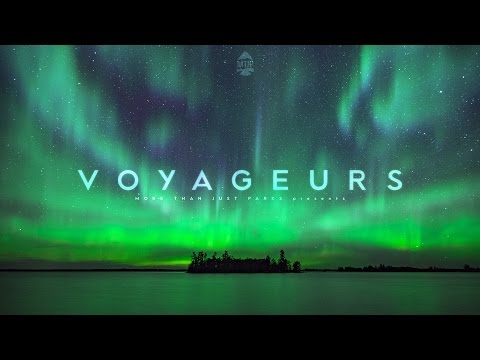
On clear nights in Voyageurs you can see the most spectacular light show in the world, the northern lights.
They start as a faint glow on the horizon before working their way up the sky, dancing in real time right before your eyes.
Here in the remote north woods there is almost no light pollution whatsoever and the night sky is truly a wonder to behold.
There’s no need to go to Iceland or Norway or even Alaska if it’s the northern lights you seek — you’ll find them here in all of their glory.
Fall and winter give you your best chances of seeing the northern lights, but you may be lucky enough any time of year if the conditions are right.
2. Ellsworth Rock Garden
On the quiet shores of Lake Kabetogama lies this incredibly unique garden featuring countless works of art made entirely out of stone. Some of the stones are massive monoliths balanced delicately upon other stones.
This fascinating attraction is entirely the work of one man, a humble carpenter from Chicago named Jack Ellsworth, who built these amazing works of art over the course of 20 years starting in the 1940’s.
After a period of falling into disrepair, the National Park Service acquired and restored this beautiful rock garden to its former glory and now you can visit it and look with wonder at the artistic expressions of one determined man.
The Ellsworth Rock Garden is accessed via boat and is a short ride across the lake from the Lake Kabetogama Visitor Center.
3. Grassy Bay Cliffs
Located in the southeastern part of the park on Sand Point Lake, these sheer granite cliffs rise 125 above the lake making for a striking contrast with the surrounding area.
The cliffs are particularly beautiful in the fall when they are crowned by brilliant autumn reds and yellows.
Learning about how these lakes and rock formations were formed over some 2.5 billion years ago and seeing these natural wonders up close can make your visit all the more enjoyable.
As with most everything in the park, Grassy Bay Cliffs can only be reached by water. Head over to our Voyageurs National Park Guide to learn all about renting boats in the park. To learn more about the geological history of the park visit a park visitors center or check out the park website.
To learn more check out our Grassy Bay Cliffs post.
4. Gold Portage
The Gold Portage area is a terrific place to spot some of the park’s more elusive and iconic wildlife such as moose, bears, foxes, and maybe even wolves.
Here you’ll find a half-mile trail that connects Rainy Lake with Kabetogama Lake. Hikers, canoeists, and kayakers can make their way between the lakes using this scenic portage route.
- Distance: 0.5 miles
- Difficulty: Easy
Note: This is a trail and canoe portage route that can only be accessed by boat. There is an area to tie-off your boat and access the trail.
To learn more check out our Gold Portage post.
You need a boat to see this park. Plan accordingly. This is not a park you can experience from your car. Rent a kayak, canoe, or motorboat from outfitters in Kabetogama, Ash River, or Rainy Lake. Or take the NPS ranger-led boat tours, which are excellent and affordable.
5. Kettle Falls
Kettle Falls is located in the heart of the park and is, of course, accessible only by water. Here you’ll find a quirky red-roofed historic hotel with an old slanted dance floor and plenty of north woods charm.
The Kettle Falls Hotel has been welcoming visitors from lumbermen to fishermen to tourists since 1913 and is sort of an unofficial symbol of the park.
Stop in as you’re touring the lakes and islands of the park for some refreshments and relaxation or book a stay at the only hotel inside the park. It’ll definitely be an experience you won’t forget!
6. Go Fishing!
The waters of Voyageurs National Park and the surrounding areas are teeming with native fish that are great for eating or just for sport.
There’s nothing quite like the feeling of catching your own meal and cooking it over an open fire on an island all to yourself.
Kettle Falls is a great spot in the middle of the park to refuel your boat and/or grab a bite to eat if you weren’t so lucky with the fish.
Be sure to follow National Park Service and Minnesota DNR rules governing fishing in the area and fish responsibly.
7. Junction Bay Falls
Located in the southwestern corner of Namakan Lake is Junction Bay.
Following the bay inward you’ll find where the Johnson River flows into Namakan Lake in a series of waterfalls known as Junction Bay Falls. In autumn these falls are ablaze with red maples and golden aspens.
This is a great spot in Voyageurs to stop and look around. To learn more check out our Junction Bay Falls post.
8. Kabetogama Lake Sunset
At over 25,000 acres of watery wonderland, Kabetogama Lake features some of the most spectacular waterways in the world.
During the Fall this lake is especially stunning with kaleidoscopic autumn foliage on display. Renowned for it’s lengthy magic hour, a sunset in Voyageurs National Park’s Kabetogama is a must-visit item for many.
9. Anderson Bay Overlook
Anderson Bay Overlook provides a spectacular view of the park’s famous watery landscape. From here you can see what makes Voyageurs National Park so special. Pristine lakes, islands, and boreal forest stretching into the vast north woods horizon.
Listen for the call of a loon or see if you can spy a passing fisherman wrapping up a day on the lake at sunset.
The overlook is accessed via a day use area which also provides a dock, picnic tables, and barbecues, perfect for cooking up the day’s catch. From there you can hike the 1.75-mile loop trail to the overlook.
You might also want to check out Kabetogama Lake Overlook, which can be accessed by car from the mainland.
10. Go Camping on Your Own Island
One of the coolest things you can do at Voyageurs National Park is to go camping on an island all to yourself.
The park’s giant lakes are filled with these kinds of opportunities and all one has to do is reserve their site here, hop in a boat and make your way to your very own remote island campsite.
The campsites come equipped with picnic tables, a tent area, bear lockers, and a pit toilet. Many also have trails offering opportunities to get different views of the surrounding area.
11. Hike the Locator Lake Trail
Distance: 4.3 miles (round trip)
Time: 2-3 hours
Elevation Gain: 400 feet
Locator Lake is one of the best trails in Voyageurs National Park featuring some of the park’s only real elevation gain. At 4.3 miles long this trail takes about 2 to 3 hours to complete and has just under 400 feet of elevation gain.
This hike takes you through varied terrain and eventually leads to Locator Lake, a really cool interior lake in the park known for relatively calm waters and great fishing.
Pick one lake area and commit to it. Rainy Lake, Kabetogama, and Ash River are the three main entry points, and driving between them takes 45 minutes to an hour. Kabetogama has the best mix of outfitter access and canoeing. Rainy Lake is the most developed with the best visitor center.
A Way of Life
Having grown up in Georgia I have to say I wasn’t too familiar with the sort of overnight canoe trips that are a favorite pastime for every northern Minnesotan, that is, until I married one!
Sure I had canoed the Okefenokee Swamp and the Flint River growing up, but this is an entirely different kind of experience. On successive yearly trips to Voyageurs and the Boundary Waters my wife has introduced me to the quiet world of canoeing these remote woods and lakes and I have never turned back.
There’s something very special about this vast and immensely beautiful area Sigurd Olson called the Singing Wilderness. Traveling by canoe through the pristine mosaic of waters and islands that comprise this area puts one in touch with nature in a way that feels like coming home no matter where you’re from.
Don’t get me wrong, canoeing long distances is hard work, but I find it a more rewarding experience than long hikes myself.
Entrance Fees
There are no entrance fees to Voyageurs National Park.
Cell Service
Cell Service is hit or miss throughout the park. The visitors centers have service and most places with roads do. Rainy Lake has some coverage, but as you go east on the other lakes coverage is rare.
Guide Book
Best Guide Book is this one which we used extensively on our visit.
Map
Map: If you’re planning on anything more than a casual visit to Voyageurs you honestly need this map which shows you the water routes throughout the park. It’s waterproof and an key tool for navigating the park.
Dry Bags
Dry bags are an essential Voyageurs item keeping wallets, phones, clothes, etc. nice and dry in a very wet park. We used / love this dry bag.
Getting to Voyageurs
Getting to Voyageurs National Park is not as easy as a lot of other parks, but for the intrepid adventurer it’s well worth the journey. A lot of folks will start by flying in to Minneapolis where you can get relatively inexpensive flights and rental cars. The park is a 4 and a half hour drive north from the MSP airport.
You can also fly directly in to International Falls which is serviced by a few of the major domestic carriers. Flying into INL is usually pretty pricey so keep that in mind if you’re trying to do this on a budget. Once there you can rent a car (Hertz is not available) and you’re already practically in the park.
Boat Rentals
The entire park is accessible only by boat! Rentals are easy and our Voyageurs National Park Guide provides a guide to renting boats in the park.
Best Time to Visit
Best Time to Visit Voyageurs National Park is in the Fall. The bustle of summer fishing and house boating is long gone and the park’s shores and trails are ablaze with magnificent autumn reds, yellows, and oranges. Fall is a feast for the eyes at Voyageurs, but be quick as it’s also very short in this coldest area of the continental U.S.
Where to Stay
Visiting Voyageurs National Park? If you haven’t decided where to stay (yet) check out our helpful guide on visiting Voyageurs National Park for tips. Don’t have time? Here’s our favorite hotel for Voyageurs.
Watch Our Award-Winning Voyageurs Video
We created this short film based on our travels through Voyageurs National Park that happened to win an award or two and now has been seen over a million times around the world. We’re pretty excited about it. Enjoy!
If you visit in late September, you have a real shot at the northern lights. Voyageurs sits at the 48th parallel with almost zero light pollution. The aurora is visible here more often than nearly anywhere else in the Lower 48.
- See The Northern Lights
- Ellsworth Rock Garden
- Grassy Bay Cliffs
- Gold Portage
- Kettle Falls
- Go Fishing
- Junction Bay Falls
- Kabetogama Lake Sunset
- Anderson Bay Overlook
- Camp on Your Own Island
- Locator Lake Trail
Planning a trip to Voyageurs National Park? Learn how to do it right with our comprehensive Voyageurs National Park Guide that covers what to see, campgrounds, lodging, dining, seasons & weather, and so much more.
>> Voyageurs National Park Guide <<
The park is primarily accessed via three large lakes (Namakan, Kabetogama, and Rainy). Each of the three main lakes in Voyageurs National Park can be accessed at various locations depending on what type of activity you’ll be doing.
The park does offer some hiking trails on the mainland that can be reached by car. These are mostly concentrated near the Ash River Visitor Center and the Rainy Lake Visitor Center.
Before traveling make sure to familiarize yourself with how to safely navigate the lakes. The U.S. Coast Gaurd maintains a series of buoys marking safe routes through the park’s waters. You’ll want to head over to the park website to understand how to use the buoys for navigation. It’s actually pretty easy!
Once on the lakes in your chosen mode of transport you’ll need a map and the ability to read it properly, a GPS is always a plus too.
These are large lakes and offer more than a few opportunities to lose your bearings so do come prepared.
It’s a good idea to have a way to contact the mainland in the event of an emergency and keep in mind cell service is mostly non-existent once out on the water.
What If I love the parks, but I’m not familiar with boats?
Not to worry! Traveling by canoe is one of the oldest and safest modes of transportation there is and it’s lots of fun even for beginners. Plus it’s incredibly inexpensive. Did I mention it’s easy?
Renting and operating motorized boats is easy too! The lodge or resort from which you rent your boat will show you exactly how to safely operate it and ensure you’re feeling confident and comfortable behind the wheel.
Remember the locals here are truly “Minnesota Nice”.
If you’re renting a boat, typically your lodge or resort will give you a radio with which to contact them in the event you should need anything.
This could range from wanting to have fuel and/or food delivered to you or needing help getting unstuck from a tricky area.
Voyageurs Visitor Centers
The park has three visitors centers where you can grab a map and learn about the park.
The Rainy Lake Visitors Center in International Falls, the Kabetogama Lake Visitor Center off of Highway 53 in Kabetogama, and the Ash River Visitors Center on the eastern end of Kabetogama Lake.
The Rainy Lake Visitor Center is open year round while the others close for the season at the end of September.
Voyageurs National Park is located in the Northernmost region of Minnesota, straddling the Canadian border.
The park is about 275 miles north of Minneapolis, about 4 and a half hours driving. Voyageurs National Park lies adjacent to Superior National Forest and the renowned Boundary Waters Canoe Area Wilderness.
Yes you can drive into Voyageurs National Park. The park has 3 visitor centers, all reachable by car, and a number of trails that can be reached without ever needing a watercraft.
We recommend summer or fall when temperatures are mild and the entire park is accessible. Visitors need not worry about summer crowds thanks to the park’s remote location, also all three visitor centers are open in the summer whereas only one is open after September.
International Falls, MN, is the nearest city, just minutes from the park’s boundary. Falls International Airport (INL) provides easy access to the park and is serviced by Delta Airlines.
Voyageurs National Park is almost entirely accessible only by boat. There are numerous lodges and outfitters that rent boats ranging from kayaks and canoes to motorized fishing boats and houseboats. There are also several guide services that will take you sightseeing on their boat.
While no specific time guarantees opportunities to see the northern lights, the fall and winter are usually the best time to visit to see the northern lights.
If you enjoy the outdoors and traveling by watercraft then Voyageurs National Park should be on your list. If not, I would recommend other parks that can be visited via car.
Helpful Related Articles
Voyageurs Guide: Voyageurs National Park: Epic Guide to Minnesota’s Watery Wonderland
Things to Do in Voyageurs: 10 Incredible Things to Do in Voyageurs National Park
Minnesota National Parks: 6 EPIC Minnesota National Parks Worth Visiting (Guide + Photos)
Voyageurs Camping: Voyageurs National Park Camping (Everything You Need to Know)
aster_mtjp]:public_html$ exit
Have you visited Voyageurs National Park? I’d love to hear about your experience — did you go by canoe, motorboat, or houseboat? And did you catch the northern lights? Drop a comment below and let me know your favorite spot in the park.