 MORE THAN JUST PARKS
PART V · WE HAVE DONE THIS BEFORE CHAPTER 1 Receipts
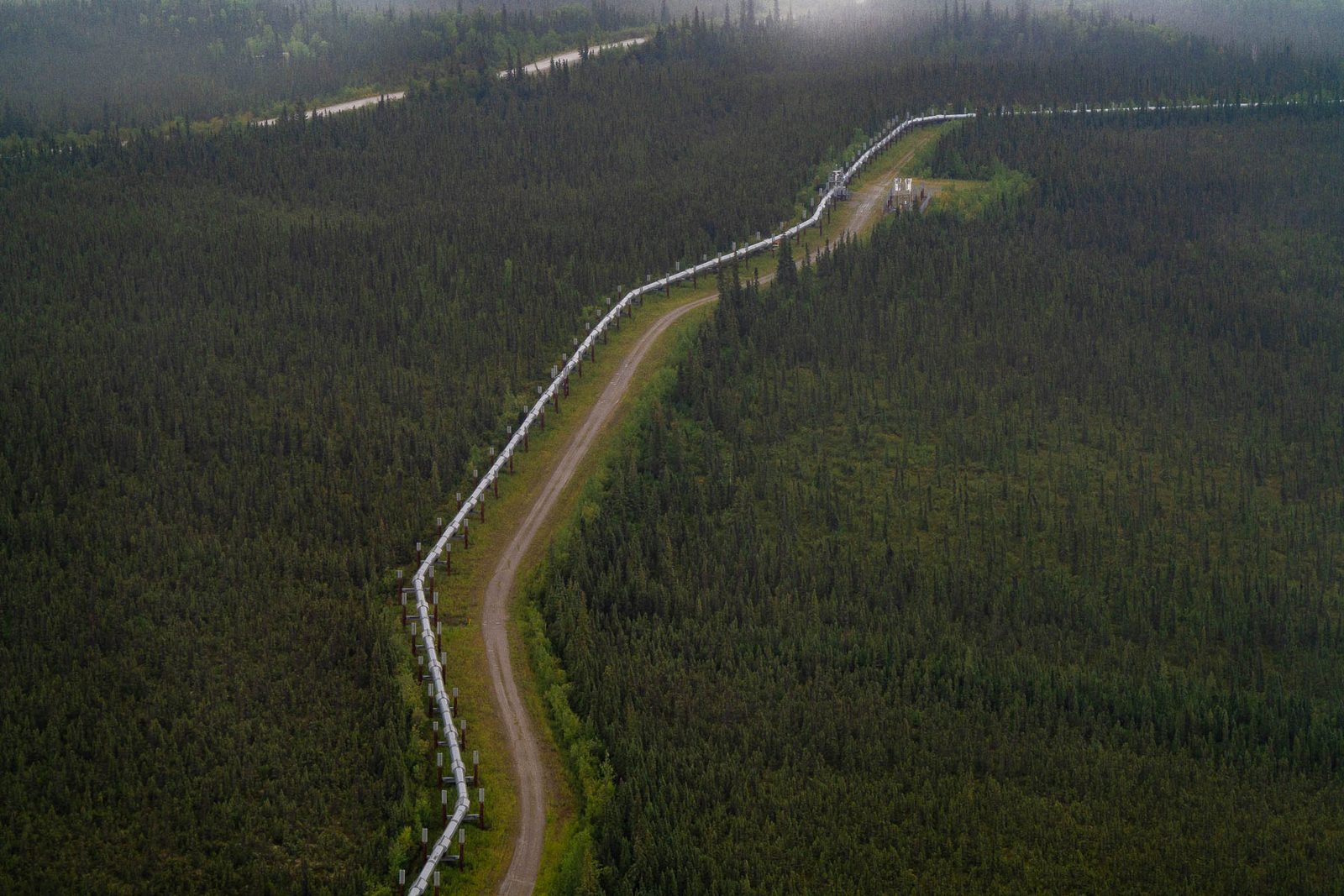
Alaska has built one publicly financed road to a private mine, to Red Dog, and it earns money for the state for a reason that doesn't exist at Ambler. The Dalton Highway, where Ambler would start, is a pipeline and oil road the state now maintains for heavy industry: $465.6 million of capital since 2015, $454 million more planned, and no mechanism in place to make industry pay.
What this chapter finds
The Ambler Road would leave the Dalton Highway at about milepost 161. The Dalton is the working example of what a public road serving industry costs the public.
Alaska's own Department of Transportation told the Senate Resources Committee in January 2026 that capital investment in the Dalton ran $465.6 million from 2015 to 2025, with $454 million planned for 2026 to 2031. That's about $920 million from 2015 to 2031, spent and planned, before a single Ambler truck uses it. The same slide describes "heavy maintenance demand" and says "harsh conditions require constant investment to maintain reliability."
Maintenance is where the structure bites. The department's own published figure is about $16.5 million a year on Dalton maintenance operations, roughly $10.5 million of it state money, as of state fiscal year 2019. And the reason the state carries that share is a rule most people have never heard of:
"Activities like pothole repair, grading gravel surfaces, and snow plowing are not eligible for federal funding, which means they must be funded by the state." Alaska DOT&PF, Maintenance on the Dalton Highway
Nearly two thirds of the Dalton is gravel. The part of the bill that recurs every year is the part Washington won't pay.
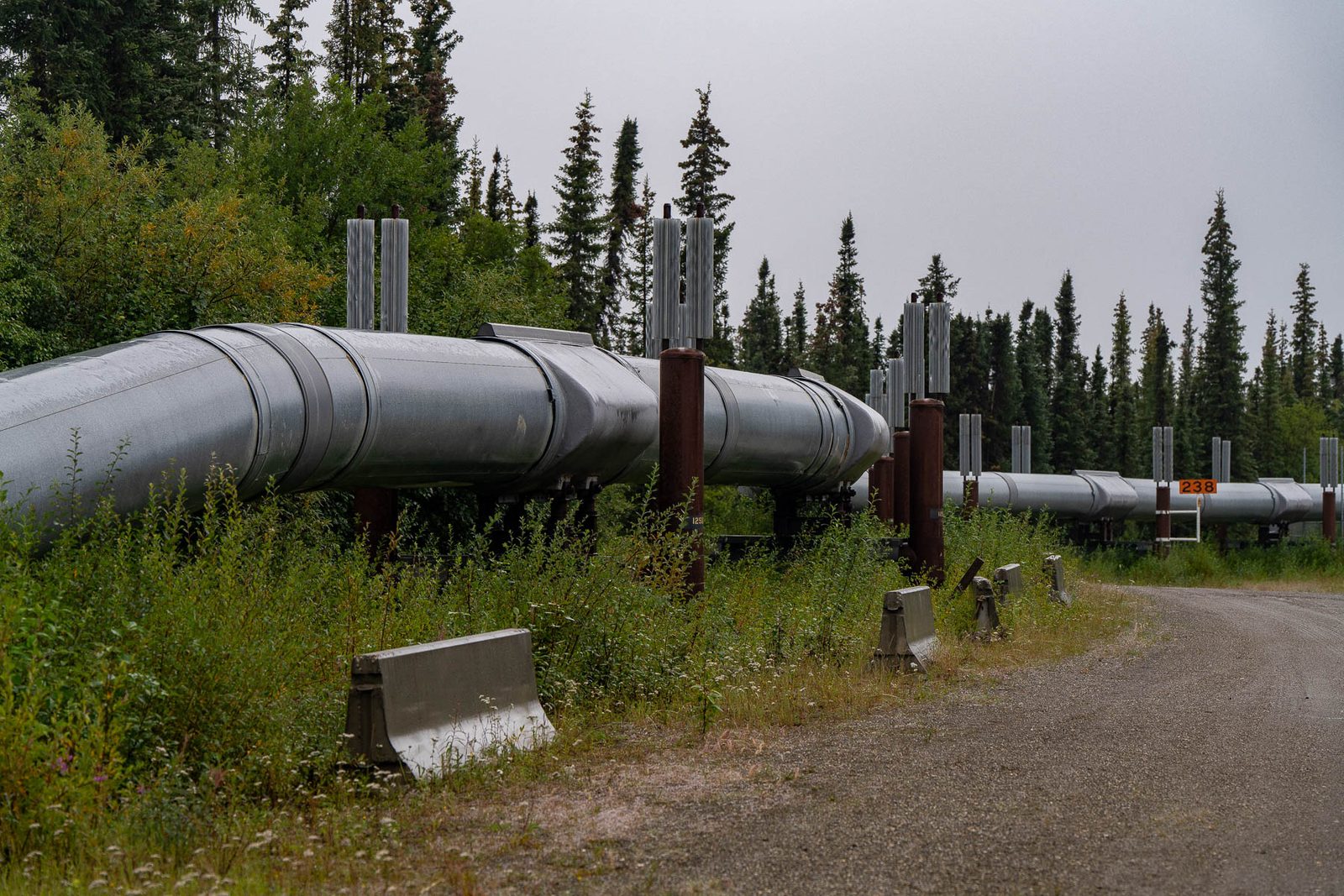
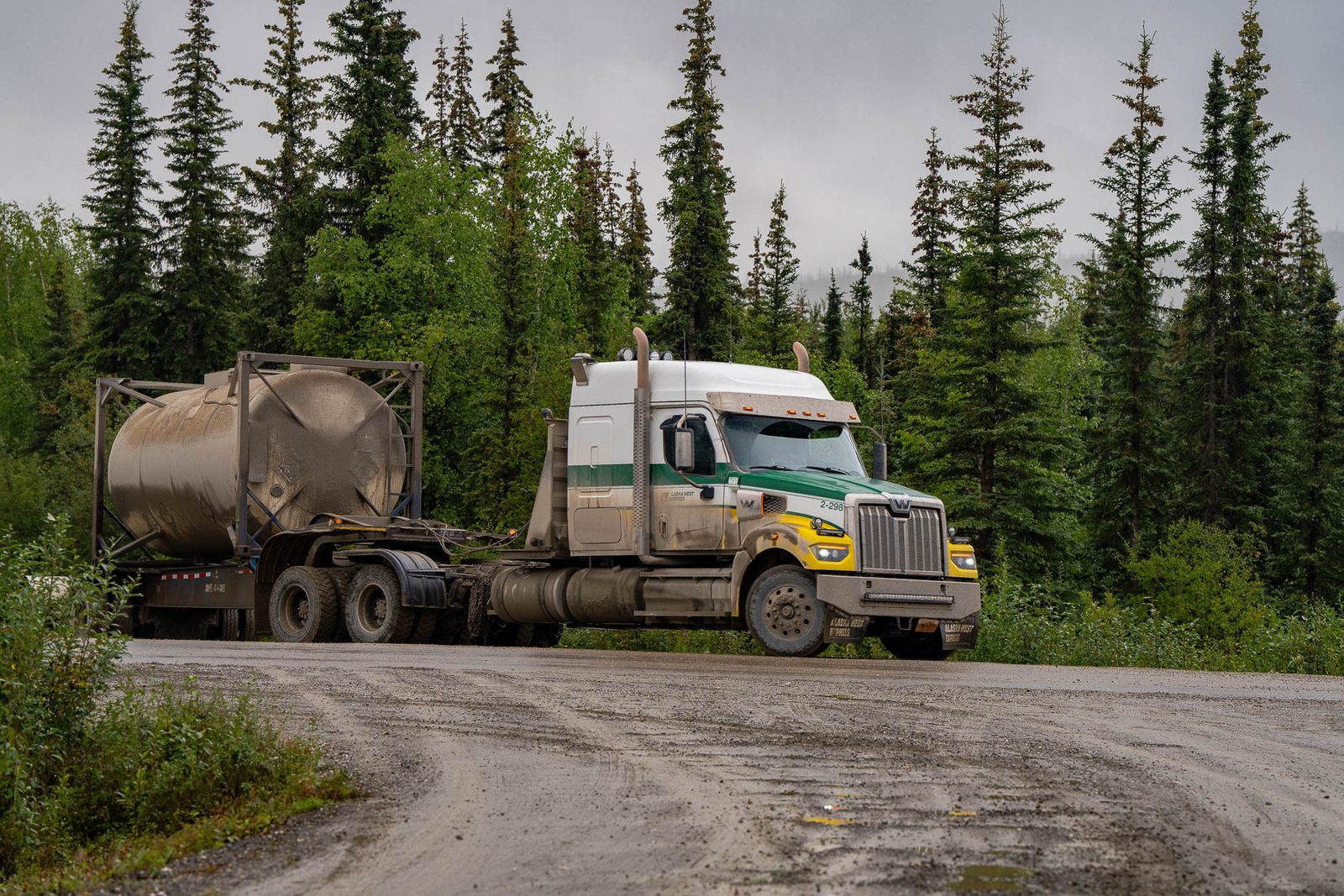
What follows is a maintenance record, from the road the Ambler Road would begin at.
One honest caveat, and we print it
A University of Alaska Fairbanks climate specialist said of the June 2025 washout: "There's really not much to find a climate change connection here." We include that because it's true and because the argument doesn't need the attribution. A culvert failed under a road built in 1974. That's a structural fact about gravel roads over frozen ground, and it's stronger without a climate claim bolted onto it.
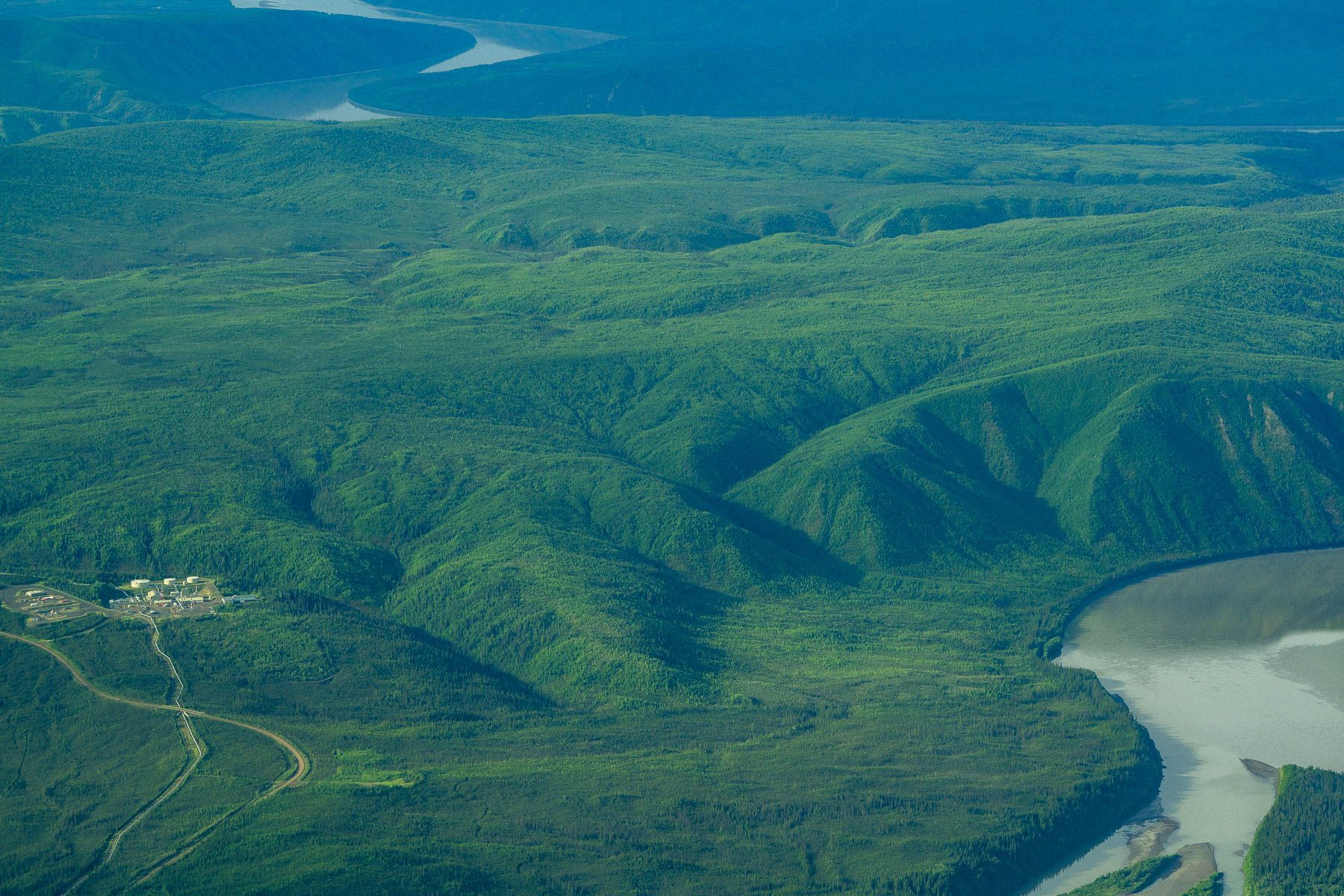
In April 2026 a bill was introduced in the Alaska Senate to toll the Dalton Highway. Its sponsor statement is one sentence long in the part that matters:
"At present, the State of Alaska is responsible for covering the entire cost of repairs resulting from heavy industrial transportation." Senate Bill 286, 34th Alaska Legislature, sponsor statement, April 2026
The bill was heard twice in Senate State Affairs in May and went no further. The transportation department's own fiscal note explains why the problem isn't easily fixed even if the politics changed: under federal law, "the conversion of the Dalton Highway to a toll facility would not qualify under current federal tolling provisions", and the Dalton "currently relies on federal funding participation rates of up to 90 percent."
So there's no toll and no industrial user agreement on the road Ambler traffic would use for its first 161 miles, and the one toll bill proposed this year hasn't passed.
What Ambler would add to that road isn't a rounding error. At the milepost where the Ambler Road would tie in, the state's own traffic submission counts 244 vehicles a day, of which 85 are combination trucks and 35 are single-unit trucks. Adding the federal review's 160 to 238 Ambler truck trips a day would, by our arithmetic, take the heavy-truck count on that stretch to between about two and three times what it is now.
The counterweight, because it's real
The state told legislators the Dalton's paved sections are in "fair" condition, and by the federal composite standard the state is right: those sections rate about 50 percent Fair and 40 percent Good. On roughness alone, which is the thing a driver feels, 39 percent of measured points are worse than the federal "Poor" threshold, and 62 percent on the section Ambler would use. And none of that applies to the 255 miles that are gravel, by the department's own count.
Alaska has a publicly financed mining road that has been a genuine success, and any argument that pretends otherwise falls apart the moment somebody opens the books. So here it's first.
The DeLong Mountain Transportation System, built by AIDEA and completed in 1989, serves Teck's Red Dog zinc mine. It moves four to six percent of the world's zinc. In fiscal year 2025 it returned $28.5 million to AIDEA, almost 41 percent of the authority's increase in net position for the year. Through 2017 Teck estimated its royalty payments to NANA, the Iñupiat regional corporation, at more than $1.8 billion since the mine opened, with about $860 million of that shared with other Alaska Native corporations under section 7(i) of the Alaska Native Claims Settlement Act. NANA says the mine supplies about 90 percent of the Northwest Arctic Borough's budget.
That's the case for the model, made properly. Now the reason it doesn't transfer.
"Relative to AIDEA's payments required under its agreement with Teck, through its life to 2040, a corporate guarantee of payment is provided, regardless of mine operations or ore prices." AIDEA, DeLong Mountain Transportation System Asset Management Review, December 2017
AIDEA's exposure at Red Dog is to Teck's creditworthiness, and only through that to the mine's traffic. The road could carry nothing at all and Teck would still pay, because a multinational signed a guaranty agreement that says so "regardless of operations or market conditions."
Ambler has no guarantor. Ambler Metals is a junior joint venture, and by AIDEA's own accounting no road use agreement exists: the authority hasn't booked a liability for the $20.7 million Ambler Metals has advanced because "the parties have not entered into a road use agreement and the project has not advanced to construction."
There's a second structural difference and it's just as large. Red Dog was a mine before it was a road. The environmental impact statement, the record of decision and the federal discharge permit were all in hand in 1984 and 1985. AIDEA signed its project agreement in 1986 and sold $103 million in bonds in March 1987. The permits came first, by years.
At Ambler, the Bureau of Land Management's 2024 decision says the opposite in one line: "Mineral exploration has occurred in the District since the 1950s; however, no mines have been developed, and no plans of development are pending before the federal government." The first mine application entered federal review in April 2026, targeting late 2028.
AIDEA's own 2017 review is candid about what happened after the bonds were sold. Its consultants had assumed about 600,000 wet tonnes a year over a thirty-year mine life, rising zinc prices, and other users of the port sharing the cost. The 1993 update, as AIDEA records it:
"The project was not meeting the original projected throughput rates. Operational costs were higher than originally projected. Market/commodity prices for both zinc and lead had decreased versus the 1986 projections." AIDEA's 2017 review, recording its consultants' 1993 update
Other port users "had not materialized as projected in 1986." By the time of the 1997 expansion decision, "the mine had lost money since its opening." And AIDEA had knowingly written a fifty-year financing against a mine expected to last thirty: "the projected mine life at the time of the project financing only extended to 2020, or twenty years short of the agreement/financing term." What closed that gap was the later discovery and permitting of the Aqqaluk deposit. The model was rescued by geology, not by the forecast.
That gap hasn't fully closed even now. The original Red Dog deposit was depleted in 2012, and mining at Aqqaluk and Qanaiyaq is expected to run to approximately 2031, against a toll agreement that runs to 2040.
This is the part of the precedent that should decide the argument, and it comes from AIDEA rather than from any critic.
"the closure plan and DR&R funding do not include the DMTS port and road. As a result, the level of potential financial impacts to AIDEA from a potential future closure of the mine (and port) are unknown... The current agreements do not indicate the responsibility for any of the potential DMTS related DR&R." AIDEA, DMTS Asset Management Review, December 2017
The same review adds that the agreement "does not specify dismantlement, removal, and/or rehabilitation (DR&R) requirement responsibilities" and that costs "may be significant and exceed the value of the Reserve Account." AIDEA's most recent audited financial statements say it again in auditor's language: neither the amount of potential costs nor the extent of the authority's liability is currently known.
Ambler is in a worse position than that, not a better one. The 2024 record of decision notes that AIDEA's proposal calls for removal of the road "although no detailed reclamation plan has been developed", and describes "uncertainty regarding the process of reclamation of the road, whether it would be successful, whether and how it would be funded and conducted." We searched the full text of the 2020 joint record of decision, 1.47 million characters, for "reclamation bond", "performance bond", "financial assurance" and "surety". There's no dollar amount anywhere in it.
The state-level backstop, as of the most recent figure we could find, is small. A 2005 Government Accountability Office report found that operators in Alaska's bond pool "do not develop individual cost estimates" for reclaiming the land they disturb, and that the pool "had $1 million in reclamation funds as of July 2004", with the state agreeing to cover any additional costs. The pool was priced off placer gold reclamation and excludes chemical-leaching operations. The figure is for the shared pool, not for the individual bonds operators can post instead. We haven't found a newer figure, and we flag the date rather than implying it's current.
Fairness, on the record
The Bureau of Land Management didn't reject a proposed bonding requirement. The mitigation measures it declined were an asbestos health-screening provision and a weed-free gravel certification. Anyone arguing this point should argue the actual record.
In 2013 the Alaska Division of Legislative Audit examined a different state project built on the same premise: public money up front, repaid by user fees projected in advance. Its conclusions:
"toll and revenue projections are unreasonably optimistic, and the projected cash flows to the State are likely overstated as a result... the general structure of the P3 agreement... provides that the State will bear the risk of lower-than-expected toll revenues." Alaska Division of Legislative Audit, Knik Arm Bridge and Toll Authority, March 2013
The audit quoted the Federal Highway Administration's own guidance on exactly this failure mode: "Inaccurate or overly optimistic traffic projections and underestimated project costs can lead to the development of pro forma financials that appear to justify the investment decision, but that do not reflect the project's actual ability to repay debt."
The bridge authority formally disagreed, and its law firm called the report's assessment "astonishingly incomplete and distorted." The bridge was never built. Ambler's plan differs on one point: the federal review says bondholders, not the state, would carry the revenue risk on AIDEA's bonds.
And a plain negative finding: in the Division of Legislative Audit's published reports we found no audit of AIDEA's project portfolio or investment returns.
The failure mode isn't exotic. It has a shape, and the shape is a road that arrives before a mine does.
The road's construction estimate went from $501.9 million in the 2020 errata to $672.4 million in 2024, up about a third, with the 2024 figures escalated for inflation through mid-2023. Add $77.7 million for closure and reclamation and it's $750.1 million. The most recent figures are the government's, not a critic's. In 2026 prices the construction figure is about $763 million, and with the interest on the 30-year bonds AIDEA plans to sell, plus fifty years of upkeep and removal, about $2.2 billion, by our calculation.
Three dated estimates from documents in our record. Earlier figures circulate, about $211 million from AIDEA around 2015, $300 million from a 2018 prefeasibility study and an undated $350 million, and none of them is attached to a document we hold, so none is on this chart. The 50-year total is a different measure and is off the chart too: an engineer's January 2026 estimate puts it at $2.03 billion, and our own calculation at about $2.2 billion.
Two more details belong with that number. The reissued right-of-way grant runs 50 years; the Clean Water Act permit that goes with it runs 15. And the decision itself states the dependency that the whole repayment premise rests on: "the economic feasibility of the Ambler Road... is ultimately based on the economic feasibility of the mines proposed in the District."
There's one more piece of the repayment structure worth knowing, because it runs the other way from how it's usually described. Ambler Metals has advanced AIDEA about $20.7 million for feasibility and permitting work. Under the agreement, if the project proceeds, that money converts into credits against future road tolls, with interest. It is a prepayment on the tolls that are supposed to pay the public back, and AIDEA hasn't recognized a liability for it.
What this chapter doesn't say
It doesn't say publicly financed mining roads never work. One of them works well enough to fund most of a borough. The point is what made it work: a permitted mine, a financed mine, a world-class orebody, and a multinational contractually obligated to pay regardless of operations or prices.
It doesn't say AIDEA's Red Dog projection failed. AIDEA's 2017 review and its audited financial statements describe the remaining repayment differently, and they may be different measures. We print both and say they don't reconcile rather than picking the one that reads better.
It doesn't say AIDEA committed $145 million to Bokan Mountain. The legislature pre-authorised bonds of up to $145 million for Bokan and up to $125 million for Niblack, and neither was ever issued.
It doesn't use Pebble as an example. We found no AIDEA or state financing of a Pebble road or port, so it doesn't belong on this list.
Once. The DeLong Mountain road to Red Dog works because a multinational guarantees payment "regardless of mine operations or ore prices." Ambler has no guarantor, and no road use agreement exists at all.
AIDEA, DeLong Mountain Transportation System Asset Management Review, December 2017; AIDEA audited financial statements, FY2025.The road Ambler would start from has taken $465.6 million in capital since 2015, with $454 million more planned through 2031, by the state's own accounting, and a 2026 bill to make industrial users contribute hasn't passed.
Alaska DOT&PF, Senate Resources presentation, January 2026; Senate Bill 286, 34th Alaska Legislature.Nobody has said. Thirty-six years on, AIDEA's own review says its Red Dog agreements "do not indicate the responsibility" for taking that road and port out, and the costs "may be significant and exceed the value of the Reserve Account." Where this model fails, it fails the same way every time: the road gets built before the mine exists. Quebec, Ontario and AIDEA's own Mustang project are all the same shape.
AIDEA, DMTS Asset Management Review, December 2017; Alaska Division of Legislative Audit, March 2013.Almost nothing on this page comes from reporting about these projects. It comes from the projects' own paperwork: AIDEA's asset management review of its own road, AIDEA's audited financial statements, the transportation department's presentations and press releases, a bill and its fiscal note, a legislative audit, an auditor general's report and a federal record of decision.
Every question on this page is answerable before construction rather than after it, and none of them is a question about whether mining is good. Who guarantees repayment if the mines aren't built. What the reclamation bond is, in dollars. Who pays to remove the road. Whether the Dalton's industrial users will contribute to the road they damage.
If you live in Alaska, this is a state question first: AIDEA needs the legislature's permission to borrow the rest, and the legislature has never audited AIDEA's project portfolio. Your legislators can ask for both.
Everyone else: call the Capitol switchboard at (202) 224-3121 and ask your senators and representative whether they will support a federal financing decision made after a reclamation bond exists, rather than before.