

Fall Overview
Fall is the season when Yellowstone hands you the bull elk bugling at Mammoth, bison rutting in the Lamar, and the first snow dusting the geyser basins, all while the August crowds thin out. The trade-off is that the park starts closing on you. Roads, lodges, and campgrounds shut down in stages from early September, and the exact dates move with the weather every year.
So a fall trip lives or dies on where you enter, what you want to do, and how far you plan to roam. From early September toward late November the closures tier in, and which entrance and route you choose decides how much of the park you actually reach.
Here’s the reassuring part. No matter when you come, the whole park almost never shuts down. The entire park has fully closed only twice since 1988, once for the wildfires of ’88 and once for the 2022 floods. Everything else is a matter of which roads and services are still running, and that is what the sections below sort out.
I don’t want to mislead anyone; you’re gambling more with a trip to Yellowstone in the fall (especially late fall) than you would at the craps table at Caesars Palace in Vegas.
Love Yellowstone? It's one of 117 threatened public lands destinations we're tracking. Get the free briefing.
While places like Great Smoky Mountains National Park have surrounding towns that embrace fall, there’s a potentially frustrating series of closures in and around Yellowstone in the fall that make planning a little tricky. Thank goodness you’ve got us to help you get the best out of Yellowstone in the fall.
The Honesty and Oddity of Yellowstone in Fall
Before we dive into all the best things to do in Yellowstone in the fall, I don’t want to mislead you into thinking that planning this trip is easy.
While many amenities, including hotels and access roads, close between September and November, the winter activities don’t kick off until mid-December. That leaves this “season within a season” that gives you the solitude of the park but not the winter features like being able to snowmobile or ski in through most entrances closed to cars.
Even most hotels have “dark days” around Yellowstone in the fall (late fall) when they shut down for a week or a month in October or November. Pay close attention to hotel availability near Yellowstone in the fall. There isn’t 100% consistency among different hotels and resorts about when they close or open in the fall. On the plus side, this is a great time of year to book a trip with shorter notice, while those visiting during peak season need to book a year or more in advance.
Restaurants and shops might be closed too, but all of the cities bordering Yellowstone in the fall have enough of a year-round population that you won’t find a ghost town or no grocery stores open.
Tours could be hard to come by after November 1. There’s another transition between the tour bus season, which ends October 31 and snowcoach tours which pick up December 15.
Fall Month-by-Month in Yellowstone
We’re going to dive into many smaller sections of each activity to consider at Yellowstone in the fall, but here’s an overview of each month.
September
Visitation: 751,690 (2022)
Weather: Average high 67°F, Average low 37°F, precipitation chances are the lowest of the season.
About 64% of all Yellowstone in the fall visitors arrive in September. In 2022, September had just a 5% decrease in park visitors compared to August.
September could also be split into two months. Early September, especially around Labor Day weekend. This feels more like an extension of summer.
- Boating and water activities shut down in early September.
- Some campsites start closing for the season in early or mid-September.
- Elk, bears, and raptors become more active.
- Mosquitoes are not as intense.
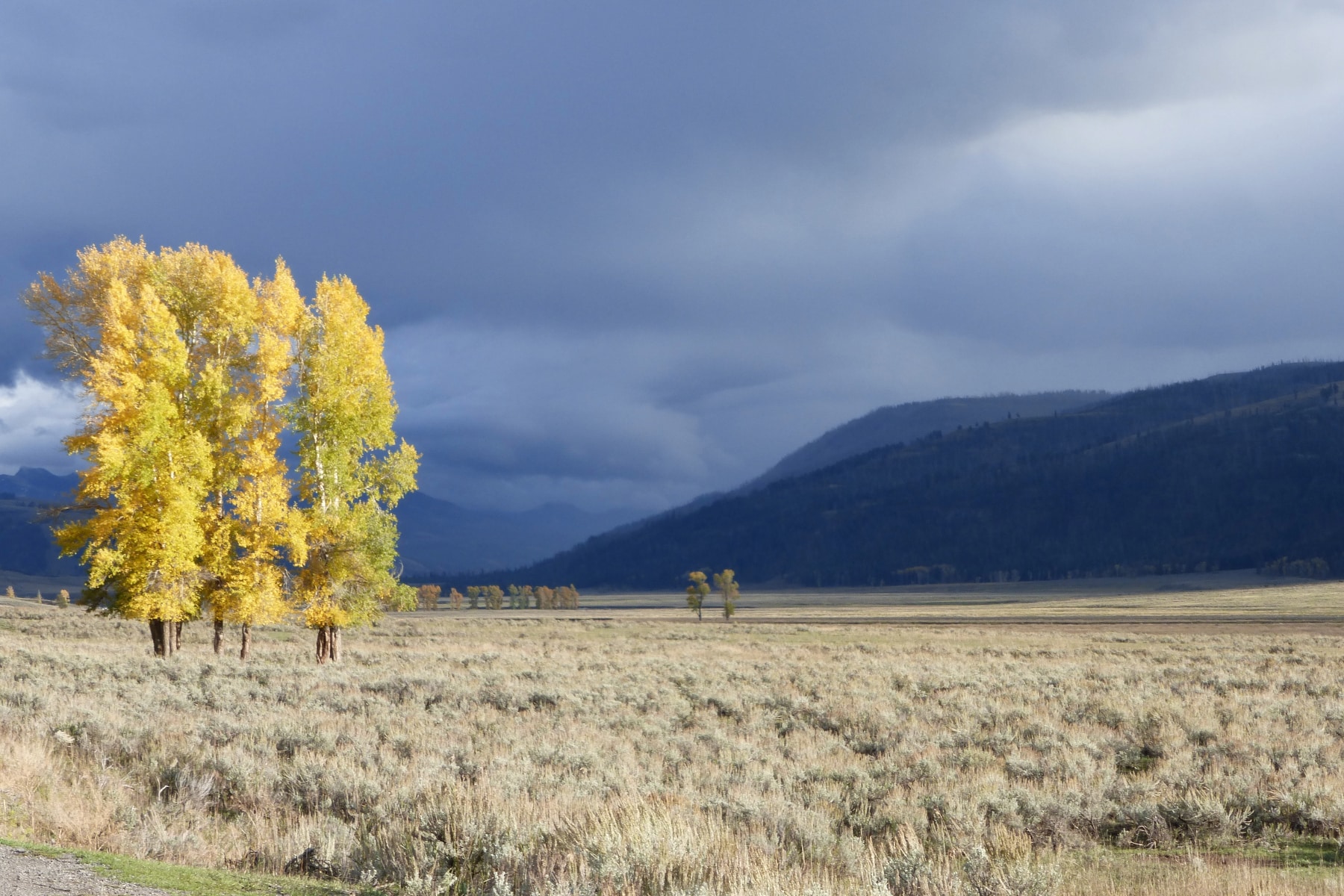
Late September, when the crowds start to die down, is also Yellowstone in the fall bursts with foliage at the higher elevations.
All roads in and around the park are open in September, barring an early snowstorm.
October
Visitation: 357,947 (2022)
Weather: Average high 56°F, Average low 29°F, precipitation chances mixed between snow and rain
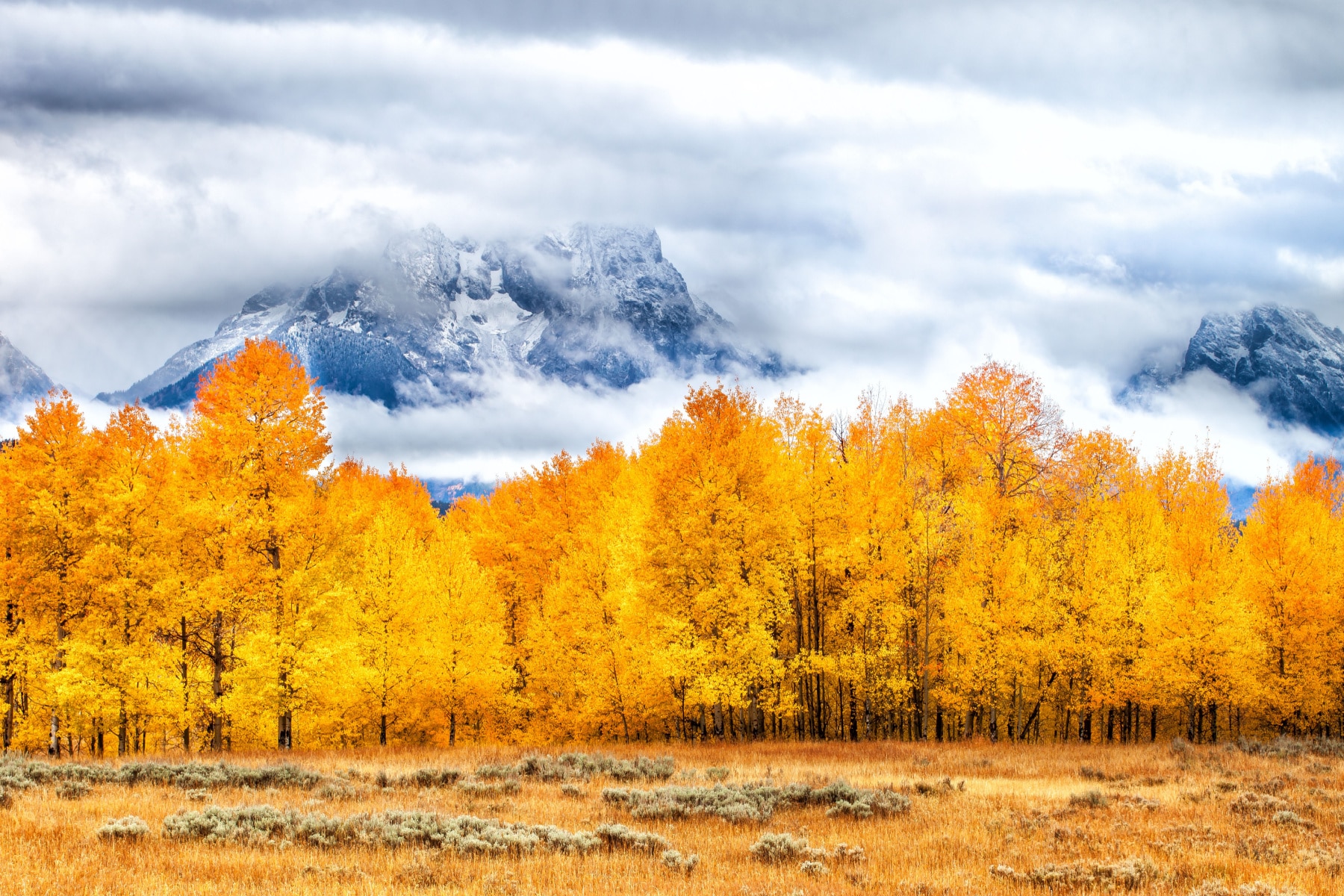
About one-third of all Yellowstone in the fall visitors arrive in October. Barring any early season storm, all of the roads inside the park are open, but some roads outside the park, like the Beartooth Highway, will close mid-October.
The fall colors reach the lower elevations, and snow can start to pile up above 7,000 feet. The final campsites are closed by mid-October. Some visitors and education centers will close for the season. Fishing is still a Yellowstone in the fall popular option.
Bears are more visible along the roads at Yellowstone in the fall.
November
Visitation: 66,774 (2022)
Weather: Average high 38°F, Average low 19°, the average snow accumulation is nine inches.
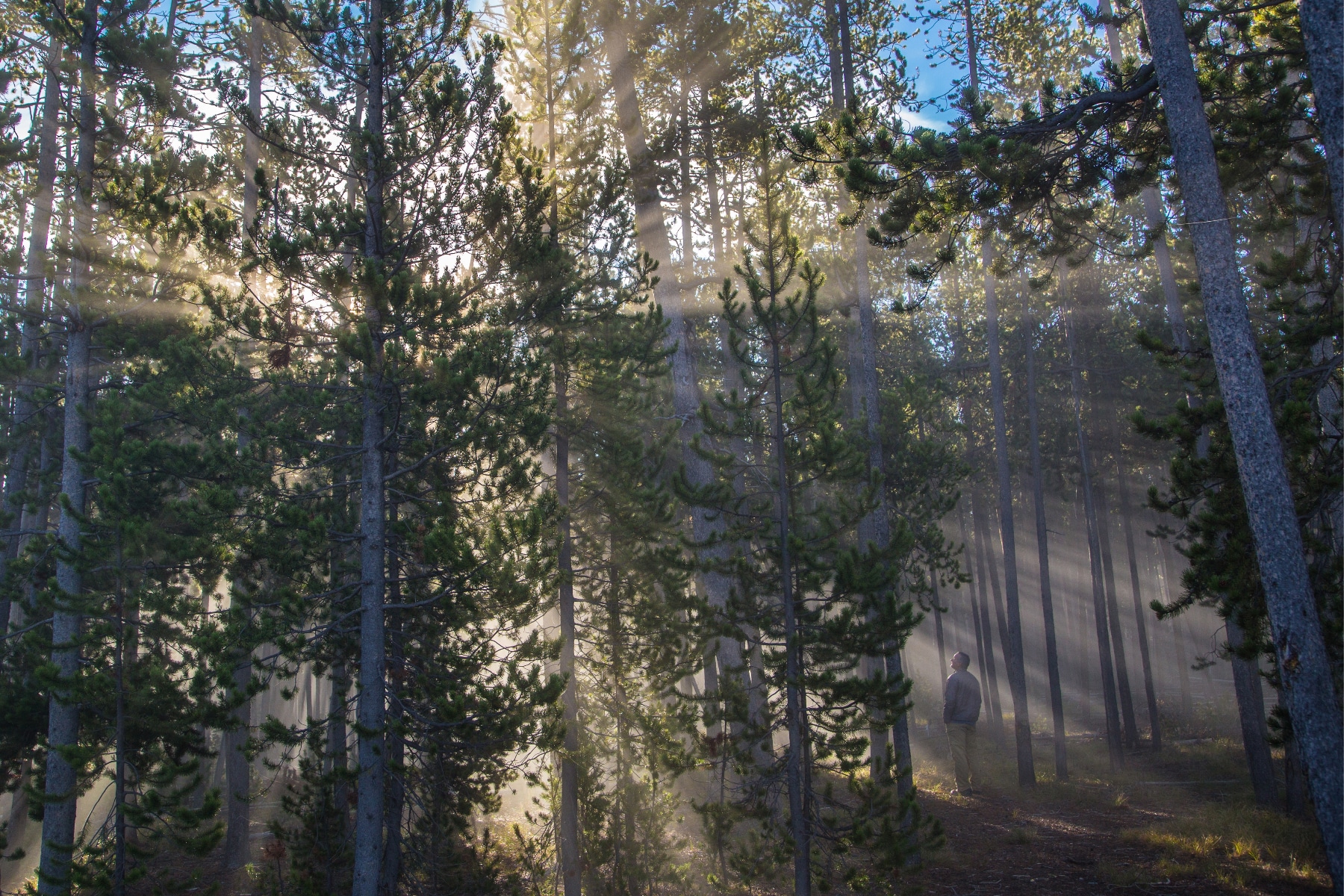
Just 6% of fall visitors in Yellowstone come during this month. Vehicle traffic to the park is limited to one road on the northern edge.
Cross-country skiing and snowshoeing can’t start until there’s a solid snowpack, so November can be this world trapped between seasons if it’s dry. Activities are limited to hiking, backpacking, and wildlife viewing in a limited area. Bicyclists will love this time of year as they can still ride on the roads closed to automobiles, weather permitting.
It’s rare for fall foliage to peak in November, as it is usually completed by mid-October. November is the best month of fall to see the wolves in Lamar Valley.
FALL BACK: Yellowstone National Park adheres to daylight saving time. The clocks roll back one hour on the first Sunday in November in the middle of the night. That means you’ll have an extra hour of sunlight in the morning, but the sun will set an hour sooner after that day.
Accessing Yellowstone in the Fall
Getting to Yellowstone in the fall is twofold: you have to get to the park on the roads of Idaho, Montana, or Wyoming, and then you have to know what entrances and roads are open within the park. This map shows the park road that is open after October 31, and the reds and greens note visitor centers with open/closed dates.
NOTE: The West Yellowstone Visitor’s Center for most of the fall is the Chamber of Commerce. That address is 30 Yellowstone Ave, West Yellowstone, MT 59758.
What’s Open and What’s Closed in Fall
Yellowstone in the fall is a perfect time to go camping. It also offers the best chance for getting a permit and seizing the moment of last-minute camping availability. Pay attention to this detailed chart from the park, as there is little uniformity to the separate campsite closing dates at Yellowstone in the fall.
Yellowstone Visitor Centers Open/Close Status in Fall
Albright Visitor Center: Open year-round near Mammoth Hot Springs
West Yellowstone Chamber of Commerce: Open year-round in West Yellowstone, just outside the park entrance.
Canyon Visitor Education Center: Closes November 1. Located in Canyon Village.
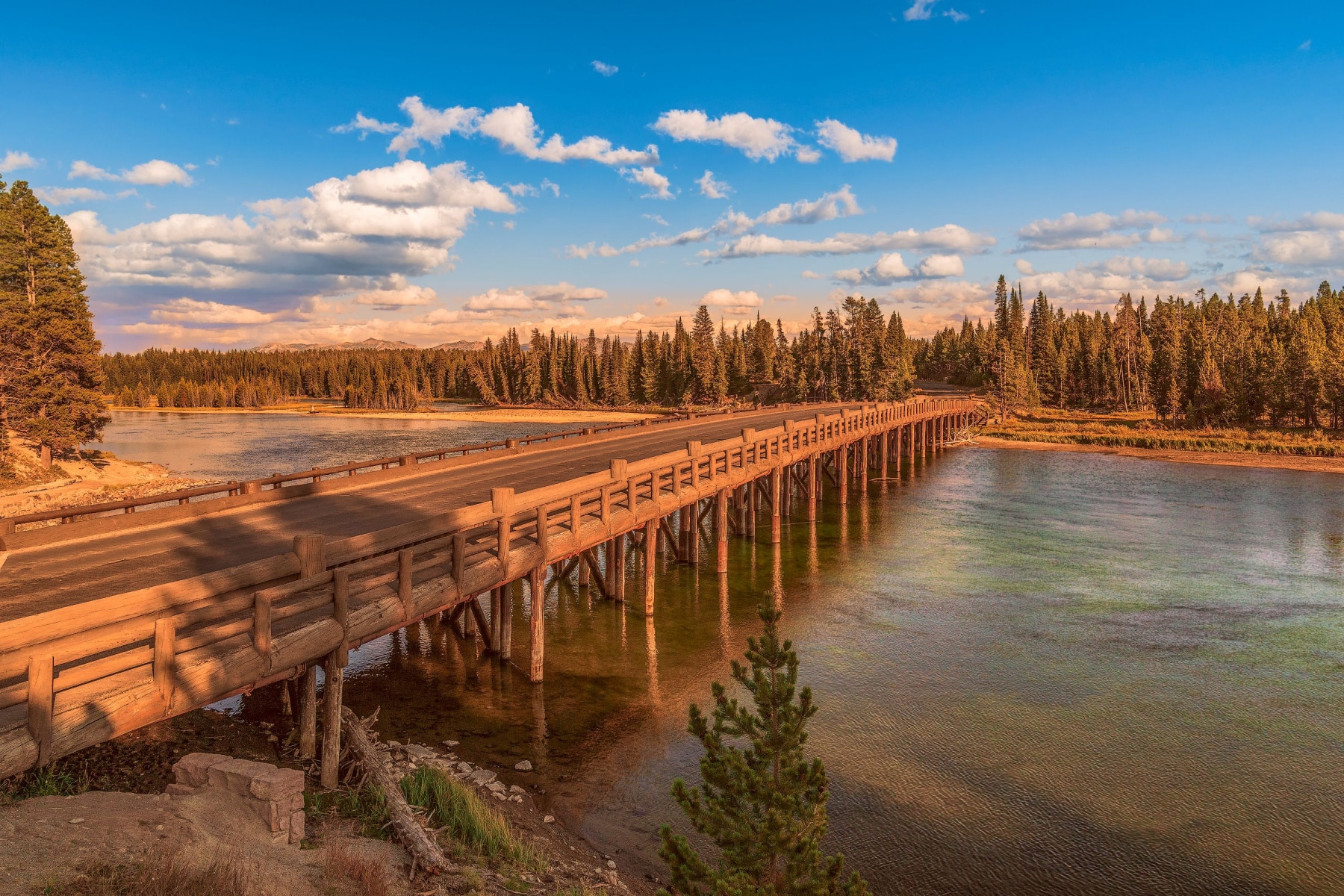
Fishing Bridge Education Center: Closes October 8. Located at Yellowstone Lake.
Old Faithful Visitor Center: Closes November 1.
Norris Geyser Basin Museum: Closes October 10.
West Thumb Information Station: Closes October 9.
Check Road Conditions: You can’t afford to visit Yellowstone in the fall without checking road conditions first. Call (307) 344-2117 to get updated information or text 82190 to 888-777 to get text alerts.
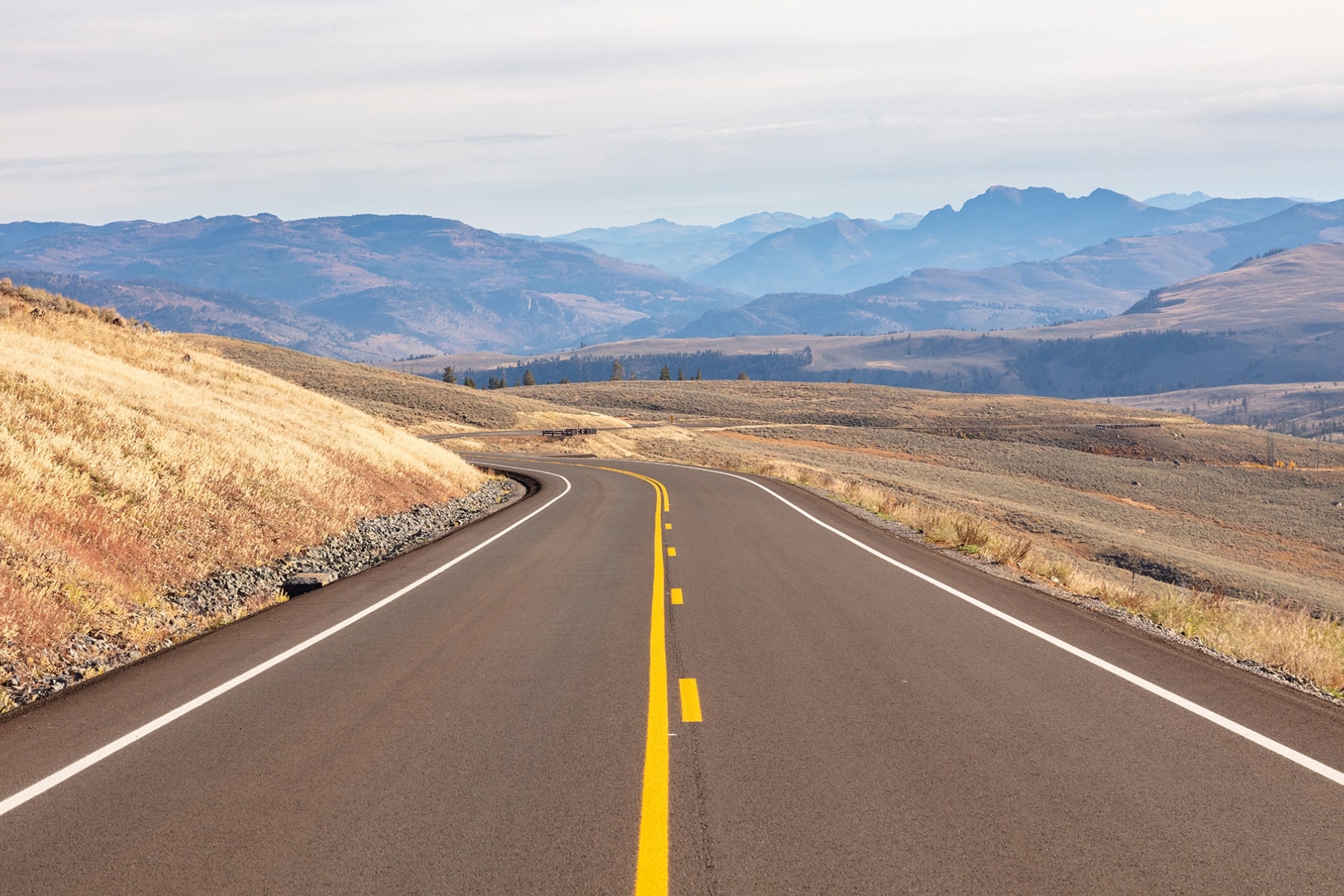
The only road open after October 31 at Yellowstone in the fall is the north entrance in Gardiner to Mammoth Hot Springs, then to Tower-Roosevelt and eventually to Cooke City, Montana. Note: Gardner River High Bridge construction will cause delays near the north entrance through October 2026 (and again in 2027). In early to mid-November, the road beyond Cooke City will be closed, and you will not be able to reach Pilot Creek until spring. The Wyoming Department of Transportation will make that road closure decision.
Roads inside Yellowstone in the fall close earlier than November 1 if the weather gets bad, but it will close no later than that date. You should have tire chains with you at all times while visiting Yellowstone in the fall. Make sure you know how to put them on and take them off.
Camping in Yellowstone in the Fall

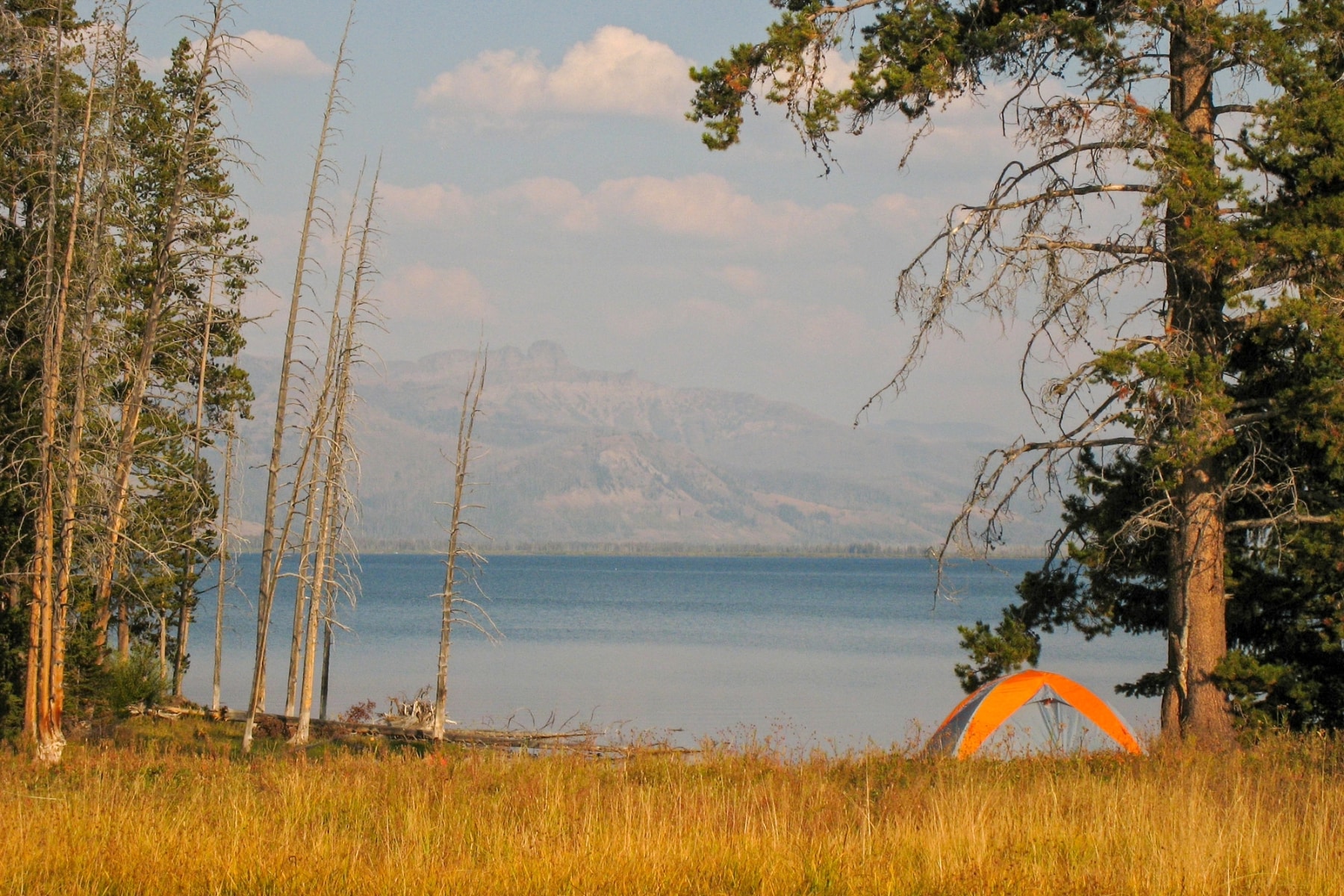
Yellowstone in the fall has 12 campgrounds but usually 11 of them close by October 15. Mammoth Campground is open year-round, the only one of its kind in the park. Starting October 15, Mammoth Campground is open to the first people who claim a spot. You don’t need nor can you get a reservation.
Backcountry Winter Camping
Peak season in the backcountry runs through October 31. You will need to go through Recreation.gov to play the permit lottery. In 2026, the Early Access Lottery applications ran March 1-20, and first-come online booking starts April 26. Fees are $10 per application plus $5 per person per night.
The non-peak season for backcountry camping and exploring at Yellowstone in the fall starts on November 1. You do need a permit, and those aren’t available until October 6. Find more information on the park’s Winter Backcountry Camping page. An orientation on Yellowstone’s backcountry safety in winter is required.
Thermal Features of Yellowstone in the Fall
One of the best parts about Yellowstone in the fall is that the thermal basins don’t give two bison’s butts about the season. That means as long as you can get to the location of the thermal feature, you can visit it.
Mammoth Hot Springs is the only thermal basin open to vehicles after November 1 at Yellowstone in the fall, so if you really want to see places like Old Faithful, you’ll want to plan a trip in September or October. Winter geyser tours are available, but those don’t start until mid-December.
MORE: Check the geyser eruption predictions during your trip to Yellowstone in the fall. Once the Old Faithful Visitor Center closes down for the season, you can still check this Geyser Activity website.
Fall Fishing and Boating in Yellowstone
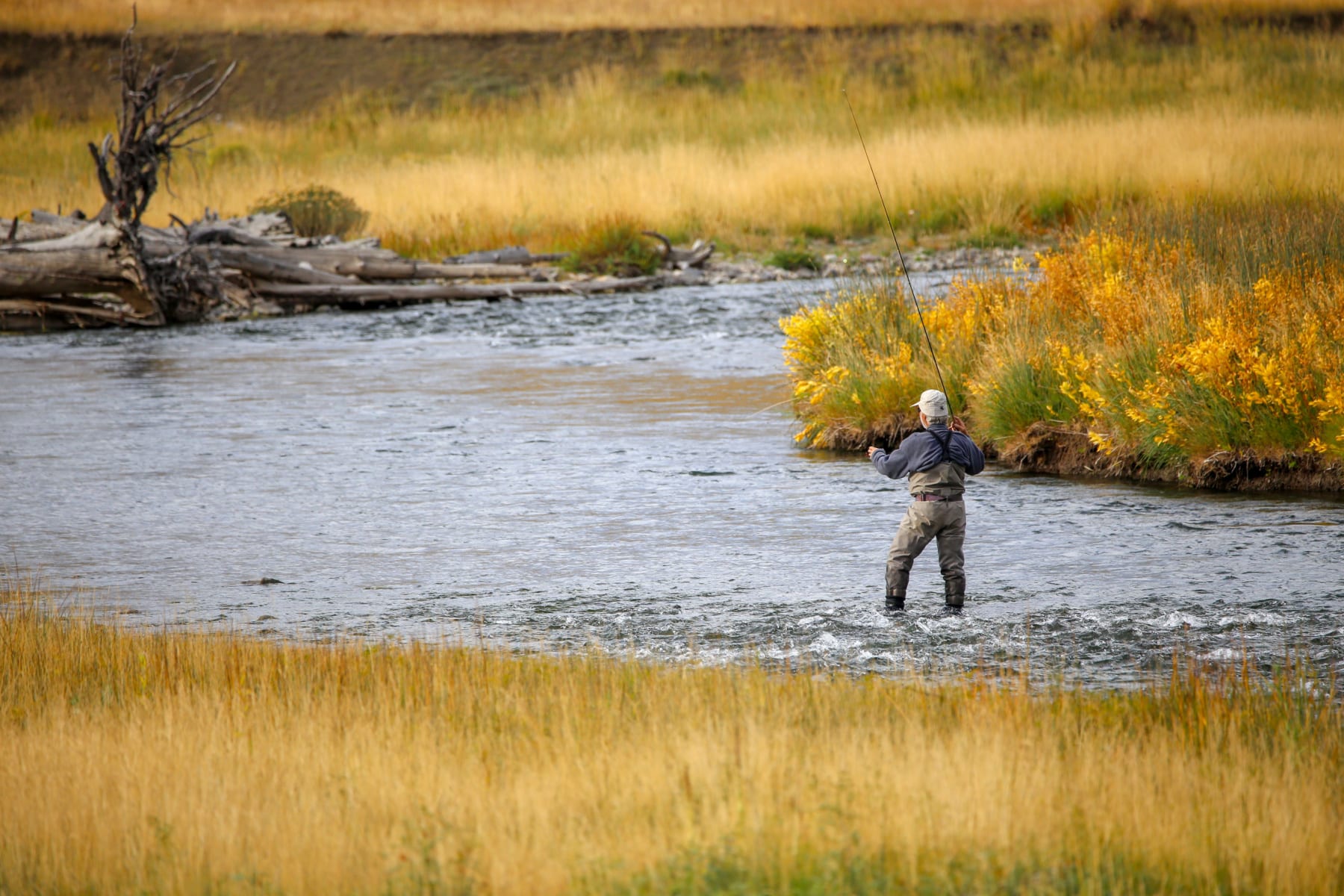
The end of fishing and boating seasons extends to October 31, which is perfect timing for anglers and boaters to enjoy Yellowstone in the fall. That lines up perfectly with the end of full-park road access.

Yellowstone National Park includes four sections to choose from, with different bodies of water and types of fish available. Anglers over the age of 15 need a license for fishing in Yellowstone, which you can only buy on Recreation.gov. A valid Wyoming, Montana, or Idaho license won’t suffice.
To help you plan your trip, use this Yellowstone Fishing Regulations guide.
If your Yellowstone in the fall trip is in November, look for local outfitters that offer fishing trips outside the park’s boundaries.
The boating season also goes until October 31, but be sure to read the list of inspections, permits, and requirements before you go on the water during Yellowstone in the fall.
Hiking in Yellowstone in the Fall
Barring weather damage or a big storm, all trails are open in Yellowstone in the fall through October 31. Once the roads close on November 1, you’ll still have access by car to the trailheads in Mammoth Hot Springs and the Northeast section of the park. Please check the Northeast trails impacted by flood damage in 2022, as they might not be open in time for your fall hike in Yellowstone.

As we’ll discuss in a bit, there’s a lot more wildlife activity at Yellowstone in the fall and not a lot of people on the trails to help if you need it.
Unlike Yosemite National Park, most waterfalls in Yellowstone will run throughout the year. That means beautiful waterfalls among the foliage at Yellowstone in the fall. Sure, they aren’t as solid as in spring, but they’re still flowing.
You’ll also be walking across creeks and rivers throughout many of the day hikes. This can catch hikers off guard if it’s cold outside and they don’t have the right equipment to cross water.
If you want to take a Yellowstone in the fall horseback ride, you’ll need to go through one of the many local tour companies. Those rides are usually available until the first week of November.
Biking in Yellowstone in the Fall
Anyone who has sat in bumper-to-bumper traffic of Yellowstone might dream about empty roads all to yourself. That dream comes true every November 1. Fall biking is allowed (say it with me), weather permitting. Here are the top Yellowstone in the fall bicycle roads open.
- Mammoth Hot Springs to the West Entrance: 49 miles
- Madison Junction to Old Faithful: 16 miles
- Tower Fall to Chittenden Road/ East Entrance to Sylvan Pass: Each six miles
- South Entrance to West Thumb: 22 miles
The park also offers nine designated biking trails off the main roads.
Here’s the rub: some of the bicycle rental companies inside the park will stop bike rentals after Labor Day. Bring your own bike or rent one in a nearby town at Yellowstone in the fall. Biking is never allowed on top of snow. That goes for trails and roads.
Best Fall Foliage in Yellowstone
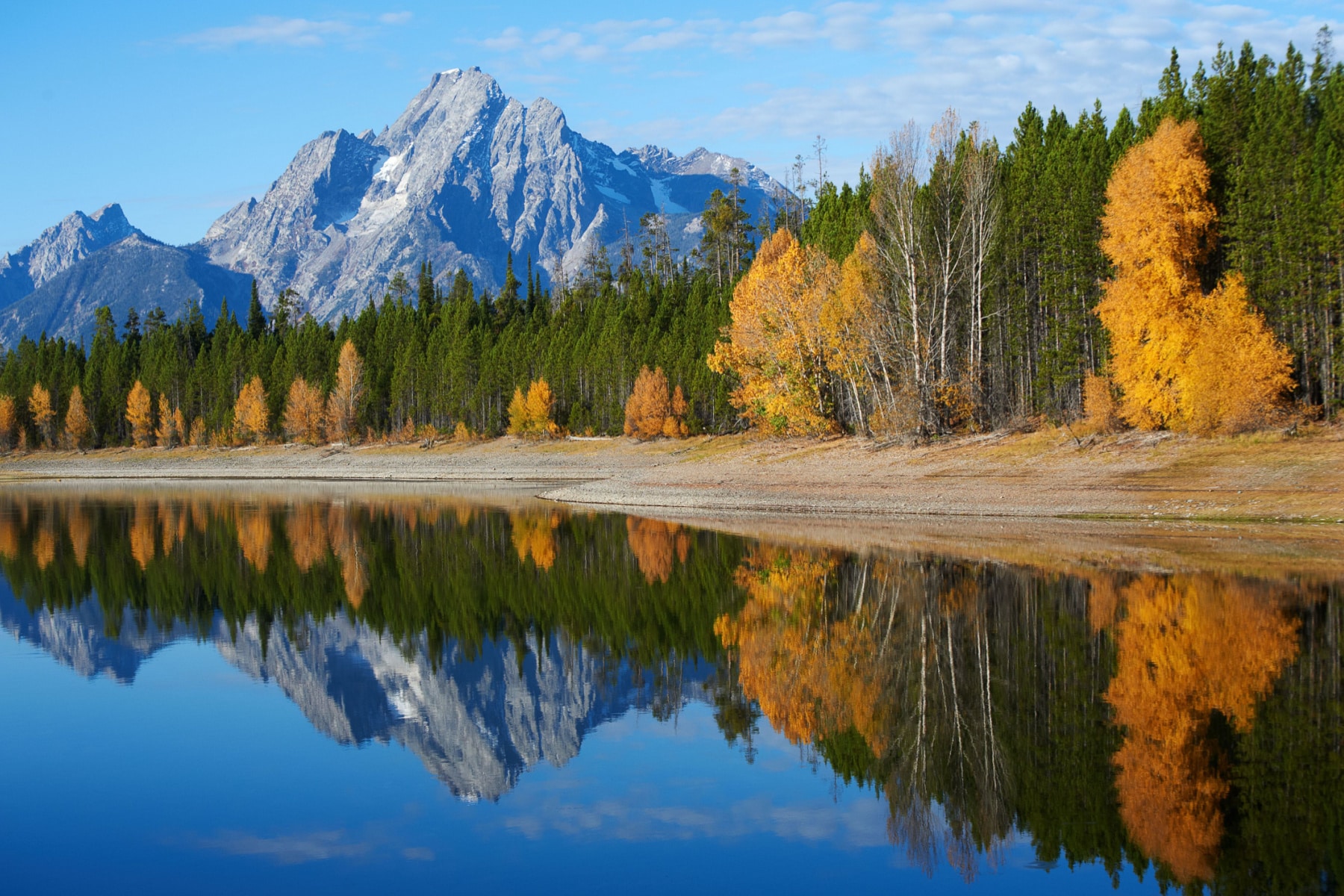
Yellowstone in the fall and the surrounding entry roads burst with color, but you need to know the tight timeline so you can make the most of it. Since the park is mostly between 7,000 feet and 8,500 feet above sea level, that means leaf-peepers can expect peak views in late September or early November. The lower elevations below 7,000 feet will peak in mid to late October.
Since the peak season happens while all the roads are still open at Yellowstone in the fall (barring an early storm, I know, I sound like a broken record at this point), you can enjoy views from above, below, and beyond. Here are some of my favorite spots.
- Old Faithful and Geyser Basins: While renowned for its geysers, these areas are also surrounded by vibrant aspen and cottonwood trees. Witness the contrast of vivid foliage against the backdrop of erupting geysers at Yellowstone in the fall.
- Grand Canyon of the Yellowstone in the fall: As you stand on the edge of this dramatic canyon, marvel at the blend of golden aspens and deep orange hues that frame the waterfalls, such as the iconic Lower Falls.
- Mammoth Hot Springs: Explore the unique terraces of Mammoth Hot Springs adorned with fiery foliage. The vibrant colors against the intricate mineral formations create a surreal landscape.
- West Thumb Geyser Basin: This lesser-explored gem offers a tranquil lakeside setting adorned with trees showcasing brilliant shades of red and gold at Yellowstone in the fall.
- Lamar Valley: A wildlife enthusiast’s paradise, this valley transforms at Yellowstone in the fall, with meadows and forests taking on warm tones. (And wait until we talk about the wildlife here!)
- Fairy Falls Trail: The trail weaves through meadows and forests, with the waterfall as your rewarding finale at Yellowstone in the fall.
- Mount Washburn: For panoramic views of the landscape at Yellowstone in the fall landscape, take the hike to Mount Washburn’s summit. The sweeping vistas of colorful valleys and distant peaks are sure to leave you awe-inspired.
- Artist Paint Pots Trail: This short hike showcases geothermal features and vibrant hues at Yellowstone in the fall. The bubbling mud pots and steam vents create a surreal contrast with the changing leaves.
While you can take all the personal photos or videos you’d like with a handheld camera, drones are not allowed in Yellowstone National Park.
Yellowstone Wildlife in the Fall
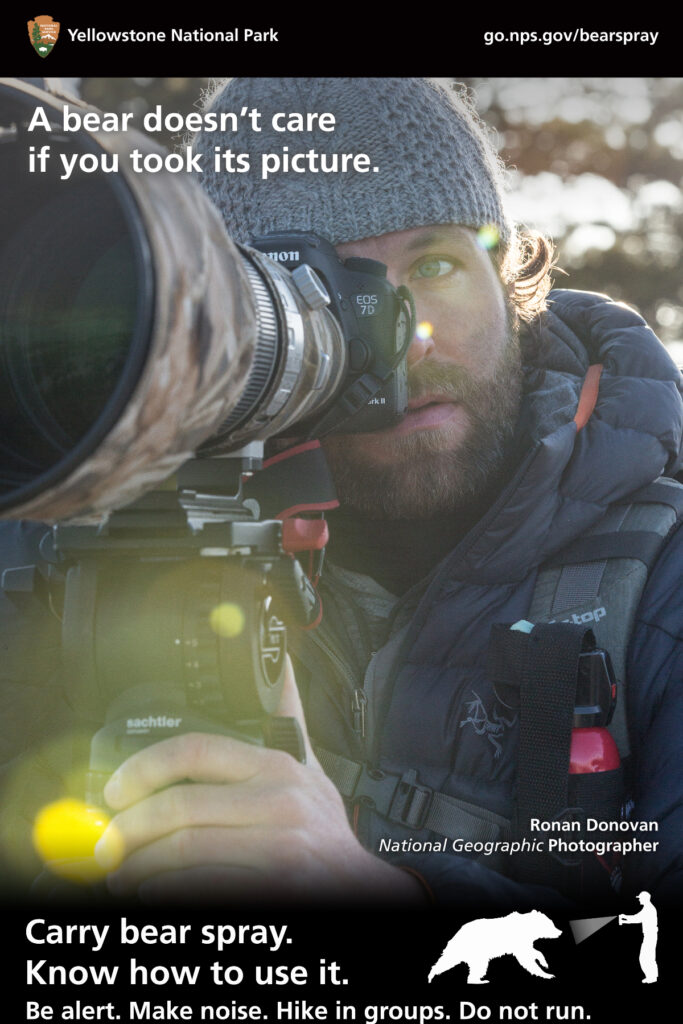
The abundance of wildlife at Yellowstone in the fall makes it all that more desirable, and fall is rich with animal activity. You’ll need exemplary wildlife safety skills and a strong desire not to end up on the Tourons of Yellowstone social media sites.

Elk Activity in Yellowstone During Fall
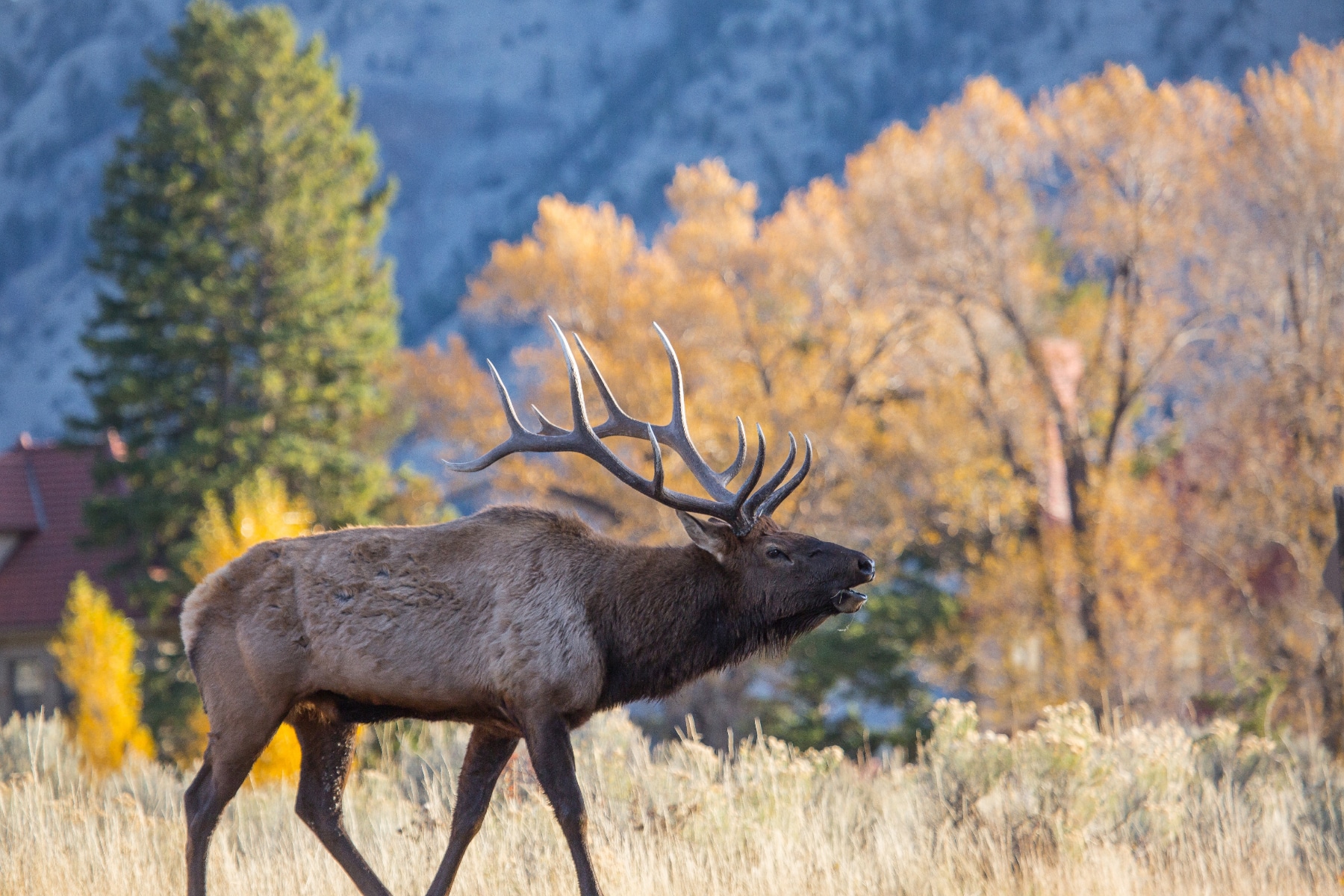
Yellowstone in the fall brings more animals closer to the tourists than possibly another season, and that means the safety risks go up. The elk mating season, known as the elk rut, brings these magnificent creatures to Mammoth Hot Springs and Grant Village. Up to 20,000 elk live in the Yellowstone.
Mating season can also make elk very agitated. Even if you are staying safely in your car, they are still known to charge vehicles and be perceived as hostile.
The rut at Yellowstone in the fall runs from early September through October. It’s no surprise they are aggressive, considering how elk mating is done. First, the animals gather in a group. Then, the males (bull elk) attempt to show their superiority and catch the eye of a lucky lady (cow elk) by bugling. That’s a loud noise that echoes through Yellowstone in the fall. Here, take a listen.
Things to Know Before You Visit Yellowstone National Park
Entrance Fees
Sunscreen
We love sunscreen, especially this one, since it’s eco-friendly and effective.
Insect Repellent
If you’re looking for a good insect repellent, we recommend this one or this one if you’re a DEET person.
Guide Book
The Best Guide Book for Yellowstone National Park is this one, which we’ve marked up and highlighted quite a bit.
Map
The Best Map: I like this map best for Yellowstone National Park.
National Parks Checklist Map: This beautiful National Parks Checklist Map can be ordered to your house.
Framed National Parks Map: We’re a sucker for maps; this framed national parks map is the best.
Where to Stay in Yellowstone National Park
Where to Stay: This is our favorite hotel in/around Yellowstone National Park.
FAQ: Yellowstone in the Fall
Yellowstone in the fall is going to feel more like a traditional winter, especially after September. If you’re wearing the right layers and have cold-weather accessories, there’s no reason you won’t enjoy your time here. Some summer visitors even get a rude awakening of cold temperatures. Enjoy the smaller crowds. The cold isn’t dangerous in October unless you aren’t prepared for it.
Both Gardiner and West Yellowstone offer many things to do outside the park and have outfitters and tour companies to get you ready to go inside the park. If it’s after November 1, then Gardiner or Cooke City will be your two options on the only road open to vehicle traffic.
No. You only need a park pass to get into the park. No reservation or timed entry is applicable to Yellowstone at any time of the year.
Yellowstone in the fall offers better odds of seeing the Northern Lights. September and October are two of the top sighting months in North America. However, it’s not something you should bank on. Yellowstone has seen the aurora as recently as April 2026, and park officials say it happens once or twice a year. Even the best predictions only give a three-day forecast for potential activity.
You can see the Milky Way in all its splendor in Yellowstone in the fall. The best fall views are around 10:00 p.m. in September and by 8:00 p.m. in October. The boardwalks and roads won’t have lighting, so you’ll be going into the pitch darkness. Bring a flashlight and keep your eyes focused on the path ahead of you until you’re at a viewing location.
Yellowstone in the Fall Final Thoughts
The unpredictable nature of Yellowstone in the fall rumbles that primitive instinct in many visitors. For the safest and most predictable route, plan a trip during the first two weeks of September. October guests should still have access to many activities. If a big snowstorm hits, you’ll have quite a story to tell!
November is the slowest month of the year, and during Yellowstone in the fall. It’s also when the least amenities are offered. This also brings the biggest weather risks and cold weather challenges of the season. The solitude and presence on the trails is a gift in itself if you’re looking for the extra space that’s hard to find in Yellowstone at almost any other time of the year.
For those who love everything about Yellowstone in the fall, you’ll likely find great deals on accommodations. Even if you get snowed in, West Yellowstone and Gardiner offer great amenities for tourists, and for once, you won’t have to wait in line for a meal.
Pin Yellowstone in the Fall
Helpful Related Links
- Pick your window: best time to visit Yellowstone
- Plan the days: Yellowstone itinerary, 1 to 5 days
- Fall wildlife central: Lamar Valley wildlife guide
- Where to sleep: where to stay in Yellowstone
- Getting there: best airports near Yellowstone
- Park trivia: 18 Yellowstone facts
- Pair it with the Tetons: Grand Teton National Park guide and things to do in Grand Teton
- Make it a road trip: Wyoming national parks and Mount Rushmore to Yellowstone drive
What to Bring to Yellowstone
Gear we recommend for Yellowstone. Affiliate links support our work at no cost to you.
More Than Just Parks may earn a small commission from purchases made through these links, at no extra cost to you. We only recommend gear we would actually use.
Affiliate disclosure: Some links on this page earn us a small commission at no extra cost to you. We only recommend gear we actually use.


