
Write before November 30
Don't approve Twin Mountain II until the streams are mapped
United States Forest Service · Tongass National Forest, Thorne Bay Ranger District
- What
- Alternative 2 would log 85 units of Tongass old growth, yet the agency admits its stream map was last updated December 2025 and will keep changing after the decision.
- Where
- Tongass National Forest, Thorne Bay Ranger District, Prince of Wales Island, AK
- How much
- Units proposed, Alternative 2 vs Alternative 3: 85 vs 58. Net harvest volume, Unit 45: 1,931 thousand board feet. Largest single unit: 83.3 acres.
- By when
- File an objection before November 30, 2026. That’s when the objection period closes. After that, the decision can be signed once any objections are resolved.Date from Forest Service legal notice ↗, read October 18, 2026.
What to ask forAll 3 points →
The agency should analyze soil disturbance and landslide risk directly rather than deferring to on-site judgment.
Where these four lines come from
- WhatOur plain-English read of the Forest Service project page ↗. Check it against the agency’s own words under Case.
- WhereThe places and states the project page names, as PLAN read them.
- 85 vs 58“a total of 85 units for Alternative 2, and a total of 58 units for Alternative 3.legacy requirements. Units with an LSTA boundary greater than 20 acres in size within legacy VCUs must retain 30 percent of the entire unit” Unit Card Header Information Open the document ↗
- 1,931 MBF“Net Harvest Volume (MBF): Alt 2 - 1,931” Unit 45 Open the document ↗
- 83.3 acres“Total Unit Acres: Alt 2 – 83.3” Unit 45 Open the document ↗
- By whenNovember 30, 2026, from Forest Service legal notice, published October 16, 2026 ↗. Read October 18, 2026.
- Read from PLAN’s record November 13, 2026.
Our reportingSee the grove and the full story →
The objection door
File an objection by November 30
The comment rounds on this sale are over. The objection period is open, and an objection is the strongest thing you can file: it goes to the Reviewing Officer, Acting Regional Forester Jacqueline Buchanan, and she has to answer it in writing before the decision can be signed (36 CFR 218). It’s public, it has to be specific, and it rests on your earlier comment or on new information that came out after the comment rounds closed. The Final EIS and draft decision brought plenty of that, listed below, and it reaches the whole Twin Mountain II sale, not just Unit 346.
Who can object
- If you commented before
- You can object. That means you sent the Forest Service a specific written comment in your own name, in the 2020 scoping or in the April 24 to June 8, 2026 comment period on the Draft EIS. An organization’s comment counts for the organization only, so belonging to a group that commented doesn’t make you eligible (36 CFR 218.5(a) and (c)). You can raise what you raised then, and the new information listed below.
- If you didn’t comment
- The Forest Service’s own legal notice, printed October 16, 2026, says people who haven’t commented “may gain limited eligibility to object based on new information,” where that information is “truly new and was not available during the designated public comment opportunity.” The changes listed below came out after the comment rounds closed, and that notice is the basis we’re filing our own objection on. Go in knowing the risk: the regulation says the Reviewing Officer “must set aside and not review” an objection from anyone who didn’t comment (36 CFR 218.10(a)(3)), and the Forest Service’s form replies to readers say only commenters can object, without mentioning its own notice. Either way, you’re owed written reasons, and your objection stays in the record (218.10(b)).
- If you’re not sure whether you commented
- Look before you file. The Forest Service’s comment reading room on the portal lists the comments it received. An objection from someone who didn’t comment is likely to be set aside, so it’s worth the few minutes.
What changed after the comment rounds closed
These are the changes we found by reading the Draft EIS beside the Final EIS and the draft decision. Whether any of them counts as truly new information is the Reviewing Officer’s call, not ours. Quote the page when you use one.
- 1.The Final EIS added new reasons for the sale: a presidential executive order (14225), a USDA Secretary’s memo (1078-006) and the Forest Plan’s projected timber sale quantity (PTSQ). None of them appear in the Draft EIS. (Final EIS, pages 2 and 4 ↗)
- 2.The draft decision picks Alternative 2, the biggest option, because it “includes the highest volume of old-growth timber and is expected to support the most opportunities for local and regional jobs.” The Final EIS says the smaller Alternative 3, 1,144 acres against 1,738, also “meets the purpose and need.” Alternative 3 still includes Unit 346. (Draft Record of Decision, page 6; Final EIS, Summary page iii and page 17 ↗)
- 3.The draft decision says Alternative 2 “will be more expensive than Alternative 3” once road costs are counted, and still finds the land it takes to be “the minimum necessary” for subsistence law (ANILCA section 810). (Draft Record of Decision, pages 6 and 11 ↗)
- 4.The unit cards issued with the draft decision give no date or method for any exam of the stands after 2019. The draft’s cards already carried that 2019 text; what’s new is Unit 346’s final card, which records goshawk surveys in 2026 and still dates no exam of the stand, its streams or its windthrow risk. (The Final EIS also repeats the Draft EIS’s sentences that field surveys ran 2016 through 2020 and that some units haven’t been completely verified; those aren’t new.) (Draft Record of Decision, Attachment 1, page 181, and Draft EIS, Appendix A, page 229 (the two cards); Final EIS, pages 231 and 232 and Draft EIS, page 213 (same sentences) ↗)
- 5.The Draft EIS said the windfirmness field review “happened during sale layout.” The Final EIS says it “happens as part of implementation.” Unit 346’s card, like 26 others, still says RAW buffers were found unnecessary “after field review by qualified specialists.” (Draft EIS, page 22; Final EIS, page 18; Attachment 1, page 181 ↗)
- 6.Seven new “microsale” units were added after comment, “not previously analyzed,” about 98 acres in all. Separately, the Alternative 2 total went from 1,655 acres in the draft to 1,738. (Final EIS, page 15; the 1,655 acres is the Draft EIS’s figure ↗)
- 7.More Than Just Parks’ August 29, 2026 field record of Unit 346 was sent to the Forest Service on September 10 and saved to the project record, per the project lead on September 11. The Final EIS and draft decision don’t mention it. (project lead’s reply, September 11, 2026 ↗)
What an objection has to contain (36 CFR 218.8(d))
- Your name and address, a phone number if you have one, and your signature (a scanned signature is fine by email). If several people sign, say who the lead objector is.
- The project name (Twin Mountain II Timber Sale), the responsible official (Janelle Crocker, Acting Forest Supervisor) and the forest (Tongass National Forest, Thorne Bay Ranger District).
- Which parts of the project you object to and the specific issues; how you believe the analysis or draft decision breaks a law, regulation or policy; the fix you want; and your reasons.
- How each issue connects to a comment you made, or that it rests on new information that came out after the comment rounds closed.
- Any document you rely on goes in with the objection. The only things you can cite without attaching them are laws and regulations, Forest Service directives and the Forest Plan, documents the Final EIS itself cites, and your own earlier comments, each by date, page and section (218.8(b)). An objection without specific issues and reasons can be set aside (218.10(a)(5)).
- File it on the Forest Service portal or by mail, as .doc, .rtf, .txt or .html, by Monday, November 30, 2026.
Objections are due November 30, 2026. That date came off the agency’s own legal notice, which is the only source the regulation lets an objector rely on (36 CFR 218.6(c)).
On paper: Jacqueline Buchanan, Acting Regional Forester, Alaska Regional Office, ATTN: Twin Mountain II Project, P.O. Box 21628, 709 West 9th Street, Juneau, AK 99802-1628. Fax: 907-586-7840.
File an objection in your own words. You can also write Janelle Crocker, who signs the decision, and call the members who answer to you.
Write your objectionAlso write the Acting Forest SupervisorWhat to say
Make these points, in your own words
Many steep, wet units are approved for ground-based yarding despite the document's own warning that slopes over 35 percent have three times the detrimental disturbance rate.Read the point +
Unit 45 averages 30 to 65 percent slopes with dominant forested wetlands and still proposes shovel yarding. The agency should analyze soil disturbance and landslide risk directly rather than deferring to on-site judgment.
Several units sit on moderate vulnerability karst with inclusions of high vulnerability karst that still need no-harvest buffers laid out during implementation, meaning the protection is not fixed at the decision.Read the point +
Unit 181 even has a sinkhole still requiring a buffer. The agency should delineate and buffer karst features before the decision under the Federal Cave Resources Protection Act, not after.
The document repeatedly says wetland avoidance was not feasible and that temporary roads will cross forested wetlands, without quantifying the total wetland acreage crossed across all units.Read the point +
Unit 64 alone crosses about 2 acres of forested wetland. The agency should total and analyze cumulative wetland impacts rather than dismissing each crossing unit by unit.
Say it in your own words. Where you live, whether you have stood in country like this, why a grove like this one matters to you: that’s what makes a letter yours, and the one ask at the end is what it’s for.
Also from our reporting
- On September 10, 2026, field documentation of seven denning structures, with a photo appendix, was sent to the Forest Service. On September 11 the project lead replied that it had been saved to the project record and would be shared with the project wildlife biologist and silviculturist. None of it appears in the roughly 720 pages of the Final Environmental Impact Statement and draft Record of Decision posted October 14. (More Than Just Parks, Twin Mountain II ↗)
- Between 1954 and 2004, an estimated 94 percent of northern Prince of Wales Island’s contiguous high-volume old growth was logged, by the estimate of John Schoen, a retired Alaska Department of Fish and Game biologist. (Earth Island Journal, “Wolves Losing Ground” ↗)
PLAN's read: critical threat
Alternative 2 would log 85 units of Tongass old growth, yet the agency admits its stream map was last updated December 2025 and will keep changing after the decision.
What’s at risk
If this goes through
Our plain-English read of the official notice ↗. Check it against the agency’s own words below.
By the numbers, from the agency’s own document
- Units proposed, Alt 2 vs Alt 3
Unit Card Header Information
Open the document ↗“a total of 85 units for Alternative 2, and a total of 58 units for Alternative 3.legacy requirements. Units with an LSTA boundary greater than 20 acres in size within legacy VCUs must retain 30 percent of the entire unit”
- Net harvest volume, Unit 45
- Largest single unit acres
Source: the agency’s document ↗
Testing the agency’s case
What the agency argues, and whether its own record backs it
- 5
- Not fully backed
- 1
- Contradicted by its own record
- 2
- Never analyzed
The Forest Service proposes to log old-growth stands in 85 units under Alternative 2 or 58 units under Alternative 3. Most of the logging would be clearcutting with shovel and cable yarding, with some helicopter single-tree selection. It says these stands are over-mature and decaying, and that clearcutting is the best way to turn them into productive, healthy, windfirm timber.
“Units that are proposed for even-aged management have conditions that do not currently meet nor are on a trajectory to meet the desired condition. Even-aged management using clearcutting is the optimal method to move these stands from the existing condition to the desired condition.”
Even-aged Systems (Clearcut)
Each Ask below goes into your letter when you write it with PLAN on this page, matched to what you tell it about how this land reaches you.
EffectsContradicted by its own recordHarvest would comply with the Forest Plan's scenery components, and any unit expected not to meet the Forest Plan will be noted on its card.
The Scenery section pairs its compliance statement with a promise to flag on the card any unit expected not to meet the Forest Plan. The cards also add scenery measures, such as bending a temporary road to screen Unit 242 and using a natural roadside berm as a visual buffer for Unit 325. Unit 345's card flags itself as promised: its clearcut openings exceed the Forest Plan's 2- to 10-acre openings for a moderate scenic integrity objective in the Modified Landscape land use designation. But it stays a 16.6-acre clearcut in both alternatives with no fix listed, and that can't be squared with the statement that harvest would comply. The introduction also bars clearcutting where visual concerns call for a different system.
AskExplain how Unit 345 can meet the Forest Plan's scenery limits or change it to a system that does, and state the scenic objective for each Modified Landscape clearcut.
The agency’s words, the record and the law +Hide the words
The agency says
“The effects of timber harvest upon scenic integrity within proposed units would comply with the Forest Plan components for Scenery.”
Scenery
Elsewhere in the same document
“Unit clearcut openings exceed Forest Plan S&G of 2- to 10-acre openings for harvests within Moderate SIO in Modified Landscape LUD.”
Unit 345
“First, there must be no visual, soil, regeneration, or other resource concerns requiring mitigation through use of other silvicultural systems.”
Even-aged Systems (Clearcut)
The law
“Resource plans and permits, contracts, and other instruments for the use and occupancy of National Forest System lands shall be consistent with the land management plans.” National Forest Management Act, 16 U.S.C. 1604(i) ↗
Purpose and needNot fully backedEvery clearcut unit has a moderate or high insect, disease or windthrow risk rating, or needs restocking, as the project's own test requires.
Most clearcut cards meet the project's test with a stated moderate or high rating. Unit 17 has heavy mistletoe and a high windthrow risk, Unit 78 has moderate mistletoe, and Unit 109 adds moderate yellow-cedar decline. Unit 122 is the gap: it rates windthrow risk low, reports only 'varying levels of mistletoe' with no rating, and says nothing about poor stocking. Most cards repeat the same justification ending in 'or to rehabilitate poorly stocked timberlands' without saying which factor applies. The document says final prescriptions are completed at the time of decision, and the required Certified Silviculturist finding isn't in this text.
AskState the qualifying factor and rating for each clearcut unit, include the silviculturist's findings, and explain why Unit 122 qualifies or prescribe a different system.
The agency’s words, the record +Hide the words
The agency says
“For the purpose of this project, an old-growth stand proposed for clearcutting must have a moderate or high insect, disease, or windthrow risk rating; a need to rehabilitate poorly stocked timber lands; or a combination of these factors.”
Even-aged Systems (Clearcut)
Elsewhere in the same document
“This stand has varying levels of mistletoe. The risk for windthrow in this stand is low due to the existing stand and site characteristics.”
Unit 122
EffectsNot fully backedEvery unit complies with the Forest Plan's wildlife standards, including the required nest buffers.
Several cards apply 600-foot forested windfirm buffers to raptor nests (Units 51, 951, 964 and 988) and 600-foot buffers to murrelet nests (Units 78, 955 and 988). The heron and murrelet standards apply the 600-foot buffer 'where available.' Unit 943's modified heron buffer still spans 600 feet: 200 feet no-cut and 400 feet partial cut. That unit is also dropped in Alternative 3 to further protect the nests. Unit 183 says line officers approved a modified goshawk buffer. For Units 302, 939 and 958, the cards say the hawk buffers haven't been applied yet and that roads and boundaries should be reviewed to avoid them. Still, a partial-cut zone isn't plainly the forested buffer the card describes. Under Alternative 2, most of Unit 186's western polygon lies inside the 100-acre goshawk nesting buffer. So full compliance isn't shown.
AskApply every required nest buffer before a decision, explain how Unit 943's modified heron buffer and Unit 186's overlap meet the Forest Plan, and move proposed roads out of raptor buffers.
The agency’s words, the record and the law +Hide the words
The agency says
“All units comply with required Forest Plan Wildlife Standards and Guidelines. Any nests and animal dens discovered at any time will receive the necessary standard and guideline applications.”
Wildlife
Elsewhere in the same document
“A modified heron nest buffer was applied. This buffer consists of 200-ft no cut buffer and a 400-ft partial cut buffer.”
Unit 943
“Goshawk surveys documented a sharp-shinned hawk nest within the southern section of the unit; a 600-ft forested windfirm buffer has not been applied yet.”
Unit 302
The law
“Resource plans and permits, contracts, and other instruments for the use and occupancy of National Forest System lands shall be consistent with the land management plans.” National Forest Management Act, 16 U.S.C. 1604(i) ↗
Show 3 more claims +Show fewer
EffectsNot fully backedDetrimental soil conditions in young-growth stands have been evaluated so that cumulative detrimental soil conditions won't exceed Region 10 Soil Quality Standards.
The cards back soil protection unit by unit. They exclude unstable ground, for example about 121 acres around Unit 934 and 81 acres near Unit 122. They require at least partial suspension unless stated otherwise. They tell crews to keep ground equipment off slopes over 35 percent, use designated access routes and slash mats, and consult a soil scientist. But no detrimental soil figures appear in this text, either for the young-growth evaluation or for the proposed units. The introduction says slopes over 35 percent are generally unsuitable for untethered ground-based yarding. Yet shovel yarding is planned for Unit 939, all of which exceeds 35 percent, and for Units 345 and 346, where most of the ground-based area does.
AskDisclose the expected detrimental soil disturbance for each shovel unit on slopes over 35 percent, or switch those units to cable or helicopter yarding.
The agency’s words, the record and the law +Hide the words
The agency says
“Per Tongass Land and Resource Management Plan direction detrimental soil conditions in young-growth stands have been evaluated to ensure cumulative detrimental soil conditions do not exceed Region 10 Soil Quality Standards.”
Soils/Wetlands
Elsewhere in the same document
“The entire proposed unit exceeds 35% slope. Most of the unit can be yarded from the proposed temp road but ground-based equipment travel should be confined to designated access routes.”
Unit 939
“There is a risk of high detrimental soil disturbance from ground-based harvesting due to slope and the presence of forested wetlands throughout the unit.”
Unit 43
The law
“Resource plans and permits, contracts, and other instruments for the use and occupancy of National Forest System lands shall be consistent with the land management plans.” National Forest Management Act, 16 U.S.C. 1604(i) ↗
EffectsNot fully backedAll mapped streams, and any found during layout, will be protected by best management practices and the Forest Plan's riparian standards.
Every card lists buffers for Class I, II and III streams under Category A or B protection and gives Class IV streams Category C protection. Each card also says any stream found during layout or road construction will be mapped and approved by a fisheries biologist or hydrologist before layout is finalized. New crossings, such as the one on road 2051040 for Unit 4, will be designed to meet aquatic organism passage standards. The red-rated culverts on haul routes, including eight on road 2050400 for Unit 33, are existing structures that the cards disclose. The document doesn't say whether they'll be replaced, but that's a fish-passage question about existing roads, not about the riparian buffers and practices this claim covers.
AskSay whether and when each red-rated culvert on the haul routes will be replaced. If any won't be, explain how hauling over them protects fish.
The agency’s words, the record and the law +Hide the words
The agency says
“These streams, and any additional streams found during layout, will be protected by the appropriate BMPs and Forest Plan Riparian Standards and Guidelines.”
Fisheries
Elsewhere in the same document
“NFS Road Crossing: 2050400-4.51 (RED); Class I; MMO; Incision: 1ft; Gradient: 8%; Alluvium; 24in plastic pipe; Timing dates: 6/25-9/1; Existing structure in place not meeting fish passage requirements.”
Unit 33
The law
“Resource plans and permits, contracts, and other instruments for the use and occupancy of National Forest System lands shall be consistent with the land management plans.” National Forest Management Act, 16 U.S.C. 1604(i) ↗
ScienceNot fully backedFixing incomplete data, including stream mapping, won't substantially change the project or reveal significant new environmental information.
The agency backs its expectation with a process. Adjustments follow Forest Service Handbook 1909.15 section 18. Every card says newly found streams will be mapped and classified, with a fisheries biologist or hydrologist approving them before layout is finalized, and then protected under the riparian standards. The field corrections shown so far reduced concerns rather than adding them. Unit 45's stream was corrected to Class IV, and Unit 346's streams were reclassified and remapped, so extra windfirmness buffers weren't needed. The pending boundary changes for Units 83, 183 and 246 add windfirmness buffers, which shrink those units. Still, the Fisheries section expects stream locations and types to change and says new streams will first appear in the final cards.
AskFinish the stream surveys and publish corrected stream maps and buffers for every unit in a revised draft, so the public can comment before the final environmental impact statement.
The agency’s words, the record and the law +Hide the words
The agency says
“We do not anticipate adjustments due to incomplete information to represent a substantial change, significant new circumstances, or significant new information relevant to environmental concerns and bearing on the proposed action or Alternatives.”
Unit Card Introduction
Elsewhere in the same document
“Changes to stream location and type are anticipated as additional surveys are completed, and any newly mapped streams will be depicted and described in the FEIS unit cards.”
Fisheries
“A RAW review was initially needed along the Class III stream within this unit, but the stream designations were corrected to Class IV and so additional RAW buffers were determined to be unnecessary after field review by qualified specialists.”
Unit 45
The law
“ensure the professional integrity, including scientific integrity, of the discussion and analysis in an environmental document; (E) make use of reliable data and resources in carrying out this chapter;” National Environmental Policy Act, 42 U.S.C. 4332(2)(D)-(E) ↗
What the document never analyzes
Not analyzedTribal consultation and subsistence use
The cards name deer winter range, wolf dens, Class I fish streams and bays like Red Bay and Warm Chuck Inlet, but never discuss subsistence hunting, fishing or gathering, or consultation with tribes.
Searched all 287 pages for ‘tribal’, ‘tribe’, ‘subsistence’. None appear.
AskAnalyze effects on subsistence deer, fish and gathering in each affected area, and describe consultation with tribes on unit locations.
Not analyzedClimate and forest carbon
The cards propose clearcutting old-growth stands across dozens of units and rate each stand's wind exposure, but never discuss climate effects or the carbon stored in these stands.
Searched all 287 pages for ‘climate’, ‘carbon’, ‘greenhouse’. None appear.
AskEstimate the carbon released by harvesting these old-growth stands and discuss how changing storm and wind patterns affect windthrow risk at unit edges.
How this was read
Read from the agency’s own decision document ↗, all 287 pages. Every quote is checked word for word against it, a claim marked contradicted stands on a quote from the same document, and a second reading argued the agency’s side of every verdict before it was published. The verdicts are our reading; the quotes are the agency’s. A court can set aside agency action it finds “arbitrary, capricious, an abuse of discretion, or otherwise not in accordance with law” (5 U.S.C. 706(2)(A) ↗), which is why these gaps are worth putting in the record.
In the agency’s own words
The Tongass National Forest posted the Final Environmental Impact Statement and a draft Record of Decision for the Twin Mountain II Timber Sale on October 14, 2026. The Responsible Official, Acting Forest Supervisor Janelle Crocker, intends to select Alternative 2: up to 26.4 million board feet of old-growth timber on about 1,738 acres of the Thorne Bay Ranger District on Prince of Wales Island, about 13 miles of new temporary road, and 33 miles of closed road reopened. Unit 346, a 16.2-acre old-growth stand, is prescribed for clearcutting. Objections are due Monday, November 30, 2026.
The groups on this fight
Who has been on this fight
Give straight to them; nothing routes through us.
- Southeast Alaska Conservation Council
On the record on this fight (2020)
A client in the case that struck down the 2019 Prince of Wales logging plan. Its October 21, 2020 release names Twin Mountain II as the next old-growth sale planned for the island.
Press release, October 21, 2020 ↗ - Earthjustice
On the record on this fight (2020)
Represented eight groups in the case that struck down the 2019 Prince of Wales logging plan. Its October 21, 2020 release names Twin Mountain II as the next old-growth sale planned for the island.
Press release, October 21, 2020 ↗
Who signs it
Janelle Crocker
Acting Forest Supervisor, Tongass National Forest (Responsible Official)
Where the notice says so
The ground
Tongass National Forest
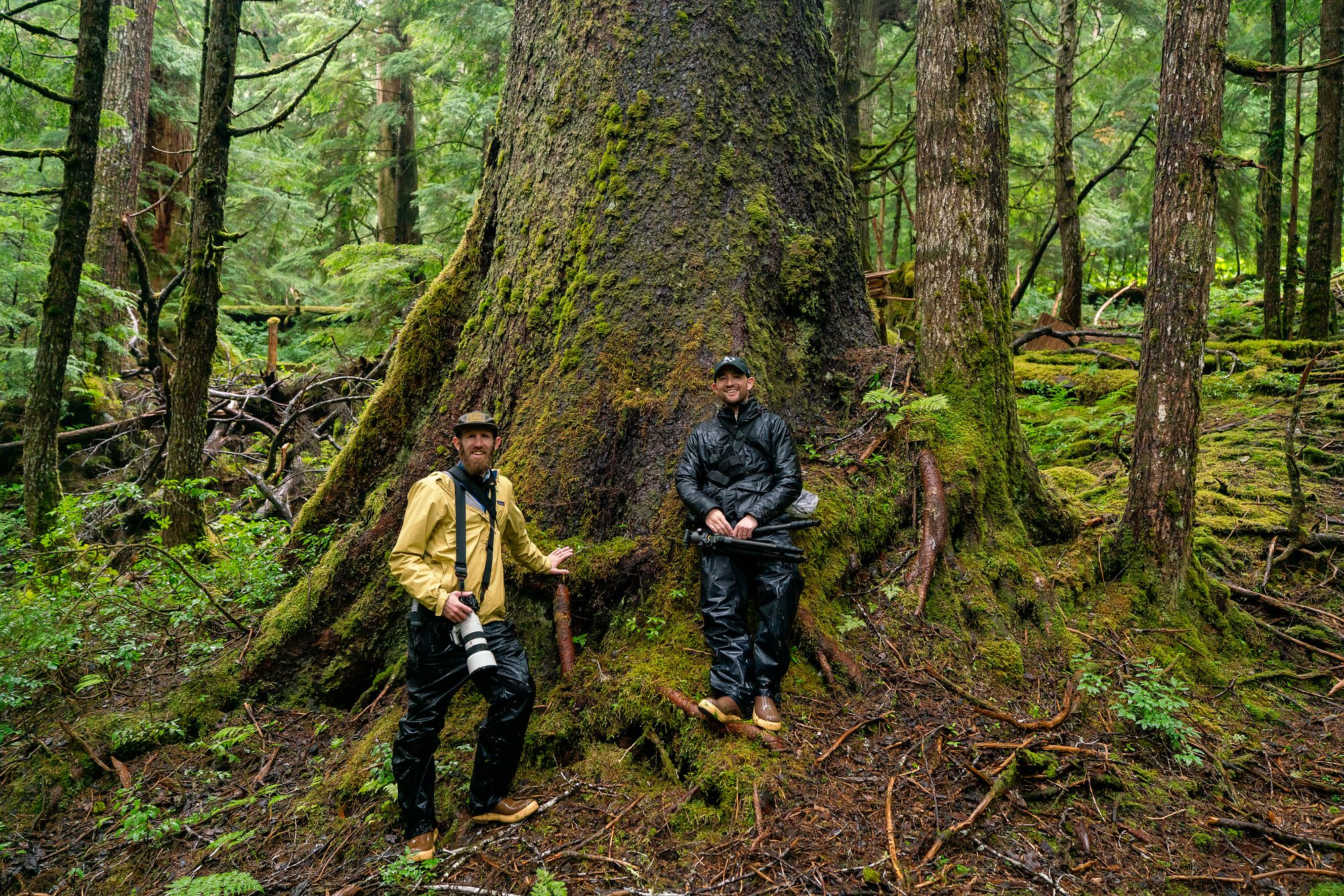
The photograph on this page: Old growth in the Twin Mountain II project area, Prince of Wales Island, Tongass National Forest.. More Than Just Parks.
In court on this ground
14 court cases are over Tongass National Forest. The newest is first.
Still open · latest entry August 28, 2026
Ketchikan Indian Community v. United States Forest Service
Latest entry we hold: “Unissued summons re Defendant U.S. Department of Agriculture”
Still open · latest entry June 1, 2026
State of Alaska v. The United States Department of Agriculture
Latest entry we hold: “SLG TEXT ORDER: The Court has reviewed and ACCEPTS the Joint Status Report of Plaintiffs and Federal Defendants at Docket 91.”
Ruled · May 8, 2026
The court: “ORDER ON REMEDY:The Forest Service's December 2023 Record of Decision for the Mendenhall Glacier Visitor Facility Improvements Project is hereby REMANDED WITHOUT VACATUR.”
Decided · latest entry April 2, 2026
Alaska Forest Association v. U.S. Department of Agriculture
Latest entry we hold: “NOTICE OF APPEAL as to 44 Order on Motion to Dismiss for Failure to State a Claim, 45 Judgment, by Alaska Forest Association, Alcan Timber Incorporated, Viking Lumber Company, Inc..”
Docket closed · latest entry December 13, 2023
Inside Passage Electric Cooperative v. U.S. Department of Agriculture
Latest entry we hold: “ANSWER to 1 Complaint, by U.S. Department of Agriculture, Thomas Vilsack.”
Docket closed · latest entry December 12, 2023
Latest entry we hold: “CLERK'S NOTICE: The Nature of Suit of this case shall be changed from 899 to 893 to reflect Environmental Matters.”
Docket closed · filed December 23, 2020
Organized Village of Kake v. Vilsack
The court closed the docket. We don’t hold its entries yet.
Ruled · May 23, 2017
Southeast Alaska Conservation Council v. U.S. Forest Service
The court: “FILED OPINION (ALEX KOZINSKI, DIARMUID F. O'SCANNLAIN and RONALD M. GOULD) AFFIRMED.”
Ruled · February 6, 2015
State of Alaska v. United States Department of Agriculture
The court: “MANDATE of USCA (certified copy) as to 63 Notice of Appeal to DC Circuit Court, filed by ALASKA FOREST ASSOCIATION, SOUTHEAST CONFERENCE, 62 Notice of Appeal to DC Circuit Court, filed by KETCHIKAN GATEWAY…”
Docket closed · latest entry February 19, 2014
State of Alaska v. Department of Agriculture
Latest entry we hold: “MODIFIED EVENT FROM FILED TO LODGED--CORRECTED APPELLANT REPLY BRIEF lodged by State of Alaska in 13-5147, Alaska Electric Light & Power, Alaska Marine Lines, Inc., Alaska Miners Association, Alaska Power &…”
Docket closed · latest entry August 10, 2012
Alaska Forest Association v. Schafer
Latest entry we hold: “MEMORANDUM OPINION. Signed by Judge John D. Bates on 8/10/2012.”
Docket closed · latest entry February 17, 2010
Southeast Conference v. Schaefer
Latest entry we hold: “MEMORANDUM OPINION. Signed by Judge John D. Bates on 12/17/2010.”
Decided · no date on file
In re Big Thorne Project & 2008 Tongass Forest Plan
Decided. We don’t hold the court’s words on it yet.
Decided · no date on file
Alaska v. United States Department of Agriculture
Decided. We don’t hold the court’s words on it yet.
Who holds the vote
PLAN’s record doesn’t tie a member of Congress to this fight yet. The scorecard grades the votes and bills that decide public lands; nothing joins a vote or a bill to this decision, so there’s no member to name here without guessing.
See how your members vote ↗Calling your two senators and your representative is the Call door on this page.
Forest ServiceWe track this on the agency’s own system of record, where most on-the-ground decisions live.
The reporting behind this
From More Than Just ParksKnow an open comment period we are missing, or spotted a wrong deadline? .
More fights that need you
Go deeper for free
See how your members of Congress vote on public lands
Every representative, graded on the votes that decide the fate of parks, forests, and refuges.
Open ↗The mapSee the places under active threat
A live map of the parks, monuments, and wild country in the crosshairs right now.
Open ↗A wrong fact, a dead link, a form that wouldn’t take your letter: one tap and it comes to the people who build PLAN, with this fight attached.