
NPS rule would cut public input on bike trail decisions
Bicycle Use in Park Areas
National Park ServiceFederal Register 2026-17902 ↗
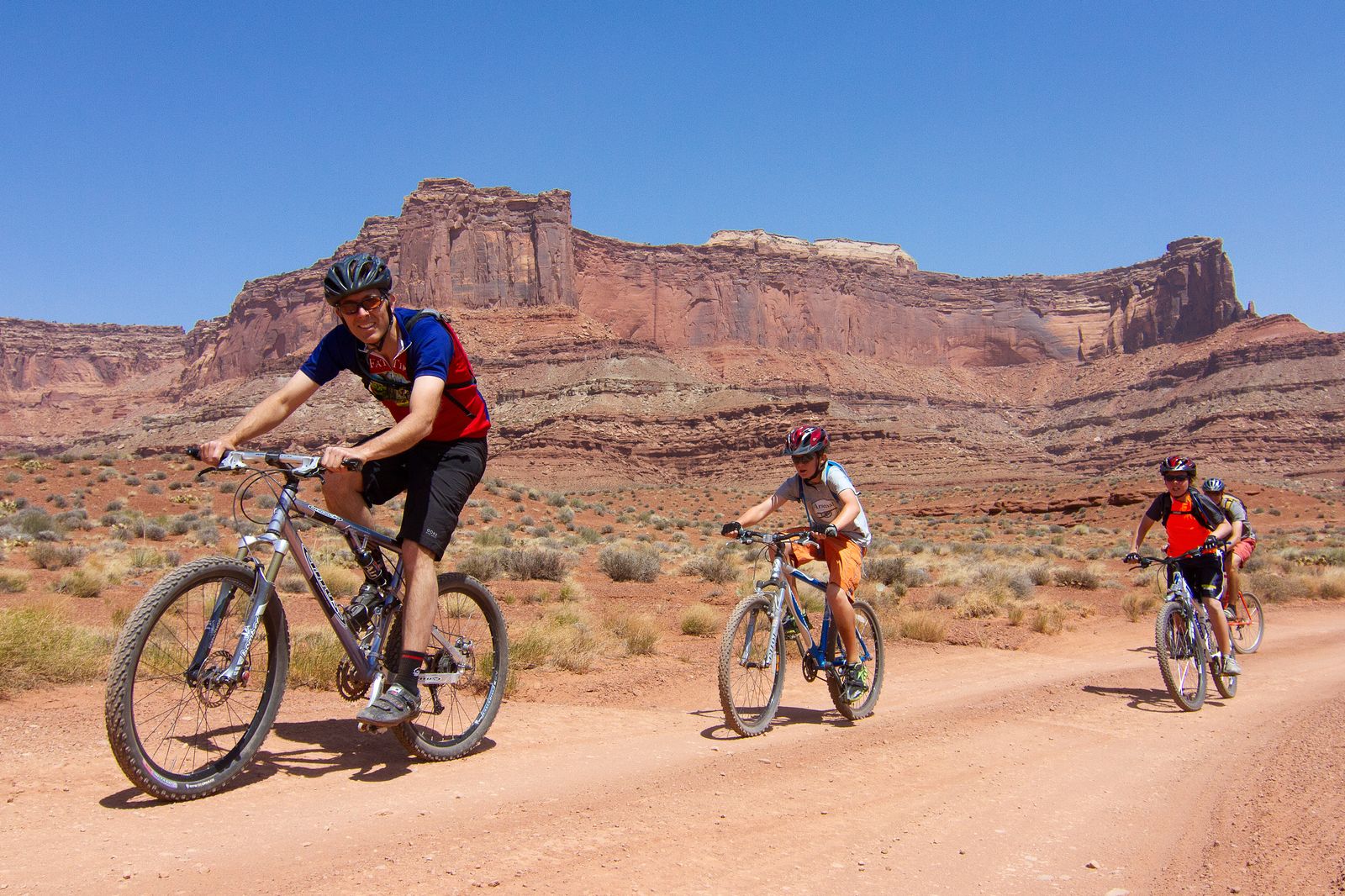
The agency wants to remove procedural steps that give the public a say in where bikes are allowed across all national parks.
What’s at risk
Public involvement requirements for bicycle trail designations in national parks are at risk. The proposed rule would reduce or eliminate some opportunities for public comment before the agency approves new or expanded bike use.
If this goes through
If this rule is finalized, the NPS could approve new and expanded bicycle use across park lands with less public scrutiny, setting a precedent that is difficult to reverse through rulemaking.
Our plain-English read of the official notice ↗. Check it against the agency’s own words below.
The agency’s case, tested
What the agency argues, and whether its own record backs it
- 2
- Hold up
- 6
- No support given
- 1
- Never analyzed
The National Park Service proposes to drop rules that require an environmental assessment or impact statement, a planning document, a written determination and public comment before bike trails are designated. It says those steps conflict with NEPA and Interior policy and unnecessarily restrict recreation, and it would require rulemaking only for significant or controversial designations and never-improved locations.
“The changes would align NPS regulations with applicable Federal law and policy, remove unnecessary requirements, and ensure public involvement when needed.”
Summary
Each Ask below goes into your letter when you write it with PLAN on this page, matched to what you tell it about how this land reaches you.
Purpose and need
No support given
The current rules deny the public recreation opportunities because the agency can't afford the required reviews for even trivial trail changes.
The agency's example is a hypothetical 20-foot paved path from a parking lot to a visitor center. The document gives no count of trails or projects delayed or dropped under the current rules, and no examples of actual denied designations.
AskProvide the number and examples of bike trail designations that were delayed or abandoned because of the current requirements.
The agency’s words +Hide the words
The agency says
“The result is that the public is denied a new opportunity for recreation and access that would otherwise be allowed as an appropriate use of the park area.”
Policy and Regulatory Framework
Effects
No support given
The planning document requirements are redundant because NEPA review will cover the same items, such as maintenance costs, safety and user conflict.
The agency cites Handbook sections covering costs, maintenance, safety, economic effects, natural and cultural effects and mitigation, and argues that where a project's scope warrants those items, such as a backcountry trail network, an environmental assessment or impact statement would likely be prepared. It openly states the items would be evaluated only when potential effects justify it. That makes the redundancy partial: the document itself says 'may include' and 'likely,' and in categorical exclusion cases the items wouldn't be evaluated through NEPA.
AskExplain how trail safety, user conflict and resource protection will be evaluated when a categorical exclusion is used and no environmental assessment or planning document is prepared.
The agency’s words, the record +Hide the words
The agency says
“These requirements are inconsistent with the NPS’s established framework for planning and are redundant with compliance actions required by NEPA.”
Policy and Regulatory Framework
Elsewhere in the same document
“Appendix 1, Section 4 of the Handbook states that the description of alternatives in an EA or EIS may include a description of project maintenance, estimated costs, and modifications of existing facilities.”
Policy and Regulatory Framework
Effects
No support given
Dropping the sustainable trail design requirement won't matter because separate agency processes govern trail design and construction.
The agency says it maintains design and construction processes for trails of all types, subject to their own policies, compliance requirements and technical standards, and points to its Park Planning, Facilities, and Lands Directorate. It notes erosion and compaction mostly aren't possible on paved developed-area trails, and new bike use on never-improved ground would still require rulemaking. But the document doesn't describe what those separate processes require or show they call for sustainable design on backcountry bike trails, where its 2012 discussion identified resource impacts.
AskIdentify the specific design and construction standards that will apply to new backcountry bike trails and show they address erosion and compaction.
The agency’s words, the record +Hide the words
The agency says
“Because these processes are managed under separate NPS authorities and procedures, decisions about physical design and construction are not part of this rule.”
Policy and Regulatory Framework
Elsewhere in the same document
“This discussion identifies potential impacts to resources from backcountry trail use and offers recommendations for mitigating those impacts by ensuring that trails are sustainable.”
Policy and Regulatory Framework
Show 3 more claims +Show fewer
Economics
No support given
The rule will produce net economic benefits by cutting administrative costs.
The agency says costs of planning documents, environmental reviews and written determinations would be eliminated where not warranted. The document gives no figures for staff time, contractor fees, number of reviews per year or savings, and doesn't weigh any costs of reduced review.
AskEstimate how many trail reviews the current rules require each year, their cost, and the expected savings, alongside any costs from reduced review.
The agency’s words +Hide the words
The agency says
“The NPS expects this rule would result in net economic benefits due to reduced administrative costs.”
Regulatory Planning and Review (Executive Orders 12866 and 14192)
Process
No support given
The new rulemaking triggers will ensure public involvement where bike use has more potential to affect park resources, visitors, or community interests.
The agency's strongest support is that rulemaking would be required for any designation meeting the 36 CFR 1.5(b) criteria, which cover actions that would adversely affect the park's natural, aesthetic, scenic or cultural values or significantly alter public use patterns, and for all never-improved locations. It points to its micromobility rule treating never-improved surfaces as higher impact and asks for comment on the criteria. Still, the document gives no data showing that past surfacing, such as gravel or old rail beds, predicts lower impact, and designations on those surfaces outside the 1.5(b) criteria would need only notice.
AskProvide evidence that surface history predicts impact, and require public comment for any new bike or e-bike designation on backcountry or natural-surface trails.
The agency’s words, the record and the law +Hide the words
The agency says
“The purpose of the rulemaking requirements in this rule is to ensure public involvement in decision-making that has more potential for impacts to park resources, values, and visitors, or when stakeholders such as gateway communities have strong viewpoints about potential designations.”
Proposed Rule
Elsewhere in the same document
“Rulemaking would not be required for locations with surfaces composed of these materials at present, nor for locations that have a natural surface at present but in the past were altered or improved by artificial or processed materials, such as trails located on top of old rail lines.”
Proposed Rule
“The use of bicycles and electric bicycles is allowed in other locations designated by the superintendent after notice is provided using one or more of the methods described in § 1.7 of this chapter.”
§ 4.30 Bicycles
The law
“After consideration of the relevant matter presented, the agency shall incorporate in the rules adopted a concise general statement of their basis and purpose.” Administrative Procedure Act, 5 U.S.C. 553(c) ↗
Process
No support given
The rule itself needs no environmental review because it fits categorical exclusions and involves no extraordinary circumstances.
The agency relies on two exclusions: one for minor changes to visitor-activity regulations, covering e-bikes on public park roads, and one for procedural rules whose effects are too broad or speculative to analyze and will later be subject to NEPA collectively or case by case. It argues the significant-impact bar is replaced by the Organic Act non-impairment standard and the Management Policies bar on unacceptable impacts. Still, the document states its extraordinary-circumstances conclusion without showing that review and says it will document the exclusions later.
AskPublish the categorical exclusion documentation and explain how extraordinary circumstances were reviewed for allowing e-bikes on all park roads.
The agency’s words +Hide the words
The agency says
“This rule does not involve any of the extraordinary circumstances listed in 43 CFR 46.215 that would require further analysis under NEPA.”
National Environmental Policy Act of 1969 (NEPA; 42 U.S.C. 4321 et seq.)
What the document never analyzes
Not analyzed
Endangered species and critical habitat
The existing rule requires a finding that bike use won't disturb wildlife, and the proposal drops it, yet the document never discusses threatened or endangered species along trails.
Searched all 7 pages for ‘endangered’, ‘critical habitat’, ‘endangered species act’. None appear.
AskExplain how threatened and endangered species will be protected when trails are opened to bikes without an environmental assessment or written determination.
Where its own record backs the agency
AuthorityThe current bike rules force a full environmental review in every case, blocking categorical exclusions that NEPA would otherwise allow, such as the one adopted from the Federal Highway Administration.Why it holds +
The document describes the existing regulations as requiring an environmental assessment or impact statement for listed actions whether or not NEPA would require one. It also says the agency adopted a highway categorical exclusion covering bicycle paths. On the document's own description, the current rule does block that pathway.
The agency says
“The NPS cannot use this categorical exclusion, however, for the construction of new bicycle trails because of the regulatory requirement to prepare an EA or EIS.”
Policy and Regulatory Framework
Its own record backs it
“These regulations require the NPS to prepare an environmental assessment (EA) or an environmental impact statement (EIS) that evaluates the potential impacts of various actions, whether or not an EA or EIS would be required by the National Environmental Policy Act (NEPA).”
Policy and Regulatory Framework
ProcessThe required minimum 30-day comment period on an environmental assessment conflicts with Interior's NEPA Handbook and should be removed.Why it holds +
The agency's main point is that the Handbook says NEPA doesn't require public involvement on an environmental assessment and leaves whether, when and how to involve the public to the official's discretion. A rule that mandates a comment period in every case conflicts with that discretion on the document's own terms. The duration point is weaker: the Handbook says periods, if offered, should generally not be more than 30 days, and a 30-day period meets both. That doesn't undo the conflict on whether to offer comment at all.
The agency says
“The requirement to provide at least 30 days of public comment on an EA conflicts with Departmental policy set forth in 516 DM 1—U.S. Department of the Interior Handbook of NEPA Implementing Procedures (the Handbook).”
Policy and Regulatory Framework
Its own record backs it
“The Handbook states that public comment periods, if offered, should generally not be more than 30 days.”
Policy and Regulatory Framework
Read from the agency’s own decision document ↗, all 7 pages. Every quote is checked word for word against it, a claim marked contradicted stands on a quote from the same document, and a second reading argued the agency’s side of every verdict before it was published. The verdicts are our reading; the quotes are the agency’s. A court can set aside agency action it finds “arbitrary, capricious, an abuse of discretion, or otherwise not in accordance with law” (5 U.S.C. 706(2)(A) ↗), which is why these gaps are worth putting in the record.
What to say
Make these points, in your own words
- I oppose this action as proposed, and I ask the agency to weigh the specific harms below.
- The agency applies a categorical exclusion to what it elsewhere calls a substantive policy change. The rule would allow e-bikes on all park roads and parking areas open to motor vehicles without any superintendent designation -- a class-wide expansion affecting more than 400 park units simultaneously. Yet the NEPA section categorically excludes this change as a 'minor change in programs and regulations pertaining to visitor activities.' The agency's own supplementary text acknowledges that e-bikes 'reduce the physical demands of operating a bicycle' and 'expand opportunities for recreation and access,' implying a real increase in use intensity system-wide. The agency should explain why a simultaneous, system-wide change in e-bike access across every park unit qualifies as 'minor' rather than prepare an EA analyzing cumulative effects.
- The agency eliminates mandatory public comment on bicycle designations while providing no substitute mechanism to ensure public involvement. The proposed rule at section (b) says superintendents designate locations after 'notice is provided using one or more of the methods described in § 1.7,' but the rule is silent on whether the public can respond to that notice before a designation takes effect. The existing rule guaranteed at least 30 days of comment on an EA. The agency argues this 30-day minimum 'conflicts with Departmental policy,' but the Handbook provision it cites gives superintendents 'discretion to determine whether to involve the public' -- it does not prohibit public comment, it just makes it discretionary. The agency should explain how eliminating a guaranteed comment opportunity is consistent with the NPS's own mission to manage parks 'for the enjoyment of this and…
- The agency's own 2012 final rule stated that categorical exclusions were precluded because 'there may be cases where impacts are significant, including soil erosion, safety, and conflicts with other users.' The current rule cites that acknowledgment approvingly as evidence that the old rule was internally inconsistent, but then uses the same logic to justify applying categorical exclusions now -- without addressing what changed about the underlying resource conditions that made significant impacts possible in 2012. The agency should identify what specific factual change since 2012 makes significant impacts no longer a realistic possibility, or prepare an EA that evaluates that question.
- The agency completely dismisses the requirement to prepare park planning documents but never analyzes what happens when a superintendent designates a trail for bicycle use with no planning document, no EA, and no written determination. The rule's supplementary text gives the example of a '20-foot paved path connecting a parking lot with a visitor center' to illustrate unnecessary burden, but then eliminates planning requirements for all trails, including multi-use backcountry trail networks. The agency should either retain a scaled planning requirement for designations above a defined threshold of complexity or demonstrate that existing NEPA categorical exclusion reviews will capture the items the planning document previously addressed.
Show all 12 points from the document
- The agency eliminates the written determination requirement but provides no explanation for why the regional director concurrence requirement -- an internal check on superintendent discretion -- is also being removed. The supplementary text criticizes the written determination for being 'confusingly similar to, but not the same' as the planning document criteria, but that is an argument for harmonizing the criteria, not for eliminating independent regional oversight entirely. Without regional director concurrence, a single superintendent can designate any improved trail for bicycle use with only posting a notice. The agency should explain why eliminating regional oversight is necessary rather than simply streamlining the criteria.
- The rule's rulemaking trigger for unimproved surfaces -- 'locations that have never been improved by artificial or processed materials' -- creates a loophole for trails that were once graded or treated but now have a natural surface. The supplementary text explicitly states that 'locations that have a natural surface at present but in the past were altered or improved by artificial or processed materials' do not require rulemaking. Many old rail trails and historic wagon roads may have long since revegetated while retaining underlying compacted soils. The agency should define how recent or substantial the prior improvement must be to qualify for the exemption, or explain how superintendent notice alone protects resources on these corridors.
- The agency concludes that Tribal consultation is not required because the rule 'will have no substantial direct effect on federally recognized Indian Tribes,' but the rule would allow e-bikes and bicycles on any improved trail in more than 400 park units -- including parks that contain culturally significant areas, sacred sites, and lands subject to Tribal gathering rights. A separate NPS regulation cited in the rule, 36 CFR 2.6(d)(2), requires an EA before allowing Tribes to gather plants in park areas, showing that the NPS recognizes Tribal interests in park resources as a distinct legal category. The agency should consult with Tribes whose cultural resources or gathering areas could be affected by expanded bicycle access before finalizing the rule.
- The agency's own supplementary text acknowledges that the existing sustainable trail design requirement 'has even less meaning when superintendents consider bicycle use on trails in frontcountry areas,' implying that no comparable standard governs frontcountry designations. The proposed rule removes the sustainable trail design requirement entirely without substituting any design or condition standard for either frontcountry or backcountry designations. The agency says superintendents will rely on 'established NPS processes for design and construction,' but those processes are not incorporated by reference in the regulation and are not enforceable by the public. The agency should identify the specific design standards that will apply to new bicycle trail construction and designate them as the enforceable standard in the regulatory text.
- The agency's NEPA determination relies on a second categorical exclusion -- 43 CFR 46.210(i), covering 'minor policies, directives, regulations, and guidelines' -- for all rule changes not related to e-bikes on roads. That exclusion applies in part to actions 'whose environmental effects are too broad, speculative, or conjectural to lend themselves to meaningful analysis and will later be subject to the NEPA process, either collectively or case-by-case.' The agency is using this provision to defer all project-level analysis to future case-by-case review while simultaneously eliminating the EA and planning document requirements that would have ensured that review happens in a meaningful way. The agency should explain how future case-by-case NEPA review will occur if superintendents may now rely on categorical exclusions for individual designations without any regulatory floor for…
- The agency eliminates the substantive prohibition on allowing bicycle use on existing trails when an EA or EIS concludes the action 'may have a significant impact on the environment,' arguing the standard is different from the NPS Organic Act's non-impairment standard. However, the agency does not analyze whether existing NPS Management Policies and the Organic Act non-impairment standard are actually applied consistently by superintendents at the project level, or whether removing the NEPA-significance backstop creates a gap in resource protection. The agency also acknowledges the distinction between existing and new trails in the old rule is illogical, but the solution it adopts removes the protection entirely rather than extending it to new trails as well. The agency should analyze how the non-impairment standard will operate in practice as a substitute for the NEPA-significance…
- Say something only you can say. The law requires the agency to consider and respond to substantive comments, and specifics are what make a comment substantive.
In the agency’s own words
The National Park Service (NPS) proposes to modify the procedural requirements in existing NPS regulations for the designation of roads and trails for bicycle use within park areas. The changes would align NPS regulations with applicable Federal law and policy, remove unnecessary requirements, and ensure public involvement when needed. The changes in this rule would allow the NPS to manage its resources and allocate taxpayer funds more efficiently and streamline the approval of new and expanded opportunities for use and enjoyment of park areas by the American public.
Federal Register 2026-17902 ↗Read the docket on regulations.gov ↗
Did the agency answer?
10 issues are on this record. The agency has not published its decision document yet, so each one stays pending until the agency answers.
Issues on the record, awaiting the decision
- PendingThe agency's NEPA determination relies on a second categorical exclusion -- 43 CFR 46.210(i), covering 'minor policies, directives, regulations, and guidelines' -- for all rule changes not related to
The agency's NEPA determination relies on a second categorical exclusion -- 43 CFR 46.210(i), covering 'minor policies, directives, regulations, and guidelines' -- for all rule changes not related to e-bikes on roads. That exclusion applies in part to actions 'whose environmental effects are too broad, speculative, or conjectural to lend themselves to meaningful analysis and will later be subject to the NEPA process, either collectively or case-by-case.' The agency is using this provision to defer all project-level analysis to future case-by-case review while simultaneously eliminating the EA and planning document requirements that would have ensured that review happens in a meaningful way. The agency should explain how future case-by-case NEPA review will occur if superintendents may now rely on categorical exclusions for individual designations without any regulatory floor for analysis.
A hole PLAN found in the agency’s own analysis, quote verified against the document
- PendingThe agency applies a categorical exclusion to what it elsewhere calls a substantive policy change.
The agency applies a categorical exclusion to what it elsewhere calls a substantive policy change. The rule would allow e-bikes on all park roads and parking areas open to motor vehicles without any superintendent designation -- a class-wide expansion affecting more than 400 park units simultaneously. Yet the NEPA section categorically excludes this change as a 'minor change in programs and regulations pertaining to visitor activities.' The agency's own supplementary text acknowledges that e-bikes 'reduce the physical demands of operating a bicycle' and 'expand opportunities for recreation and access,' implying a real increase in use intensity system-wide. The agency should explain why a simultaneous, system-wide change in e-bike access across every park unit qualifies as 'minor' rather than prepare an EA analyzing cumulative effects.
A hole PLAN found in the agency’s own analysis, quote verified against the document
- PendingThe agency's own supplementary text acknowledges that the existing sustainable trail design requirement 'has even less meaning when superintendents consider bicycle use on trails in frontcountry areas
The agency's own supplementary text acknowledges that the existing sustainable trail design requirement 'has even less meaning when superintendents consider bicycle use on trails in frontcountry areas,' implying that no comparable standard governs frontcountry designations. The proposed rule removes the sustainable trail design requirement entirely without substituting any design or condition standard for either frontcountry or backcountry designations. The agency says superintendents will rely on 'established NPS processes for design and construction,' but those processes are not incorporated by reference in the regulation and are not enforceable by the public. The agency should identify the specific design standards that will apply to new bicycle trail construction and designate them as the enforceable standard in the regulatory text.
A hole PLAN found in the agency’s own analysis, quote verified against the document
- PendingThe agency completely dismisses the requirement to prepare park planning documents but never analyzes what happens when a superintendent designates a trail for bicycle use with no planning document, n
The agency completely dismisses the requirement to prepare park planning documents but never analyzes what happens when a superintendent designates a trail for bicycle use with no planning document, no EA, and no written determination. The rule's supplementary text gives the example of a '20-foot paved path connecting a parking lot with a visitor center' to illustrate unnecessary burden, but then eliminates planning requirements for all trails, including multi-use backcountry trail networks. The agency should either retain a scaled planning requirement for designations above a defined threshold of complexity or demonstrate that existing NEPA categorical exclusion reviews will capture the items the planning document previously addressed.
A hole PLAN found in the agency’s own analysis, quote verified against the document
- PendingThe agency eliminates the written determination requirement but provides no explanation for why the regional director concurrence requirement -- an internal check on superintendent discretion -- is al
The agency eliminates the written determination requirement but provides no explanation for why the regional director concurrence requirement -- an internal check on superintendent discretion -- is also being removed. The supplementary text criticizes the written determination for being 'confusingly similar to, but not the same' as the planning document criteria, but that is an argument for harmonizing the criteria, not for eliminating independent regional oversight entirely. Without regional director concurrence, a single superintendent can designate any improved trail for bicycle use with only posting a notice. The agency should explain why eliminating regional oversight is necessary rather than simply streamlining the criteria.
A hole PLAN found in the agency’s own analysis, quote verified against the document
- PendingThe rule's rulemaking trigger for unimproved surfaces -- 'locations that have never been improved by artificial or processed materials' -- creates a loophole for trails that were once graded or treate
The rule's rulemaking trigger for unimproved surfaces -- 'locations that have never been improved by artificial or processed materials' -- creates a loophole for trails that were once graded or treated but now have a natural surface. The supplementary text explicitly states that 'locations that have a natural surface at present but in the past were altered or improved by artificial or processed materials' do not require rulemaking. Many old rail trails and historic wagon roads may have long since revegetated while retaining underlying compacted soils. The agency should define how recent or substantial the prior improvement must be to qualify for the exemption, or explain how superintendent notice alone protects resources on these corridors.
A hole PLAN found in the agency’s own analysis, quote verified against the document
- PendingThe agency concludes that Tribal consultation is not required because the rule 'will have no substantial direct effect on federally recognized Indian Tribes,' but the rule would allow e-bikes and bicy
The agency concludes that Tribal consultation is not required because the rule 'will have no substantial direct effect on federally recognized Indian Tribes,' but the rule would allow e-bikes and bicycles on any improved trail in more than 400 park units -- including parks that contain culturally significant areas, sacred sites, and lands subject to Tribal gathering rights. A separate NPS regulation cited in the rule, 36 CFR 2.6(d)(2), requires an EA before allowing Tribes to gather plants in park areas, showing that the NPS recognizes Tribal interests in park resources as a distinct legal category. The agency should consult with Tribes whose cultural resources or gathering areas could be affected by expanded bicycle access before finalizing the rule.
A hole PLAN found in the agency’s own analysis, quote verified against the document
- PendingThe agency eliminates the substantive prohibition on allowing bicycle use on existing trails when an EA or EIS concludes the action 'may have a significant impact on the environment,' arguing the stan
The agency eliminates the substantive prohibition on allowing bicycle use on existing trails when an EA or EIS concludes the action 'may have a significant impact on the environment,' arguing the standard is different from the NPS Organic Act's non-impairment standard. However, the agency does not analyze whether existing NPS Management Policies and the Organic Act non-impairment standard are actually applied consistently by superintendents at the project level, or whether removing the NEPA-significance backstop creates a gap in resource protection. The agency also acknowledges the distinction between existing and new trails in the old rule is illogical, but the solution it adopts removes the protection entirely rather than extending it to new trails as well. The agency should analyze how the non-impairment standard will operate in practice as a substitute for the NEPA-significance limitation, or extend an equivalent substantive limit to all trail designations.
A hole PLAN found in the agency’s own analysis, quote verified against the document
- PendingThe agency eliminates mandatory public comment on bicycle designations while providing no substitute mechanism to ensure public involvement.
The agency eliminates mandatory public comment on bicycle designations while providing no substitute mechanism to ensure public involvement. The proposed rule at section (b) says superintendents designate locations after 'notice is provided using one or more of the methods described in § 1.7,' but the rule is silent on whether the public can respond to that notice before a designation takes effect. The existing rule guaranteed at least 30 days of comment on an EA. The agency argues this 30-day minimum 'conflicts with Departmental policy,' but the Handbook provision it cites gives superintendents 'discretion to determine whether to involve the public' -- it does not prohibit public comment, it just makes it discretionary. The agency should explain how eliminating a guaranteed comment opportunity is consistent with the NPS's own mission to manage parks 'for the enjoyment of this and future generations,' and should commit to minimum notice-and-response procedures for all non-trivial designations.
A hole PLAN found in the agency’s own analysis, quote verified against the document
- PendingThe agency's own 2012 final rule stated that categorical exclusions were precluded because 'there may be cases where impacts are significant, including soil erosion, safety, and conflicts with other u
The agency's own 2012 final rule stated that categorical exclusions were precluded because 'there may be cases where impacts are significant, including soil erosion, safety, and conflicts with other users.' The current rule cites that acknowledgment approvingly as evidence that the old rule was internally inconsistent, but then uses the same logic to justify applying categorical exclusions now -- without addressing what changed about the underlying resource conditions that made significant impacts possible in 2012. The agency should identify what specific factual change since 2012 makes significant impacts no longer a realistic possibility, or prepare an EA that evaluates that question.
A hole PLAN found in the agency’s own analysis, quote verified against the document
The reporting behind this
From More Than Just ParksAfter more than a decade chasing peak color across America, we built the foliage map we always wanted.
Another foreign mining company wants a piece of America’s public lands. This one comes with millions of gallons of groundwater pumping and radioactive radon.
The administration went looking for a sliver of Yosemite for a private developer and finally convinced the rest of public-lands world that if Yosemite is negotiable, nothing is safe.
More actions that need you
Go deeper, free
See how your members of Congress vote on public lands
Every representative, graded on the votes that decide the fate of parks, forests, and refuges.
Open ↗The mapSee the places under active threat
A live map of the parks, monuments, and wild country in the crosshairs right now.
Open ↗A wrong fact, a dead link, a form that wouldn’t take your letter: one tap and it comes to the people who build PLAN, with this fight attached.
Know an open comment period we are missing, or spotted a wrong deadline? .