
Comments closed September 2 · decided
Support prescribed burning across Idaho Panhandle National Forests
U.S. Forest Service · Idaho Panhandle National Forests, ID
- What
- The Forest Service wants to use controlled burns to reduce wildfire risk for Idaho Panhandle communities and forests.
- Where
- Idaho Panhandle National Forests, ID
- How much
- approximately 10,000 acres typical annual prescribed fire treatment area; up to 30,000 acres in any single year maximum authorized annual treatment area; 681,220 acres highest-priority Backcountry MA acres eligible for treatment
- Decided
- Comments closed September 2, 2026. The decision is on file: Final EA with Appendices_IPNF Forestwide Prescribed Fire Project_Sept2026. Open it ↗Date from Forest Service CARA comment page ↗, read October 29, 2026.
Where these four lines come from
- WhatOur plain-English read of the Forest Service project page ↗. Check it against the agency’s own words under Case.
- WhereThe places and states the project page names, as PLAN read them.
- approximately 10,000 acres“The Forest Service anticipates treating approximately 10,000 acres with prescribed fire during a typical implementation year” Proposed Action Open the document ↗
- up to 30,000 acres in any single year“The decision authorizes implementation of up to 30,000 acres during any individual year should operational capacity and environmental conditions allow.” Proposed Action Open the document ↗
- 681,220 acres“Backcountry is the second largest MA designation in the Forest Plan, encompassing 681,220 acres.” Geographic Treatment Priority Open the document ↗
- DecidedSeptember 2, 2026, from Forest Service CARA comment page, the notice text ↗: “requested through 9/2/2026 11:59:59 PM (Pacific Standard Time)”. Read October 29, 2026. The decision document is the one on file in PLAN’s record.
- Read from PLAN’s record November 9, 2026.
What the proposal said, and what the decision did
Size limit on trees cut to prepare burns
Unreviewed · Source: Decision document, Final EA with Appendices_IPNF Forestwide Prescribed Fire Project_Sept2026 ↗
Did the agency answer?
PLAN found 10 issues in the agency’s analysis.
Each issue against the decision, unreviewed
PLAN’s match, not yet checked by a personThe Water Resources section states that 'no short- or long-term adverse effects to water quality, water yield, municipal watersheds, stream channel stability, riparian function, or aquatic habitat would occur' from this project.
The Water Resources section states that 'no short- or long-term adverse effects to water quality, water yield, municipal watersheds, stream channel stability, riparian function, or aquatic habitat would occur' from this project.
Yet the Soils section within the same document acknowledges 'localized increases in erosion potential' and 'small areas of compaction, rutting, or displacement may occur,' and the Fisheries section acknowledges 'localized and temporary increases in sediment yield associated with low- to moderate-intensity prescribed burning, handline construction.' Erosion and sediment yield are water quality effects; they are not a separate topic from what the Water Resources section disclaims. The agency cannot reach a zero-adverse-effect conclusion on water quality while acknowledging sediment pulses and erosion from the same activities in adjacent sections of the same document. The agency should delete the absolute no-adverse-effect claim in the Water Resources section, reconcile it with the admissions in the Soils and Fisheries sections, and provide a quantified analysis of short-term water quality effects at both the 10,000-acre typical and 30,000-acre maximum annual treatment levels.
A hole PLAN found in the agency’s own analysis
“Short-term effects may include localized and temporary increases in sediment yield associated with low- to moderate-intensity prescribed burning, handline construction, use of existing roads, or temporary disturbance of upland soils. However, project design features, best management practices, RHCA protections, and implementation coordination and review procedures prior to any activities occurring would minimize sediment yield”
The agency’s own words, Final EA with Appendices_IPNF Forestwide Prescribed Fire Project_Sept2026 ↗, Fisheries Existing Conditions and Environmental Effects · PLAN’s match, unchecked, an answer in part
PLAN’s match, not yet checked by a personThe draft Biological Assessment already determined the action 'may affect and is likely to adversely affect Canada lynx, designated lynx critical habitat, grizzly bear, and whitebark pine.' Under 50 CFR 402.14, formal Section 7 consultation must produce a completed Biological Opinion, including an incidental take statement, before the agency makes an irreversible commitment of resources.
The draft Biological Assessment already determined the action 'may affect and is likely to adversely affect Canada lynx, designated lynx critical habitat, grizzly bear, and whitebark pine.' Under 50 CFR 402.14, formal Section 7 consultation must produce a completed Biological Opinion, including an incidental take statement, before the agency makes an irreversible commitment of resources.
The Endangered Species Act section states 'If consultation is not completed before project implementation, consultation pursuant to 50 CFR 402.05(b) will be completed as soon as practicable,' plainly authorizing implementation before a Biological Opinion exists. Emergency consultation procedures under EO 14225 do not substitute for a completed Biological Opinion for species already carrying likely-to-adversely-affect determinations. The agency should not issue a final decision or begin any implementation until formal ESA Section 7 consultation is complete and a Biological Opinion with an incidental take statement is in hand for all three species.
A hole PLAN found in the agency’s own analysis
“If consultation is not completed before project implementation, consultation pursuant to 50 CFR 402.05(b) will be completed as soon as practicable. The Forest Service has initiated formal consultation with the USFWS for listed species with "likely to adversely affect" determinations and informal consultation for species with "not likely to adversely affect" determinations.”
The agency’s own words, Final EA with Appendices_IPNF Forestwide Prescribed Fire Project_Sept2026 ↗, Endangered Species Act · PLAN’s match, unchecked
PLAN’s match, not yet checked by a personThe document states 'Pursuant to EADs under IIJA, this project will not be subject to the pre-decisional objection review process (36 CFR 218)' because the Forest Supervisor invoked the Emergency Action Determination.
The document states 'Pursuant to EADs under IIJA, this project will not be subject to the pre-decisional objection review process (36 CFR 218)' because the Forest Supervisor invoked the Emergency Action Determination.
The 36 CFR 218 objection process is the only formal mechanism by which members of the public can challenge the adequacy of the agency's environmental analysis before implementation begins. This project covers the entire IPNF administrative boundary with ESA consultation still open, Washington SHPO consultation listed as pending, and no individual treatment units identified for public review. The EAD provision in IIJA was intended for site-specific emergencies, not indefinite forestwide programmatic authorizations. The agency should provide a specific written legal justification for applying the EAD to a programmatic EA of this scope and duration, demonstrate that the statutory criteria are satisfied for the forestwide program rather than individual high-risk parcels, and either restore the pre-decisional objection process or extend the public comment period to provide a meaningful substitute opportunity for review.
A hole PLAN found in the agency’s own analysis
“Over 96 percent of the project area falls within the landscape identified by Secretary Rollins, and this project will contribute towards forest resilience, community protection and ingress/egress. Forest Supervisor, Timothy Gilloon, has approved the use of the Forest Health and Hazardous Fuels EAD for the Forestwide Prescribed Fire project on the Idaho Panhandle National Forests.”
The agency’s own words, Final EA with Appendices_IPNF Forestwide Prescribed Fire Project_Sept2026 ↗, Purpose and Need · PLAN’s match, unchecked, an answer in part
PLAN’s match, not yet checked by a personThe project rests on a condition-based management framework in which 'Rather than identifying individual prescribed fire treatment units during project planning, the decision authorizes implementation wherever site-specific conditions satisfy the purpose and need.' All site-specific surveys for sensitive plants, whitebark pine, lynx analysis units, cultural resources, and wetland verification are deferred to post-decision implementation reviews described in Appendix B.
The project rests on a condition-based management framework in which 'Rather than identifying individual prescribed fire treatment units during project planning, the decision authorizes implementation wherever site-specific conditions satisfy the purpose and need.' All site-specific surveys for sensitive plants, whitebark pine, lynx analysis units, cultural resources, and wetland verification are deferred to post-decision implementation reviews described in Appendix B.
The public cannot evaluate whether any specific watershed, cultural site, or occupied species habitat will be protected when no treatment units are identified at decision time. NEPA requires that reasonably foreseeable impacts be analyzed before the decision is made, not deferred to post-decision administrative checklists that the public has no right to review or challenge, especially when the pre-decisional objection process has also been eliminated. The agency should conduct site-specific surveys and prepare a site-specific analysis for at least the first year of proposed treatments in each geographic area before issuing a final decision, or prepare an EIS that fully discloses the range of site-specific impacts.
A hole PLAN found in the agency’s own analysis
“This implementation review is an administrative verification step used to apply the project within the constraints analyzed in this Environmental Assessment and does not defer or establish Forest Plan compliance after the decision.”
The agency’s own words, Final EA with Appendices_IPNF Forestwide Prescribed Fire Project_Sept2026 ↗, Federally Listed Species · PLAN’s match, unchecked
PLAN’s match, not yet checked by a personThe Agencies and Persons Consulted section lists Washington State Historic Preservation Office as '(pending consultation),' meaning consultation has not been completed.
The Agencies and Persons Consulted section lists Washington State Historic Preservation Office as '(pending consultation),' meaning consultation has not been completed.
At the same time, the Cultural Resources section acknowledges 'Many cultural resources within the Project Area remain unevaluated or partially documented due to the large geographic scale of the Proposed Action,' yet the Section 106 review concludes no adverse effect on historic properties. Section 106 of the NHPA requires the agency to afford all required consulting parties, including SHPO, a reasonable opportunity to comment before the final decision. A no-adverse-effect finding cannot be reached with a required consulting party outstanding and a documented backlog of unevaluated cultural resources. The agency should complete Washington SHPO consultation, finish all outstanding cultural resource inventories, and provide consulting tribes the opportunity to review completed inventory results before finalizing the decision.
A hole PLAN found in the agency’s own analysis
“The Forest Service conducted cultural resource review and consultation in compliance with Section 106 of the NHPA, as amended, and applicable Programmatic Agreements among the Forest Service, Idaho State Historic Preservation Office (SHPO), Washington SHPO, and consulting tribes.”
The agency’s own words, Final EA with Appendices_IPNF Forestwide Prescribed Fire Project_Sept2026 ↗, National Historic Preservation Act – Section 106 Review · PLAN’s match, unchecked, an answer in part
PLAN’s match, not yet checked by a personDesign feature WBP-8 in Appendix A allows broadcast burning within whitebark pine stands, stating 'Broadcast burning within whitebark pine stands may only occur under conditions that would result in minimal risk of whitebark pine mortality.' The phrase 'minimal risk' is nowhere defined: no flame length, fire residence time, scorch height, duff consumption depth, or prescription fuel moisture threshold is specified.
Design feature WBP-8 in Appendix A allows broadcast burning within whitebark pine stands, stating 'Broadcast burning within whitebark pine stands may only occur under conditions that would result in minimal risk of whitebark pine mortality.' The phrase 'minimal risk' is nowhere defined: no flame length, fire residence time, scorch height, duff consumption depth, or prescription fuel moisture threshold is specified.
The document simultaneously states the action 'may affect and is likely to adversely affect whitebark pine.' A likely-adverse-effect determination for a federally listed threatened species cannot be adequately addressed by a design feature that relies on an undefined, subjective standard with no measurable trigger or verifiable field parameter. The agency should define specific, quantifiable thresholds for what constitutes 'minimal risk of whitebark pine mortality,' expressed in measurable prescription parameters, before authorizing any broadcast burning within occupied whitebark pine habitat.
A hole PLAN found in the agency’s own analysis
“Broadcast burning under conditions that reduce residence time of fire to reduce effects to bark and fine roots. Fuel breaks, ignition patterns that will minimize fire intensity, strategic fire suppression plans and/or timing restrictions that reduce or eliminate consumable fuels in whitebark pine stands (such as fuel moisture or snowpack)”
The agency’s own words, Final EA with Appendices_IPNF Forestwide Prescribed Fire Project_Sept2026 ↗, WBP, page 8 · PLAN’s match, unchecked, an answer in part
PLAN’s match, not yet checked by a personThe not-likely-to-jeopardize determination for Suckley's cuckoo bumble bee, a proposed endangered species, relies in part on the observation that 'there have been no species observations of SCBB in the contiguous United States since 2016.' A nationwide absence of observations since 2016 reflects a data gap across the entire range, not confirmed local absence, and the document acknowledges that no targeted surveys have been conducted on the IPNF.
The not-likely-to-jeopardize determination for Suckley's cuckoo bumble bee, a proposed endangered species, relies in part on the observation that 'there have been no species observations of SCBB in the contiguous United States since 2016.' A nationwide absence of observations since 2016 reflects a data gap across the entire range, not confirmed local absence, and the document acknowledges that no targeted surveys have been conducted on the IPNF.
The document also confirms that known SCBB host species, western bumble bee and Nevada bumble bee, are present within the action area, and that the species uses high-elevation habitats consistent with those found on the forest. Relying on a range-wide survey gap to justify a no-jeopardy determination for a proposed endangered species, when hosts are confirmed present and no site-specific surveys have been done, is not an adequate factual basis. The agency should conduct targeted field surveys for SCBB across the project area and complete a jeopardy determination based on site-specific data before issuing a final decision.
A hole PLAN found in the agency’s own analysis
“There is low likelihood of treatments affecting Suckley's cuckoo bumble bee due to the length of time since last observation from the action area and adjacent to the forest.”
The agency’s own words, Final EA with Appendices_IPNF Forestwide Prescribed Fire Project_Sept2026 ↗, Rationale for NLJ Determination(s) · PLAN’s match, unchecked, an answer in part
PLAN’s match, not yet checked by a personUnder Issues Considered but Dismissed from Detailed Analysis, the document dismisses wetlands and floodplains from analysis because the project 'does not propose to modify floodplains or wetlands.' But design feature AQ-3 in Appendix A explicitly states that while ignition is prohibited in RHCAs, 'fire is allowed to creep or back in from outside the RHCA.' RHCA categories defined in design feature AQ-1 include buffers around ponds, lakes, reservoirs, and wetlands greater than one acre, as well as seasonally flowing streams and wetlands smaller than one acre.
Under Issues Considered but Dismissed from Detailed Analysis, the document dismisses wetlands and floodplains from analysis because the project 'does not propose to modify floodplains or wetlands.' But design feature AQ-3 in Appendix A explicitly states that while ignition is prohibited in RHCAs, 'fire is allowed to creep or back in from outside the RHCA.' RHCA categories defined in design feature AQ-1 include buffers around ponds, lakes, reservoirs, and wetlands greater than one acre, as well as seasonally flowing streams and wetlands smaller than one acre.
Fire that creeps into a wetland buffer modifies wetland vegetation and hydrology regardless of whether that modification was the agency's intent. Dismissing wetland and floodplain analysis on the basis of intent, while simultaneously authorizing fire to enter those buffers, is an unreasoned conclusion that does not satisfy Executive Orders 11990 and 11988. The agency should analyze the actual effects of low-intensity fire entering RHCA wetland buffers on wetland hydrology, vegetation, and function.
A hole PLAN found in the agency’s own analysis
“Floodplains and Wetlands: The project does not propose to modify floodplains or wetlands; therefore, the project is consistent with Executive Orders 11990 (Protection of Wetlands) and 11988 (Floodplain Management), and these resources are not analyzed in greater detail.”
The agency’s own words, Final EA with Appendices_IPNF Forestwide Prescribed Fire Project_Sept2026 ↗, Issues Considered but Dismissed from Detailed Analysis · PLAN’s match, unchecked, an answer in part
PLAN’s match, not yet checked by a personThe Carbon section states 'These emissions represent a relatively small fraction of total Forest carbon stocks' for a program of up to 30,000 acres of annual burning, but provides no supporting numbers: no estimated tons of CO2, methane, or nitrous oxide per year, no percentage of total Forest carbon stocks, and no comparison to annual carbon sequestration rates on the IPNF.
The Carbon section states 'These emissions represent a relatively small fraction of total Forest carbon stocks' for a program of up to 30,000 acres of annual burning, but provides no supporting numbers: no estimated tons of CO2, methane, or nitrous oxide per year, no percentage of total Forest carbon stocks, and no comparison to annual carbon sequestration rates on the IPNF.
The program has no specified end date and could treat 10,000 to 30,000 acres per year for decades. Without any figures, the assertion that emissions are small relative to total stocks is not a reasoned conclusion; it is an unsupported claim. The agency should quantify projected annual carbon emissions at both the typical 10,000-acre and maximum 30,000-acre treatment levels, express those figures as a percentage of total IPNF carbon stocks and annual sequestration, and disclose the long-term cumulative net carbon balance of the proposed program over a defined multi-decade horizon.
A hole PLAN found in the agency’s own analysis
“If the maximum treatment acres were applied, it would constitute 0.01% of IPNF forested carbon stocks. Mechanical prescribed fire preparation activities would also contribute minor emissions associated with equipment operation and biomass decomposition. These emissions represent approximately 0.05% of total Forest carbon stocks and primarily involve fuels that would otherwise decompose or potentially burn during future wildfire events.”
The agency’s own words, Final EA with Appendices_IPNF Forestwide Prescribed Fire Project_Sept2026 ↗, Carbon Existing Conditions and Environmental Effects · PLAN’s match, unchecked, an answer in part
PLAN’s match, not yet checked by a personThe Air Quality section identifies three communities in PM2.5 and PM10 maintenance or nonattainment areas, West Silver Valley, Sandpoint, Pinehurst, and Libby Valley, as sensitive receptors, yet provides no quantified emission estimates at either the typical 10,000-acre or maximum 30,000-acre annual treatment level.
The Air Quality section identifies three communities in PM2.5 and PM10 maintenance or nonattainment areas, West Silver Valley, Sandpoint, Pinehurst, and Libby Valley, as sensitive receptors, yet provides no quantified emission estimates at either the typical 10,000-acre or maximum 30,000-acre annual treatment level.
The Level of Analysis states effects are evaluated based on maximum annual treatment acreage, but all air quality conclusions are qualitative. The document states 'The decision authorizes implementation of up to 30,000 acres during any individual year should operational capacity and environmental conditions allow.' A threefold difference between a 10,000-acre and a 30,000-acre burn year produces proportionally different smoke volumes, and for communities already out of attainment that difference is material. The agency should quantify projected PM2.5 and PM10 emissions at both the 10,000-acre and 30,000-acre annual treatment scenarios and model the resulting concentrations at each named nonattainment and maintenance community before issuing a final decision.
A hole PLAN found in the agency’s own analysis
“Several portions of the IPNF occur within or adjacent to areas designated as maintenance or nonattainment for particulate matter under the National Ambient Air Quality Standards (NAAQS), including the West Silver Valley PM2.5 maintenance area in Shoshone County, the Sandpoint and Pinehurst PM10 maintenance areas, and the Libby Valley PM2.5 nonattainment area in Montana.”
The agency’s own words, Final EA with Appendices_IPNF Forestwide Prescribed Fire Project_Sept2026 ↗, Air Quality Existing Conditions and Environmental Effects · PLAN’s match, unchecked, an answer in part
Decision document: Final EA with Appendices_IPNF Forestwide Prescribed Fire Project_Sept2026 ↗
Protective action worth supporting
The Forest Service wants to use controlled burns to reduce wildfire risk for Idaho Panhandle communities and forests.
What’s at risk
If we stay silent
Our plain-English read of the official notice ↗. Check it against the agency’s own words below.
By the numbers, from the agency’s own document
- Typical annual prescribed fire treatment area
Proposed Action
Open the document ↗“The Forest Service anticipates treating approximately 10,000 acres with prescribed fire during a typical implementation year”
- Maximum authorized annual treatment area
Proposed Action
Open the document ↗“The decision authorizes implementation of up to 30,000 acres during any individual year should operational capacity and environmental conditions allow.”
- Highest-priority Backcountry MA acres eligible for treatment
Geographic Treatment Priority
Open the document ↗“Backcountry is the second largest MA designation in the Forest Plan, encompassing 681,220 acres.”
- Inventoried Roadless Area acres subject to treatment
Inventoried Roadless Areas
Open the document ↗“The IPNF contains approximately 657,758 acres of IRAs”
- Project area share covered by EAD emergency declaration
Purpose and Need
Open the document ↗“Over 96 percent of the project area falls within the landscape identified by Secretary Rollins”
- Share of IPNF biophysical settings with 72-80 year fire return
Purpose and Need
Open the document ↗“approximately 71 percent of the biophysical settings on the IPNF historically experienced fire return intervals ranging from 72 to 80 years”
Source: the agency’s document ↗
The agency’s own analysis
What the notice says, and what it leaves out
The window has closed; the record of what was missing stays.
The agency says
“no short- or long-term adverse effects to water quality, water yield, municipal watersheds, stream channel stability, riparian function, or aquatic habitat would occur”
The Water Resources section states that 'no short- or long-term adverse effects to water quality, water yield, municipal watersheds, stream channel stability, riparian function, or aquatic habitat would occur' from this project.
The agency says
“If consultation is not completed before project implementation, consultation pursuant to 50 CFR 402.05(b) will be completed as soon as practicable.”
The draft Biological Assessment already determined the action 'may affect and is likely to adversely affect Canada lynx, designated lynx critical habitat, grizzly bear, and whitebark pine.' Under 50 CFR 402.14, formal Section 7 consultation must produce a completed Biological Opinion, including an incidental take statement, before the agency makes an irreversible commitment of resources.
The agency says
“Pursuant to EADs under IIJA, this project will not be subject to the pre-decisional objection review process (36 CFR 218).”
The document states 'Pursuant to EADs under IIJA, this project will not be subject to the pre-decisional objection review process (36 CFR 218)' because the Forest Supervisor invoked the Emergency Action Determination.
The agency says
“Rather than identifying individual prescribed fire treatment units during project planning, the decision authorizes implementation wherever site-specific conditions satisfy the purpose and need”
The project rests on a condition-based management framework in which 'Rather than identifying individual prescribed fire treatment units during project planning, the decision authorizes implementation wherever site-specific conditions satisfy the purpose and need.' All site-specific surveys for sensitive plants, whitebark pine, lynx analysis units, cultural resources, and wetland verification are deferred to post-decision implementation reviews described in Appendix B.
The agency says
“Many cultural resources within the Project Area remain unevaluated or partially documented due to the large geographic scale of the Proposed Action”
The Agencies and Persons Consulted section lists Washington State Historic Preservation Office as '(pending consultation),' meaning consultation has not been completed.
The agency says
“Broadcast burning within whitebark pine stands may only occur under conditions that would result in minimal risk of whitebark pine mortality.”
Design feature WBP-8 in Appendix A allows broadcast burning within whitebark pine stands, stating 'Broadcast burning within whitebark pine stands may only occur under conditions that would result in minimal risk of whitebark pine mortality.' The phrase 'minimal risk' is nowhere defined: no flame length, fire residence time, scorch height, duff consumption depth, or prescription fuel moisture threshold is specified.
The agency says
“there have been no species observations of SCBB in the contiguous United States since 2016”
The not-likely-to-jeopardize determination for Suckley's cuckoo bumble bee, a proposed endangered species, relies in part on the observation that 'there have been no species observations of SCBB in the contiguous United States since 2016.' A nationwide absence of observations since 2016 reflects a data gap across the entire range, not confirmed local absence, and the document acknowledges that no targeted surveys have been conducted on the IPNF.
The agency says
“fire is allowed to creep or back in from outside the RHCA”
Under Issues Considered but Dismissed from Detailed Analysis, the document dismisses wetlands and floodplains from analysis because the project 'does not propose to modify floodplains or wetlands.' But design feature AQ-3 in Appendix A explicitly states that while ignition is prohibited in RHCAs, 'fire is allowed to creep or back in from outside the RHCA.' RHCA categories defined in design feature AQ-1 include buffers around ponds, lakes, reservoirs, and wetlands greater than one acre, as well as seasonally flowing streams and wetlands smaller than one acre.
The agency says
“These emissions represent a relatively small fraction of total Forest carbon stocks”
The Carbon section states 'These emissions represent a relatively small fraction of total Forest carbon stocks' for a program of up to 30,000 acres of annual burning, but provides no supporting numbers: no estimated tons of CO2, methane, or nitrous oxide per year, no percentage of total Forest carbon stocks, and no comparison to annual carbon sequestration rates on the IPNF.
The agency says
“The decision authorizes implementation of up to 30,000 acres during any individual year should operational capacity and environmental conditions allow.”
The Air Quality section identifies three communities in PM2.5 and PM10 maintenance or nonattainment areas, West Silver Valley, Sandpoint, Pinehurst, and Libby Valley, as sensitive receptors, yet provides no quantified emission estimates at either the typical 10,000-acre or maximum 30,000-acre annual treatment level.
In the agency’s own words
The project proposes to increase the application of prescribed fire across landscapes to reduce the risk of uncharacteristically severe and large wildfires, promote forest resiliency, and reduce impact risk on local communities and valued resources.
The groups on this fight
4 groups predicted likely to care in Idaho
Predicted likely to care is a guess from the group's sourced work in Idaho, with no link to this decision. Give straight to them; nothing routes through us.
- Advocates for the West
Predicted likely to care · a guess
Bruneau-Jarbidge Rivers, Idaho: Represented Western Watersheds Project in the Jarbidge grazing litigation, winning 2004 and 2005 NEPA rulings, a 2009 injunction that grazing-as-usual must end, and a 2011 order closing 17 allotments across the 625,000-acre resource area.
- Center for Biological Diversity
Predicted likely to care · a guess
Stibnite Mine / Boise National Forest, Idaho: Plaintiff and co-counsel in the February 2025 lawsuit arguing federal wildlife agencies violated the Endangered Species Act by failing to protect salmon, steelhead, bull trout, and wolverine from the mine.
- Idaho Conservation League
Predicted likely to care · a guess
Craters of the Moon National Monument, Idaho: Mobilized Idahoans to file Interior Department comments defending Craters of the Moon during the 2017 national monument review, arguing shrinkage would damage the economies of Blaine, Butte, Minidoka, and Power counties.
- Western Watersheds Project
Predicted likely to care · a guess
Bruneau-Jarbidge Rivers, Idaho: Challenging BLM's grazing management across 1.4 million acres of the Jarbidge and Bruneau river canyonlands, where it won an injunction blocking ranchers from grazing beyond their permit limits.
Every group above is on STAND for Public Lands, with its court record, its filings and who backs it.
Who signs it
PLAN hasn’t read a signer into its record for this fight. The decision on file carries the signature: Final EA with Appendices_IPNF Forestwide Prescribed Fire Project_Sept2026 ↗.
The ground
The window has closed, so there’s no watch to set on it here.
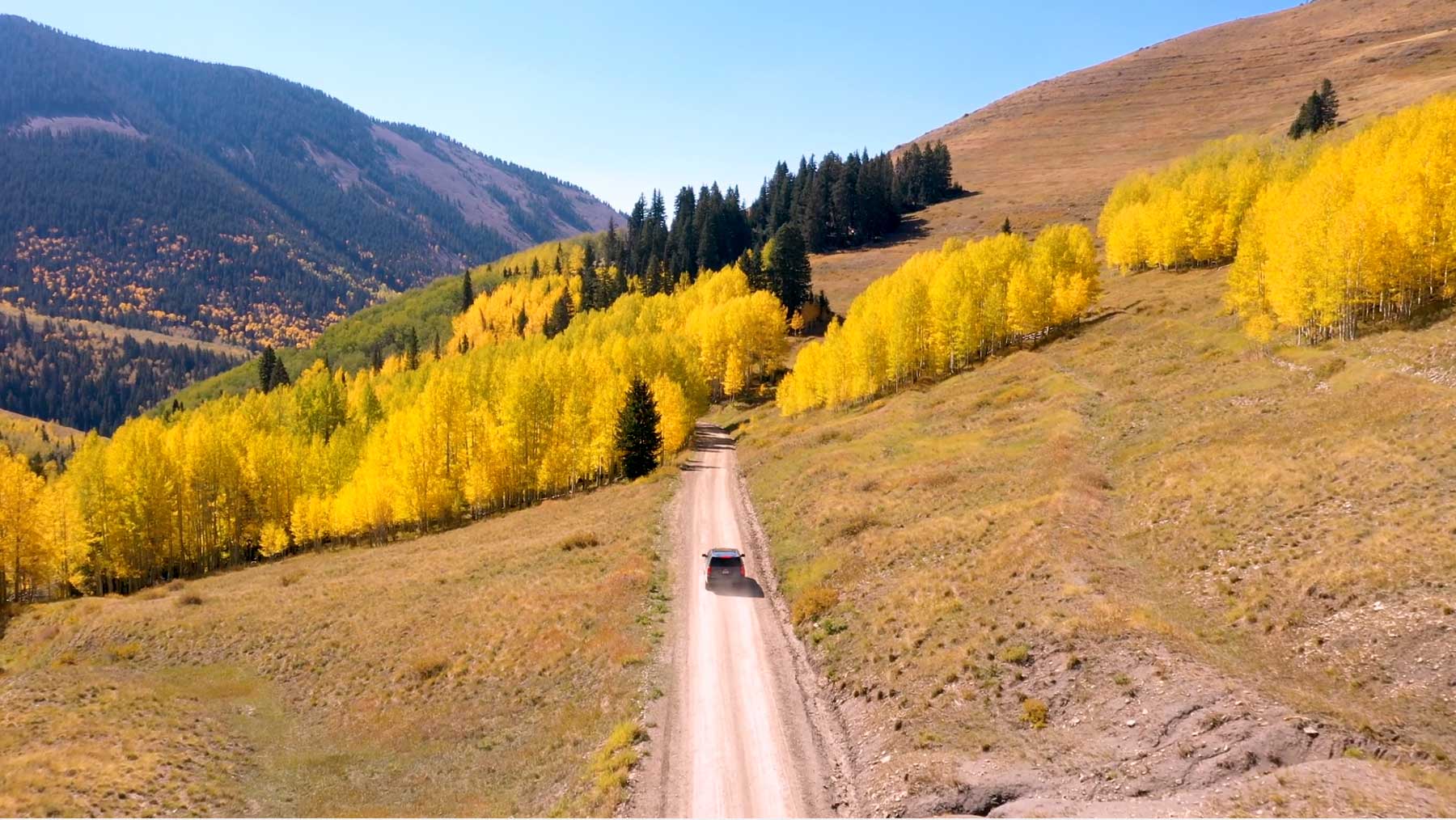
The photograph on this page: An unpaved national forest road climbing through autumn aspens. It’s the country this decision sits in, not the site itself. More Than Just Parks.
In court on this ground
This fight isn’t bound to a land unit in PLAN’s record yet, so there are no court cases to show for its ground.
Who holds the vote
PLAN’s record doesn’t tie a member of Congress to this fight yet. The scorecard grades the votes and bills that decide public lands; nothing joins a vote or a bill to this decision, so there’s no member to name here without guessing.
See how your members vote ↗Forest ServiceWe track this on the agency’s own system of record, where most on-the-ground decisions live.
Know an open comment period we are missing, or spotted a wrong deadline? .
More fights that need you
Go deeper, free
See how your members of Congress vote on public lands
Every representative, graded on the votes that decide the fate of parks, forests, and refuges.
Open ↗The mapSee the places under active threat
A live map of the parks, monuments, and wild country in the crosshairs right now.
Open ↗A wrong fact, a dead link, a form that wouldn’t take your letter: one tap and it comes to the people who build PLAN, with this fight attached.