
Stop logging in Ouachita's Fourche Lafave River Valley
Fourche Valley Project
U.S. Forest Service· Fourche Lafave River Valley, Ouachita National ForestU.S. Forest Service project page ↗
Forest ServiceWe track this on the agency’s own system of record, where most on-the-ground decisions live.
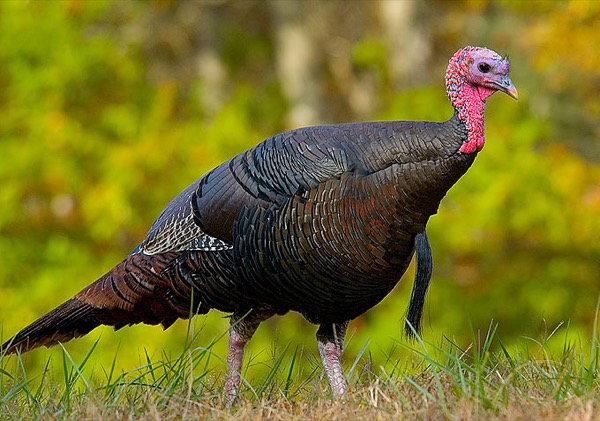
The Forest Service wants to log and alter habitat in the Fourche Lafave River Valley while bypassing normal public oversight.
What’s at risk
Trees, wildlife habitat, and public accountability in the Fourche Lafave River Valley are at stake. An Emergency Situation Determination strips away the standard pre-decisional objection process, limiting the public's ability to challenge the project before logging begins.
If this goes through
Vegetation across the Fourche Lafave River Valley will be logged and altered with no formal objection period, making it much harder to stop or reverse the damage.
Our plain-English read of the official notice ↗. Check it against the agency’s own words below.
3 holes in the agency’s own analysis
What the public could have raised, from the agency’s own document
- I oppose this action as proposed, and I ask the agency to weigh the specific harms below.
- The EA admits that the Big Blakely Creek-Lake Ouachita sub-watershed will be elevated from Low to Moderate watershed condition risk under the Proposed Action, and that even spreading implementation across five years still yields a Moderate risk. The document describes Moderate risk as characterized by 'persistent environmental effects which can change the hydrologic system with observable changes for as long as the causing action persists.' Yet the agency does not explain why this persistent, lasting impairment to beneficial uses does not rise to the level of significance requiring an EIS. The agency should prepare an EIS or provide a written significance determination that directly addresses why a persistent watershed condition change is not a significant effect under NEPA.
- The EA identifies only one issue for detailed analysis: herbicide safety. Forest policy requires analysis of alternatives to herbicide use, and the document notes this is why the No Herbicide alternative was developed. However, the No Herbicide alternative actually has a higher Revenue/Cost Ratio (2.91 versus 2.77) and lower costs than the Proposed Action, yet the agency selected the Proposed Action. The document never reconciles why the economically superior and lower-risk alternative was not chosen, stating only that manual release 'usually requires re-treatment.' That single unsupported assertion does not constitute a reasoned explanation for rejecting the cheaper, higher-ratio alternative. The agency should provide a written, reasoned explanation for selecting the Proposed Action over the No Herbicide alternative given the financial data in Table 3.1.
- The EA uses SERA risk assessments dated as far back as 2004 and 2011 to evaluate herbicide hazards, and relies on rat and bluegill as analogs for listed bat species, fish, and mussels. For triclopyr applied to bluegill the document itself states toxicity 'varies greatly with formulation' and 'appears to be somewhat toxic with great variation,' yet the EA draws a conclusion of low risk without disclosing which formulation was tested relative to the formulations proposed for use. The agency should identify the specific triclopyr formulation proposed for use in the project, confirm that the SERA data apply to that formulation, and update the risk assessment with any more recent data before relying on it to support a finding of no significant impact.
- Say something only you can say. The law requires the agency to consider and respond to substantive comments, and specifics are what make a comment substantive.
In the agency’s own words
The Ouachita National Forest (Ouachita) proposes to conduct vegetation management treatments on National Forest lands within the Fourche Lafave River Valley on the Jessieville-Winona-Fourche Ranger District. To comment, use this link: https://cara.fs2c.usda.gov/Public/CommentInput?project=324357
Did the agency answer?
The decision responded to 1 of the 3 issues raised on this record (1 only in part). 2 were not addressed.
Issues on the record, checked against the decision
- Partially respondedThe EA admits that the Big Blakely Creek-Lake Ouachita sub-watershed will be elevated from Low to Moderate watershed condition risk under the Proposed Action, and that even spreading implementation ac
The EA admits that the Big Blakely Creek-Lake Ouachita sub-watershed will be elevated from Low to Moderate watershed condition risk under the Proposed Action, and that even spreading implementation across five years still yields a Moderate risk. The document describes Moderate risk as characterized by 'persistent environmental effects which can change the hydrologic system with observable changes for as long as the causing action persists.' Yet the agency does not explain why this persistent, lasting impairment to beneficial uses does not rise to the level of significance requiring an EIS. The agency should prepare an EIS or provide a written significance determination that directly addresses why a persistent watershed condition change is not a significant effect under NEPA.
A hole PLAN found in the agency’s own analysis, quote verified against the document
“Soil and water impacts from the proposed action will be minor and localized, including temporary disturbance to soil structure or organic matter, small patches of high severity fire effects, short term erosion following heavy precipitation, and limited short term temperature changes in streams. These impacts will remain within Forest Plan thresholds”
The agency’s own words, Determination of No Significant Impacts · read by the harvest engine, excerpt verified against the document
- Not addressedThe EA identifies only one issue for detailed analysis: herbicide safety.
The EA identifies only one issue for detailed analysis: herbicide safety. Forest policy requires analysis of alternatives to herbicide use, and the document notes this is why the No Herbicide alternative was developed. However, the No Herbicide alternative actually has a higher Revenue/Cost Ratio (2.91 versus 2.77) and lower costs than the Proposed Action, yet the agency selected the Proposed Action. The document never reconciles why the economically superior and lower-risk alternative was not chosen, stating only that manual release 'usually requires re-treatment.' That single unsupported assertion does not constitute a reasoned explanation for rejecting the cheaper, higher-ratio alternative. The agency should provide a written, reasoned explanation for selecting the Proposed Action over the No Herbicide alternative given the financial data in Table 3.1.
A hole PLAN found in the agency’s own analysis, quote verified against the document
- Not addressedThe EA uses SERA risk assessments dated as far back as 2004 and 2011 to evaluate herbicide hazards, and relies on rat and bluegill as analogs for listed bat species, fish, and mussels.
The EA uses SERA risk assessments dated as far back as 2004 and 2011 to evaluate herbicide hazards, and relies on rat and bluegill as analogs for listed bat species, fish, and mussels. For triclopyr applied to bluegill the document itself states toxicity 'varies greatly with formulation' and 'appears to be somewhat toxic with great variation,' yet the EA draws a conclusion of low risk without disclosing which formulation was tested relative to the formulations proposed for use. The agency should identify the specific triclopyr formulation proposed for use in the project, confirm that the SERA data apply to that formulation, and update the risk assessment with any more recent data before relying on it to support a finding of no significant impact.
A hole PLAN found in the agency’s own analysis, quote verified against the document
The reporting behind this
From More Than Just ParksAfter more than a decade chasing peak color across America, we built the foliage map we always wanted.
Another foreign mining company wants a piece of America’s public lands. This one comes with millions of gallons of groundwater pumping and radioactive radon.
The administration went looking for a sliver of Yosemite for a private developer and finally convinced the rest of public-lands world that if Yosemite is negotiable, nothing is safe.
More actions that need you
Go deeper, free
See how your members of Congress vote on public lands
Every representative, graded on the votes that decide the fate of parks, forests, and refuges.
Open ↗The mapSee the places under active threat
A live map of the parks, monuments, and wild country in the crosshairs right now.
Open ↗A wrong fact, a dead link, a form that wouldn’t take your letter: one tap and it comes to the people who build PLAN, with this fight attached.
Know an open comment period we are missing, or spotted a wrong deadline? .