
Defend the rules for designated BLM wilderness
Policy Review: BLM Manual 6340, Management of Designated Wilderness Areas
Bureau of Land ManagementFederal Register 2026-11949 ↗
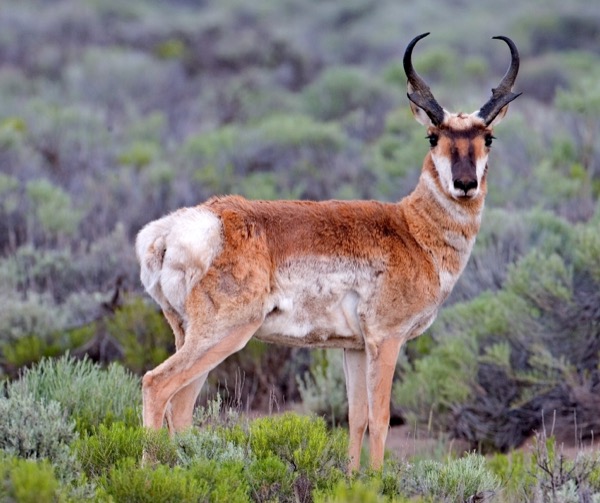
The BLM may rewrite internal rules that protect designated wilderness areas across the country.
What’s at risk
Every wilderness area managed by the Bureau of Land Management could be affected if the agency weakens or narrows how it interprets and enforces wilderness protections. The review reaches the whole manual: wilderness character, the section 4(c) limits on commercial and motorized use and structures, and the section 4(d) special provisions, not just the climbing sections that prompted it.
If this goes through
Revised rules could permanently lower the standard of protection for millions of acres of federally designated wilderness, and weaker internal policy is hard to reverse once it takes effect.
Our plain-English read of the official notice ↗. Check it against the agency’s own words below.
6 holes in the agency’s own analysis
What the public could have raised, from the agency’s own document
- I oppose this action as proposed, and I ask the agency to weigh the specific harms below.
- This review is not limited to climbing. Manual 6340 is the policy that implements the Wilderness Act on every BLM-managed wilderness area: preserving wilderness character; administering the "recreational, scenic, scientific, educational, conservation, and historical" public purposes; the section 4(c) limits on commercial enterprise, motorized equipment, structures, and installations; and the section 4(d) special provisions. Say which of those protections matter to the areas you know and ask the BLM to keep them at least as strong as the current manual.
- The notice asks an open question: whether "updates, clarifications, or other revisions to existing Manual 6340 may be appropriate." Ask the BLM to identify in the final policy every provision it changes from the current manual, and to explain each change against its duty to preserve wilderness character, so the revision cannot arrive as a quiet rewrite.
- The BLM proposes that fixed anchors for recreational rock climbing 'will not be considered installations' and thus exempt from minimum requirements analysis (New section 2.5D(6)), but this directly contradicts the stated purpose that structures must meet 'the minimum requirement to administer the area as wilderness' (Revised section 2.5A). The agency provides no reasoned explanation for why climbing anchors alone warrant categorical exemption from the MRA standard applied to all other structures. The BLM should provide detailed justification for this exception or prepare an Environmental Impact Statement analyzing the wilderness character impacts of allowing fixed anchor placement and maintenance.
- The revised guidance states that 'the occasional placement and maintenance of a fixed anchor for belay, rappel, or protection purposes will be allowed in wilderness, and does not violate the Wilderness Act or necessarily impair the future enjoyment of wilderness' (New section 2.5D(6)), but offers no analysis of cumulative impacts from repeated placement across multiple climbing areas or over time. The word 'necessarily' creates ambiguity about what level of impairment would actually violate the Wilderness Act. The BLM should clarify this standard and analyze how repeated anchor placement across all BLM wilderness areas affects wilderness character cumulatively.
Show all 8 points from the document
- The guidance requires that 'fixed anchors should be used as a last resort when temporary anchors and equipment, which can be placed and removed without altering the environment (clean climbing), is not viable' (New section 2.5D(6)), but contains no enforcement mechanism, monitoring protocol, or definition of when this 'last resort' standard has been satisfied. Without clear standards for implementation and verification, this policy directive cannot be enforced. The BLM should define objective criteria for determining when clean climbing is 'not viable' and specify monitoring and compliance procedures.
- The revised section 2.5A states that 'existing climbing routes established prior to January 4, 2025 (including fixed anchors along the routes) must be allowed to be used and maintained,' establishing a cutoff date with no explanation for its selection or rationale. This arbitrary date determination affects which climbing infrastructure receives permanent protection but is never justified. The BLM should explain how January 4, 2025 was selected, whether this date relates to specific statutory language or prior policy, and whether it reflects the date this guidance was drafted.
- Say something only you can say. The law requires the agency to consider and respond to substantive comments, and specifics are what make a comment substantive.
In the agency’s own words
The Bureau of Land Management (BLM) is seeking public comment on potential updates to BLM Manual 6340--Management of Designated Wilderness Areas and is interested in receiving information and recommendations regarding whether updates, clarifications, or other revisions to existing Manual 6340 may be appropriate.
The reporting behind this
From More Than Just ParksAfter more than a decade chasing peak color across America, we built the foliage map we always wanted.
Another foreign mining company wants a piece of America’s public lands. This one comes with millions of gallons of groundwater pumping and radioactive radon.
Five departments gutted their environmental review rules in one day, without taking comment on the rules that shrink your comment. More than a million Americans have objected since. Nothing has change
More actions that need you
Go deeper, free
See how your members of Congress vote on public lands
Every representative, graded on the votes that decide the fate of parks, forests, and refuges.
Open ↗The mapSee the places under active threat
A live map of the parks, monuments, and wild country in the crosshairs right now.
Open ↗A wrong fact, a dead link, a form that wouldn’t take your letter: one tap and it comes to the people who build PLAN, with this fight attached.
Know an open comment period we are missing, or spotted a wrong deadline? .