
Open for comment · closes November 22
Nebraska National Forests and Grasslands plan loses key protections
U.S. Forest Service · Nebraska National Forests and Grasslands, NE
- What
- The Forest Service wants to remove and rewrite rules that currently guide how Nebraska's public forests and grasslands are managed.
- Where
- Nebraska National Forests and Grasslands, NE
- How much
- Expected decision date: 4/2027 (Estimated). NEPA start date: 10/8/2026. Categorical exclusion cited: USDA-38d-USFS.
- By when
- Comments to U.S. Forest Service by November 22, 2026.Date from Forest Service CARA comment page ↗, read November 4, 2026.
What to ask forAll 4 points →
The agency should list every component to be edited or removed.
Where these four lines come from
- WhatOur plain-English read of the Forest Service project page ↗. Check it against the agency’s own words under Case.
- WhereThe places and states the project page names, as PLAN read them.
- 4/2027 (Estimated)“Project Decision Information Expected Decision Date: 4/2027 (Estimated) States: Nebraska; South Dakota; Wyoming” Project Decision Information Open the document ↗
- 10/8/2026“Milestone Date NEPA Start Date 10/8/2026 Finding/Decision Date” Project Milestones Open the document ↗
- USDA-38d-USFS“Expected Analysis Type: Categorical Exclusion Categorical Exclusion: USDA-38d-USFS Lead Management Unit: Nebraska National Forest” Project Overview Open the document ↗
- By whenNovember 22, 2026, from Forest Service CARA comment page, the notice text ↗: “requested through 11/22/2026 11:59:59 PM (Central Standard Time)”. Read November 4, 2026.
- Read from PLAN’s record November 13, 2026.
Two ways to be heard on this, and both count. Comment for the legal record, then call the members who answer to you.
Comment nowWhat to say
Make these points, in your own words
The notice proposes to amend 'multiple components' of the Land Management Plan, but it expects only a Categorical Exclusion (USDA-38d-USFS).Read the point +
It doesn't say which components are affected, and it doesn't explain why a plan-wide rewrite across three states and 14 counties has no significant effect. The agency should list every component to be edited or removed. It should show the CE applies to each one, or prepare an EA or EIS.
The notice justifies removals as 'duplicate information' or 'changed conditions across the landscape and ecosystems.'Read the point +
It names no duplicated component and no changed condition, and it cites no monitoring data. Without that, the public can't check that a removed component isn't a protection. The agency should publish a component-by-component table. The table should give the reason for each change and the data behind any claimed change in conditions.
The notice covers 14 counties in Nebraska, South Dakota and Wyoming.Read the point +
These include Oglala Lakota County and several national grasslands with differing ecosystems, grazing and recreation uses. A single CE can't show a site-specific look at each of them. The agency should explain how extraordinary circumstances were screened for each unit. If it can't, it should analyze them directly in an EA or EIS.
The notice points readers to a document widget that requires cookies and cross-site tracking permission.Read the point +
It prints no proposed amendment text and no comment deadline on the page. The public can't comment meaningfully on changes it can't easily read. The agency should post the proposed amendment text in plain accessible form and state a comment period with dates. If the CE route means no formal comment period, it should justify that choice and extend opportunities to comment.
Say something only you can say. The law requires the agency to consider and respond to substantive comments, and specifics are what make a comment substantive.
Affects public lands
The Forest Service wants to remove and rewrite rules that currently guide how Nebraska's public forests and grasslands are managed.
What’s at risk
If this goes through
Our plain-English read of the official notice ↗. Check it against the agency’s own words below.
By the numbers, from the agency’s own document
- Expected decision date
Project Decision Information
Open the document ↗“Project Decision Information Expected Decision Date: 4/2027 (Estimated) States: Nebraska; South Dakota; Wyoming”
- NEPA start date
Project Milestones
Open the document ↗“Milestone Date NEPA Start Date 10/8/2026 Finding/Decision Date”
- Categorical exclusion cited
Project Overview
Open the document ↗“Expected Analysis Type: Categorical Exclusion Categorical Exclusion: USDA-38d-USFS Lead Management Unit: Nebraska National Forest”
Source: the agency’s document ↗
Testing the agency’s case
What the agency argues, and whether its own record backs it
- 2
- Not backed yet
The Nebraska National Forests and Grasslands wants to amend several parts of its land management plan. It says it would edit or remove parts that either repeat other information in the plan or no longer fit because conditions on the landscape and in its ecosystems have changed.
“The Nebraska National Forests and Grasslands proposes to amend multiple components of it's Land Management Plan. Amendments would include edits and removal of components that are duplicate information in the plan or because of changed conditions across the landscape and ecosystems.”
Nebraska National Forests and Grasslands Plan Amendments 2026
Each Ask below goes into your letter when you write it with PLAN on this page, matched to what you tell it about how this land reaches you.
Purpose and needNot backed yetSome plan components would be edited or removed because they duplicate information elsewhere in the plan.
The notice says some components would be edited or removed because they duplicate information in the plan. It doesn't say which components or where the repeated information appears. The project documents it points to aren't in this text. Without that list, there's no way to check that each removed component is truly a duplicate.
AskList every component proposed for removal as a duplicate. Point to the plan wording that would remain for each one, and show that its direction is equally binding.
The agency’s words +Hide the words
The agency says
“Amendments would include edits and removal of components that are duplicate information in the plan or because of changed conditions across the landscape and ecosystems.”
Nebraska National Forests and Grasslands Plan Amendments 2026
ScienceNot backed yetConditions across the landscape and ecosystems have changed enough that some plan components should be edited or removed.
The notice gives changed conditions as a reason for the amendments. It doesn't name the conditions, where they changed across the units in Nebraska, South Dakota and Wyoming, or what data shows the change. It also doesn't say which components it would change for this reason.
AskIdentify each changed condition, the data and monitoring that show it, the places it applies, and which plan component each one would change or remove.
The agency’s words and the law +Hide the words
The agency says
“Amendments would include edits and removal of components that are duplicate information in the plan or because of changed conditions across the landscape and ecosystems.”
Nebraska National Forests and Grasslands Plan Amendments 2026
The law
“ensure the professional integrity, including scientific integrity, of the discussion and analysis in an environmental document; (E) make use of reliable data and resources in carrying out this chapter;” National Environmental Policy Act, 42 U.S.C. 4332(2)(D)-(E) ↗
How this was read
Read from the agency’s own notice ↗, the notice that opens this window; the full analysis comes later, so what it leaves unsupported is what to ask it to show. Every quote is checked word for word against it, a claim marked contradicted stands on a quote from the same document, and a second reading argued the agency’s side of every verdict before it was published. The verdicts are our reading; the quotes are the agency’s. A court can set aside agency action it finds “arbitrary, capricious, an abuse of discretion, or otherwise not in accordance with law” (5 U.S.C. 706(2)(A) ↗), which is why these gaps are worth putting in the record.
In the agency’s own words
The Nebraska National Forests and Grasslands proposes to amend multiple components of it's Land Management Plan. Amendments would include edits and removal of components that are duplicate information in the plan or because of changed conditions across the landscape and ecosystems.
Who signs it
The notice names no signer PLAN could read. PLAN names a decision-maker only when the document names one.
The ground
This fight isn’t bound to a map place in PLAN’s record yet. The notice names Nebraska National Forests and Grasslands (NE); none is a unit on the threatened lands map, so there’s no place page to open or watch.
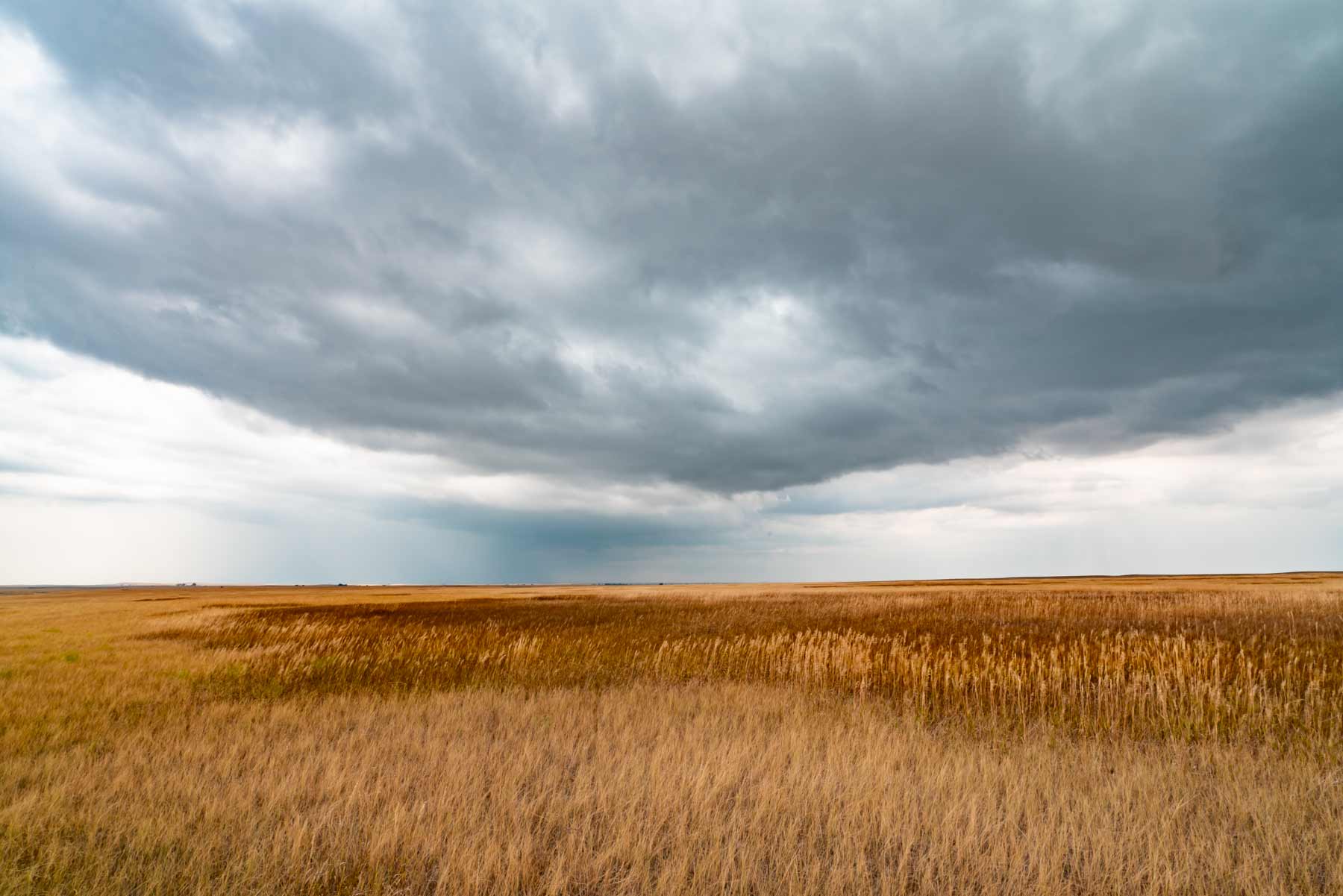
The photograph on this page: Storm over prairie grassland, Badlands country, South Dakota. More Than Just Parks.
In court on this ground
No court case we track is over Nebraska National Forest.
Who holds the vote
PLAN’s record doesn’t tie a member of Congress to this fight yet. The scorecard grades the votes and bills that decide public lands; nothing joins a vote or a bill to this decision, so there’s no member to name here without guessing.
See how your members vote ↗Calling your two senators and your representative is the Call door on this page.
Forest ServiceWe track this on the agency’s own system of record, where most on-the-ground decisions live.
Know an open comment period we are missing, or spotted a wrong deadline? .
More fights that need you
Go deeper for free
See how your members of Congress vote on public lands
Every representative, graded on the votes that decide the fate of parks, forests, and refuges.
Open ↗The mapSee the places under active threat
A live map of the parks, monuments, and wild country in the crosshairs right now.
Open ↗A wrong fact, a dead link, a form that wouldn’t take your letter: one tap and it comes to the people who build PLAN, with this fight attached.