

I’ll be straight with you, because most articles on this subject aren’t. Indianapolis sits in the middle of the state and the middle of the country, which means no national park is right next door. But the city is better positioned than most of the Midwest, because within a two to three hour drive you’ve got the only national park in Indiana, the launch point of the Lewis and Clark expedition, the boyhood farm that shaped Abraham Lincoln, and a Revolutionary War prize most Hoosiers have never heard of.
The catch is the famous out-of-state names. Mammoth Cave is three hours south in Kentucky, and Cuyahoga Valley is the better part of a day east in Ohio. Those are real trips, not afternoons, and we’ll say so.
So this list runs by honest drive time from Indianapolis, the genuine day trips first and the long hauls labeled as the overnights they are. The statewide picture is in our Indiana national parks guide.
National Parks Near Indianapolis at a Glance
| Site | Drive from Indianapolis | Type | 2026 fee | Time needed |
|---|---|---|---|---|
| George Rogers Clark National Historical Park | About 2 hours | Revolutionary War memorial | Free | 1 to 2 hours |
| Lewis and Clark National Historic Trail (Clarksville) | About 2 hours | National historic trail | Free | 2 to 3 hours |
| Lincoln Boyhood National Memorial | About 2.5 hours | National memorial | Free | Half day |
| Indiana Dunes National Park | 2.5 to 3 hours | National park | $25/vehicle | Full day to overnight |
| Charles Young Buffalo Soldiers National Monument | 2.5 to 3 hours | National monument (OH) | Free | 2 to 3 hours |
| Mammoth Cave National Park | About 3 hours | National park (KY) | Free entry; cave tours cost | Full day to overnight |
| Hopewell Culture National Historical Park | About 3.5 hours | Ancient earthworks (OH) | Free | Half day |
| Cuyahoga Valley National Park | 4.5 to 5 hours | National park (OH) | Free | Weekend |
1. George Rogers Clark National Historical Park
About 2 hours southwest in Vincennes. Free.
117 public lands destinations are under threat. Get the free briefing that 27,000+ people use to stay informed and take action.
The largest Revolutionary War memorial outside of Washington is in Indiana, and almost nobody knows it. In February 1779, George Rogers Clark led a small force of frontiersmen through the freezing flooded country of the Illinois territory to capture British-held Fort Sackville at Vincennes, a campaign that helped secure the entire Northwest Territory for the young United States. The granite memorial that marks the spot, with its seven interior murals telling the story, is a genuine piece of monumental architecture sitting quietly on the Wabash. Watch the visitor center film, walk the rotunda, and you’ll wonder why this isn’t taught in every Indiana classroom. It’s free and an easy two hours from the city.
2. Lewis and Clark National Historic Trail at the Falls of the Ohio
About 2 hours south in Clarksville. Free.
Here’s a correction worth celebrating. People assume the Lewis and Clark trail is a Missouri-and-westward story, but in 2019 the trail was officially extended east to include its true beginning, and that beginning is in Indiana. At the Falls of the Ohio in Clarksville, across the river from Louisville, William Clark met Meriwether Lewis in October 1803, and the Corps of Discovery launched from this stretch of the Ohio. The Falls of the Ohio State Park interpretive center sits on a 390-million-year-old fossil bed and tells the story, and you’re standing at the literal starting line of the expedition that mapped the West. Free, a couple of hours, and a much better Indiana connection than the trail usually gets credit for.

3. Lincoln Boyhood National Memorial
About 2.5 hours south near Lincoln City. Free.
Abraham Lincoln grew up in southern Indiana, not Illinois, spending the formative years from age seven to twenty-one on a farm in the Hoosier woods, and this memorial preserves that ground. His mother, Nancy Hanks Lincoln, is buried here, and a working pioneer homestead with costumed interpreters shows the hardscrabble life that shaped him. The visitor center’s carved memorial panels and the trail to the cabin site make for a reflective half-day. Note this is a National Memorial, not a national park, but it is one of the most affecting Lincoln sites anywhere, and it pairs naturally with adjacent Lincoln State Park if you want to stretch it into a full day.

4. Indiana Dunes National Park
2.5 to 3 hours north on Lake Michigan. $25 per vehicle.
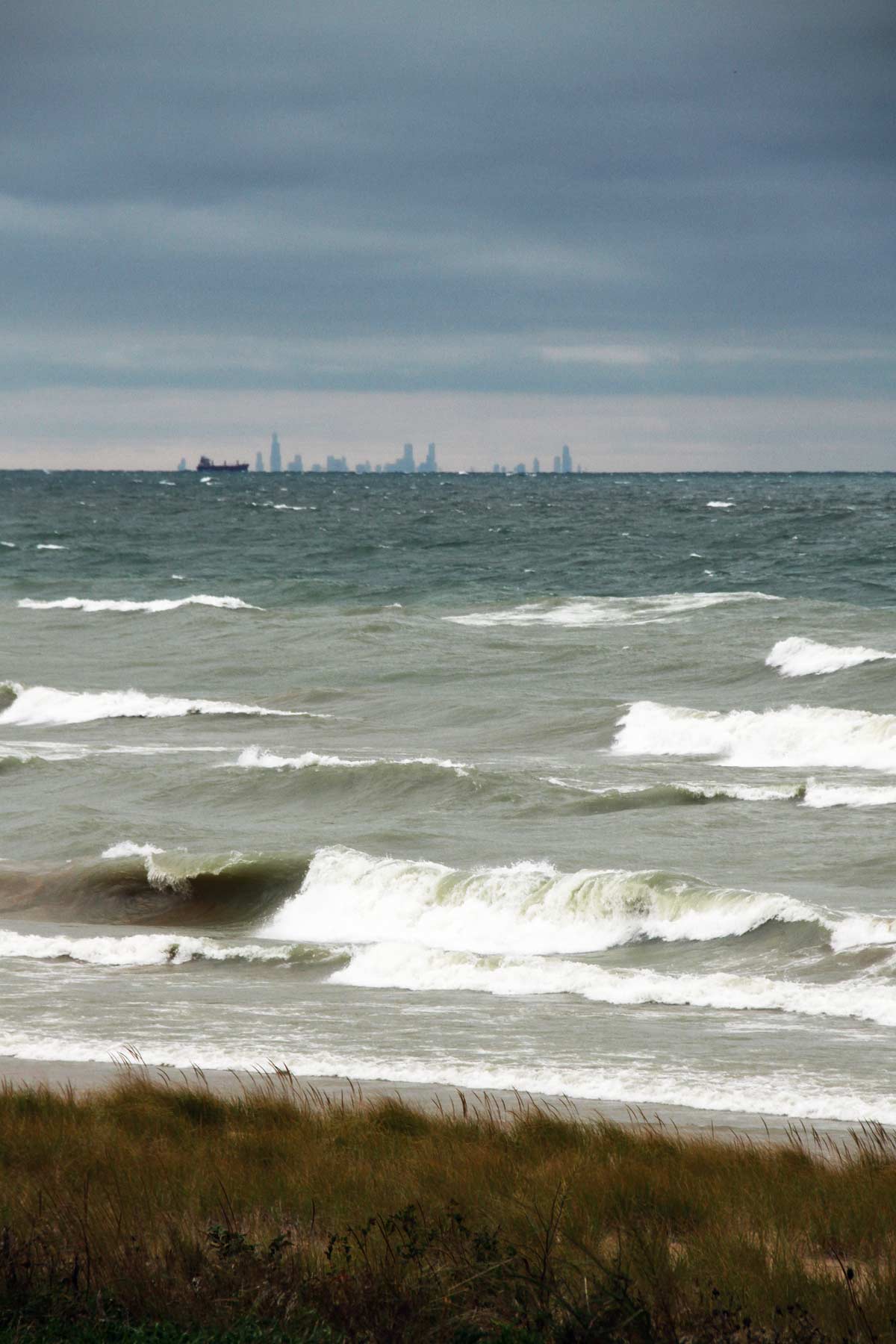
This is the one most people are actually looking for, the only full national park in Indiana, redesignated from a National Lakeshore to the country’s 61st national park in 2019. Fifteen miles of Lake Michigan shoreline back up into towering dunes, oak savanna, and wetlands so biologically diverse that the park ranks among the most species-rich in the entire system. Climb Mount Baldy or the dune-succession trail, swim off the beaches with the Chicago skyline floating on the horizon, and don’t confuse it with the adjacent Indiana Dunes State Park, which charges its own separate fee. The national park runs $25 per vehicle. Our Indiana Dunes facts cover the rest, and since it’s near Chicago, our national parks near Chicago guide overlaps.
5. Charles Young Buffalo Soldiers National Monument
2.5 to 3 hours east near Wilberforce, Ohio. Free.
This monument preserves the home of Colonel Charles Young, the third Black graduate of West Point and the first Black national park superintendent, who led troops protecting Sequoia and General Grant national parks in 1903. The house, called Youngsholm, tells the larger story of the Buffalo Soldiers, the Black Army regiments who served on the frontier and, in those early years, as some of the nation’s first park rangers. It’s a small site with limited hours, so check the schedule before you make the drive, but it’s a free and overlooked chapter of both military and national park history.
The Long Hauls: National Parks Worth a Road Trip
The next three are three to five hours out, in Kentucky and Ohio. All worth doing, none an honest day trip from Indianapolis. Plan an overnight and let each one breathe.
6. Mammoth Cave National Park
About 3 hours south in Kentucky. Free to enter; cave tours are ticketed.
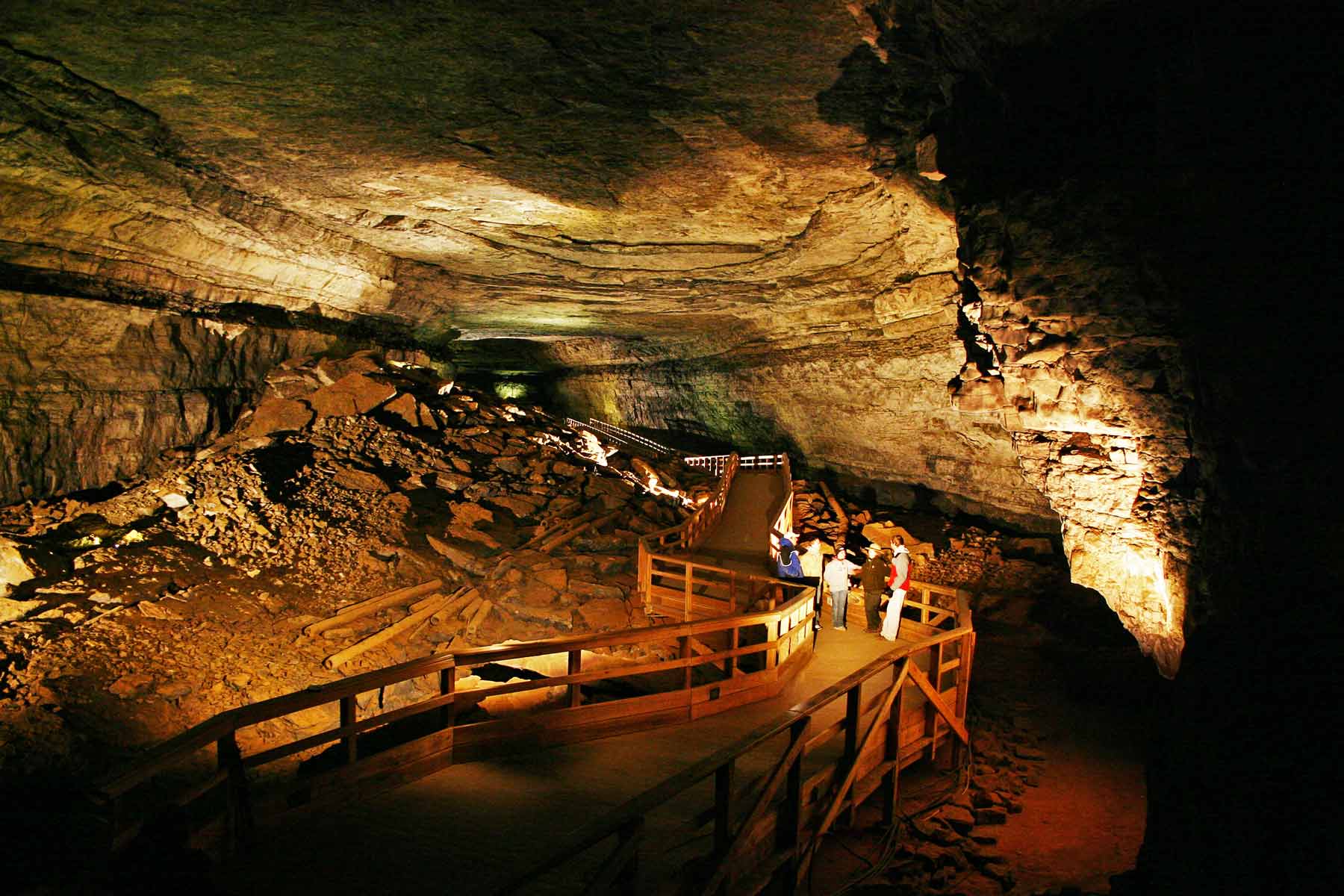
The longest cave system on Earth, with more than 400 mapped miles of passages and counting, sits about three hours south near Bowling Green. There’s no park entrance fee, but you can’t see the cave without a ranger-led tour, and those run from a gentle accessible walk to the strenuous Wild Cave crawl. Book ahead on Recreation.gov, because the popular tours sell out, especially in summer. Above ground the park has forest hiking and the Green River for paddling, which makes it an easy overnight rather than a long day. Our Mammoth Cave guide walks through the tour options.
7. Hopewell Culture National Historical Park
About 3.5 hours east near Chillicothe, Ohio. Free.
Two thousand years ago, the Hopewell people built enormous geometric earthworks across the Ohio Valley, mounds and walled enclosures aligned to the sun and moon with an engineering precision that still impresses surveyors. This park protects several of the finest, and in 2023 the Hopewell Ceremonial Earthworks were inscribed as a UNESCO World Heritage Site, putting them in the company of the pyramids and Stonehenge. The Mound City Group, a walled compound of burial mounds beside the Scioto River, is the centerpiece. It’s free, often nearly empty, and a quietly astonishing half-day for anyone willing to make the drive into southern Ohio.
8. Cuyahoga Valley National Park
4.5 to 5 hours east in Ohio. Free.
The only other national park within reach, Cuyahoga Valley runs along its namesake river between Cleveland and Akron, a green corridor of waterfalls, the historic Ohio and Erie Canal towpath, and a scenic railroad you can actually ride with your bike aboard. Brandywine Falls is the headliner, but the real pleasure is the towpath trail and the quiet farms and forests that the park has knit back together from old industrial land. It’s free, one of the most-visited parks in the country, and at nearly five hours out it’s firmly a weekend trip from Indianapolis, best paired with the Hopewell earthworks on the way over. Our Ohio national parks guide covers it in full.
More Things To Do Around Indianapolis
Right in the city, the Indiana War Memorial and the surrounding five-block memorial plaza make a free downtown stop, though it’s a state-run site rather than a National Park Service unit. For green space, Eagle Creek Park on the northwest side is one of the largest city parks in the country, and the Indiana Dunes trip pairs naturally with Chicago if you want a bigger weekend. Heading the other direction, our guides to Illinois national parks and Iowa national parks pick up the rest of the Midwest.
A Weekend Plan From Indianapolis
Three plans, in rising order of ambition.
- The southern Indiana history day. George Rogers Clark in Vincennes in the morning, then south to the Falls of the Ohio and the Lewis and Clark launch point near Louisville in the afternoon. Two free sites, two centuries of frontier history, one tank of gas.
- The Indiana Dunes day. Drive north early, hike the dune-succession trail or climb Mount Baldy, swim off Lake Michigan with Chicago on the horizon, and home by dark. The only national park in the state, and a genuinely full day at $25 a car.
- The Mammoth Cave overnight. Book a cave tour ahead, drive south Friday, do a long tour Saturday morning and the Green River or the surface trails after, and stay the night near the park. The longest cave on Earth is worth more than a rushed afternoon.