

Seen from Seattle, Mount Rainier looks serene enough for a postcard, and Washington has printed that postcard a million times. Up close, the story is wilder. The mountain is an active volcano carrying more glacier ice than any other peak in the contiguous United States, it once held the world record for snowfall in a single season, and its summit register includes generals, naturalists, honeymooners, and one Air Force pilot who really should have known better.
What follows are 14 verified facts about Mount Rainier National Park, the people who named and climbed the mountain, and the scientists who watch it around the clock. For trip planning, entrance passes, road openings, and the current reservation rules, start with our full Mount Rainier National Park guide, which we keep current so this article does not have to.
Tony Pattiz taught American history for more than 25 years before he began writing it for this site. Will and Jim have photographed Mount Rainier from the wildflower meadows at Paradise to its night skies, and the More Than Just Parks images in this article come from those trips. Every date, number, and name below has been checked against the National Park Service, the U.S. Geological Survey, and the other primary sources listed at the end of this article. Last verified July 2026.
Mount Rainier National Park Basics
- Location: The Cascade Range of west-central Washington, southeast of Seattle and Tacoma
- Size: 236,381 acres, 97 percent of it designated wilderness, per the NPS park FAQ
- Summit: 14,410 feet, the official NPS and USGS figure
- Established: March 2, 1899, America’s fifth national park
- Glaciers: 28 major glaciers covering about 30 square miles, per the park’s current inventory
- Visitation: 1,635,342 recreation visits in 2025, per NPS Stats
- Volcano status: One of the 16 Decade Volcanoes worldwide, singled out for close scientific study
1. People Have Lived With This Mountain For At Least 9,000 Years
Long before anyone thought to measure it, people were walking its meadows. Archaeologists at Mount Rainier study human use of the mountain spanning at least 9,000 years. Native peoples traveled its river valleys and subalpine meadows to hunt, gather berries, and collect medicinal plants, returning season after season for millennia.
Love Mount Rainier? It's one of 117 threatened public lands destinations we're tracking. Get the free briefing.
That relationship never ended. The National Park Service today recognizes six associated tribal nations, the Cowlitz Indian Tribe, the Muckleshoot Indian Tribe, the Nisqually Indian Tribe, the Puyallup Tribe of Indians, the Squaxin Island Tribe, and the Confederated Tribes and Bands of the Yakama Nation, whose ancestral homelands include the mountain. In the park’s own words, these lands have been home since time immemorial.

2. Its Older Name Is Tahoma
What did people call the mountain for those thousands of years? Not Rainier. The NPS lists Tahoma, Takhoma, Tacoma, and Ta-co-bet among the names used by the tribes associated with the mountain, and a Puyallup Tribe language consultant’s analysis, reported by Native News Online, counts some 20 distinct names for the peak across seven tribal languages, most of them Salishan in origin. Tahoma is often translated as mother of waters, a fitting name for a peak the NPS credits with spawning five major rivers.
The name refuses to fade. The city of Tacoma carries it, so does the Tahoma Glacier inside the park, and for decades Washingtonians fought to restore it to the mountain itself. Petitions to the U.S. Board on Geographic Names were denied in 1890, 1917, and 1921, and a renaming bill passed the Senate in 1924 only to die in the House. Rainier stuck, but plenty of Washingtonians still call the mountain Tahoma.
3. A British Captain Named It For A Friend Who Never Saw It
The mountain’s official name is an accident of friendship. In May 1792, Captain George Vancouver of the Royal Navy sailed into Puget Sound to chart the coastline, saw the great snowy cone on the horizon, and named it for his friend Rear Admiral Peter Rainier, a fellow officer who had fought against the American colonies in the Revolutionary War and who never laid eyes on the peak that bears his name. Vancouver recorded the moment in his expedition journal on May 8, 1792.
The round snowy mountain, now forming its southern extremity, and which, after my friend Rear Admiral Rainier, I distinguished by the name of Mount Rainier.
George Vancouver’s journal, May 8, 1792
Vancouver handed out names freely on that survey. Mount Baker and Mount Hood were likewise christened for British naval officers, none of whom ever stood beneath the mountains that carry their names.

4. It Became America’s Fifth National Park In 1899
Tourism found the mountain before Congress did. In 1883, a Yelm settler named James Longmire, coming down from his own summit climb, found a mineral spring in the forest at what is now Longmire and soon opened a hotel and spa beside it. Visitors followed, and so did the conservationists. John Muir, fresh off his own climb, put the Sierra Club behind the campaign for a park.
Congress obliged on March 2, 1899, once its members were assured the park would cost the government nothing, and Mount Rainier became the nation’s fifth national park, after Yellowstone, Sequoia, Yosemite, and General Grant. Today 97 percent of its 236,381 acres is congressionally designated wilderness.
5. The Official Summit Is 14,410 Feet, But The Mountain Is Getting Shorter
Mount Rainier is the highest peak in Washington and in the entire Cascade Range. The USGS and the National Park Service both list the official summit elevation at 14,410 feet.
The mountain itself has other ideas. In the summer of 2024, a survey team led by Seattle University engineering professor Eric Gilbertson carried precision GPS gear to the top and found that Columbia Crest, the icy dome long treated as the summit, had melted down 21.8 feet since it was last measured in 1998. The high point has shifted to bare rock on the southwest crater rim, at 14,399.6 feet. The official figure has not changed, but the ice that made Columbia Crest the top of Washington is going.
6. No Peak In The Lower 48 Carries More Glacier Ice
Rainier is the most glaciated peak in the contiguous United States, by the Park Service’s own description. The park counts 28 major glaciers, plus numerous unnamed snowfields, covering about 30 square miles of the mountain. The Emmons Glacier has the largest area of any glacier in the contiguous 48 states at 4.3 square miles, and the Carbon Glacier reaches the lowest terminus, ending at just 3,600 feet in a rainforest valley.
The ice is in retreat. In 2023 the park officially removed the Stevens Glacier from its inventory because the ice had stopped flowing, reclassifying it as a perennial snowfield, and park scientists have documented more than a century of shrinkage across the rest. You do not need a rope to see the survivors. Several major glaciers sit within reach of roadside viewpoints and short trails.

7. The First Recorded Ascent Ended With A Night On The Summit
In August 1870, Hazard Stevens and Philemon Beecher Van Trump made the first recorded climb of the mountain, after a guide named Sluiskin led them to a base camp near what is now Paradise. Stevens was a Civil War general who had received the Medal of Honor for the capture of Fort Huger in Virginia. The mountain tested him anyway. The two men reached the top too late in the day to descend and survived a brutal night at the summit.
We had spent eleven hours of unremitted toil in making the ascent, and, thoroughly fatigued, and chilled by the cold, bitter gale, we saw ourselves obliged to pass the night on the summit without shelter or food, except our meagre lunch.
Hazard Stevens, “The Ascent of Takhoma,” The Atlantic Monthly, 1876
The mountain still tests people. In a typical year about 10,000 climbers attempt the summit and just under half make it, according to the park’s annual climbing statistics, with weather, altitude, and crevasse hazard turning back the rest.
8. John Muir’s 1888 Climb Gave Camp Muir Its Name
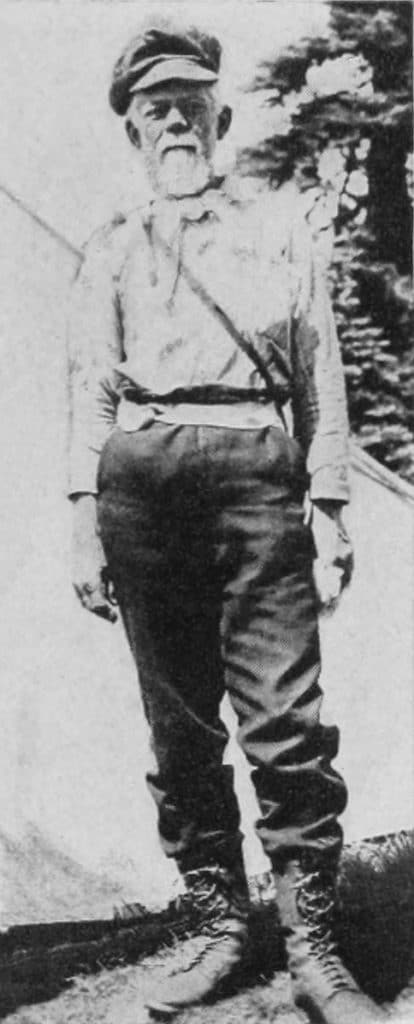
In August 1888, John Muir joined the party that made the sixth recorded ascent of the mountain, climbing alongside educator Edward S. Ingraham, the ever-present Van Trump, and photographer A.C. Warner, whose camera made the trip too. On the way up, Muir picked out a sheltered pumice ridge at about 10,188 feet as the place to spend the night before the summit push.
Ingraham named the spot Camp Muir in the naturalist’s honor, and it remains the standard high camp on the mountain’s most popular climbing route to this day. Muir repaid the mountain by throwing his weight, and the Sierra Club’s, behind the campaign that made it a national park eleven years later.
9. Paradise Once Held The World Record For Snowfall
Paradise, the subalpine meadowland at 5,400 feet on the mountain’s south side, receives on average 640 inches of snow a year, more than 53 feet. In the winter of 1971 to 1972 it recorded 1,122 inches, about 93.5 feet, which stood as the world record for measured snowfall in a single season for more than two decades.
The record finally fell close to home. In the winter of 1998 to 1999, the Mount Baker Ski Area, farther north in the same range, measured 1,140 inches, a total NOAA verified as the new world record in 1999. Paradise settled for second place on Earth, which is not a bad consolation prize for a place you can drive to.
10. More Than 260 Miles Of Trail Wind Through The Park
The park maintains over 260 miles of trails, running from old-growth river valleys up through subalpine wildflower meadows to the edge of the ice. Routes range from paved nature loops at Paradise and Sunrise to multi-day wilderness traverses.
The crown jewel is the Wonderland Trail, about 93 miles of tread that fully encircles the mountain with roughly 27,000 feet of elevation gain and the same again in loss. Hikers who complete the loop see every face of the volcano, and most call it one of the great long walks in the national park system.
11. The Park Shelters 65 Mammal Species And 182 Kinds Of Birds
Stack ecosystems from lowland forest to glacier and you get a lot of neighbors. By the park’s own count, Mount Rainier is home to 65 mammal species, 182 species of birds, 14 amphibians, 5 reptiles, and 14 species of native fish.
The easy ones to spot are Columbian black-tailed deer, Douglas squirrels, Steller’s jays, and ravens. Patience and a little luck can add black bears, elk, and mountain goats on the high slopes. The park is also working to restore Pacific fishers, forest carnivores that had vanished from the area, and it monitors northern spotted owls in its old growth.

12. A Pilot Landed A Plane On The Summit In 1951
File this one under things you could apparently do in 1951. On April 12 of that year, Lieutenant John W. Hodgkin, a 42-year-old pilot from McChord Air Force Base, fitted his Piper J-3 Cub with skis and set it down on top of Mount Rainier, a world record for a high-altitude landing at the time. Then the engine refused to restart in the thin air, and Hodgkin spent a below-zero night huddled in the cockpit.
He did not wait for rescue. The next morning he pushed the little plane to the edge of the Nisqually Glacier’s snowfields, jumped in as it gathered speed, and glided off the mountain without power, making a dead-stick landing on frozen Mowich Lake at the 5,000-foot level. With 20 gallons of gasoline dropped by an Air Force plane and a hand from a park ranger, he took off from the ice and flew home. For his trouble, he was charged in federal court with landing a private aircraft in a national park without permission and fined $350.

13. Walt Disney Honeymooned Here In 1925
On July 13, 1925, Walt Disney married Lillian Bounds at her brother’s home in Lewiston, Idaho, and the newlyweds headed for Mount Rainier and Seattle on their honeymoon. As the story goes, they took in the mountain quickly, because Walt had a tooth that needed pulling in Seattle.
A dental appointment cutting short a honeymoon at one of the most beautiful places in America is a rough beat. Walt managed. Mickey Mouse would not exist for another three years, and the studio that followed did fine.
14. It Is An Active Volcano Under Constant Watch
Beneath the ice, Mount Rainier is an active stratovolcano. The USGS reports that its last magmatic eruption came about 1,000 years ago, and an active thermal system still melts steam caves beneath the summit icecap. The agency rates the volcano’s threat potential as very high, and the International Association of Volcanology and Geochemistry of the Earth’s Interior named Rainier one of the world’s 16 Decade Volcanoes, the short list singled out for intensive study because of the combination of hazard and nearby population.
The chief danger is not lava. It is lahars, fast-moving slurries of water, rock, and debris that can race down river valleys like liquid concrete, in some scenarios without any eruption at all. About 80,000 people live and work in Mount Rainier’s lahar hazard zones, which is why the USGS and its partners operate a lahar detection system on the mountain’s flanks and why valley towns post evacuation routes.
None of this should keep you away. The odds of anything happening during a visit are vanishingly small, and the mountain is among the most closely monitored on Earth. Read the lahar signs, then enjoy the place.

What It Feels Like To Stand At Paradise
Facts only carry you so far, so here is what our cameras cannot fully capture. On a clear July morning at Paradise, the mountain does not sit on the horizon the way it does from Seattle. It fills the sky, close enough that you can trace individual crevasses without binoculars, and the meadows below it hum. Marmots whistle from the rocks, meltwater runs under the boardwalks, and the avalanche lilies come up through the edges of the receding snowbanks in lines, as if someone planted them. When a cloud deck breaks apart and the summit appears overhead, whole trailheads of strangers stop walking at the same moment. We have photographed a lot of remarkable places, and the wildflower weeks at Paradise are still the standard we measure the others against.
If you want that exact experience, our guide to Paradise at Mount Rainier covers the trails, the timing, and the honest logistics of the park’s most popular corner.
Where These Facts Come From
Every claim in this article was checked against the sources below in July 2026. Numbers that change over time, like glacier counts, visitation, and summit measurements, are stated with the year they were reported.
- NPS, Mount Rainier Frequently Asked Questions, for the establishment date, acreage, wilderness percentage, official elevation, and the 1971 to 1972 snowfall record
- NPS, Mount Rainier History and Culture and NPS, Associated Tribes of Mount Rainier, for the 9,000-year human record and the tribal nations
- NPS, Mount Rainier History, for the tribal names, Vancouver’s 1792 naming, the 1870 ascent, James Longmire, and the 1899 establishment
- Native News Online, reporting the Puyallup Tribe language analysis of the mountain’s roughly 20 names across seven tribal languages
- Mount Rainier, A Record of Exploration (1916), via Project Gutenberg, for the text of Vancouver’s journal entry
- USGS, Mount Rainier and USGS, Lahars and Debris Flows at Mount Rainier, for the volcano’s status, last eruption, threat rating, and lahar hazard figures
- Mount Rainier Elevation Survey 2024, Eric Gilbertson and team, for the 2024 summit re-measurement
- NPS, Mount Rainier Glaciers and NPS, Paradise-Stevens Glacier, for the glacier count, Emmons and Carbon superlatives, and the 2023 reclassification
- NPS, John Muir and His Efforts to Preserve Mount Rainier and NPS, Historic Camp Muir Area, for the 1888 climb and the naming of Camp Muir
- NPS, Annual Climbing Statistics, for summit attempts and success rates, and NPS, Annual Visitation, for the 2025 visitor count
- NPS, Annual Snowfall Totals, NPS, Paradise, and The Seattle Times, for Paradise snowfall figures and the Mount Baker record
- NPS, The Wonderland Trail and NPS, Day Hiking at Mount Rainier, for trail mileage
- NPS, Animals of Mount Rainier, for the wildlife species counts, and NPS, Mount Rainier National Park, for the most-glaciated and five-rivers descriptions
- HistoryLink.org, Mount Rainier National Park, for the Tacoma renaming petitions and the 1924 Senate bill
- HistoryLink.org, Daryl C. McClary, for the 1951 Hodgkin summit landing, and The Walt Disney Family Museum, for the 1925 honeymoon
Keep Exploring Mount Rainier
- Mount Rainier National Park Guide, our full trip planning hub, including passes and current reservation rules
- Best Things To Do In Mount Rainier National Park
- Washington’s National Parks, how Rainier stacks up against its neighbors
- Olympic National Park Facts, more history from Washington
- North Cascades National Park Facts
- Before you go, check live alerts and air quality on our national park conditions dashboard
What to Bring to Mount Rainier
Gear we recommend for Mount Rainier. Affiliate links support our work at no cost to you.
More Than Just Parks may earn a small commission from purchases made through these links, at no extra cost to you. We only recommend gear we would actually use.
Affiliate disclosure: Some links on this page earn us a small commission at no extra cost to you. We only recommend gear we actually use.


