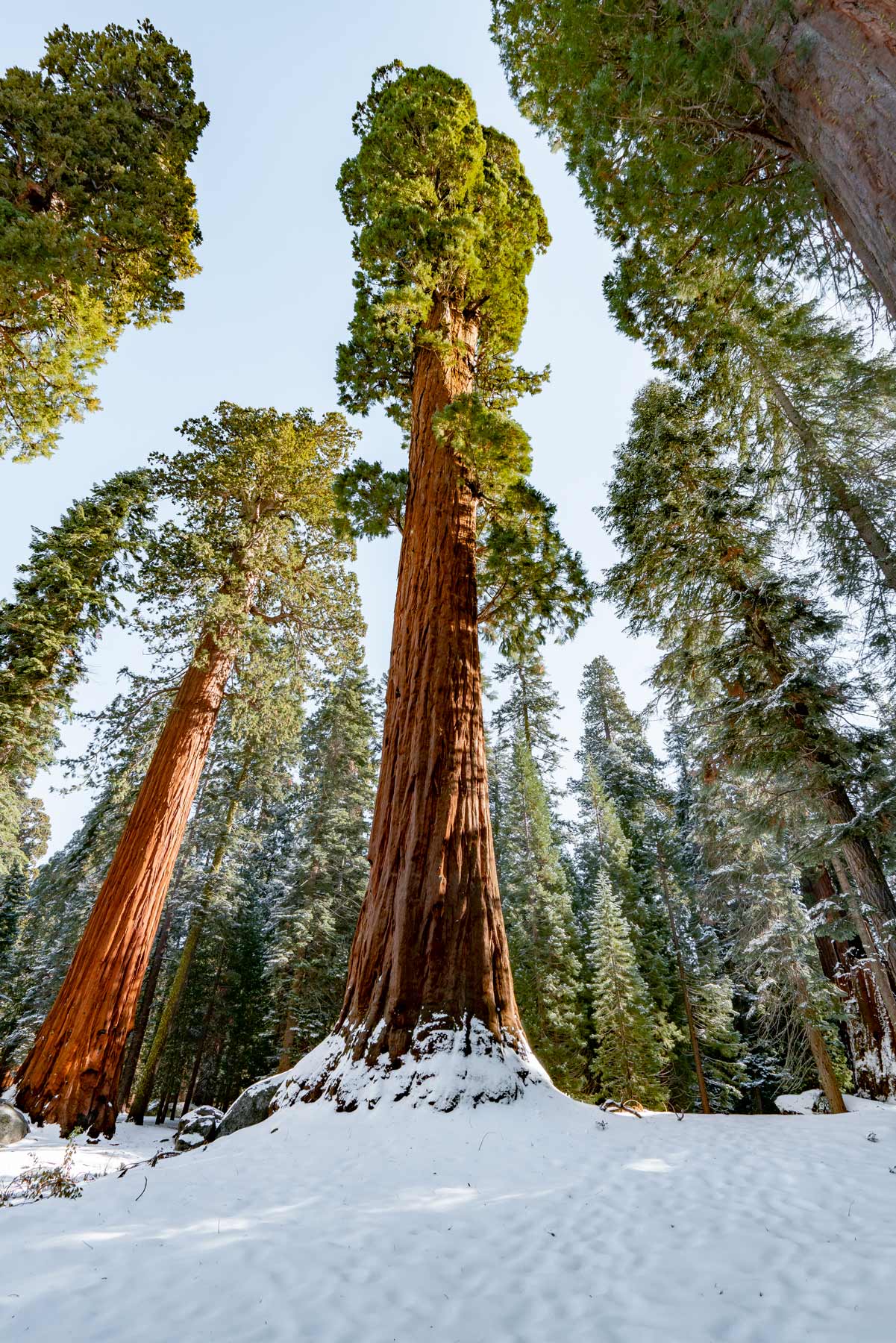


In the Giant Forest of Sequoia National Park stands the General Sherman Tree, the largest tree on Earth measured by the volume of its trunk. It is not the tallest tree in the world, that title belongs to the coast redwoods of Northern California, and it is not the oldest, but no single tree packs more wood into one living trunk than this giant sequoia.
This guide covers how big the tree really is, how to visit it, when to go, and the strange and interesting history behind its name.
How Big Is the General Sherman Tree?
The numbers are hard to picture until you stand at the base. The General Sherman Tree rises about 275 feet, with a circumference at the ground of roughly 103 feet and a base diameter of more than 36 feet. Some of its branches are nearly 7 feet thick, wider than many tree trunks. Its trunk holds an estimated 52,500 cubic feet of wood, which is what makes it the largest tree in the world by volume.
- Height: about 275 feet (274.9 ft)
- Base circumference: about 103 feet (102.6 ft)
- Base diameter: more than 36 feet
- Estimated age: roughly 2,200 to 2,700 years
- Estimated weight: well over 2 million pounds
- Species: giant sequoia (Sequoiadendron giganteum)
For scale, at roughly 275 feet the General Sherman is a little shorter than the Statue of Liberty including its pedestal, and considerably taller than a 26-story building.
117 public lands destinations are under threat. Get the free briefing that 27,000+ people use to stay informed and take action.

“No other tree combines such massiveness of trunk with such height…. Spruces and pines of majestic port standing around look like saplings.”
-Julia Ellen Rogers, The Tree Book, 1905
Visiting the General Sherman Tree
The tree sits in the Giant Forest, reached from the Wolverton Road area off the Generals Highway in Sequoia National Park. There are two main ways to walk to it.
- Main Trail (from the upper parking area): A paved path of about half a mile with stairs. The walk down to the tree is gentle, but remember the return is uphill at elevation, which catches some visitors off guard.
- General Sherman Tree Trail / Congress Trail: A roughly 1 to 3 mile loop option through the surrounding sequoia grove if you want more than the direct route.
An accessible parking area along the Generals Highway offers a shorter, flatter approach for visitors who need it. The trail passes through the Giant Forest grove, with exhibits explaining how these trees live and grow.

Know Before You Go
- Entrance fee: Sequoia and Kings Canyon charge a per-vehicle entrance fee. Confirm the current rate on the NPS site, or use an America the Beautiful pass.
- Fuel up first. There are no through roads and drive times inside the parks run long. Top off your tank before you enter.
- Cell service is spotty. Download maps before you arrive.
- Elevation. The Giant Forest sits around 6,000 to 7,000 feet. Take the uphill return slowly and bring water.
- Wildfire season. Late summer and fall carry real fire risk. Keep plans flexible and check current conditions and air quality before you go.
Best Time to Visit
Go early in the morning to beat the crowds, which build through the day at this very popular stop. Late summer through October usually brings mild weather. Winter is a quieter, beautiful option, when snow settles against the red-brown bark of the sequoias, though you should check road and chain requirements before driving up.
How the General Sherman Tree Got Its Name
The story usually told is that in 1879 a cattleman and trapper named James Wolverton came upon the tree and named it for General William Tecumseh Sherman, under whom he was said to have served during the Civil War. It is a tidy story, though it is worth noting that the name does not appear in the written record until years later. Historian William Tweed has pointed out that soldiers did not write down the name “General Sherman Tree” until 1897, when a sign was placed on the tree, and the Wolverton account was not published until a 1921 park guide, decades after the fact.

The Tree Was Once Named for Karl Marx
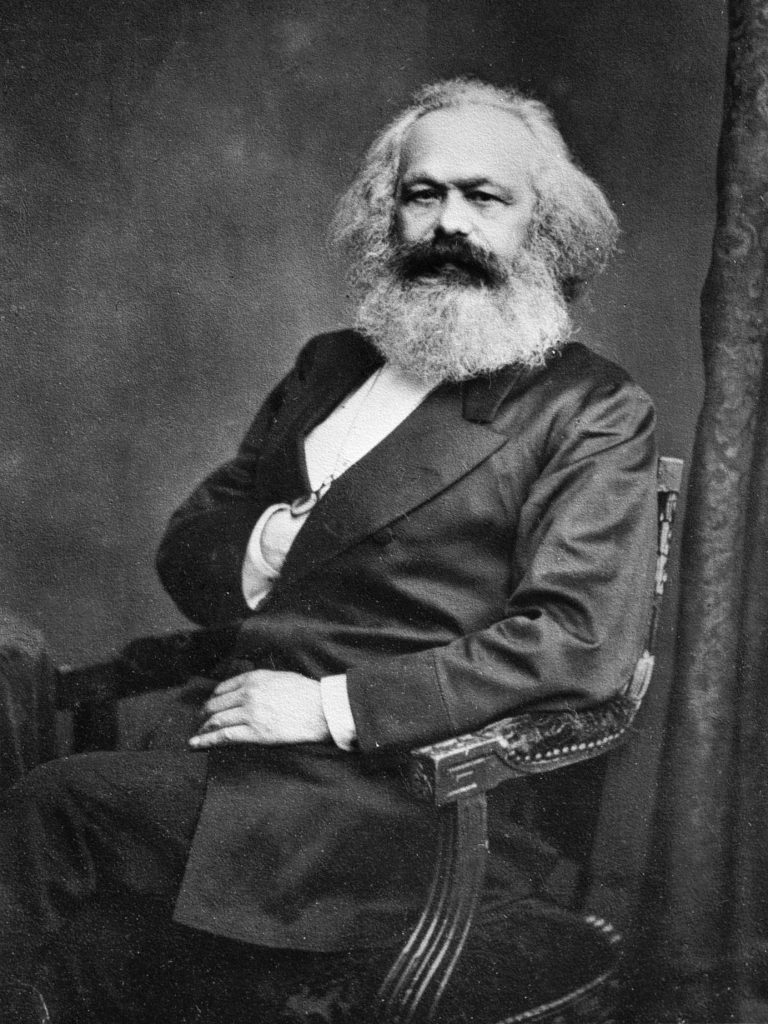
Here the history gets genuinely interesting. In the 1880s, a utopian socialist group called the Kaweah Colony settled in the area with plans to log the big trees. They gave this particular giant the name “Karl Marx Tree.” After Sequoia National Park was established in 1890, the colonists were eventually removed from the land. The Marx name fell away, and the General Sherman name is the one that stuck.
RELATED: The General Grant Tree in Kings Canyon, the second-largest tree in the world and the Nation’s Christmas Tree.
The Other Giants of the Sierra
General Sherman has company. Just down the road in Kings Canyon National Park stands the General Grant Tree, the second-largest tree in the world, roughly 267 feet tall and about 29 feet across at its base. A third giant sequoia, known as the President, ranks among the largest by volume and is estimated to be more than 3,000 years old.
How do these trees live so long? Their bark and wood are rich in tannins that resist fungal rot, insects, and low-intensity fire. In fact, giant sequoias depend on fire. The heat of a passing ground fire dries and opens their cones, releasing the tiny seeds onto bare, nutrient-rich soil where they can sprout. Fire suppression over the last century has actually made it harder for new sequoias to take hold.

“The sequoias belong to the silences of the millenniums. Many of them have seen a hundred human generations rise, give off their little clamors and perish.”
-Edwin Markham
A Park Built to Protect a Tree
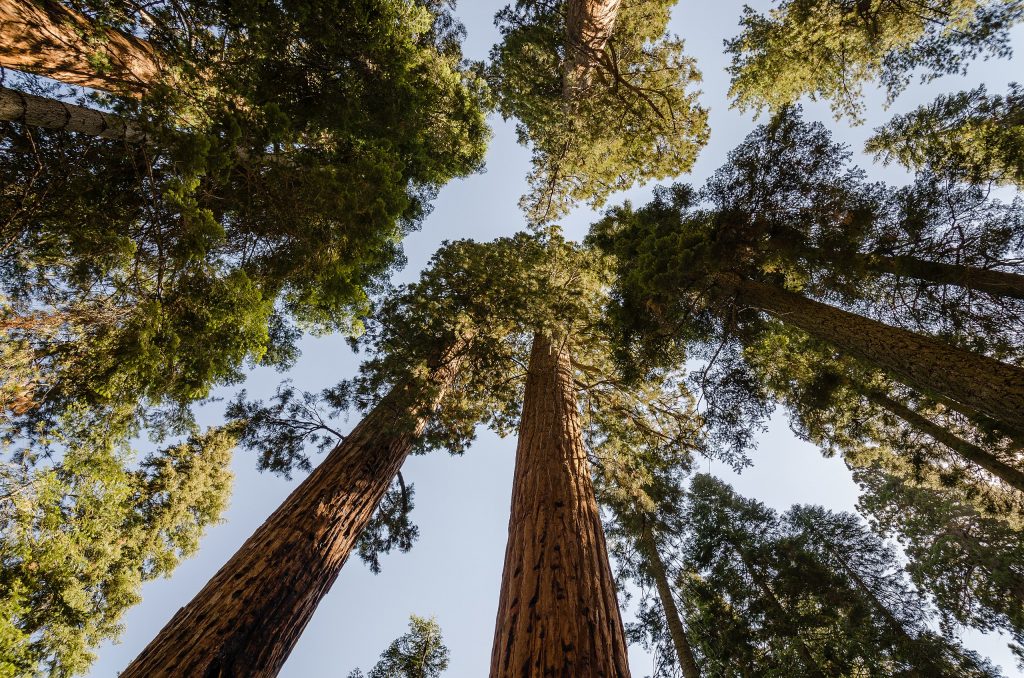
Sequoia, established in 1890, was the second national park in the United States after Yellowstone, and it was created in large part to protect the giant sequoias from logging. Giant sequoias grow naturally only on the western slope of the Sierra Nevada, generally between about 5,000 and 8,000 feet, where the climate suits them.
The park is more than big trees. Its eastern boundary reaches Mount Whitney, which at 14,505 feet is the highest peak in the contiguous United States. Together, Sequoia and Kings Canyon protect a vast backcountry laced with hundreds of miles of trails, including a stretch of the John Muir Trail, which runs about 210 miles from Yosemite Valley to the summit of Mount Whitney.

“In every walk with nature one receives far more than he seeks.”
-John Muir
When Wildfire Came to the Giant Forest
In 2021, the KNP Complex Fire burned through parts of Sequoia National Park and threatened the Giant Forest. In a striking precaution, firefighters wrapped the base of the General Sherman Tree and several other landmark sequoias in fire-resistant foil to shield them from the flames. The Giant Forest came through, but the fire was a sharp reminder that even 2,000-year-old trees are not immune to the larger, hotter wildfires of a changing climate.
“There is nothing so American as our national parks…. The fundamental idea behind the parks is that the country belongs to the people.”
-President Franklin D. Roosevelt
Helpful Related Articles
Sequoia National Park Guide: Sequoia National Park
Sequoia Facts: Sequoia National Park Facts
General Grant Tree: General Grant Tree, the second-largest tree in the world
Kings Canyon: Things to Do in Kings Canyon National Park
California National Parks: Best California National Parks to Visit
About the People Behind More Than Just Parks
I don’t just make this stuff up out of thin air. My sons have spent their entire adult lives exploring and filming America’s national parks and public lands.

They’ve worked with the National Park Service, the Department of the Interior, and the U.S. Forest Service for years creating films on important places and issues.
As for me, I’m a retired lifelong educator and a proud dad of these two guys who are hopelessly obsessed with the national parks. I’m always on the hunt for topics where nature and history intersect, so please feel free to share any ideas you might have with me.
My sons Jim Pattiz and Will Pattiz, collectively known as the Pattiz Brothers, are the filmmakers behind More Than Just Parks, and our whole family loves the national parks.


