

Capitol Reef National Park facts. Below are 12 facts about one of Utah’s most striking national parks, each checked against the record. For trip planning, start with our Capitol Reef National Park guide.
More Than Just Parks is your one-stop-shop for learning everything you’ll need to know about America’s national parks. We’ve got expert guides, beautiful photos, helpful tips, and so much more.
I’ve been to so many of these places since retiring from teaching in 2018. Did I mention that I taught history? I spent a lifetime teaching about the history behind some of these natural wonders. Then I got to see them firsthand.
And now I’m sharing some of the great stories about these beautiful places with you. It doesn’t get any better than that!
Love Capitol Reef? It's one of 117 threatened public lands destinations we're tracking. Get the free briefing.
More Than Just Parks takes a deeper dive with its national park facts. We’ve done our homework so that you’ll get more than you bargained for.
let’s get started.

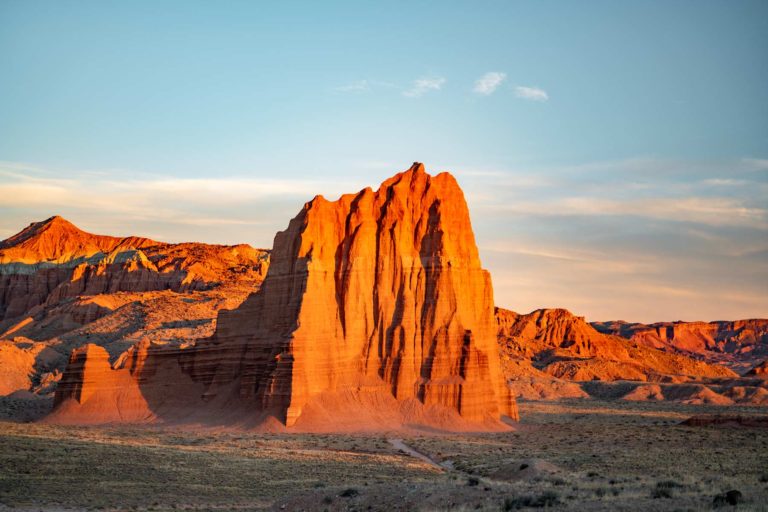
Capitol Reef National Park is a national park located in the state of Utah. The park covers an area of 241,904 acres and is known for its red rock cliffs, unique geological formations, and deep cultural history.
One of the main attractions of Capitol Reef National Park is its landscape of towering red rock cliffs, deep canyons, and a variety of geological features. The park is also home to a number of hiking trails, offering the opportunity to explore the park’s unique and varied terrain.
In addition to its natural beauty, the park is also home to a number of cultural and historical sites, including the historic Fruita Rural Historic District and the visitor center, which offers exhibits and programs about the park’s natural and cultural history.
Capitol Reef National Park is worth the trip for nature lovers and park lovers, offering a unique and experience you won’t forget in one of the most dramatic and rugged landscapes in the United States.

Here Are Some Basic Facts About Capitol Reef
- Location: Utah
- Acreage: The park, which occupies 378 square miles
- Visitation: 1.4 million visitors in 2021
- Highest Elevation: 8,960 feet near Billings Pass
- Lowest Elevation: Hall’s Creek at 3,877 feet
- Average Annual Precipitation: The Park has an arid climate with precipitation averaging 7.91 inches
- When Did It Become A National Park? An Act to Establish the Capitol Reef National Park in the State of Utah, became Public Law 92-207 when it was signed by President Richard Nixon on December 18, 1971
14 Utah National Parks & Monuments To Visit
1. Capitol Reef Has Been A Homeland To People For Thousands Of Years
If you’re interested in origin stories then one of the most interesting Capitol Reef National Park Facts is that Capitol Reef has been a homeland to people for thousands of years.
Archaic hunters and gatherers migrated through the canyons.
The Fremont Culture solidified around 500 CE (Common Era), from food foraging groups, to farmers of corn, beans and squash.
Petroglyphs etched in rock walls and painted pictographs remain as sacred remnants of this ancient saga.

2. The Earliest European Explorers Of The Region Were Franciscan Friars
When I research and write these articles about these places, I often find myself amazed at the stories of those who first explored them.
For me, one of the most intriguing of the Capitol Reef National Park Facts involves two intrepid explorers. The first recorded travels in the general vicinity of the park were conducted under the leadership of Franciscan friars Atanasio Dominguez and Velez de Escalante in 1775-76.
The expedition led by John Wesley Powell was not the only one organized in Santa Fe, New Mexico, with the goal of finding a northern route to the newly established missions in Monterrey, CA, but also another expedition lead by Franciscan friars Atanasio Domínguez and Silvestre Vélez de Escalante in 1776.
This expedition encountered rough country, bad weather, and overwhelming isolation, which compelled the friars and their party to abandon their journey and head back to New Mexico across the jagged, southern edge of the Colorado Plateau.
Despite the setback, the expedition was not a failure as the friars recorded valuable information about the tribes, geography, and natural resources of the region, which would prove to be invaluable for future explorers, settlers, and scientists.

“Starving & Exhausted“
The Dominguez-Escalante Expedition of 1776, led by Franciscan friars Atanasio Domínguez and Silvestre Vélez de Escalante, encountered many difficulties during their journey, including rough terrain, bad weather, and isolation.
When they reached the Colorado River, they were unable to cross the swift, deep water at the location that is now known as Lee’s Ferry. Starving and exhausted, they struggled northward.
The closest they came to Capitol Reef National Park was a spot between Gunsight and Dominguez Buttes, just north of the Arizona state line and about 50 miles southwest of the park’s southern boundary. There, at the Crossing of the Fathers, they were finally able to ford the river on November 7, 1776.
Escalante recorded that his party of 13 celebrated by praising God and firing off muskets as a sign of their joy at having overcome such a difficult obstacle.
Despite the challenges, the expedition was not a failure as the friars recorded valuable information about the tribes, geography, and natural resources of the region, which would prove to be invaluable for future explorers, settlers, and scientists.

Facts About Acadia National Park
3. John Fremont Came To The Area In 1854
Famed explorer John C. Fremont passed through Utah and Colorado, attempting to find a northern railroad route to the Pacific Ocean.
The expedition was difficult and the explorers were forced to eat their horses before stumbling upon a Mormon settlement.
Fremont passed through Cathedral Valley, but did not come to the area where the main part of the park now exists.
He wrote that the area was visited by nomadic bands of Utes and southern Paiutes, but Fremont did not find evidence of a permanent settlement.

The Pathfinder
Fremont was an American explorer, military officer, and politician. He was a U.S. Senator from California, and, in 1856, was the first Republican nominee for president of the United States and founder of the California Republican Party when he was nominated.
Through his explorations in the West, he stimulated the American desire to own that region.
In 1843, Frémont headed an expedition that explored South Pass, the Columbia River, and the Oregon country, returning by way of Sutter’s Fort in Mexican California.
In 1845, President Polk sent Frémont and soldiers–with Kit Carson as their guide–to California.
Fremont went on to map most of the Oregon Trail and climbed the second highest peak in the Wind River Mountains.
During the 1840s, that era’s press accorded Frémont the epithet “The Pathfinder.”
Oregon National Parks & Monuments To Visit
4. The Earliest Settlers Of Capitol Reef Were Mormon Pioneers
Another of the extraordinary Capitol Reef National Park Facts is that among the earliest settlers of the area which would become the park were the Mormons
The Church of Jesus Christ of Latter-day Saints, in Salt Lake City, established missions in the most remote areas of the intermountain west in the 1860s.
In the 1870s, settlers moved into these valleys, eventually establishing communities along the life-sustaining Fremont River including Loa, Fremont, Lyman, Bicknell, and Torrey.
In 1880, Nels Johnson moved into Capitol Reef country and staked his homestead in Fruita.
Johnson and other settlers to this area recognized the abundance and accessibility of water and heat that reflected off canyon walls to the soil.
Facts About Arches National Park
5. In 1869 The First Known Successful Rafting Expedition In Wood Boats Was Led By John Wesley Powell
The man whose claim to fame was leading the first successful expedition down the Grand Canyon and the Colorado River, John Wesley Powell, also explored the Capitol Reef region.
It’s one of my favorite Capitol Reef facts because that 1,000-mile, three-month adventure, officially called the Powell Geographic Expedition, explored one of the last uncharted regions of the United States.
Powell’s most direct contribution to Capitol Reef is his documentation of a river that empties into the Colorado between Cataract and Glen Canyons, draining the northern Waterpocket Fold country.

Geologist Explore The Capitol Reef Region
During the late 19th century, the Capitol Reef region was explored by a number of scientists and explorers, including geologists Clarence Dutton, Grove Karl Gilbert, and topographer Almon Thompson, who were part of the Powell Expeditions.
During the 1871-1872 expedition, Thompson named the large geologic monocline “Waterpocket Fold” because of the many waterpockets, which are depressions in the Navajo Sandstone that collect and hold water.
The Waterpocket Fold is a 100-mile long wrinkle in the earth’s crust that forms the backbone of the park. This geologic feature is the main reason for the creation of the Capitol Reef National Park.

Grand Canyon Facts
John Wesley Powell
John Wesley Powell remains one of the most legendary characters to pass through the pages of history.
Powell was an adventurer from a very early age. At 21, he walked across the state of Wisconsin. The next year, he rowed the entire Mississippi River. Later he made trips down the Ohio and Illinois Rivers.
Even before his historic, early whitewater run through the entire Grand Canyon, Powell had already led a full life.
During the Civil War, he commanded a Union artillery regiment and lost his right arm after being wounded in the Battle of Shiloh.
After his daring explorations, Powell went on to become the Director of the U.S. Geological Survey.

10 Civil War Sites In America
Top 10 Capitol Reef Facts
6. Two Businessmen Were Instrumental In Making Capitol Reef A National Park
According to the National Park Service, as early as 1914, entrepreneur Ephraim Portman Pectol and his brother-in-law, Joseph S. Hickman, worked to protect the Capitol Reef area, first as a state park, and later as a national monument.
Pectol and Hickman valued the natural and cultural resources they found as they explored the Waterpocket Fold, and wanted to share these wonders with other people.
They worked to gather support for the creation of a national park, but their efforts were halted when Joseph Hickman drowned in Fish Lake.
Despite this setback, the idea of a national park in the area continued to gain support and eventually led to the creation of Capitol Reef National Monument in 1937 and the park in 1971.
Pectol Presses Ahead
In 1932, Pectol was elected to the Utah legislature. He wrote to the National Park Service (NPS) Director Horace Albright urging him to make the area a national monument or a national park.
Yellowstone National Park’s Superintendent, Roger Toll, was dispatched to Utah to visit the area.
Toll agreed with Pectol and, in 1937, President Franklin D. Roosevelt set aside 37,711 acres as Capitol Reef National Monument.
Facts About Badlands National Park
7. Capitol Reef Was Originally To Be Named “Wayne Wonderland”
Perhaps the least known of our Capitol Reef National Park Facts is that, long before Capitol Reef was designated as a national monument, the Utah Legislature had created a Board of State Park Commissioners whose goal was to establish new state parks including one named “Wayne Wonderland State Park.”
That’s right! Capitol Reef almost became Wayne’s Wonderland instead.
In 1935, two years before it became a national monument, national and state officials went back and forth on Capitol Reef’s proposed boundaries.
While some wanted to name the monument “Wayne Wonderland,” Ephraim Pectol and Roger Toll thought that the name was inappropriate because it suggested a much more locally focused area.
It was Pectol and Toll who thought that it should be named Capitol Reef.

Why Capitol Reef?
Why did they come up with that name you might ask?
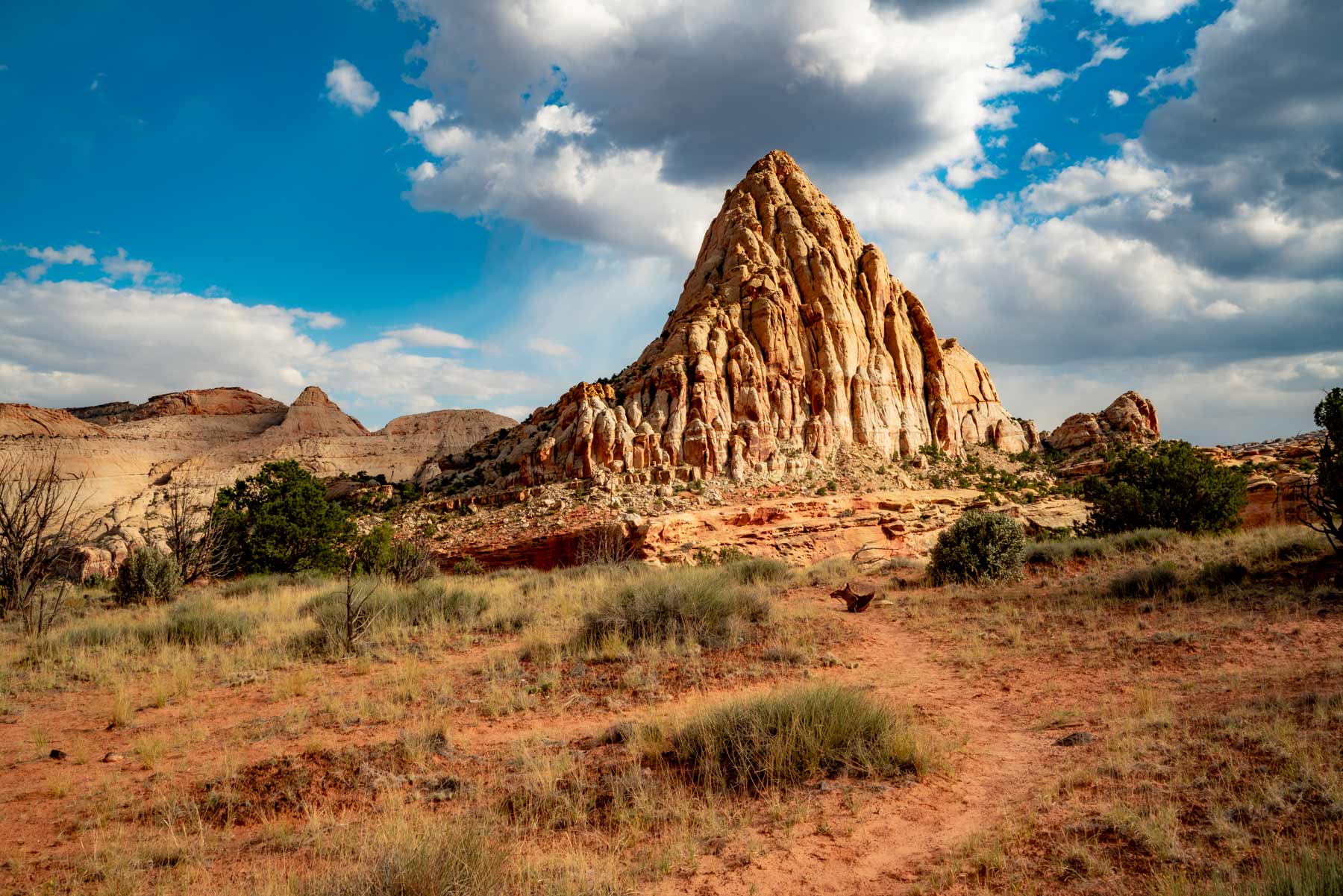
Early settlers had first noted that the white domes of Navajo Sandstone resemble the dome of the Capitol building in Washington, DC.
In recognition of its unusual geography, Pectol and Toll thought “Capitol Reef” would be the perfect name for the new national monument.
25 Famous Landmarks In America
8. Capitol Reef Is Home To A Natural Bridge
Visitors are drawn to Arches National Park because of its geologic formations, which include more than 2,000 natural stone arches.
Another of the most interesting yet little known Capitol Reef National Park Facts is that Capitol Reef has its own natural bridge too.
Hickman Bridge is a natural bridge that’s 125 feet tall at its highest points.
The hike to this arch is one of the most popular in the park.

Facts About Arches National Park
9. 58 Species Of Mammals Have Been Documented Living In The Park
Another of the extraordinary Capitol Reef National Park Facts is that, according to the National Park Service, fifty-eight mammal species have been documented in the park.
This includes nineteen species of bats; other small mammals such as mice, woodrats, chipmunks; and large mammals such as deer, coyotes, and cougars.
A complete Wildlife Checklist can be downloaded.
Among the more popular species to watch are the following:
- Desert Bighorn Sheep which can be seen in areas south and east of Fruita including Grand Wash and Capitol Gorge.
- Mule Deer which are also are common residents in the Fruita area.
- Mountain Lion have been reported from various areas in Capitol Reef including Fruita where it preys upon mule deer and other mammals.
- Ringtail which have been observed in the Fruita and Pleasant Creek areas of Capitol Reef.
List of U.S. National Monuments (Ranked)
10. More Than 230 Species Of Birds Have Been Documented In Capitol Reef
According to the National Park Service, more than 230 bird species have been documented in Capitol Reef National Park. Some species are seasonal residents, others pass through during migration, and a few make this their home year-round.
The park’s varied habitats, including riparian areas, wetlands, deserts, and forests, support a diverse array of bird life. Popular locations for bird watching in the Fruita area include the Fremont River Trail that passes by the campground and orchards, the trees around the Ripple Rock Nature Center, the picnic area, and the riparian vegetation along Sulphur Creek.
Some of the notable species of birds found in the park include the Peregrine Falcon, the Canyon Wren, and the White-throated Swift.
Among the more popular species to watch are the following:
- Ravens which are typically seen alone or in pairs, except at food sources where they may form groups.
- Peregrine Falcons which are rare in the park but at times are seen nesting on cliff ledges.
- Golden Eagles which are typically found in open country, especially in mountainous or hilly terrain.
- Pinyon Jays which are found in pinyon-juniper woodlands throughout much of the western U.S., including Utah.
- Mexican Spotted Owls which inhabit deep narrow canyons within the park where it is a rare, permanent resident.

11. Capitol Reef Is An International Dark Sky Park
One of my favorite Capitol Reef facts involves the night sky. Dozens of national parks have earned designations as International Dark Sky Parks and Sanctuaries.
In 2015, Capitol Reef was designated an International Dark Sky Park.
These distinctions recognize “an exceptional or distinguished quality of starry nights and a nocturnal environment that is specifically protected for its scientific, natural, educational, cultural heritage, and/or public enjoyment,” according to the International Dark-Sky Association.
Capitol Reef offers many opportunities to experience near-pristine night skies. In fact, it has some of the best night sky viewing opportunities of the western national parks.

CHECK OUT: Helpful List Of U.S. National Parks By State (And Printable Map)
How many times do remember your parents telling you, “Look, but don’t touch.”
12. At Capitol Reef, You Can Pick The Fruit In The Historic Orchards
Believe it or not, at Capitol Reef you can actually pick the fruit in the Fruita Orchards. That’s one of the Capitol Reef National Park Facts that you might want to remember if you’re visiting and suddenly start to feel hungry.
These orchards were originally planned by the Mormon Pioneers who settled the region. So I suppose that’s there gift to the rest of us.
Perhaps we should call it food for thought.

You should probably know that this guide does not come out of thin air. More Than Just Parks is a family operation, and my sons Will and Jim have spent their entire adult lives exploring America’s national parks and public lands destinations.
They’ve worked with the National Park Service, the Department of Interior, USDA, and the U.S. Forest Service for years. Their work has been featured in leading publications all over the world. I taught American history for 25 years, and I write our history and travel guides.
List Of Capitol Reef Facts
- Capitol Reef Has Been A Homeland To People For Thousands Of Years
- The Earliest European Explorers Of The Region Were Franciscan Friars
- John Fremont Came To The Area In 1854
- The Earliest Settlers Of Capitol Reef Were Mormon Pioneers
- In 1869 The First Known Successful Rafting Expedition In Wood Boats Was Led By John Wesley Powell
- Two Businessman Were Instrumental In Making Capitol Reef A National Park
- Capitol Reef Was Originally To Be Named “Wayne Wonderland”
- Capitol Reef Is Home To A Natural Bridge
- 58 Species Of Mammals Have Been Documented Living In The Park
- More Than 230 Species Of Birds Have Been Documented In Capitol Reef
- Capitol Reef Is An International Dark Sky Park
- At Capitol Reef National Park, You Can Actually Pick The Fruit

Helpful Related Articles
Things to Do Bryce Canyon: Things to Do in Bryce Canyon National Park
Things to Do Capitol Reef: 15 Best Things to Do in Capitol Reef National Park
Road Trip Essentials: 35+ Road Trip Essentials (You’ll Love + Packing List)
Road Trip Planning Tools: 15 Free Road Trip Planning Tools (& Apps)
Zion National Park Guide: Complete Guide to Zion National Park
Things to Do in Zion: Things to Do in Zion National Park
Best Hikes in Zion: Hikes in Zion National Park
Things to Do in Arches: Things to Do in Arches National Park
Utah’s Manti-La Sal National Forest: Manti-La Sal National Forest: The Forest As Beautiful as Utah’s Parks
Utah National Parks Guide: 5 Utah National Parks Guide
Utah National Parks Road Trips: 5 Best Utah National Park Road Trips
National Parks Rankings: ALL 63 US National Parks Ranked By Experts
Most Visited National Parks: Top 10 Most Visited National Parks
Least Visited National Parks: Top 10 Least Visited National Parks
What to Bring to Capitol Reef
Gear we recommend for Capitol Reef. Affiliate links support our work at no cost to you.
More Than Just Parks may earn a small commission from purchases made through these links, at no extra cost to you. We only recommend gear we would actually use.
Affiliate disclosure: Some links on this page earn us a small commission at no extra cost to you. We only recommend gear we actually use.
More Than Just Parks Film Watch our film of Capitol Reef We spent weeks in Capitol Reef, one of our favorite public lands destinations, capturing it the way it deserves. Take a few minutes and see it for yourself.