
Skip to the page

H.R. 2347 · In the Senate · Not passed

The Senate Permitting Bill

BAAJA would fast-track pipelines, mines and data centers, on public land included, and make their permits harder to challenge in court.

  • S.Amdt. 6883
    The text senators are voting on. Proposed Nov. 10, 2026. It strikes the text of H.R. 2347 and puts BAAJA in its place.
  • H.R. 2347
    The bill that carries it. Passed the House by voice vote on Apr. 27, 2026 as the Survivor Justice Tax Prevention Act. The Senate is using it as the vehicle.
  • S. 5653
    BAAJA as introduced. Introduced Sept. 30, 2026 and sent to the Energy and Natural Resources Committee. No action on it since.

BAAJA is the Bipartisan American Affordability and Jobs Act of 2026. Read Nov. 17, 2026.

Or search by name or state. Each member’s office line is listed for readers who want to contact them.

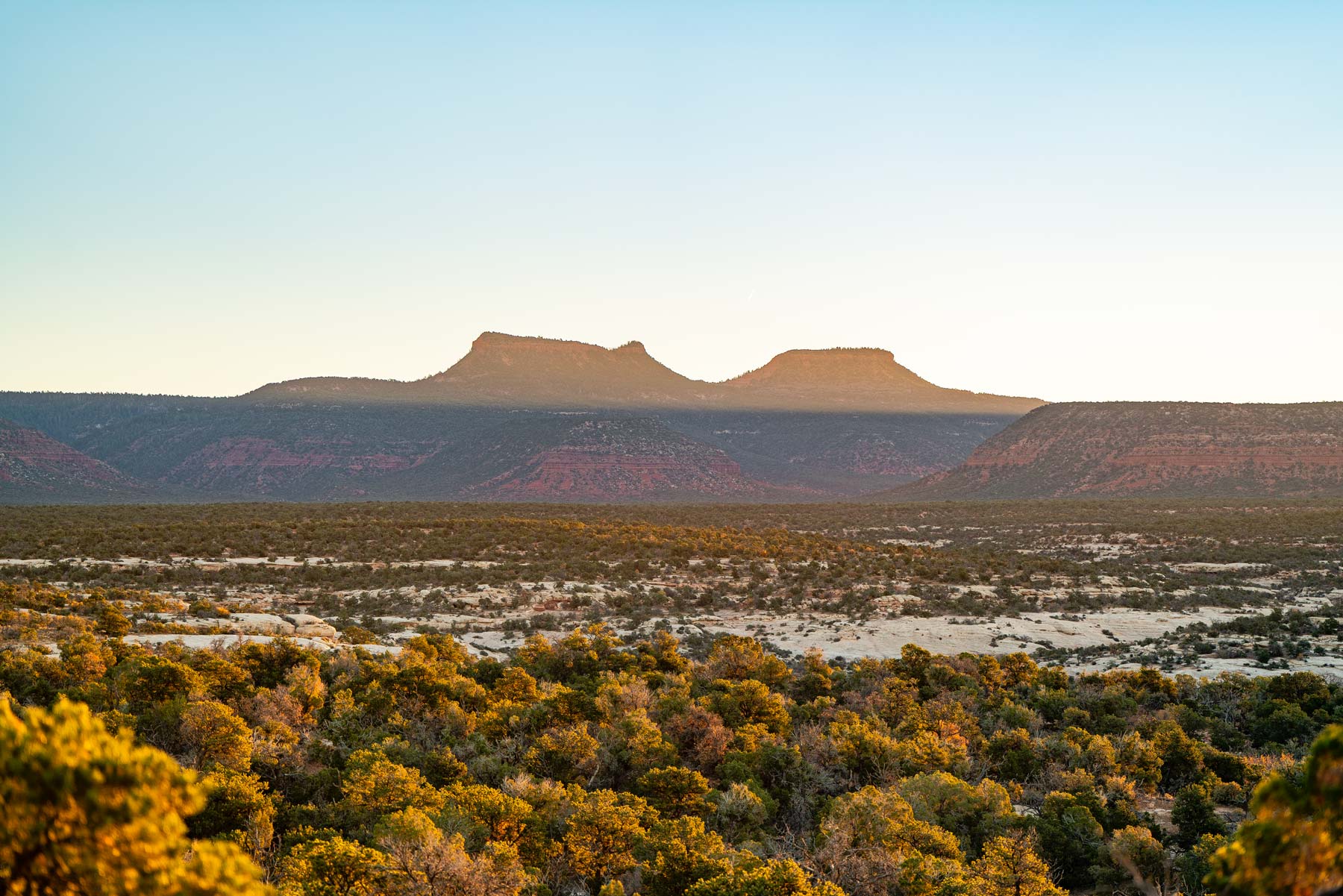
Bears Ears, seen from Natural Bridges National Monument, Utah / More Than Just Parks

What this is

This page follows one bill through Congress: where it stands, what is in it, how each senator voted, and what is listed for each House seat, beside the grade each member holds on the Congressional Public Lands Score. Votes come from the Senate’s own roll call files. Our rating of the bill and our analysis sit in their own panels, apart from the votes and the bill’s text.

The short version

BAAJA is a permitting bill. It changes how the federal government approves pipelines, mines and data centers, and that includes projects on public land.

It shortens environmental reviews and lets agencies skip them for some kinds of work.

It limits what a court can do when an approval breaks the law.

It makes permits very hard for a later administration to undo.

It lets companies sue the government over denials and delays, and taxpayers pay if they win.

It doesn't sell public land.

Sens. Shelley Moore Capito, Mike Lee, Sheldon Whitehouse and Martin Heinrich sponsored the text the Senate is voting on. The Senate needs 60 votes to end debate, so it can't move without votes from both parties.

Text: S.Amdt. 6883, Congressional Record, Nov. 10, 2026, S5471 to S5520. Sponsors: congress.gov. Read Nov. 17, 2026.

Every line on this bill

The wire

23lines, Sept. 30 to Nov. 17

Showing 23 of 23, newest first

Every line opens the page it came from. Quotes are word for word. Each source was opened on Nov. 17, 2026. A lane with 0 has no line yet. Read Nov. 17, 2026.

One bill, both chambers

Who voted how

The Senate has voted three times on moving the bill forward. The House has not voted on this text. Each side shows what each member has done on it so far, beside their public lands grade.

70 yes, 27 noNov. 16, 2026: the vote to end debate on the substitute text.

Y70yesN27no–3did not vote60 needed to end debate

70 yes is 10 more than the 60 it needed (our subtraction).

Each square is a senator: the state, and under it Y for yes, N for no or a dash for did not vote. Yes votes come first, then no, then those who did not vote. Source: Senate roll call vote 264, senate.gov. Read Nov. 17, 2026.

100 senators

Y is yes, N is no, a dash is did not vote; each mark opens the roll call. “Nothing listed yet” means this page holds no statement or vote on passing the bill for that senator, not that they haven’t made one. Votes: senate.gov. Sponsors: congress.gov. Grades: Congressional Public Lands Score, file of Nov. 12, 2026. Office lines: senate.gov. Read Nov. 17, 2026.

Our opinionMore Than Just Parks

How we rate this bill

More Than Just Parks rates a vote for this bill as a vote against public lands.

This is our opinion. We read the text senators are voting on and checked every part we cite against it word for word.

We rate it this way because of what the text does on public land. It cuts back the public's review of projects, limits the courts and locks in the permits this administration approves.

Our reasons are the seven parts of the bill listed here. Each one opens to the bill's own words.

The votes so far
The three Senate votes were on moving the bill forward. None was a vote on passing it.
The Public Lands Score
The vote on passing this bill will count in each member's Congressional Public Lands Score. The three votes so far don't.
What the bill doesn't do
It doesn't sell or transfer public land. We searched the full text and found nothing that does.

Text: Congressional Record, Nov. 10, 2026, S5471 to S5520. Score: the file of Nov. 12, 2026, whose 19 scored Senate votes hold none on H.R. 2347. Read Nov. 17, 2026.

AnalysisMore Than Just Parks

Our analysis

Dated analysis from our desk: what just happened, what it means, and what to watch next. It is ours, and it is kept apart from the votes and the bill’s text above and below it.

Tuesday, November 17, 2026Analysis · More Than Just Parks

What just happened

The Senate voted 70-27 on Monday to end debate on the bill's text. It was the third vote to move the bill forward, and it needed 60.

The Senate still hasn't voted on passing it, and no date is set.

The same day, Al Gore called the bill a “serious mistake” at the United Nations climate conference and urged Democrats to reconsider.

What it means

This bill can't pass the Senate without Democrats.

Its centerpiece keeps a project approved once it's approved. Two of its sponsors have sold that as a way to protect wind and solar from this president. But for the next two years the president approving projects on your public lands is this one, and the bill would protect his decisions long after he's gone.

He said so himself. On Nov. 8 the president wrote that the bill “will codify our America First Energy Agenda, and ensure that we can build Pipelines, Mines, and Power Plants faster than ever before.”

The day after the first Senate vote, the Interior Department made selling public land to state, local and Tribal governments part of its plan for 2026 through 2030. BAAJA doesn't sell land. It makes the development that follows much harder to challenge.

What to watch next

Three Senate steps are left. Senators have to adopt the new text, vote to end debate on the bill and then vote to pass it. Ending debate takes 60.

Then the House has to pass the same text. Its last scheduled day this year is Dec. 17.

No House member has voted on this text, so the House side of this page starts empty. We'll post each office's answer word for word as it comes in.

Votes: Senate roll call 264, senate.gov. Schedule: Senate Daily Press, Nov. 17. The president's words: Truth Social, Nov. 8, as quoted in our Nov. 9 piece. Gore and the Interior plan: our pieces of Nov. 17 and Nov. 13. Read Nov. 17, 2026.

No earlier entries.

S.Amdt. 6883 · Congressional Record, Nov. 10, 2026, pages S5471 to S5520

What’s in the bill

Seven parts of the bill, each in plain words first. The bill's own words and the page they're printed on are right under each one.

Sec. 1102

Agencies decide if a review happens

The agency approving a project decides whether that project needs an environmental review at all. The bill also names 15 kinds of work that never get one. Some gas pipeline work is on that list.

“The term `major Federal action’ means a proposed agency action subject to the requirements of this Act that the agency carrying out the proposed agency action determines is subject to substantial Federal control and responsibility.”

What changed from the bill as introduced

The definition is word for word the same as introduced. One exclusion was added (federally funded wireline broadband on a right-of-way already reviewed), so the pipeline exclusion moved from item (xii) to (xiii).

Sec. 1106

Fewer options, older science, a deadline

Agencies have to throw out any option that doesn't meet the company's goals. They don't have to look at science published after a review begins. A full review has to be done in two years and a shorter one in a year.

“eliminate from consideration any alternative (except for a no-action alternative) that does not-- (I) fulfill the purpose and need of the proposed agency action; and (II) meet the goals of an applicable non-Federal project sponsor.”

“No Federal agency shall be required to consider any scientific or technical research that becomes publicly available after the date of publication of a notice of intent or decision to prepare an environmental document for a proposed agency action.”

Deadlines: an environmental impact statement “not later than the date that is 2 years after” (S5477); an environmental assessment “not later than the date that is 1 year after” (S5476).

What changed from the bill as introduced

These passages are unchanged. Federal comment duties were added to what cannot delay a deadline, and a D.C. district court option was added for deadline suits.

Sec. 1110

What a court can still do

If a court finds an approval broke the environmental review law, it can't cancel the approval or stop the project. It can only send the paperwork back to be fixed while the work goes on. Anyone who wants to sue has 150 days and has to file in a federal appeals court.

“the only remedy the court may order to redress that violation is to remand, without vacatur or issuance of an injunction, the applicable authorization to the agency”

“An authorization remanded under paragraph (5)(A) shall remain in effect while the Federal agency corrects any errors or deficiencies found by the reviewing court.”

A claim must be filed “not later than 150 days after” the approval is published or made public (S5478), in “the court of appeals of the United States for the circuit in which a project ... will be constructed, expanded, or operated” (S5479).

What changed from the bill as introduced

The remedy, the 150 days and the court are unchanged. The rule that you must have commented now applies only to comment periods held after enactment; challenges to rules and to projects with no location go to the D.C. Circuit.

Sec. 1401

Permits that stay approved

Once a project has its federal permits, a later administration can't revoke, pause or reopen them outside a short list of exceptions. That covers permits in effect on or after Nov. 6, 2026. If a court finds an agency interfered in bad faith, taxpayers pay the company 25 to 50 percent of its development and construction costs.

“a Federal department or agency shall not take any new action that would revoke, rescind, withdraw, terminate, suspend, vacate, remand, reopen, materially amend, or materially alter a Federal authorization or permit in effect on or after November 6, 2026”

“costs in an amount not less than 25 percent and not more than 50 percent of the total of all development and construction costs incurred by the holder”

The payout applies only “on a showing that 1 or more Federal agencies interfered with a Federal authorization or permit in bad faith” (S5488).

What changed from the bill as introduced

Changed substantially. The cutoff moved from Sept. 16 to Nov. 6, 2026; “vacate, remand, reopen” were added to what is barred; a new exception covers action “taken pursuant to any applicable law or regulation”; the payout now needs a bad-faith finding and a final court judgment, and counts development and construction costs only.

Sec. 1402

Companies can sue over a pattern

A developer can sue if its project was denied in bad faith or delayed as part of a pattern against that kind of project. A court can look back 10 years. A win pays 50 to 100 percent of what the project was expected to cost to build. The bill covers 46 kinds of projects, from wind and solar to coal, pipelines and hardrock mines.

“damages in an amount equal to not less than 50 percent and not more than 100 percent of the total reasonably expected cost of construction of the project”

The claim covers permits “denied in bad faith as part of a pattern of disparate treatment by the Federal Government against the specific type of covered project at issue” (S5490), measured against “the 10 most recent calendar years of empirical data” (S5489).

What changed from the bill as introduced

“Improperly denied” became “denied in bad faith”; the look-back grew from 5 to 10 years; a substantial rise in denials counts as evidence of bad faith, and the government must then disprove the case or show a lawful reason.

Sec. 1403

A one-year clock on other permits

Permits that don't go through an environmental review have to be decided within a year. If the agency misses that deadline, the applicant can sue to force an answer.

“all Federal agencies shall render decisions on all applicable covered applications not later than 1 year after the date on which the latest of the covered applications was submitted.”

What changed from the bill as introduced

Moved here from sec. 1402(c). The clock now starts at submission (as introduced: when the application was found complete); a rehearing rule and a D.C. court option were added.

Sec. 2215

More public land for mine waste

A mining company can claim as many five-acre sites on public land as it says its mine needs. The sites are for waste rock, tailings and other mine operations. The company can't take ownership of them, so the land stays federal.

“locate and include within the plan of operations as many mill site claims under this subsection as are reasonably necessary for its operations”

“A location of a single mill site under this subsection shall not exceed 5 acres.”

“A mill site under this section shall not be eligible for patenting.”

What changed from the bill as introduced

No change in substance.

Quotes: S.Amdt. 6883 as printed in the Congressional Record, Nov. 10, 2026; the S page is the Record page, the p. number the printed page of S. 5653 as introduced. Each quote was found word for word on Nov. 17, 2026. The text, as a PDF.

S. 5653 as introduced, beside S.Amdt. 6883

What changed from the bill as introduced

The bill as introduced had 71 numbered sections. The text senators are voting on has 83.

1 section of the introduced bill was dropped.

Added to Division A: a 150-day window (was 2 years) to sue over FAST-41 projects; a 180-day clock for state wildlife action plans; a new Title V on nuclear licensing; a new Title VI on wildfire smoke in air-quality data and brownfields money

1134, 1309, 1501 to 1504, 1601, 1602

Added to Division B: FERC authority over grid operators’ governance; a Data Center Community Assistance Program; conforming amendments moved; 72-hour public notice when the Energy Department changes safety standards at certain nuclear sites

2116, 2117, 2118, 2261

Dropped: the Northwest Power and Conservation Council section (FERC personnel safety moved up from 2243 to 2242)

2242 as introduced

Replaced in place: 2115 is now court review of Natural Gas Act civil penalties; 2241, on FERC staffing, was rewritten

2115, 2241

Added Division C: the tax provision of the House bill that carries the text, on damages for sexual abuse

3001

Project certainty, court review and permit deadlines changed

1110, 1401, 1402, 1403

Wording changes elsewhere, most in transmission, historic preservation and Tribal leases

40 more sections

Where older descriptions no longer match the text

  • The 25 to 50 percent payout in sec. 1401 now needs a court to find bad faith, and counts development and construction costs only. “Up to 50 percent of project cost” with no bad-faith condition describes the bill as introduced, not the text senators are voting on.
  • Sec. 1401’s cutoff date is Nov. 6, 2026. As introduced it was Sept. 16.
  • Sec. 1402 looks back 10 years, not five, and its test is “denied in bad faith,” not “improperly denied.”
  • The one-year permit clock now starts when the application is submitted and sits in sec. 1403(b), not 1402(c).
  • The gas pipeline exclusion in sec. 1102 is now item (xiii). As introduced it was (xii).

A section-by-section comparison of S. 5653 as introduced (govinfo) with S.Amdt. 6883 (Congressional Record, Nov. 10, 2026), made Nov. 17, 2026. Added and dropped are our subtraction from the counts. Sections outside the seven above were compared at heading level, not line by line.

Follow this bill

An email when the bill moves: a vote, a new text, a signature or a veto.

Change log and corrections

Nov. 17, 2026
ChangeFirst read: Senate roll calls 257, 258 and 264; the text in the Congressional Record of Nov. 10; House seats from the Clerk’s file of Nov. 3; grades from the score’s file of Nov. 12.

No corrections to date. Report an error

Figures as of Nov. 17, 2026. Votes: Senate roll call files 257, 258 and 264. Office lines: senate.gov and the House Clerk. Grades: Congressional Public Lands Score, 119th Congress, file of Nov. 12, 2026. The bill’s text: Congressional Record, Nov. 10, 2026. The schedule and the provisions: the fact pack of Nov. 17, 2026.

Photograph: Bears Ears, seen from Natural Bridges National Monument, Utah. More Than Just Parks. The frame is ours and is shown as shot, dimmed.