


Hawaii Volcanoes National Park is the rare place where you can watch the planet build itself. Will and I spent weeks here filming, and standing at the edge of Kilauea’s caldera, feeling the heat and smelling the sulfur, is unlike anything else in the National Park System. This is the home of Kilauea and Mauna Loa, two of the most active volcanoes on Earth, plus rainforest, lava tubes, and a coastline where lava once met the sea.
One important note before you plan: Kilauea has been erupting in episodes, and conditions here change fast. Whether you see active lava depends entirely on timing and luck, so always check the latest USGS and park updates before your trip. Here is my honest, ranked list of the best things to do in Hawaii Volcanoes National Park.

For the full trip plan, including lodging and maps, see our complete Hawaii Volcanoes National Park guide.
Things to Do at a Glance
| Activity | Type | Time Needed | Best For |
|---|---|---|---|
| Crater Rim Drive overlooks | Scenic drive | 2 to 3 hours | Everyone |
| Kilauea Iki Trail | Hike | 2 to 3 hours | Hikers |
| Chain of Craters Road | Scenic drive | 2 to 4 hours | Everyone |
| Nahuku (Thurston Lava Tube) | Short walk | 30 minutes | Families |
| Holei Sea Arch | Viewpoint | 15 minutes | Everyone |
| Devastation Trail | Easy walk | 1 hour | Families |
1. Drive Crater Rim Drive and the Overlooks

The open section of Crater Rim Drive strings together the park’s signature caldera overlooks, including the views toward Halemaumau crater from spots like Kilauea Overlook and the Kilauea Visitor Center area. When Kilauea is active, this is the front-row seat, and the glow after dark can be the highlight of an entire Hawaii trip.
Love Hawaii Volcanoes? It's one of 117 threatened public lands destinations we're tracking. Get the free briefing.
- Logistics: Part of Crater Rim Drive has been closed since the 2018 collapse events, but the open overlooks still deliver the main views. Start at the visitor center for the latest on which viewpoints are accessible.
- Best time of day: Go at dusk and stay after dark if there is any active lava, since the glow is far more visible at night.
- Safety: The caldera rim around Halemaumau is closed, and for good reason. Stay behind railings and on marked overlooks.
2. Hike the Kilauea Iki Trail

This is the best hike in the park and my top pick if you only have time for one. You descend through lush rainforest, then walk straight across the floor of a crater that was a churning lava lake in 1959. Steam still rises from cracks underfoot. It is a real lesson in how quickly the volcano resurfaces the land.
- Distance and difficulty: About 3.3 miles loop, moderate, with a 400-foot descent and climb. Plan 2 to 3 hours.
- Trailhead: Kilauea Iki Overlook or the Nahuku parking area.
- Tip: Go early before the parking fills, and hike it clockwise to save the rainforest for the climb out.
3. Walk Through Nahuku (Thurston Lava Tube)

Nahuku is a 500-year-old lava tube you can walk straight through, a tunnel left behind when the outer crust of a lava river cooled while the molten core drained away. It is short, lit, and sits in gorgeous rainforest, which makes it a favorite with kids.
- Logistics: A short, mostly paved walk, about 30 minutes with the surrounding loop. Parking is limited, so come early or late.
4. Drive Chain of Craters Road
This 19-mile road drops nearly 3,700 feet from the summit rainforest to the coast, crossing old lava flows the whole way. It is one of the great drives in the parks, with pullouts for craters, lava fields, and the ocean. Allow time, because there is a lot to stop for and it dead-ends at the coast.
- Time: Plan 2 to 4 hours round trip with stops. Bring water and gas, since there are no services along the way.
5. See the Holei Sea Arch
At the bottom of Chain of Craters Road, a short walk leads to the Holei Sea Arch, a 90-foot lava arch carved by the relentless surf. It is the natural turnaround point for the drive and a dramatic spot to see the raw edge where lava rock meets the Pacific.
6. View the Petroglyphs at Puu Loa
Off Chain of Craters Road, a boardwalk leads to Puu Loa, one of the largest concentrations of petroglyphs in Hawaii, with thousands of carvings sacred to Native Hawaiians. Stay on the boardwalk to protect the site, and take a moment to appreciate the cultural weight of the place.
- Distance: About 1.4 miles round trip over lava, easy to moderate. There is no shade, so bring water and sun protection.
7. Walk the Devastation Trail
This easy paved path crosses a cinder field buried by the 1959 Kilauea Iki eruption, where the forest is slowly reclaiming the ground. It is a quick, accessible way to see how life returns to a volcanic landscape, and it pairs well with the Kilauea Iki overlooks nearby.
- Distance and difficulty: About 1 mile round trip, easy and paved, around an hour.
8. Explore the Steam Vents and Sulphur Banks
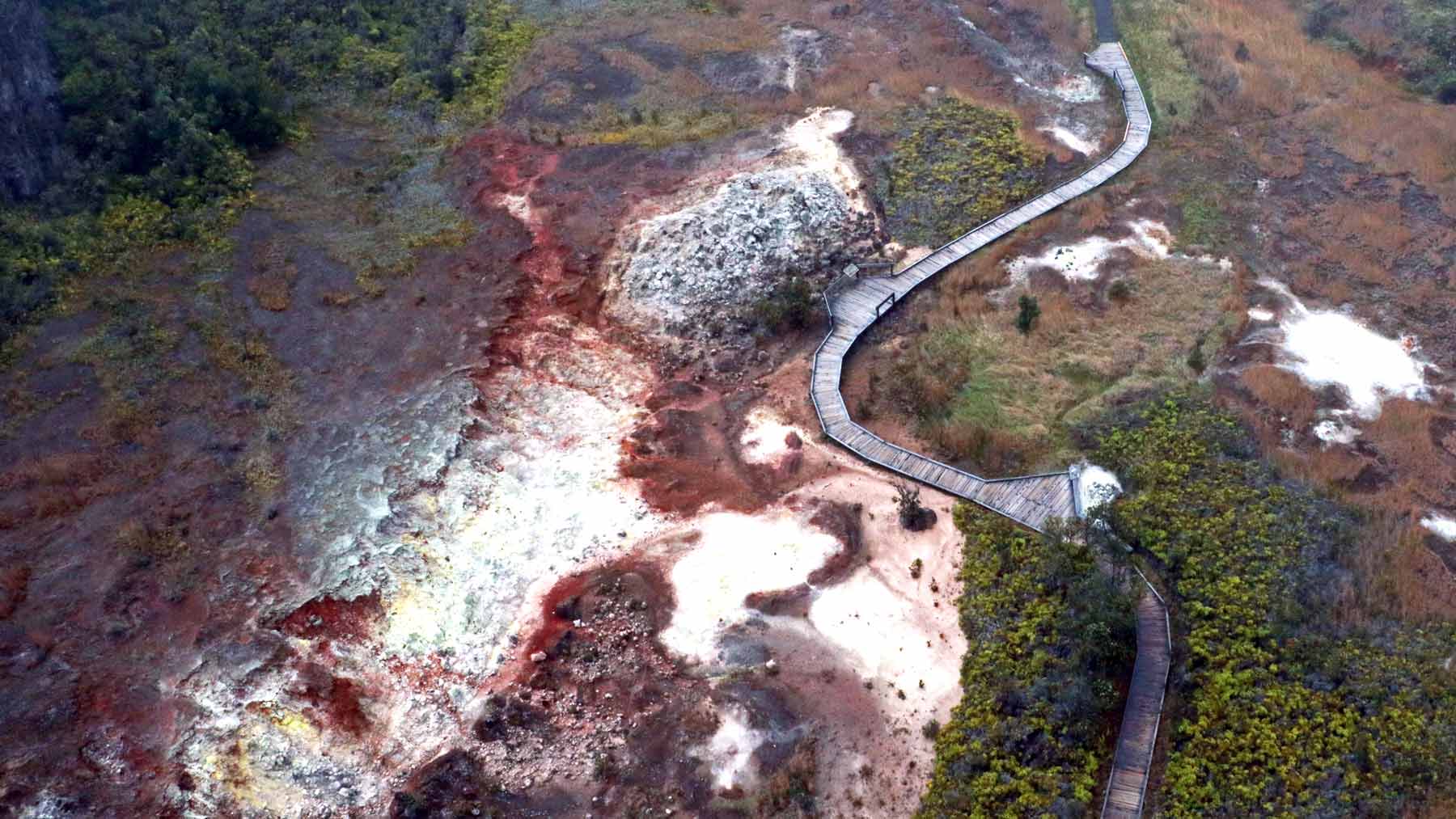
Near the visitor center, the Steam Vents and Haakulamanu (Sulphur Banks) put the volcano’s heat right in front of you. Steam pours from the ground and the rocks are stained yellow with sulfur deposits. A boardwalk keeps you safely above the hot, gassy ground.
- Note: The gases here can bother people with heart or respiratory conditions, so use your judgment on hazy days.
9. Start at the Kilauea Visitor Center
This is genuinely the most useful first stop in the park. Rangers post the latest on eruption activity, air quality, trail and road closures, and ranger programs. Ten minutes here will tell you whether tonight is a chance to see lava glow or a night to hike instead.
10. Look for Native Birds in the Rainforest

The park protects rare native rainforest, and patient watchers can spot brilliant red birds like the iiwi and apapane feeding in the ohia blossoms. The forested trails near the summit, including stretches around Kilauea Iki, are good places to look and listen.
11. Venture Toward Mauna Loa
For solitude and big views, drive the Mauna Loa Road to its end and walk a stretch toward the world’s largest active volcano. Day hikers can sample the lower trails, while serious backpackers tackle the long, high route to the summit cabins with a permit. Check road and trail status, since this area is sometimes affected by volcanic activity.
12. Join a Ranger Program
The park runs ranger talks and walks that put the geology and Hawaiian cultural history in context, and they are some of the best in the system. Check the schedule at the visitor center, since offerings shift with conditions and season.
13. Stay After Dark for the Glow
When Kilauea is active, the single best thing to do is return to an open overlook after sunset. The glow from the crater against the night sky is the experience people travel across the world for. Bring a headlamp, dress warm since the summit is cool at over 4,000 feet, and give your eyes time to adjust.
14. Stargaze at the Summit
On clear, calm nights the high, dark summit makes for excellent stargazing. If there is no active lava, the night sky alone is reason to linger. Just watch the vog forecast, since hazy nights mute both stars and any volcanic glow.
15. Add the Kahuku Unit
About an hour southwest of the main park, the Kahuku Unit offers quiet trails through former ranchland, lava flows, and forest, with almost none of the summit crowds. It keeps shorter hours, so confirm the schedule, but it is a great half day for anyone wanting space to breathe.
Planning Your Visit to Hawaii Volcanoes National Park
Getting There
The park is on the Big Island of Hawaii, about 45 minutes from Hilo and roughly 2 to 2.5 hours from Kailua-Kona. The town of Volcano sits just outside the entrance with lodging and food. A rental car is essential.
Fees and Hours
The private vehicle entrance fee is $30 and is good for seven days. The park is open 24 hours a day, year round, which matters because the best lava viewing is often at night.
Best Time to Visit
The park is worthwhile year round, and the summit’s cooler, wetter weather is a contrast to the beaches below. Timing matters most for lava: eruptions come and go in episodes, so check the latest before you commit to a date. Weekday mornings are quietest at the popular trailheads.
How Many Days Do You Need?
One full day covers the summit highlights and Chain of Craters Road. Two days lets you add longer hikes, the Kahuku Unit, and a return for night viewing if lava is active.
2026 Conditions to Know
Kilauea has been erupting in repeated episodes at the summit, with active periods followed by pauses, so whether you see lava is a matter of timing. Vog, the volcanic haze of gas and particles, can drift over visitor areas and affect air quality, especially for people with heart or breathing conditions. Part of Crater Rim Drive remains closed from the 2018 collapse. Always check current USGS volcano updates and the park website for activity, air quality, and closures before you go.
For lodging, maps, and a full itinerary, see our complete Hawaii Volcanoes National Park guide.
What to Bring to Hawaii Volcanoes
Gear we recommend for Hawaii Volcanoes. Affiliate links support our work at no cost to you.
More Than Just Parks may earn a small commission from purchases made through these links, at no extra cost to you. We only recommend gear we would actually use.
Affiliate disclosure: Some links on this page earn us a small commission at no extra cost to you. We only recommend gear we actually use.
More Than Just Parks Film Watch our 8K film of Hawaii Volcanoes We spent weeks in Hawaii Volcanoes, one of our favorite public lands destinations, capturing it the way it deserves. Take a few minutes and see it for yourself.


