Death Valley National Park — the best national park to visit in January.
January is the month most people forget about when planning a national parks trip. That is exactly why you should go. The desert parks are at their absolute best, the tropical parks are in peak season, and the crowds that define summer in places like Yellowstone and Glacier are nowhere to be found.
Parks Featured in This Guide
15 parks mapped — click a pin for details
I’ve spent multiple Januarys in the national parks, and I can tell you this: if you like solitude, comfortable hiking weather, and wildlife that is easy to spot, January delivers.
The tradeoff? Most mountain parks and northern parks are buried under snow with limited access. But that is not a problem when you know where to go. This guide covers the 15 best national parks to visit in January, including weather specifics, crowd levels, what’s open and closed, and a few parks you should avoid entirely.
1. Death Valley National Park
Location: California/Nevada
Weather: Average high of 65F (18C), average low of 39F (4C). Virtually no precipitation.
Crowds: Low
What’s Open: Everything. All roads, all campgrounds, all visitor centers.
Resources: MTJP Guide | Things to Do
Death Valley in January is a completely different park than the inferno that makes headlines in July. Daytime temps hover in the mid-60s, nights drop into the upper 30s, and the air is crystal clear. This is the park’s peak season for a reason.
Badwater Basin, the lowest point in North America at 282 feet below sea level, is comfortable enough for a long walk across the salt flats. The Mesquite Flat Sand Dunes catch golden light at sunrise and sunset. Artist’s Drive pops with mineral colors that heat haze obscures in summer. If January has been wet, you might catch the very earliest signs of what could become a spring wildflower bloom.
One caveat: Nights get genuinely cold, especially at higher elevations within the park. If you are camping at Stovepipe Wells or Furnace Creek, bring a sleeping bag rated to at least 30F. The temperature swing between afternoon and pre-dawn can be 30+ degrees.
2. Everglades National Park
Location: Florida
Weather: Average high of 77F (25C), average low of 57F (14C). Dry season.
Crowds: Moderate (this is peak season for the Everglades)
What’s Open: Everything including all ranger programs and boat tours.
Resources: Things to Do
January is the single best month for the Everglades. The dry season concentrates wildlife around shrinking water sources, which means alligators, wading birds, and manatees are all easy to spot. The mosquitoes that make summer visits miserable are largely dormant. Humidity is manageable. This is the Everglades as it was meant to be experienced.
The Anhinga Trail is the must-do. In January, you will see alligators sunning themselves within feet of the boardwalk, anhingas drying their wings, and great blue herons stalking fish in the shallow water. Shark Valley’s 15-mile tram loop offers deeper access into the sawgrass prairie.
One caveat: Because January is peak season for the Everglades, campground reservations (especially Flamingo) book up months in advance. Plan ahead or be prepared for the drive from Homestead or Florida City.
3. Big Bend National Park
Location: Texas
Weather: Average high of 61F (16C), average low of 35F (2C) in the Chisos Basin.
Crowds: Very Low
What’s Open: Everything. All trails, campgrounds, and the scenic drives.
Resources: Things to Do
Big Bend is one of the least visited major national parks, and January only amplifies the solitude. The Chisos Basin sits at elevation, so daytime highs are in the low 60s with clear skies and almost no rain. The desert floor is warmer. Either way, it is hiking weather without the punishing summer heat.
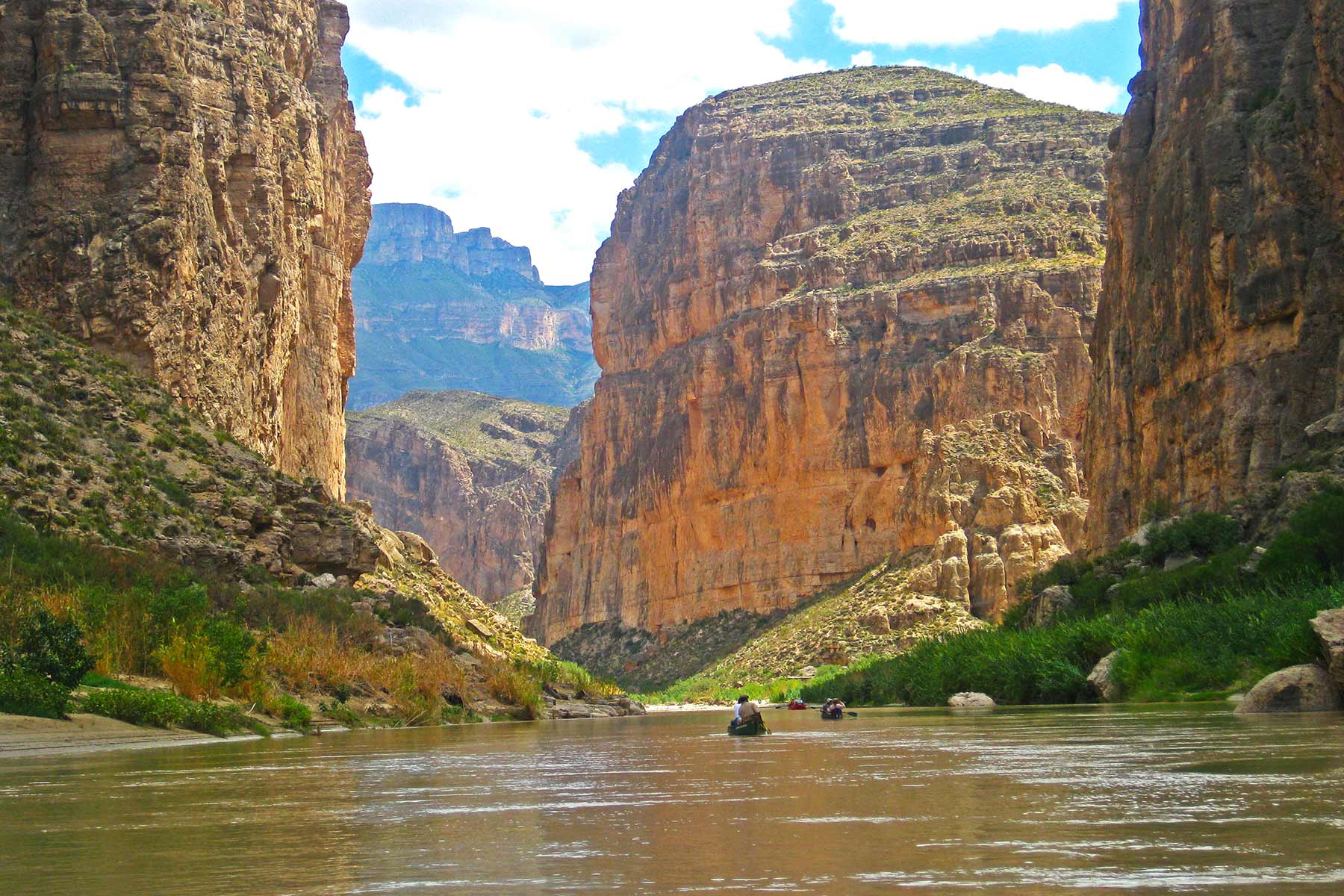
The Lost Mine Trail delivers one of the best views in all of Texas. The Window Trail takes you to a desert pour-off that frames the sunset. And Santa Elena Canyon, where the Rio Grande cuts through 1,500-foot limestone walls, is otherworldly in the quiet of winter.
One caveat: Big Bend is remote. The nearest town of any size is Alpine, about 100 miles away. Stock up on gas and groceries before you enter the park. Cell service is nonexistent in most areas.
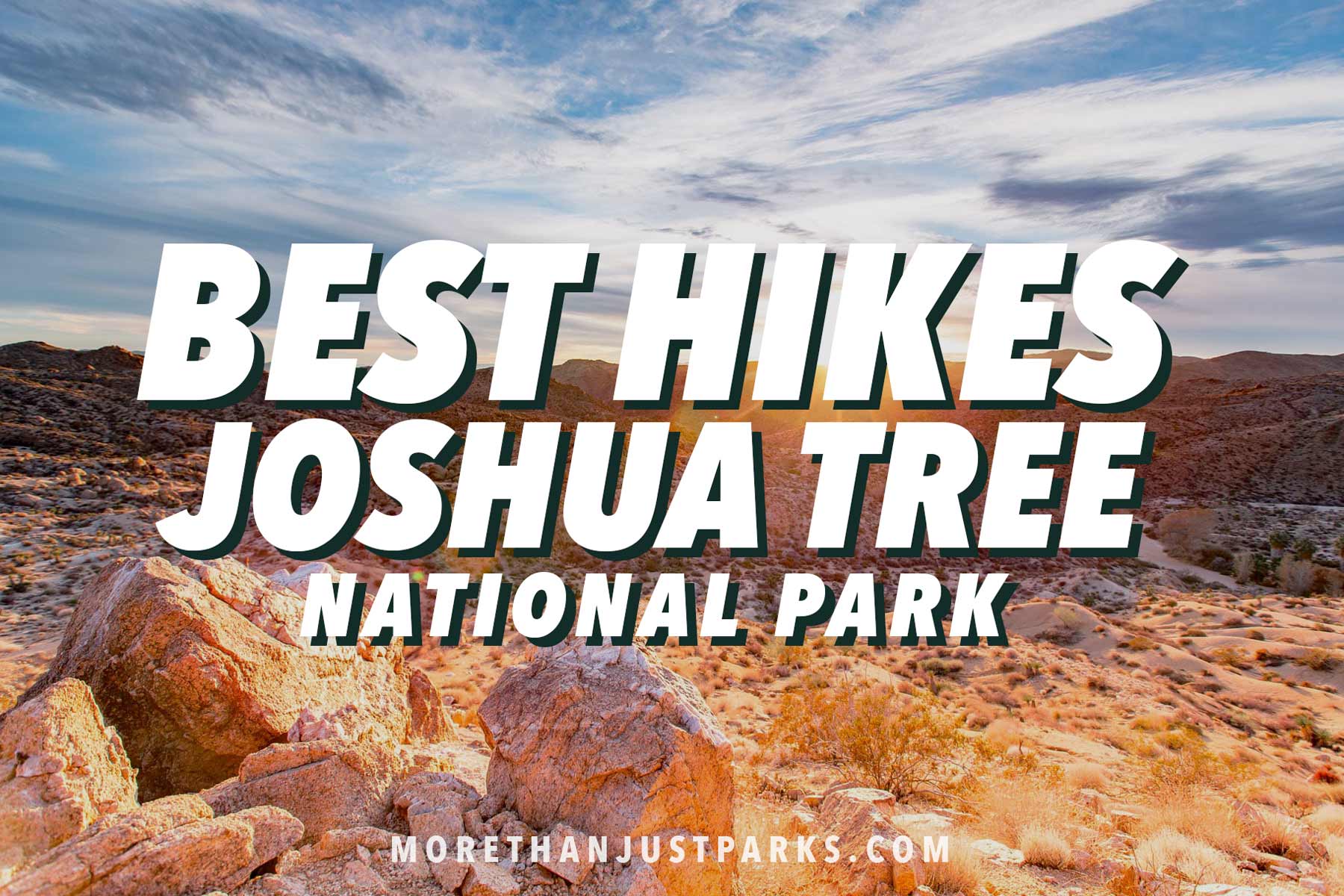
Joshua Tree National Park — perfect hiking weather in January.
4. Joshua Tree National Park
Location: California
Weather: Average high of 60F (16C), average low of 34F (1C).
Crowds: Low to Moderate
What’s Open: Everything.
Resources: Things to Do
Joshua Tree is a winter park. The rock climbers know this, and they flock here from November through March when daytime temps are in the 55-65F range. But even if you are not a climber, January is ideal for longer hikes that would be dangerous in the summer heat.
The 49 Palms Oasis trail, Ryan Mountain for panoramic views, and the Cholla Cactus Garden at golden hour are all at their best now. The night skies here rival anything in the park system, and January’s long nights give you plenty of stargazing time.
One caveat: Nights are cold. If you are camping, you are looking at temps in the low 30s and possibly below freezing at higher elevations. Wind chill can make it feel even colder. Bring serious cold-weather gear for after dark.
5. Saguaro National Park
Location: Arizona
Weather: Average high of 64F (18C), average low of 38F (3C).
Crowds: Low
What’s Open: Everything.
Resources: Things to Do
The giant saguaro cacti that define this park stand out against clear January skies like something from another planet. Tucson’s winter weather is about as good as it gets: sunny, dry, and warm enough for all-day hiking without the brutal triple-digit summer temps.
The Rincon Mountain District (east side) is quieter and wilder. The Tucson Mountain District (west side) is more accessible and has the iconic saguaro forests you have seen in photos. Both are excellent in January.
One caveat: Saguaro is not a destination park for most people. Pair it with a Tucson trip and potentially a side trip to Chiricahua National Monument for the full Southern Arizona experience.
Big Bend National Park. (NPS Photo)
6. Haleakala National Park
Location: Hawaii (Maui)
Weather: Coastal areas 75-80F (24-27C). Summit area 40-55F (4-13C).
Crowds: Moderate (Maui tourist season)
What’s Open: Everything. Sunrise reservations required for summit.
Resources: Things to Do
Haleakala is spectacular in any month, but January adds whale watching to the experience. Humpback whales arrive in Hawaiian waters in December and peak in February, so January puts you right in the middle of the season. Watch the sunrise from the 10,023-foot summit, then drive down to the coast for whale watching in the same day.
The Pipiwai Trail to Waimoku Falls through the bamboo forest is one of the best short hikes in the entire park system. The crater hike (Sliding Sands Trail) is otherworldly and January’s cooler summit temps make it more comfortable than summer.
One caveat: January is peak tourist season for Maui, so accommodations are expensive and the road to Hana will have traffic. Book sunrise reservations well in advance because they sell out weeks ahead.
7. Hawaii Volcanoes National Park
Location: Hawaii (Big Island)
Weather: Average high of 72F (22C), average low of 55F (13C) at the summit.
Crowds: Moderate
What’s Open: All areas unless volcanic activity restricts access.
Resources: MTJP Guide | Things to Do
If Kilauea is actively erupting, January’s longer nights mean more hours to see the glow from the caldera. Even when the volcano is quiet, this is one of the most geologically fascinating parks in the system. The Thurston Lava Tube, the Devastation Trail, and Crater Rim Drive are all accessible year-round.
January also puts you on the Big Island during whale season, and the Chain of Craters Road down to the coast offers ocean views where you might spot humpbacks offshore.
One caveat: Volcanic fumes (vog) can be an issue, especially for people with respiratory conditions. Check the air quality advisory before heading to the summit area. Rain is also more frequent in January than summer months.
8. Channel Islands National Park
Location: California
Weather: Average high of 58F (14C), average low of 46F (8C). Windy.
Crowds: Very Low
What’s Open: Island access via Island Packers runs year-round but on reduced schedule.
Resources: Things to Do
The Channel Islands are among the least visited parks in the lower 48, and in January you may share an entire island with a handful of other people. The gray whale migration is the headline attraction from December through March, and Island Packers runs whale watching trips alongside the ferry service.
Santa Cruz Island is the most accessible and has excellent hiking along the coast and ridgelines. The island foxes are active and bold. Kayaking the sea caves is possible on calm days but check conditions carefully.
One caveat: The channel crossing can be rough in January. Seasickness is a real possibility if you are sensitive. Pack medication and sit on the lower deck near the center of the boat. Also, there are no services on the islands. Bring everything you need including water.
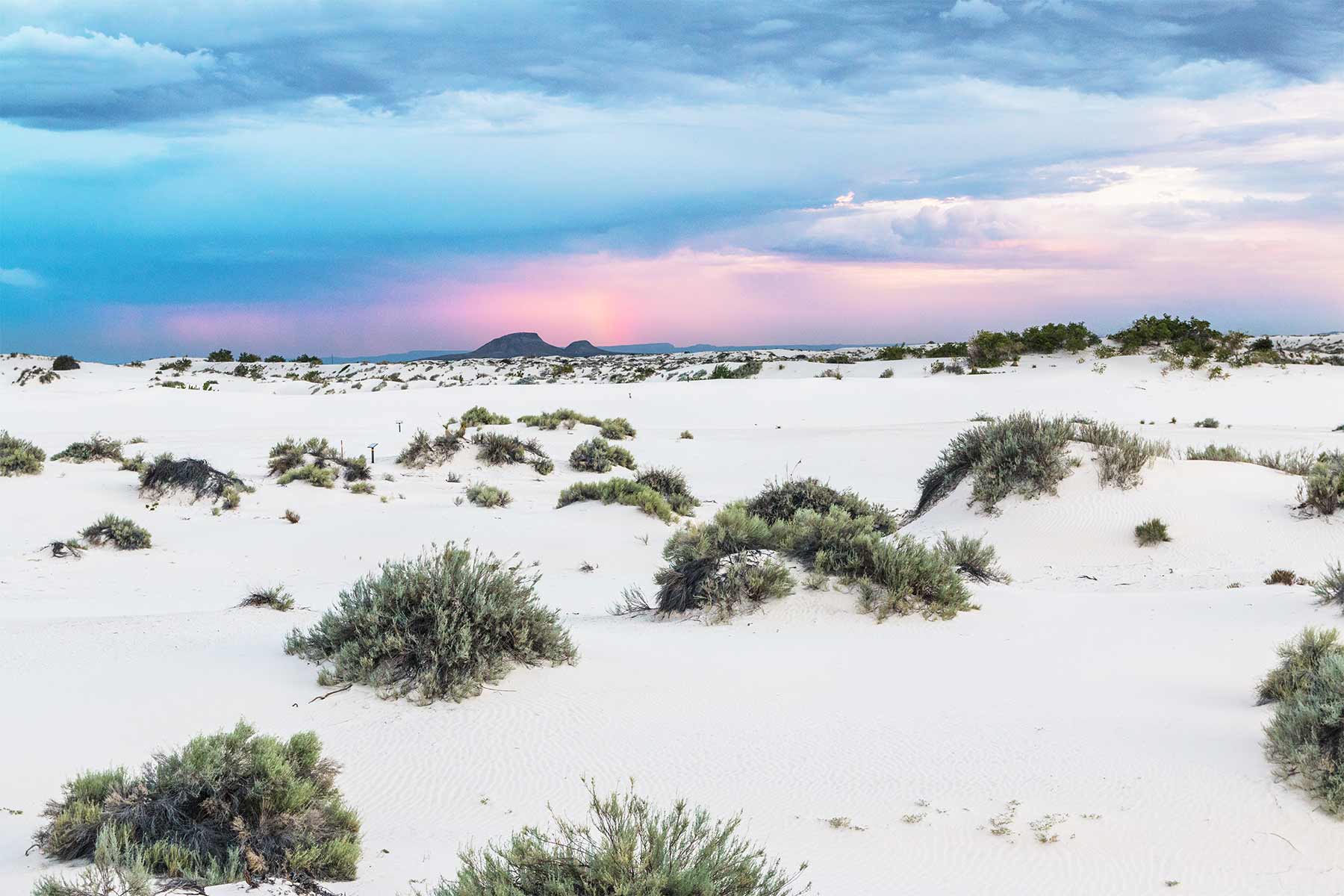
White Sands National Park. (NPS Photo)
9. Biscayne National Park
Location: Florida
Weather: Average high of 76F (24C), average low of 62F (17C).
Crowds: Low
What’s Open: All boat tours, snorkeling trips, and island access.
Resources: Things to Do
Biscayne is 95% water, and January is the best month to be on that water. Dry season means excellent visibility for snorkeling over the coral reefs. The water temps hover around 72-75F, which is comfortable enough without a wetsuit for most people. Manatees are in the bay.
The boat trip to Boca Chita Key lets you explore the lighthouse and picnic areas on a tiny island in Biscayne Bay. The snorkeling at the Maritime Heritage Trail (an underwater trail connecting shipwrecks) is a unique experience you will not find in any other park.
One caveat: You need a boat to experience most of this park. If you do not have your own, you will rely on the concessionaire for tours, and they run on a limited schedule. Book ahead.
10. Guadalupe Mountains National Park
Location: Texas
Weather: Average high of 56F (13C), average low of 31F (0C). Windy.
Crowds: Very Low
What’s Open: All trails open. No restaurants or stores in the park.
Resources: Hikes Guide
Guadalupe Mountains is one of the least visited parks in Texas, and January amplifies the emptiness. The hike to Guadalupe Peak (the highest point in Texas at 8,751 feet) is a challenging 8.4-mile round trip with 3,000 feet of elevation gain. In January, the cooler temps make this hike far more enjoyable than attempting it in summer heat.
McKittrick Canyon, famous for its fall foliage, is more subdued in January but the geology is still striking. The Permian-era reef fossils embedded in the limestone cliffs are a geology lesson disguised as a hike.
One caveat: Wind is the defining feature of this park in winter. Sustained 30-40 mph winds are common and gusts can exceed 60 mph. Check the forecast and be prepared for it to feel much colder than the thermometer reads.
11. White Sands National Park
Location: New Mexico
Weather: Average high of 57F (14C), average low of 27F (-3C).
Crowds: Very Low
What’s Open: Dunes Drive open (check for missile range closures).
Resources: Things to Do
The white gypsum dunes look like snow, and in January you might actually see them dusted with real snow, which creates one of the most surreal landscapes in the national park system. Sunset here in January is around 5:15 PM, and the way the low winter light hits the white sand turns everything pink and gold.
Sledding down the dunes is fun year-round, and the Alkali Flat Trail (a 5-mile loop through the heart of the dune field) is much more pleasant in 57-degree weather than 100-degree weather.
One caveat: White Sands sits next to an active military missile range. The park closes occasionally for missile testing, sometimes with little notice. Check the park website before driving out, especially on weekday mornings.
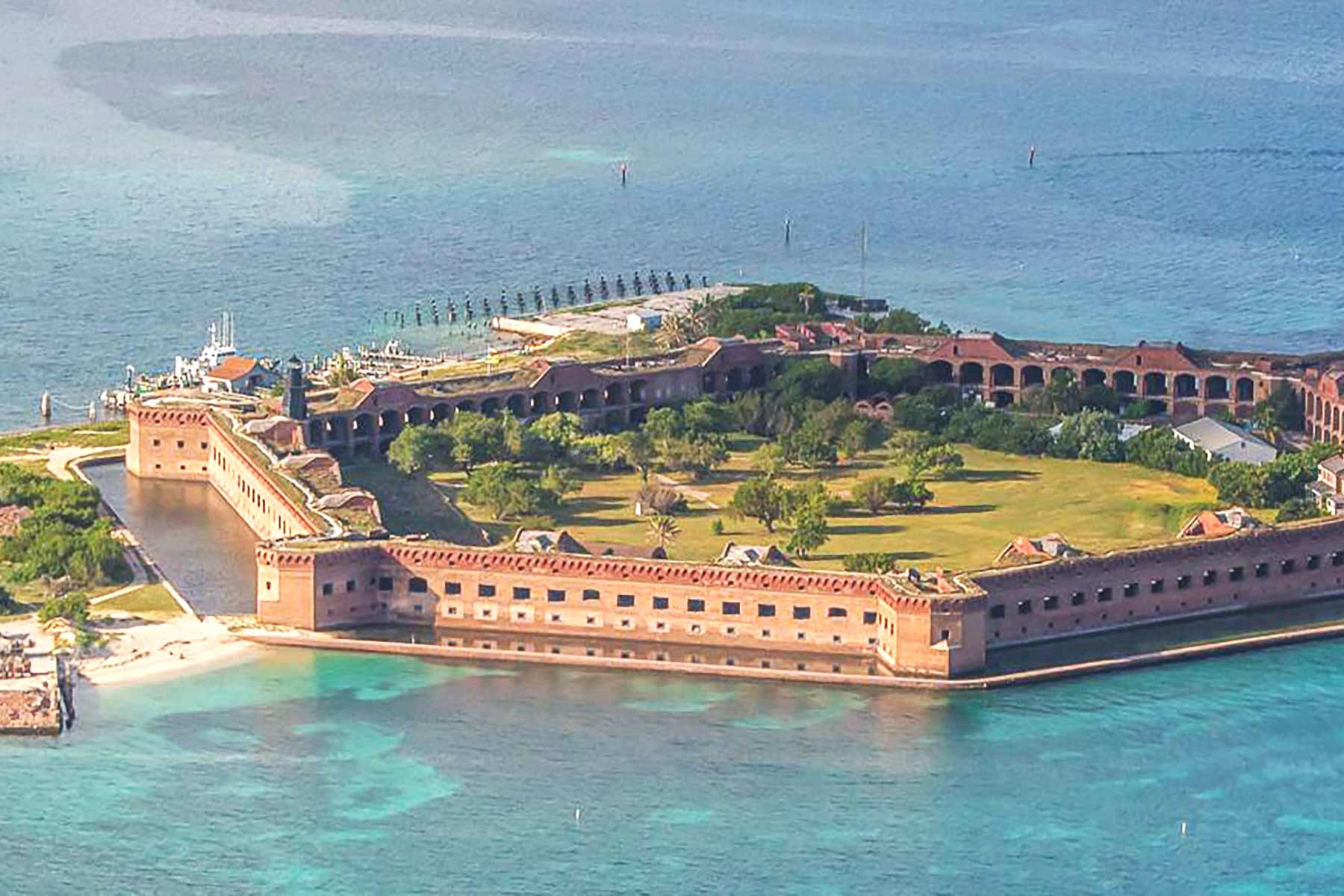
Fort Jefferson at Dry Tortugas National Park. (NPS Photo)
12. Dry Tortugas National Park
Location: Florida (70 miles west of Key West)
Weather: Average high of 75F (24C), average low of 65F (18C).
Crowds: Low (limited by ferry capacity)
What’s Open: Fort Jefferson open, snorkeling excellent, camping available.
Resources: Activities Guide
Dry Tortugas is one of the most remote parks in the system, accessible only by ferry or seaplane from Key West. January is well outside hurricane season and the water is warm enough for excellent snorkeling around Fort Jefferson, the massive Civil War-era fortress that dominates Garden Key.
The snorkeling right off the beach is some of the best in the national park system: clear water, vibrant coral, and tropical fish. The fort itself is fascinating to explore. Camping on the island (bring everything including water) is one of the most unique overnight experiences in any national park.
One caveat: The ferry from Key West takes about 2.5 hours each way, and the crossing can be choppy in January. Seasickness medication is strongly recommended. Also, the ferry books up, especially for the camping spots on the island. Reserve at least a month ahead.
13. Congaree National Park
Location: South Carolina
Weather: Average high of 56F (13C), average low of 34F (1C).
Crowds: Very Low
What’s Open: All boardwalk trails and waterways.
Resources: Things to Do
Congaree protects the largest intact expanse of old-growth bottomland hardwood forest in the Southeast. In January, the leaves are down, which means you can actually see the massive trunks and canopy structure of these champion trees. The Boardwalk Loop Trail is an easy 2.4-mile walk through some of the tallest trees east of the Mississippi.
January also means zero mosquitoes, which is a major selling point for a park that is notorious for its summer bug population. Kayaking Cedar Creek through the floodplain forest is peaceful and otherworldly with the bare canopy overhead.
One caveat: If the Congaree River has flooded recently, some trails and the creek may be underwater. Check conditions before you go. The park can go from dry to flooded in a matter of days.
14. Hot Springs National Park
Location: Arkansas
Weather: Average high of 50F (10C), average low of 30F (-1C).
Crowds: Low
What’s Open: Bathhouses open year-round. All trails accessible.
Resources: Things to Do
There is something deeply satisfying about soaking in a natural hot spring when it is 50 degrees outside. Hot Springs is the smallest major national park and one of the most unusual. It is more of a historic district than a wilderness park, centered on Bathhouse Row, a collection of gorgeous early-20th-century bathhouses.
The Buckstaff Bathhouse still offers traditional thermal baths. The Fordyce Bathhouse is now the visitor center and worth exploring for the architecture alone. For hiking, the park’s trails wind through the Ouachita Mountains with views of the surrounding Ozarks.
One caveat: This is a small park that you can fully experience in half a day. Pair it with a visit to the town of Hot Springs and the surrounding Ouachita National Forest for a fuller trip.
15. Virgin Islands National Park
Location: U.S. Virgin Islands (St. John)
Weather: Average high of 84F (29C), average low of 73F (23C). Dry season.
Crowds: Moderate (peak tourist season for the islands)
What’s Open: Everything. All beaches, trails, and snorkeling areas.
Resources: Things to Do | MTJP Guide
If you want a January national park experience that involves warm water, white sand, and snorkeling over coral reefs, Virgin Islands is your park. Trunk Bay Beach is consistently ranked among the best beaches in the world, and the underwater snorkeling trail there is perfect for beginners.
January is dry season, which means clear skies and calm seas for snorkeling and kayaking. The Reef Bay Trail hike descends through tropical forest to ancient petroglyphs and a coastal bay. A ranger-led version of this hike includes a boat ride back.
One caveat: January is peak tourist season for the Caribbean, so accommodations on St. John are expensive and limited. Many visitors stay on St. Thomas and take the ferry over. Book early or you will pay resort prices.
Not every park works in January. Here are the ones to skip:
Glacier National Park: Going-to-the-Sun Road is closed. Most facilities are shuttered. You can cross-country ski or snowshoe from the west side, but this is not the Glacier experience most people are looking for.
Rocky Mountain National Park: Trail Ridge Road is buried under snow and will not open until late May. The east side is accessible but limited. Estes Park is cold and quiet.
Denali National Park: The park road is gated at mile 3. The Alaska Railroad does not run in winter. You can ski or dog sled, but most of the park is inaccessible.
Yellowstone: Most roads are closed to private vehicles. You can enter via snowcoach or snowmobile through the west or south entrance, which is a unique experience, but it is not a standard Yellowstone visit.
North Cascades: Highway 20 is closed from roughly November through April. The park is effectively sealed off except to experienced winter backcountry travelers.
Our One Park Pick for January
Death Valley. No other month offers what January does here. The temps are perfect, the crowds are thin, the light is golden, and every corner of this enormous park is accessible. If you visit one park in January, make it Death Valley.
January National Parks FAQ
All 63 national parks are technically open in January, but many have severely limited access. Desert parks (Death Valley, Joshua Tree, Big Bend, Saguaro, White Sands), tropical parks (Everglades, Haleakala, Hawaii Volcanoes, Virgin Islands, Biscayne, Dry Tortugas), and lower-elevation parks (Congaree, Hot Springs) are fully accessible. Mountain and northern parks have road closures and limited facilities.
Is January a good time to visit national parks?
January is an excellent time to visit the right parks. Desert and tropical parks are at their best, crowds are at annual lows, and wildlife viewing is exceptional in places like the Everglades. The key is choosing parks suited to winter conditions rather than trying to fight snow and closures at mountain parks.
What is the least crowded national park in January?
North Cascades, Isle Royale, and Gates of the Arctic are technically the least visited, but they are also largely inaccessible in January. Among parks you can actually visit, Guadalupe Mountains, Big Bend, Channel Islands, and Congaree see the fewest visitors in January.
What should I pack for a January national park trip?
Layers are essential. Desert parks have 30-degree temperature swings between afternoon and night. Bring a warm sleeping bag if camping, sun protection for daytime, and wind protection for exposed areas. For tropical parks, pack reef-safe sunscreen, snorkeling gear, and rain layers.
Can I visit Yellowstone in January?
Yes, but not in the traditional sense. Most park roads close to private vehicles from early November through mid-April. You can enter via guided snowcoach or snowmobile tour through the west entrance (West Yellowstone) or south entrance. It is a unique and beautiful experience, but it requires advance planning and is not cheap.
Helpful Related Links
Monthly Hub: Best National Parks to Visit Every Month
Two brothers who've spent their entire adult lives exploring America's public lands and fighting to protect them. What started as a film project has grown into one of the most active public lands grassroots networks in the country. 20,000+ people now stand with us.