
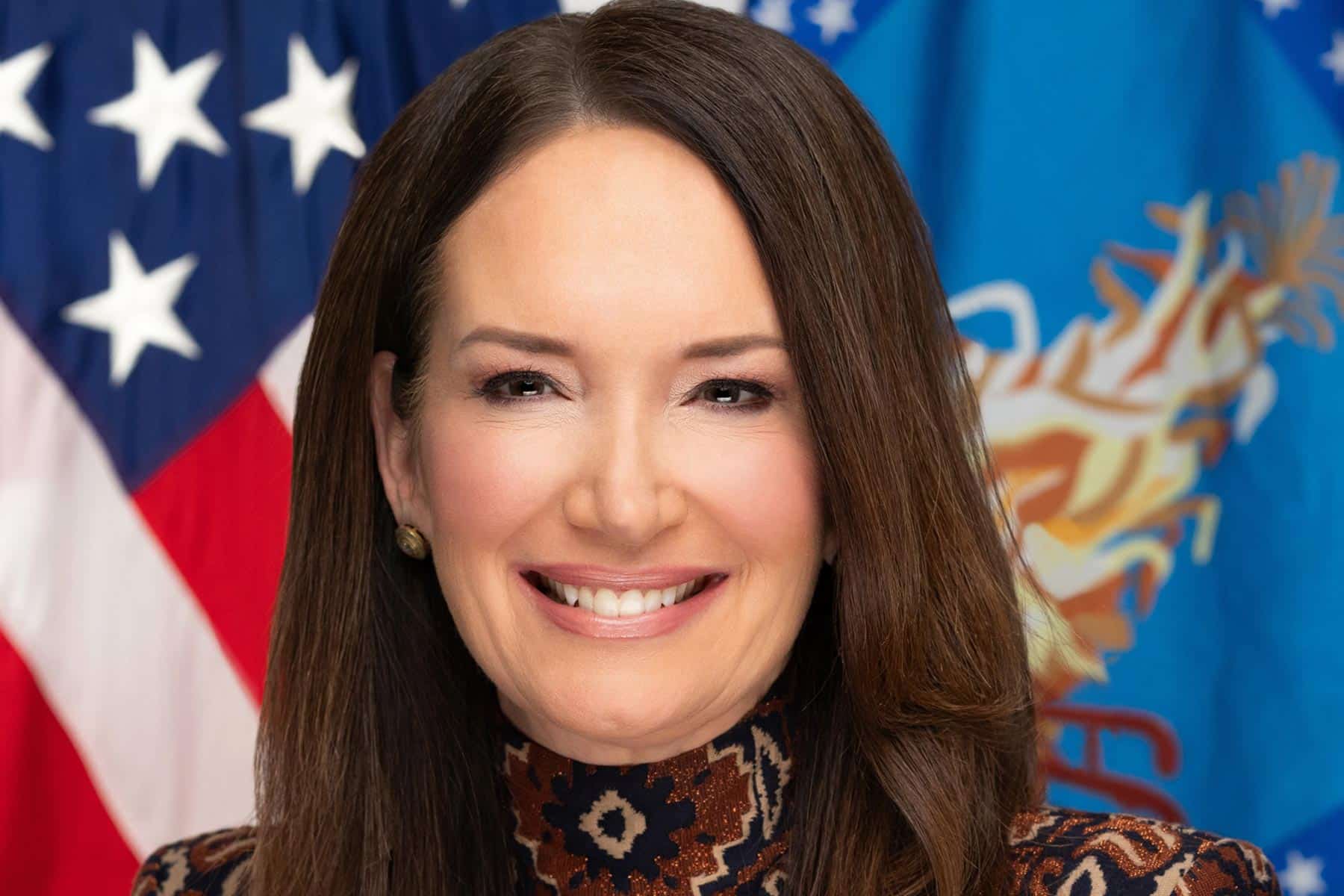
A More Than Just Parks Investigation
The Case Against
Brooke Rollins
How one political appointee dismantled America's oldest conservation agency in 13 months
A More Than Just Parks Investigation
How one political appointee dismantled America's oldest conservation agency in 13 months
Chapter I
February 2025
Brooke Rollins was confirmed as Agriculture Secretary with 19 Democrats voting yes. During her confirmation hearing, with the California wildfires still burning, she told the Senate Agriculture Committee:
"If confirmed, I will continue to deploy the tools and resources of the Forest Service to help in any way appropriate."
What followed was the most systematic dismantlement of a federal land management agency in American history.
The 19 Democrats who voted yes: Baldwin (WI), Bennet (CO), Booker (NJ), Cortez Masto (NV), Durbin (IL), Fetterman (PA), Gallego (AZ), Hassan (NH), Heinrich (NM), Hickenlooper (CO), Klobuchar (MN), Ossoff (GA), Peters (MI), Rosen (NV), Schiff (CA), Shaheen (NH), Slotkin (MI), Warnock (GA), Welch (VT). All 53 Republicans voted yes. Sanders and King voted no.
Rollins had no agricultural policy experience. She didn't need any. She spent 15 years as president of the Texas Public Policy Foundation, an Austin-based think tank bankrolled by Koch Industries, Koch family foundations, Peabody Energy, and ExxonMobil. Koch-connected entities contributed more than $3 million, including $2.5 million routed through DonorsTrust and Donors Capital Fund. Under her leadership, TPPF grew to a $10 million annual budget waging campaigns against climate action and promoting fossil fuels.
Follow the thread. At TPPF, Rollins hired Kevin Roberts as CEO. Roberts went on to lead the Heritage Foundation and author Project 2025, the blueprint for dismantling federal agencies. After leaving TPPF, Rollins served as Trump's Director of the Office of American Innovation, then co-founded the America First Policy Institute with Larry Kudlow to plan the policy agenda for a second term. Now, as Agriculture Secretary, Rollins installed Tom Schultz, a timber industry lobbyist, as Chief of the Forest Service. The people she elevated wrote the plan. The person she appointed is executing it. And she is signing the orders.
Trump signed the executive orders. DOGE executed the firings. Schultz is implementing the timber agenda day-to-day. But Rollins is Schultz's boss. She picked him. She signed the restructuring order. She proposed zeroing out the research budget. As Agriculture Secretary, she has final authority over the Forest Service. The machinery is bigger than her. The accountability starts with her.
Chapter II
The people who protect your forests, fired overnight
One day. That's how long Rollins' promise lasted. Under her authority, DOGE fired 3,400 Forest Service employees, more than 10% of the agency's total workforce, in a single sweep. Among them: 700 employees with red-card wildland firefighting certifications, according to data compiled by the National Federation of Federal Employees. Hydrologists, wildlife biologists, timber sale planners, trail crews, recreation staff. On the McCall Ranger District in Idaho, over half of all non-fire employees were gone.
These weren't bureaucrats. They were the people who maintained the trails you hike, monitored the watersheds your city drinks from, and managed the controlled burns that keep wildfires from reaching your neighborhood.
DTN/Progressive Farmer · ProPublica
Trump signed an executive order directing the elimination of NEPA environmental review regulations for federal projects. Rollins' USDA would be the primary beneficiary. NEPA is the legal framework that requires the Forest Service to study the impact of logging, mining, and drilling before approving it. Without it, timber sales on national forests can proceed without public comment, without environmental analysis, without anyone asking what a clearcut will do to the salmon in the creek below it.
No replacement framework was proposed. No transition plan was offered. Fifty years of environmental law, targeted for elimination by executive order.
Rollins named Tom Schultz as the 21st Chief of the Forest Service. Schultz wasn't just a timber executive. He was Vice President of Resources and Government Affairs at Idaho Forest Group, one of America's largest lumber producers, operating six sawmills with capacity for over one billion board feet per year. He was also President of the Federal Forest Resource Coalition, the industry's most powerful lobbying group, representing over 650 member companies and more than 350,000 workers.
His job, for his entire career, was to get more timber out of national forests. Rollins gave him the keys.
"Naming a corporate lobbyist to run the agency tasked with overseeing the last old growth left in the U.S. makes it clear that the Trump administration's goal isn't to preserve our national forests, but to sell them off to billionaires and corporate polluters."
Anna Medema, Sierra Club
Another 3,100 Forest Service employees accepted deferred resignation offers under Rollins' watch. The agency's total workforce dropped to levels not seen since the 1960s. Former Chief Dale Bosworth, who served under George W. Bush, said it plainly:
"The staffing is less now in the Forest Service than it was back in the '60s. Look at how many people go to national forests for recreation. The whole fire thing is so much different than when I was a firefighter in the '60s. I don't see how this is going to make it better."

193 million acres.
No one left to manage them.
The U.S. Forest Service oversees more land than the entire state of Texas. After the purge, districts across the West had more acres than employees to manage them. Fewer staff means fewer patrols, fewer inspections, fewer people between your forest and the next chainsaw.
Chapter III
Opening America's last wild forests to industrial extraction
Rollins issued a Secretarial Memo establishing an "Emergency Situation Determination" on 112,646,000 acres of National Forest System land, facilitating expanded timber production per Trump's executive order to increase American timber production by 25%. The "emergency" was not fire, not drought, not disease. It was that America wasn't cutting enough trees.
Under Rollins, DOGE oversight slowed Forest Service contract approvals from fifteen minutes to a month, blocking congressionally appropriated funds from being spent. DOGE denied funding for wildfire smoke detection equipment and delayed the purchase of firefighting helicopters. Rollins did not intervene. The message was clear: if Congress funds conservation, we'll make sure the money never moves.
Rollins' USDA initiated repeal of the Roadless Area Conservation Rule, targeting protections on 58 million acres of intact, roadless forest across the national forest system. These weren't marginal lands. They were the last large, unroaded, ecologically intact forests in the lower 48 states. Headwaters for rivers that supply drinking water to millions. Habitat for grizzly, lynx, wolverine, and bull trout.
Once roads go in, logging follows. Then mining. Then the forest fragments, the streams warm, the species disappear, and the carbon that took centuries to store gets released in a season. The Roadless Rule prevents all of that. Now the administration is moving to eliminate it.
With fire season approaching and the agency gutted, Rollins' Forest Service invited employees it had fired months earlier to come back temporarily. Bill Avey, former National Fire Director of the U.S. Forest Service, warned:
"You are setting up a workforce to be distracted in an environment where you can't be distracted. That kills people."
Jerry Williams, retired National Director of Fire and Aviation, said the agency was retreating to a suppression-only approach not seen since the 1930s, abandoning decades of science showing that prescribed burns and thinning are the only effective long-term strategy.
Rollins' department submitted a FY2026 budget request that proposed cutting $1.4 billion from Forest Service activities. Congress has not enacted these cuts, but the request revealed Rollins' priorities. The most telling line item: zeroing out all funding for Forest and Rangeland Research. Not a reduction. Elimination. The most respected forestry research program on the planet, proposed for zero dollars.
A scientist who says "you can't log that watershed without destroying it" is inconvenient. Easier to propose eliminating the science than to change the policy.

They fired the firefighters.
Then asked them to come back.
700 employees with wildland firefighting certifications were terminated, per the National Federation of Federal Employees. Training programs cancelled. Prevention work halted. The people who stop fires before they start were the first ones cut.
Chapter IV
The order Brooke Rollins signed on March 31, 2026
This is the one. On March 31, 2026, Brooke Rollins personally announced the most sweeping restructuring of the Forest Service in the agency's 121-year history. Not Trump. Not DOGE. Not Schultz. Rollins.
All nine regional offices closed. Headquarters relocated to Salt Lake City. More than sixty research facilities across thirty states shuttered. Career professionals replaced by 15 political appointees called "state directors," embedded in state capitals alongside governors, legislators, and industry lobbyists.
The regional offices weren't administrative overhead. They coordinated wildfire response across multi-state areas. They housed the hydrologists who understood specific watersheds, the biologists who tracked endangered species across forest boundaries, the tribal liaisons who maintained treaty relationships built over decades. Rollins eliminated all of it in a single order.
In Rollins' press release, the phrase "common sense" appears three times. "Timber production" appears once. "Climate" appears zero times. "Conservation" appears zero times.
The timber industry celebrated immediately. Travis Joseph, president of the American Forest Resource Council: "These are common sense directives Americans support and want from their Federal government." Governor Spencer Cox of Utah, who is currently suing to seize 18.5 million acres of federal land, called it "a big win for Utah and the West."
Utah is currently suing the federal government to seize 18.5 million acres of public land, a case engineered to reach a sympathetic Supreme Court and detonate 150 years of settled public land law. Cox then signed an eight-million-acre "conservation partnership" with the Forest Service that critics say is the first step toward state control of federal forests.
Utah is the epicenter of the Sagebrush Rebellion, the decades-long movement to transfer federal land to state governments who would sell or lease it to mining and logging companies. Rollins chose to move the Forest Service headquarters into the capital of that movement. She put the agency in the hands of the people who want to abolish it.
The endgame, as outlined in our reporting: embed state-level management, hollow out the federal workforce, then transfer ownership. By the time the land is sold, there won't be anyone left at Rollins' agency to object.
The Strategy
Five of six steps completed. On schedule.
Hover overTap any dot to see what was lost. Each facility represents decades of irreplaceable scientific work.
The Science
The largest forestry research organization on Earth
The Forest Service runs the largest forestry research organization in the world: 76 experimental forests across the United States. The Rothermel Fire Spread Model, built at the Missoula Fire Sciences Lab in 1972, is embedded in every wildfire behavior system in America. Missoula survived the cuts, but dozens of the labs that feed it data did not. The Forest Products Laboratory in Madison invented waterproof plywood and built airplane wood for both World Wars. Forest Inventory and Analysis provides every carbon stock number the U.S. reports to the United Nations. Without it, we cannot measure what we're losing.
You cannot move a thirty-year watershed study. You cannot transfer place-based research that depends on specific forests, specific streams, specific soil that scientists have been measuring since before Rollins was born. This isn't restructuring. This is destruction disguised as efficiency.
At the Bartlett Experimental Forest in New Hampshire's White Mountains, scientists had been studying northern hardwood silviculture for more than 90 years. Their data tracked how forests recover from logging, how different harvesting methods affect long-term growth, how climate shifts are altering the hardwood canopy of New England. That research station is now on the closure list. The monitoring equipment is still in the ground. The data series is still running. But the scientists who maintained it are gone, and no one is coming to replace them.
Decades of continuous observation, the kind of long-term dataset that cannot be rebuilt once it's broken, abandoned because Brooke Rollins decided it wasn't worth the funding to know what is happening to your forests.
The Other Side
The timber industry's strongest argument is not entirely wrong. A century of fire suppression has left many federal forests unnaturally dense. Peer-reviewed research shows that thinning combined with prescribed burning reduces wildfire severity by 62-72%. During the 2021 Bootleg Fire in Oregon, 200-foot flames dropped to four feet when they hit managed forest. The Forest Service has identified 80 million acres needing treatment but treats roughly 3 million per year. Environmental review adds 3-5 years of delay. Real problems.
But logging is not thinning. A Resources for the Future analysis found that only one-third of commercial timber areas overlap with fire risk priorities. The small-diameter wood that needs to come out for fuel reduction is rarely profitable. What the industry wants is the big, merchantable timber. The stuff that's worth money is not the stuff that's causing fires.
You don't fix a broken agency by firing the people who do the work. You don't reduce wildfire risk by eliminating the prescribed burn crews and the scientists who design treatment plans. Everything Rollins has done makes the problems she cites worse. Because the goal was never better forest management. It was access to the timber. The woman who spent 15 years at a Koch-funded think tank, who hired the architect of Project 2025, who installed a timber lobbyist as chief, is now signing the orders that open your forests to the industry she served her entire career. Theodore Roosevelt, a Republican, built this agency in 1905 to stop exactly that. This is not a partisan issue. It's an American one.
Resources for the Future · Davis et al. 2024, Forest Ecology and Management · PERC
The Cost
Thousands of communities sit within or adjacent to national forest boundaries. In small towns across the West, the Forest Service is often the largest employer. When Rollins gutted district staffs, trail maintenance stopped, access roads went unmaintained, grazing permits stalled, and fuels reduction projects that keep fire from reaching town were cancelled.
America's outdoor recreation economy generates $1.2 trillion in economic output and supports 5 million jobs. National forests draw 170 million visits per year. Every angler, hunter, hiker, and ski area operator depends on a functional Forest Service. So does every family whose house sits in the wildland-urban interface, where Rollins' cuts mean fewer prevention crews between their home and the next fire.
The Response
You're not going to create more efficiency by setting up a fire organization that's completely separate from land management agencies. It's such a sweeping change with no real analysis about whether there would be cost savings.
Mary Erickson, 40-year Forest Service veteran, former Custer Gallatin National Forest supervisor
Seven former Forest Service Chiefs recorded a joint video opposing Rollins' restructuring. Senators Merkley, Murray, Heinrich, and Klobuchar demanded an immediate halt. Tribal representatives warned it would "destroy irreplaceable knowledge about Treaty rights and working relationships built over decades."

121 years of protection.
13 months of Brooke Rollins.
This is not reform. This is demolition. And she won't stop unless you make her stop.
U.S. Capitol Switchboard
Find Your Senators →Phone Script
Hi, my name is [Your Name] and I'm a constituent from [City, State]. I'm calling to demand that the Senator publicly oppose the restructuring of the U.S. Forest Service, call for oversight hearings into Secretary Rollins' actions, and support her removal for the deliberate destruction of the agency she was confirmed to lead. In 13 months she has fired 6,500 employees, initiated the repeal of environmental review, installed a timber lobbyist as chief, targeted 58 million acres of roadless forest for development, proposed zeroing out all forestry research funding, and announced the closure of all nine regional offices and more than sixty research facilities across thirty states. This is not reform. This is demolition. Please record my opposition. Thank you.
Pre-Written Letter to Your Senator
Dear Senator [Name], I am writing as a constituent to urge immediate action on Agriculture Secretary Brooke Rollins' dismantlement of the U.S. Forest Service. In 13 months she has fired 6,500 employees, initiated the repeal of environmental review, installed a timber lobbyist as Chief, targeted Roadless Rule protections on 58 million acres for elimination, proposed zeroing out all forestry research funding, and announced the closure of all nine regional offices and 60+ research facilities across 30 states. I demand that you publicly oppose the restructuring, call for Senate oversight hearings, support efforts to remove Secretary Rollins, and co-sponsor legislation to protect the Forest Service's regional structure and research mission. Seven former Forest Service Chiefs have spoken out against this. The timber industry has publicly celebrated it. There is no ambiguity about who this serves. I urge you to act. Sincerely, [Your Name] [Your Address]
Organizations fighting this: Sierra Club Wilderness Society NFFE FS Retirees Trout Unlimited BHA Earthjustice